Artemis II: Everything you need to know about NASA’s first human moon mission in 50 years

January 18, 2026
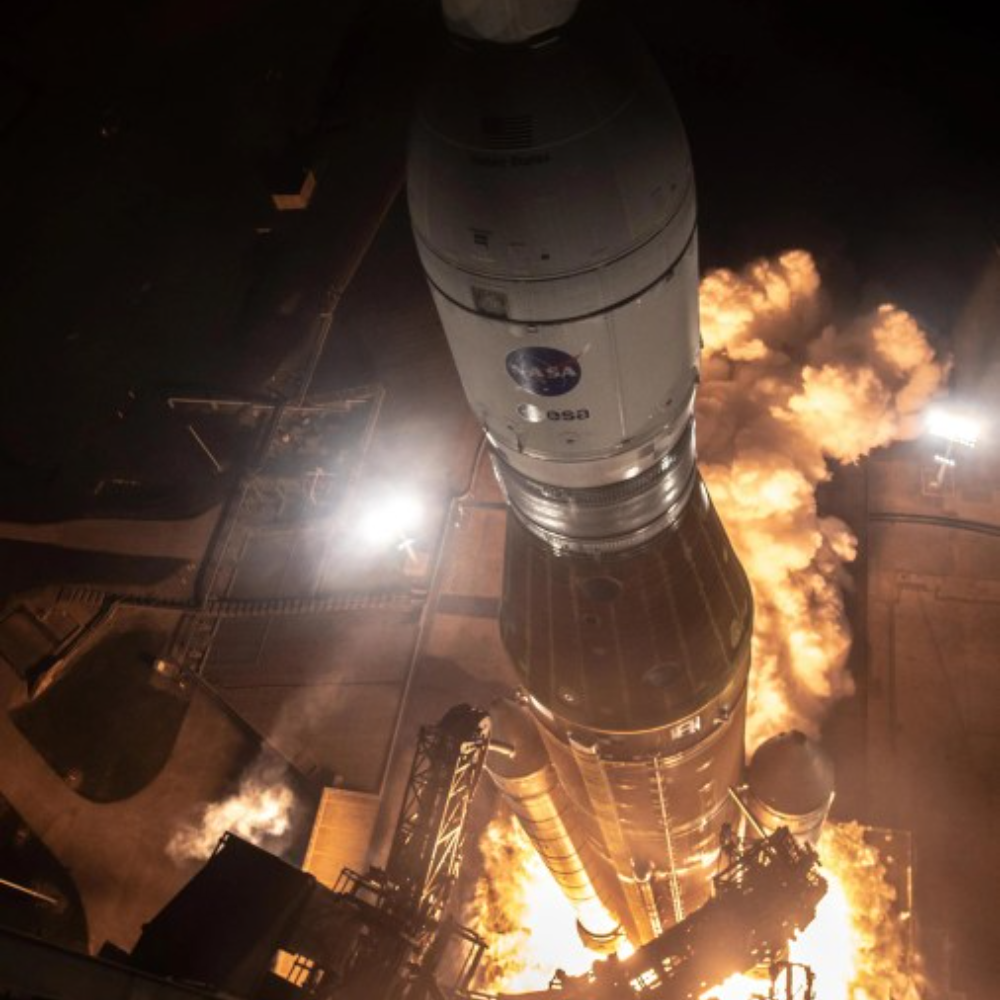
In just weeks or months, NASA is to launch Artemis II, the first crewed mission to return astronauts to lunar orbit since the Apollo Program, ahead of a planned crewed landing in 2027 by Artemis III.
NASA’s Artemis Program and successful Artemis I mission
Finally, humanity is more or less poised to return to the moon after a 50-year hiatus. The Artemis Program is NASA’s long-term initiative to return people to the moon, but in a more sustainable way than in the past.
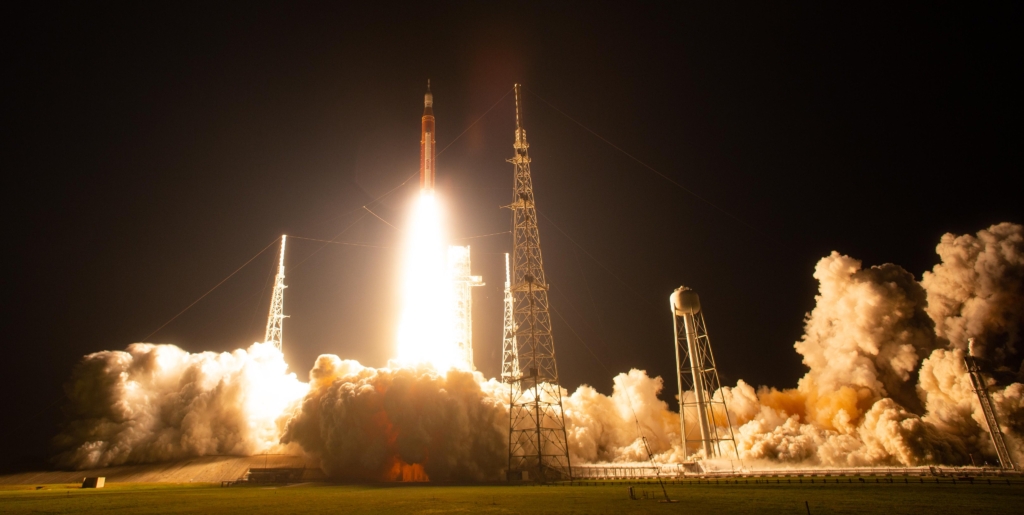
The Apollo took men to the moon, but they were unable to spend much time there. Back then, there was no ability to sustain a presence on the moon. The Artemis program seeks to change that by establishing a permanent presence on the moon.
The programme is structured as a sequence of missions numbered Artemis I, II, III, IV, and so on. Each of these progressively increases in complexity, intending to establish a permanent presence on the moon.
The first mission, Artemis I (formerly Exploration Mission-1 or EM-1), has already been successfully completed. This was an uncrewed mission that flew around the moon to test the Orion spacecraft and Space Launch System (SLS) rocket.
Artemis II is stacked, communication systems have been tested, and now we are gearing up for a launch day dress rehearsal.
— NASA Artemis (@NASAArtemis) November 20, 2025
Learn more about our next steps as we prepare to launch and fly our first crewed mission under the Artemis campaign >> https://t.co/IsqU3fRi5Y pic.twitter.com/jyF576uG66
Artemis I was stacked in October 2021, it launched on 16th November and flew by the moon on the 21st before completing a second flyby of the moon on 5th December. The Orion spacecraft then returned to Earth and splashed down in the Pacific Ocean on the 11th of December 25 days after launch.
Upcoming crewed Artemis II mission
Artemis II is the next stage in the Artemis Program and will be a crewed lunar flight around the moon. It will be the first time astronauts return to the vicinity of the moon since Apollo 17 in 1972.
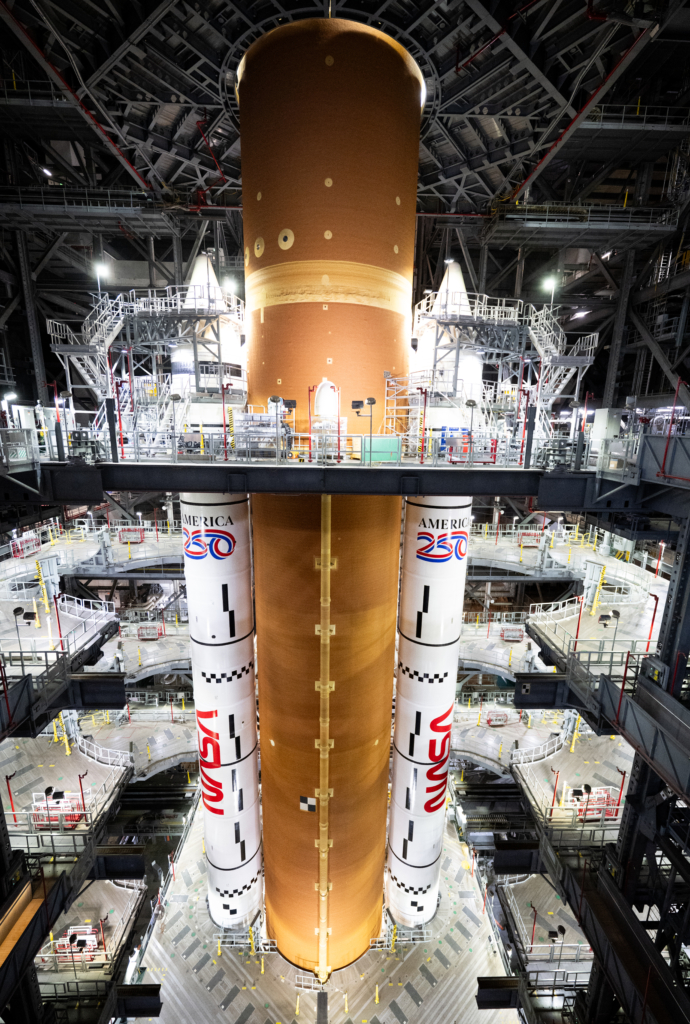
NASA says, “Four astronauts will venture around the Moon on Artemis II, the first crewed mission on NASA’s path to establishing a long-term presence at the Moon for science and exploration through Artemis. The 10-day flight will help confirm systems and hardware needed for early human lunar exploration missions.”
The four astronauts will travel around the moon without landing. The core mission objectives are to validate Orion and its life support in Deep Space; test navigation, guidance, and communication systems; and test and exercise procedures and readiness ahead of landing missions.
The four astronauts selected for the mission are:
- Reid Wiseman (Commander)
- Victor Glover (Pilot)
- Christina Koch (Mission Specialist)
- Jeremy Hansen (Mission Specialist, Canadian Space Agency)
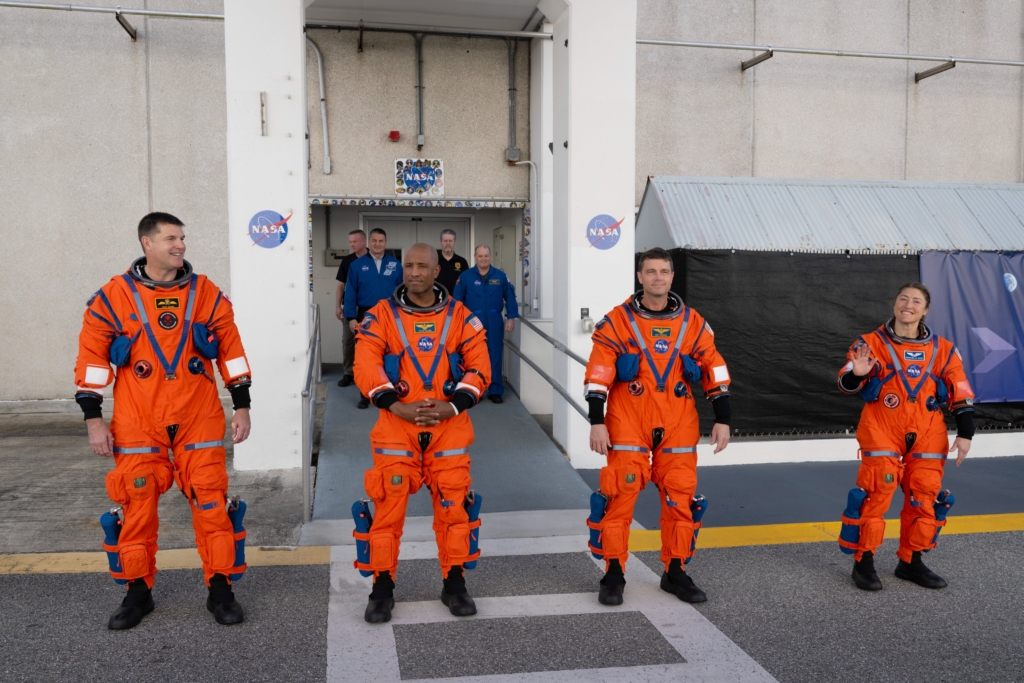
As is normal with such missions, there is a fully trained backup crew that is trained in parallel with the prime crew. They are mission-ready and trained to the same standard. The backup crew is:
- Stephanie Wilson (NASA)
- Jonny Kim (NASA)
- Andre Douglas (NASA)
- David Saint-Jacques (CSA)
The mission is to last around 10 days, and its successful completion will open the door for NASA to move on to Artemis III, which will see astronauts actually land on the moon.
Find the latest aviation industry news right here.
Artemis II timetable
To the surprise of a few, Artemis II has been delayed, having initially been scheduled for launch in 2025. Issues with the heat shield, life support, and integration work have contributed to the delays.
NASA is planning on rolling out the Artemis II rocket and spacecraft from the Vehicle Assembly Building to Launch Pad 39B at @NASAKennedy no earlier than Jan. 17. The four-mile journey will take up to 12 hours. pic.twitter.com/U4sAPzG5tJ
— NASA (@NASA) January 10, 2026
But now, it seems the mission’s launch could be just weeks away. NASA’s website says the mission is to launch “no later than April 2026.”
On the 9th of January, NASA said, “the agency soon will roll its SLS (Space Launch System) rocket and Orion spacecraft to the launch pad for the first time at the agency’s Kennedy Space Center in Florida to begin final integration, testing, and launch rehearsals.”
The next Artemis II launch window is to open as early as 6th February, although it remains unclear what the launch date will be. NASA says the mission management team needs to assess flight readiness after the upcoming wet dress rehearsals before selecting a launch date.
With less than a month from the earliest launch window for the Artemis II mission around the Moon, the crew has been fully immersed in training.
— NASA Artemis (@NASAArtemis) January 12, 2026
Rollout of the rocket and spacecraft to the launchpad is scheduled for no earlier than Jan. 17. pic.twitter.com/UCbY6wGQjx
NASA identifies the next launch opportunities as:
- Launch Period Jan. 31 – Feb. 14
- Launch opportunities February 6, 7, 8, 10, and 11
- Launch Period Feb. 28 – March 13
- Launch opportunities March 6, 7, 8, 9, 11
- Launch Period March 27 – April 10
- Launch opportunities April 1, 3, 4, 5, 6
NASA notes many things (like weather) can influence a launch. Consequently, as a general rule, up to four launch attempts may be attempted within the approximate week of opportunities with a launch period.
Equipment used for Artemis II
The two core vehicles of Artemis II are Boeing’s Space Launch System (SLS), aka the booster rocket, and the Orion Spacecraft. Boeing built the core stage and upper stage. Other major SLS contractors are Aerojet Rocketdyne and Northrop Grumman, supplying engines and solid rocket boosters.
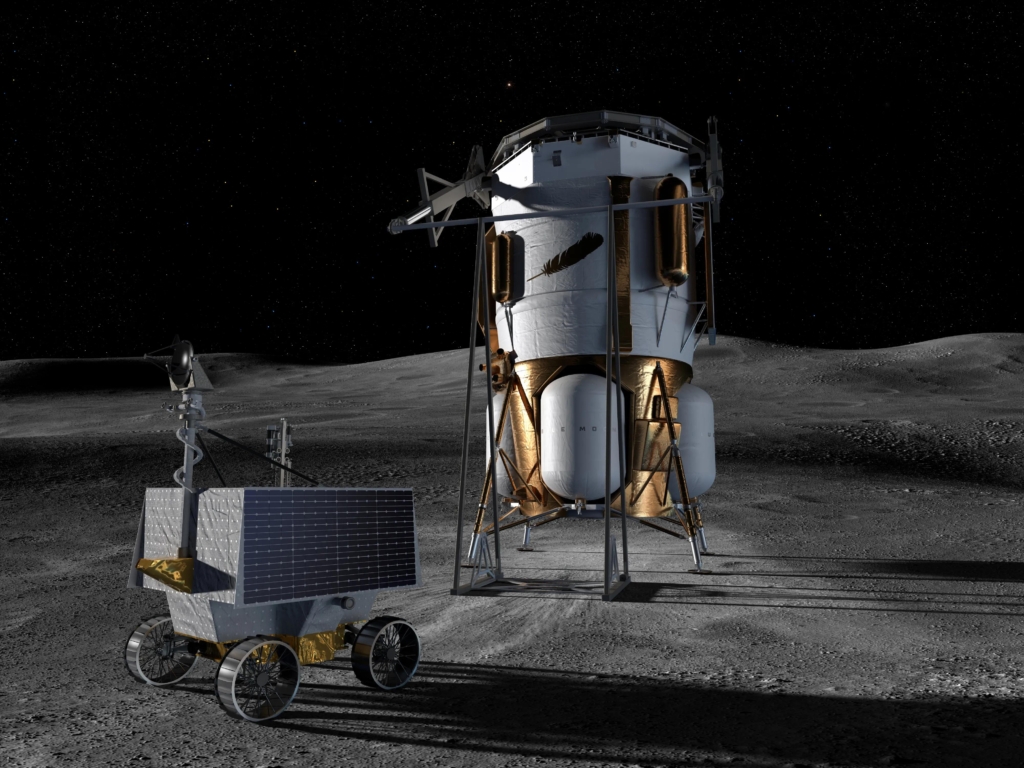
Lockheed Martin is the prime contractor for Orion, with other notable contractors being the European Space Agency, Airbus, Aerojet Rocketdyne, and Northrop Grumman.
Unlike SpaceX’s Falcon 9 booster and upcoming Starship booster, the SLS is not reusable. NASA has acknowledged this is extremely expensive, but it accepted the costs to accelerate the Artemis timeline and reduce development risks.
Get in, we're going to the Moon.
— NASA (@NASA) December 31, 2025
Our Artemis II closeout crew will be the last people to see @Astro_Reid, @AstroVicGlover, @Astro_Christina, and @Astro_Jeremy before their lunar journey.@NASAArtemis II is targeted to launch early 2026. https://t.co/nkhLryUMhZ pic.twitter.com/KcDFZfeFvr
While the Orion Capsule is theoretically reusable, it is not planned to be reused. Instead, NASA is looking forward to SpaceX’s upcoming Starship HLS for future Artemis missions and for it to be reusable.
Wider context of Artemis II
As stated, Artemis II is an important stepping stone to future Artemis missions.
Artemis III is expected to use a prepositioned Starship Human Landing System (HLS) that will rendezvous with the Orion spacecraft. Two astronauts will then transfer to the HLS and land on the moon no earlier than mid-2027.

The second crewed landing is planned for Artemis IV in 2028, and in 2030, Artemis V, the foundations of a permanent presence with the Lunar Gateway station. The Lunar Gateway is a planned space station to be assembled in orbit around the Moon.
Artemis VII is to deliver the Habitable Mobility Platform on the moon no earlier than 2032, ahead of astronauts staying on the moon for an extended period with Artemis X no earlier than 2035.
China releases a concept video of the International Lunar Research Station! #Moon #SpaceDayofChina pic.twitter.com/lw4gurKgbg
— Global Times (@globaltimesnews) April 24, 2024
This is happening in the context of China’s plans to be the second country to put astronauts on the moon by around 2030. It has plans to establish the International Lunar Research Station (ILRS), a sustainable human-robotic base in the 2030s.
Both NASA and the Chinese see the moon as a springboard to reaching Mars.