More airlines will support Android baggage-tracking feature

March 4, 2026
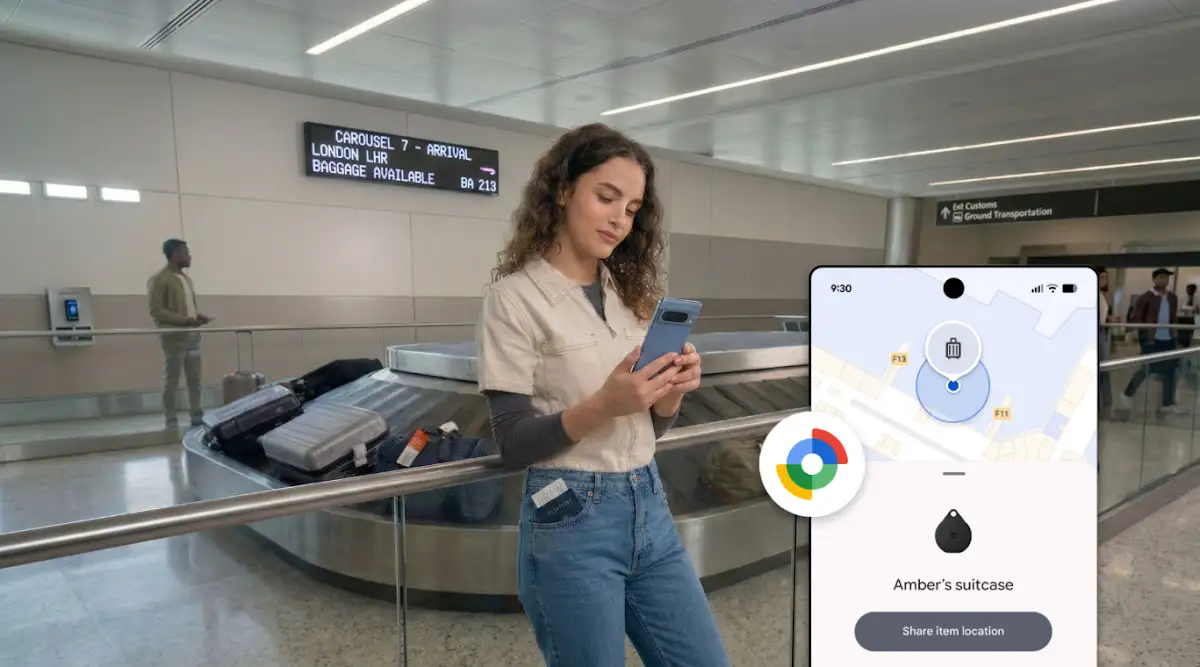
A growing number of airlines will soon allow passengers to share the location of their luggage directly from Android devices, following a new Google update that expands digital baggage-tracking capabilities across the aviation industry.
It is the latest step in integrating consumer-tracking devices into baggage-recovery, as more airlines adopt location-sharing capabilities from the two major smartphone operating systems.
Android’s new Find Hub luggage-sharing feature
As part of its March 2026 Android feature update, Google introduced a new capability within its Find Hub device-tracking network that allows travellers to securely share the location of a luggage tracker tag with participating airlines.
If a checked bag goes missing, passengers can generate a temporary link within the Find Hub app that displays the bag’s location on a map. Passengers can submit the link to an airline’s baggage-recovery system or share it with airport staff to help locate their luggage more quickly.
The location-sharing link automatically expires after seven days, and travellers can revoke it at any time. Sharing also ends automatically once the system detects that the bag has been reunited with its owner.
The feature relies on a crowdsourced network of millions of Android devices worldwide that anonymously detect compatible Bluetooth trackers and relay their locations through Google’s tracking network.
Airlines already participating in Android tracking
Google says more than ten airlines have already integrated the feature into their baggage-recovery workflows.
“We’ve collaborated with both SITA and Reunitus to integrate this technology into WorldTracer and NetTracer, the industry’s leading baggage-tracing systems. Together, these platforms power the recovery operations for hundreds of airlines at thousands of airports worldwide. This ensures that whether a passenger is flying with a major carrier or a regional partner, the tools to locate missing bags are more interconnected and effective than ever,” Google states in its announcement.
Early partners include:
- AJet
- Air India
- China Airlines
- Lufthansa Group (Lufthansa, Austrian Airlines, Brussels Airlines, and Swiss International Airlines)
- Saudia
- Scandinavian Airlines
- Turkish Airlines
Additional airlines are expected to join soon, with Google naming Qantas among them.
The update follows earlier airline experiments with Android trackers—such as the partnership between Turkish Airlines and Samsung using the Samsung SmartTag—and now integrates luggage-tracking functionality directly into Android’s device-finding feature enabled by a wider range of trackers.
Building on the success of Apple’s iOS Find My airline integrations
The airlines’ rollout of Android luggage tracking builds on the successful deployment of baggage tracking supported by Apple’s iOS Find My feature.
Apple was the first to introduce a feature that allows travellers to securely share an AirTag’s location with airlines during the baggage-recovery process, allowing airline staff to view the last known location of a missing suitcase. Airlines have successfully integrated location-sharing from Apple AirTag trackers into their baggage-handling systems. Aviation IT solutions provider SITA has previously reported a 90% reduction in permanently lost luggage resulting from the integration of the iOS feature.

Several airlines have already adopted the feature as part of their digital travel ecosystems alongside other iOS travel tools such as enhanced boarding passes and travel documents integrated into Apple Wallet.
The new Android rollout mirrors this approach, bringing similar capabilities to a much larger share of global smartphone users.
Android vs iOS: why device scale matters to airlines
Android’s global reach could significantly expand the use of passenger-shared baggage tracking.
According to StatCounter global data, Android accounts for roughly 68% of the global smartphone market worldwide, while iOS holds about 31%.
In terms of users, Appigine reports approximately 3.4 billion Android users worldwide, compared with roughly 1.4 billion iOS users.
Because open-source Android devices dominate in regions such as Asia, Africa, and South America, expanding airline integration with Android trackers could dramatically increase the number of travellers who can share luggage location data with airlines.
Bridging the gap between passengers’ digital expectations and airline systems
The platform-agnostic airline integration of consumer-device-enabled baggage tracking will give more passengers visibility of their luggage and allow airlines to see what they can see. Travellers increasingly favour being able to use digital trackers inside checked bags.
“We’ve seen a radical shift with automation and the widespread use of real-time tracking. Passengers now expect their baggage experience to be as easy and transparent as using a rideshare or delivery app,” said David Lavorel, CEO of SITA, in the announcement of the company’s Baggage IT Insights report last year.
“It’s no longer just about moving bags; it’s about delivering a smooth, connected journey.” Lavorel added. “Airlines are ready to tap into technology that improves the passenger experience while keeping costs down and being simple to roll out. Together with our partners, we’re reimagining baggage handling to give passengers full visibility and control from departure to arrival, giving them peace of mind and making travel simpler and better.”
A new growth phase for digital baggage tracking
The adoption of Android-based baggage tracking means that faster recovery of lost luggage and greater transparency of baggage handling are now available to a significantly higher number of travellers.
For airlines, supporting these consumer-device features advances the integration of passenger-generated data into operational systems, boosting initiatives for digitally connected travel experiences that link smartphones, airline apps and airport systems.
As both Android and iOS ecosystems expand their device-finding features, personal luggage trackers may soon become standard kit for travellers, and airlines will be ready.
Featured Image: Google