Wow: 30 airlines now offer AirTag baggage tracking, doubling in 6 months

July 31, 2025

When Apple announced it would enable AirTag baggage tracking in November of last year, 15 airlines were adopters. That number has now doubled to 30. Airlines have favoured the consumer technology to put their passengers at ease, while also implementing internal systems.
Airlines embrace AirTag baggage tracking
Airlines began officially integrating Apple AirTags into their baggage tracking systems in December 2024, when United Airlines became the first major carrier to accept “Share Item Location” links via the Find My network in its baggage recovery process.
By January 2025, Apple reported that more than 15 airlines had rolled out AirTag-based luggage tracking. This included Virgin Atlantic, British Airways, American Airlines and JetBlue.

Apple promised “more airlines will be added over time,” and it hasn’t taken long. The latest airline to announce the feature is Saudia, which signed up to the service just this week.
“As part of our ongoing commitment to digital transformation, we are elevating the guest experience through cutting-edge technology and innovative solutions,” said Abdulgader Attiah, Chief Data and Technology Officer of Saudia Group. “This integration of Apple’s Share Item Location feature underscores our dedication to providing world-class service and setting new standards in the aviation industry.”
This brings the number of airlines using Apple AirTags for baggage tracking to 30. The complete list, according to 9to5Mac, is:
- Ajet – Turkey
- Air Canada – Canada
- Air India – India
- Air New Zealand – New Zealand
- American Airlines – US
- Breeze Airlines – US
- Cathay Pacific – Hong Kong
- China Airlines – Taiwan
- Delta – US
- Finnair – Finland
- IAG/Aer Lingus – Ireland
- IAG/British Airways – UK
- IAG/Iberia – Spain
- IAG/Vueling – Spain
- JetBlue – US
- KLM – Netherlands
- Lufthansa Group/Austrian Airlines – Austria
- Lufthansa Group/Brussels Airlines – Belgium
- Lufthansa Group/Eurowings – Germany
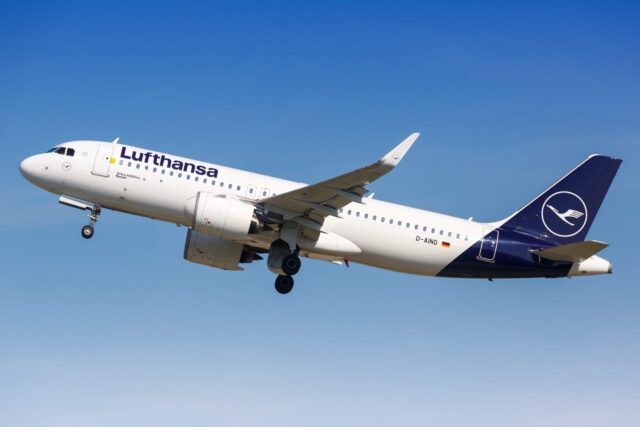
- Lufthansa Group/Lufthansa – Germany
- Lufthansa Group/Swiss – Switzerland
- Pegasus – Turkey
- Porter – Canada
- Qantas – Australia
- Saudia Airlines – Saudi Arabia
- Singapore Airlines – Singapore
- Sun Express – Turkey
- Turkish Airlines – Turkey
- United – US
- Virgin Atlantic – UK
Apple AirTags give air travellers peace of mind
Airline motivation for adopting Apple’s Find My Item feature is more about reassuring passengers than any inherent advantages of the technology to their operations.
“We know many of our customers are already travelling with AirTag in their checked bags, and this feature will soon make it easier for them to share location information with us safely and securely, helping our customer service agents work more efficiently and giving our customers added peace of mind,” said David Kinzelman, United’s chief customer officer in Apple’s announcement.
Erik Snell, Delta Air Lines’ senior vice president of Airport Customer Service, Cargo Operations, Ground Support Equipment, and Global Clean, said: “While more than 99% of checked items make it to their destination as planned, we know how stressful it can be for customers when they don’t… [Apple AirTag and Find My Item] will provide our team with extra visibility to reunite those items with their owners.”
Annalisa Gigante, head of innovation at IAG, said: “We’re always testing innovative solutions and enhancing our systems to ensure that checked bags reach their intended destination as quickly as possible.”

Apple has worked directly with airlines to ease the implementation with remarkable success. AirTags tracking complements airlines’ baggage tracking systems, giving customers a greater sense of control over their luggage. But the Apple devices do not replace airline baggage tracking systems.
Apple AirTag baggage tracking complements airline systems
When Apple announced the AirTag feature, SITA also committed to adding Apple’s Share Item Location into its WorldTracer baggage-tracing system. It is used by over 500 airlines and ground handlers at more than 2,800 airports around the world.

“As the leading industry provider for end-to-end baggage management solutions, and with global passenger traffic set to double by 2040, airports and airlines worldwide will face important challenges,” says Nicole Hogg, SITA’s director of baggage. “This collaboration with Apple will make it easy for airlines that use our industry-leading WorldTracer solution to implement Share Item Location for more efficient baggage management, and will be a huge benefit for passengers.”
Airlines focus investment on helping staff find bags first
SITA’s 2024 Air Transport IT Insights report shows that airlines have primarily invested in advances to support their internal baggage tracking process, favouring this over giving their passengers real-time updates.
- 42% of airlines have invested in providing Real-time baggage status information directly to passengers. Investment is up slightly from the 38% of airlines that reported investing in the technology the previous year. An additional 40% have said they plan to do so by 2027, bringing overall adoption to 82% of airlines.
- 65% of airlines invested in real-time baggage status information for operational staff. It is a significant increase over the 43% of airlines reported the previous year. An additional 27% plan to invest in real-time baggage status for operational staff by 2027, which would mean 92% of airlines will have that capability.
“Passengers have sometimes had to resort to their own arrangements to track their luggage, whereas ideally this should be available through the airlines and airports themselves,” SITA states in its report. “It could be argued that there has been a lack of innovation in this area, but the industry has clearly recognised this and airlines are making the necessary investments.”
Baggage handling is improving, but there’s more work ahead
Airlines don’t want to lose passenger bags. Baggage mishandling costs them an average of $5 billion per year, according to SITA. While technology adoption has yielded positive results, the financial exposure of mishandled bags continues to grow as passenger numbers increase.
“Even with an 8.2% increase in passenger traffic, the baggage mishandling rate dropped to 6.3 bags per 1,000 passengers, down from 6.9 the year before, an 8.7% improvement,” SITA CEO David Lavorel says in the Executive Summary of the report. “That’s a 67% drop since we started tracking the mishandling rate in 2007, even as baggage volumes have more than doubled. Still, 33.4 million bags were mishandled in 2024, a clear signal that while progress is real, the work is far from done.”
The most significant cause of baggage delays (41%) remains transfers between flight connections.
“Moving luggage between flights, especially on tight connections or between different carriers, continues to expose one of the weakest links in the chain,” SITA states.
While most bags eventually find their owners, Apple’s AirTags can alleviate the anxiety for travellers by allowing them to find their bags first.