Airbus vs Boeing: Which planemaker is more likely to hit its 2025 delivery target?

November 13, 2025

Airbus and Boeing have completed the third quarter of 2025 and are approaching their annual targets, despite each planemaker managing issues that have challenged their production rates this year.
Airbus has set a 2025 target of “around 820” commercial aircraft deliveries. Boeing, by contrast, has avoided setting a hard target this year and focused instead on stabilising production. Since Boeing has no official 2025 delivery target, its performance will be measured against market expectations, which are in the 600-aircraft range, with Forecast International predicting Boeing will deliver 590 aircraft.

Most notably during the quarter, Boeing finally gained FAA approval to raise 737 MAX output from 38 to 42 per month.
Where Airbus & Boeing stand after October
Airbus has completed 585 deliveries year-to-date, following 78 aircraft delivered in October. That maintains the European planemaker’s lead but still leaves a steep slope to meet that year-end target.
Boeing has racked up 493 deliveries year-to-date, after delivering 53 in October. That is the company’s strongest annual pace since 2018, and its second straight month above 50.
| OEM | 2025 Guidance / Estimate | YTD Deliveries (End October) | Remaining Deliveries Needed | Major Risks |
|---|---|---|---|---|
| Airbus SE | ~820 deliveries | 585 | ~235 over 2 months → ~118/month | Engine and cabin component supply; achieving ramp-rate |
| The Boeing Company | ~590-610 estimate (analyst) / no formal target | 493 | ~107 over 2 months → ~54/month | 737/MAX cap; quality/reg issues; supplier continuity |
What Airbus must deliver by the end of Q4
Airbus needs to deliver 235 jets between November and December to reach its target of “around 820.” That requires an average of 118 aircraft deliveries per month. While October’s 78 deliveries show momentum, the manufacturer still faces a challenging two-month sprint. Historically, Airbus has relied on a heavy December, but this would still require exceptional execution across engines, interiors, and customer acceptance.
In the company’s Q3 earnings call at the end of October, Airbus CEO Guillaume Faury said, “Our operating environment remains complex and dynamic. Navigating strong demand combined with the specific supply chain tensions … still requires continuous operational discipline and agility.”
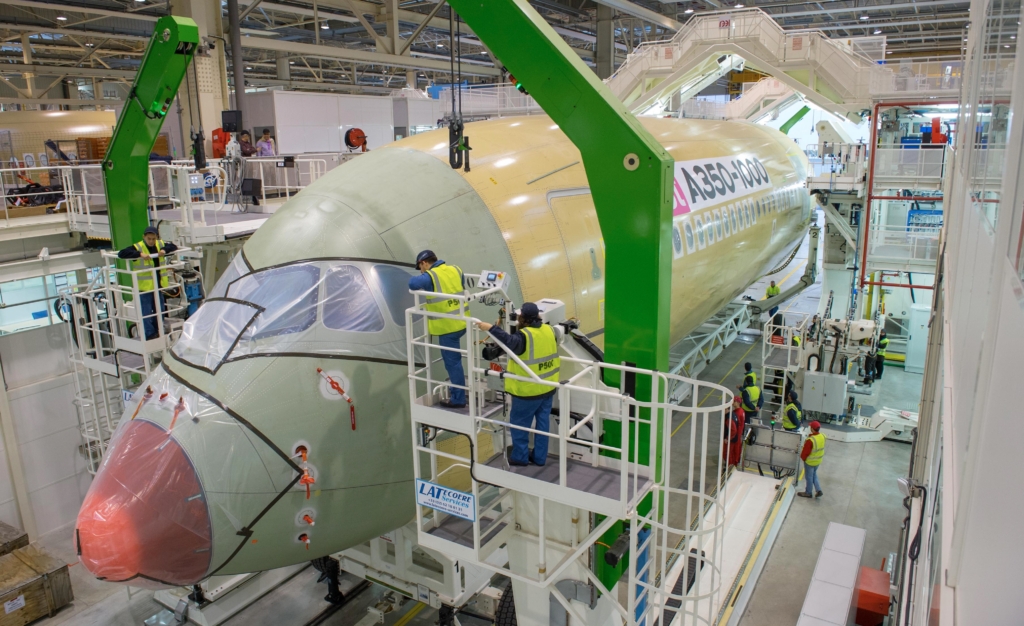
Faury said the company is on track to reach its A320 family production rate of 75 per month and is expanding capacity to prepare for a commercial aircraft ramp-up.
“The engine situation is showing signs of recovery; the number of gliders is now at 32 as of the end of September,” Faury said. “Deliveries continue to be back-end loaded as we navigate the engine situation. We have a strong year-end rally ahead of us, and our teams are in the sprint.”
What Boeing must deliver by the end of Q4
With no official target, Boeing is tracking toward analyst ranges of roughly 590–610. Hitting 600 would require Boeing to deliver around 107 aircraft over the last two months, a rate of 53–54 per month. That is generally in line with Boeing’s realised pace in September–October.
It assumes that Boeing’s 737 and 787 lines and supply/quality interventions remain on track. The FAA’s nod to increase the Boeing 737 rate to 42/month will help as the narrowbodies make up a large share of the manufacturer’s backlog (around 73%).
Boeing’s CEO, Kelly Ortberg, said the company is “making meaningful progress” during the company’s Q3 earnings call, with a 75% reduction in travelled work (tasks completed out of their production line order, sometimes due to rework requirements) on the 737 and a decrease of 60% across all aeroplane programs.

“Supported by greater stability, we successfully ramped up the 737 production to 38 aeroplanes per month, as we had planned,” Ortberg said. “We then focused on enablers such as improved quality, training and workplace coaches to help stabilise at that rate and demonstrate that all of our key performance indicators are healthy.”
These improved KPIs resulted in the FAA’s approval of the rate increase for 737 production. Ortberg said the company would continue to monitor its performance, and said rate increases beyond 42 would be implemented in increments of five, six months apart.
“We will remain disciplined and we won’t move to higher rates until we achieve stability and readiness,” Ortberg said.
Boeing’s wins and losses hinge on aircraft certification
Although the delays in certifying the 777X programme remain a drag on the company’s finances, with a nearly $5 billion charge, Ortberg had better news on certification of the Boeing 737 MAX 7 and 737 MAX 10, which some of its key customers, including Southwest Airlines and Ryanair, have long been hoping for.
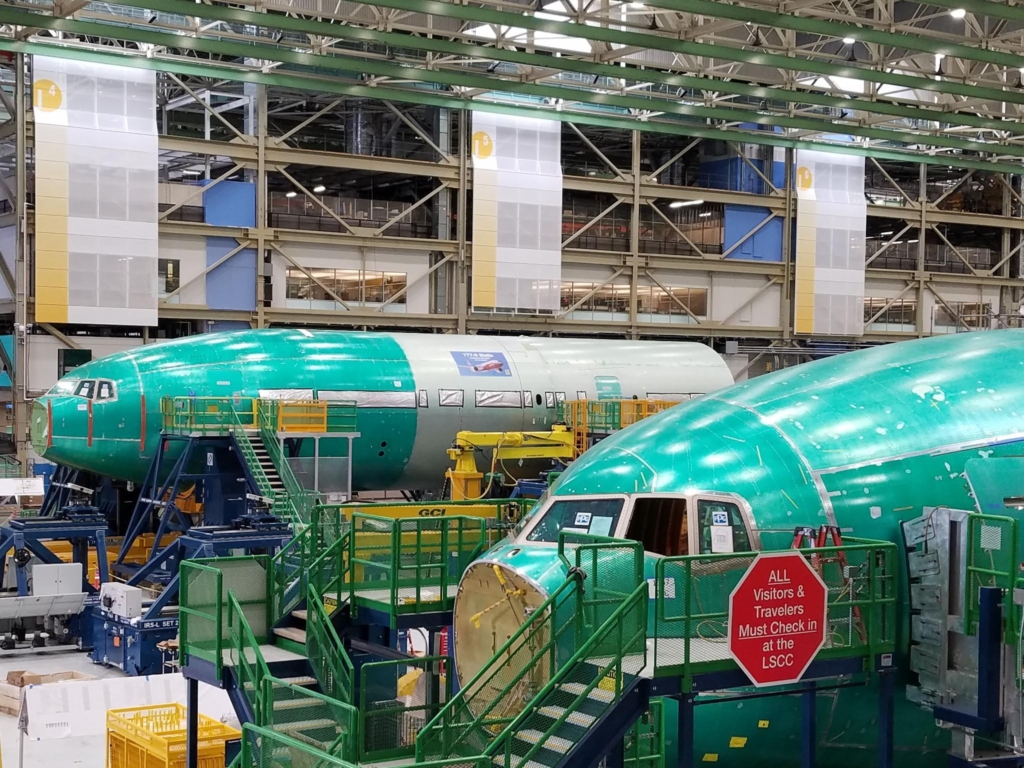
“With more than 3,000 hours of lab testing and analysis, we now have a final set of design changes to permanently address the engine anti-ice issue,” he said. “This effort remains on the critical path, and we’re now following the lead of the FAA as we work to certify the suite of design updates. As we previously shared, we anticipate certification for the 737-7 and the 737-10 to happen in 2026.”
A close race to finish with Airbus in the lead
Overall, Airbus leads Boeing by a significant margin in deliveries. For Airbus, CFM engine flow and cabin component availability are the make-or-break variables. The company said engine deliveries improved in Q3, but even with better flow, a two-month catch-up of over 230 jets is demanding.
To reach “around 820,” Airbus must out-deliver its October tally by 50% in each of the final two months. That’s not impossible. The manufacturer has built gliders that require only engines, which could help it catch up. However, it leaves almost no margin for slippage.

For Boeing, expectations are more achievable, with only 107 aircraft left to deliver to keep the market happy. The swing factor will be maintaining a clean, repeatable 737 rhythm at the newly authorised rate of 42 per month while keeping 787 at seven per month and avoiding new quality snags or supplier hiccups.
On the narrower question—which manufacturer is more likely to hit the 2025 target they’re being judged against—Boeing looks more likely to land within its externally expected range. Airbus’s officially stated “around 820” remains a stretch that will hinge on an exceptionally strong November–December.
But even if Airbus does not meet the required rate to reach its target and only maintains 78 per month, it will have delivered the most commercial aircraft of the two OEMs by the end of the year.
Find the latest aviation industry news right here.
Featured Image: Airbus