Airbus explores A220-500 stretch as demand shifts to larger variants

January 30, 2026
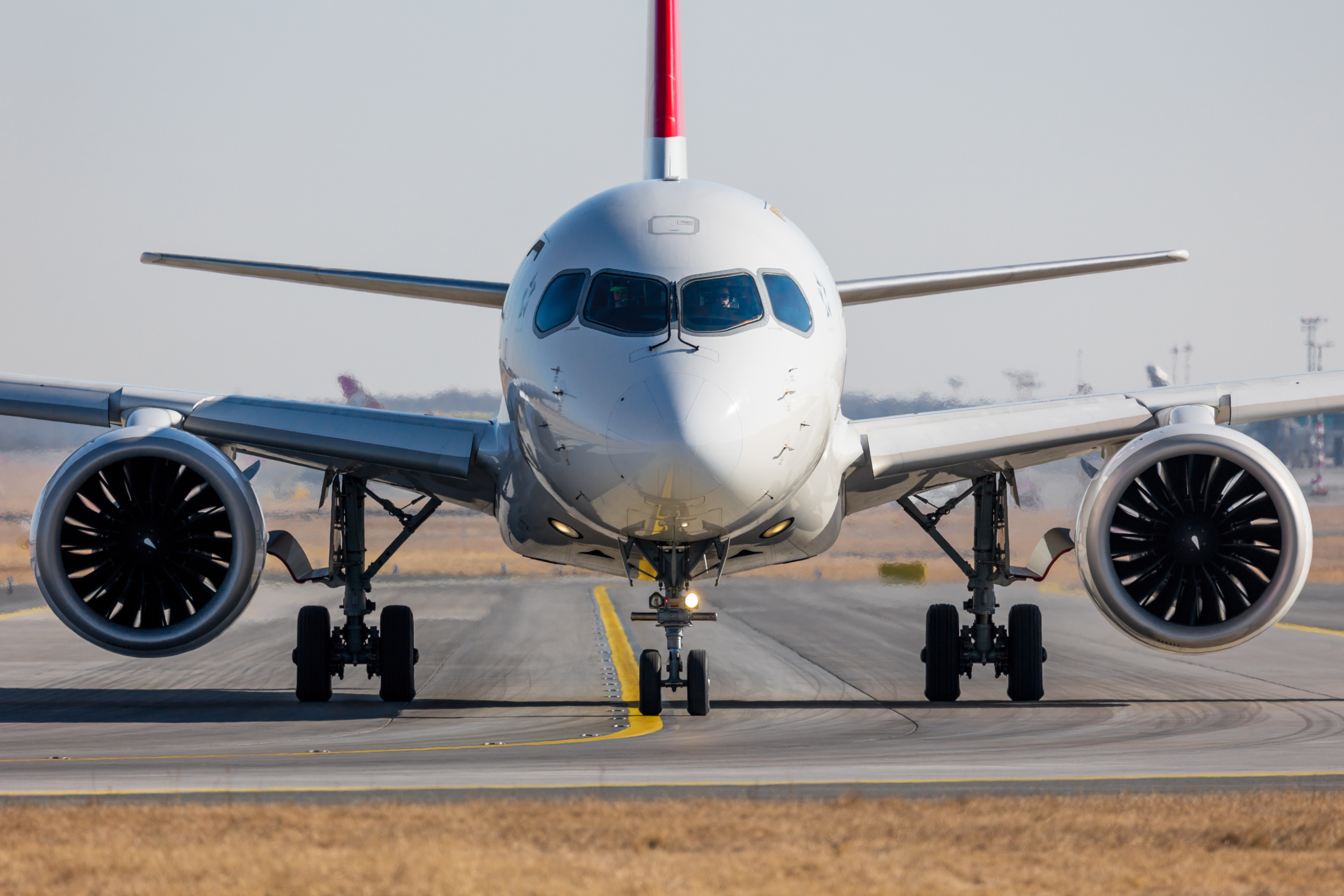
French aerospace giant Airbus is gearing up to approach airlines and aircraft lessors about a larger version of its A220 regional jet, according to a Reuters report on Thursday, 29 January.
The stretched aircraft, dubbed the A220-500, would add around five fuselage frames and approximately 20 to 25 additional seats compared to the current largest family member, the A220-300.

Airbus has mulled a stretch of the popular regional jet for several years now, but has held off launching it as the programme matured. Previously, the OEM has noted a potential cannibalisation of the smaller A320neo market with a larger A220, but now appears to be pressing ahead with exploring this option.
While Airbus has stopped short of officially launching the product, it is now actively preparing a pre-sales push to secure enough airline and lessor commitments to begin developing the aircraft. Farnborough International Airshow, which will take place in July, has been speculated as the target for a launch announcement.
What we know about the A220-500 stretch so far
A stretched A220, widely referred to as the A220-500, is being discussed as a larger, higher-capacity member of the A220 family, aimed at pushing the programme beyond the current A220-300’s upper end and into the heart of the high-demand single-aisle market.
Reporting indicates Airbus is looking at a “simple stretch” of the existing A220 design, rather than a clean-sheet rework. In practical terms, that points to:
- A product that can be sold as a capacity step-up within the A220 line, especially for carriers that like the A220 cabin and economics but want more seats per departure.
- More seats, at roughly 180 passengers, positioning the aircraft above the A220-300 and closer to the lower end of the A320 family’s capacity band.
- Lower per-seat costs, because spreading operating costs across more passengers is the quickest way to improve unit economics for airlines and lessors.
- A modest range trade-off, with Reuters reporting that the stretch could slightly reduce range, which implies Airbus is optimising the aircraft for the densest short to medium-haul missions rather than trying to make it everything to everyone.

The largest A220, the A220-300, already sits within the passenger capacity of the smallest A320neo family member, the A319neo. To date, the A319neo has attracted limited demand, with many airlines instead opting for the largest A220 rather than the smallest A320.
Stretching the A220 further would put it in a similar capacity bracket to the A320neo. Airbus has previously shied away from stretching the A220 for fear of eating into its narrowbody market, but there are strong market reasons why it’s now reconsidering this.
Why the Airbus A220-500 makes sense now
The business case for an A220-500 is less about adding a “nice-to-have” variant and more about responding to a narrowbody market that is structurally constrained for much of the next decade.
According to Avolon’s Up Next outlook, Airbus, Boeing and Embraer are collectively selling close to two years of production for every calendar year, with the largest aircraft families effectively sold out until around 2035. In that environment, a well-timed A220-500 could give Airbus an additional lever to capture demand from airlines that want more capacity but are unable to secure near-term delivery slots for larger single-aisle types.
That demand pressure is being reinforced by a broader shift in airline preferences towards larger variants. Avolon notes that the market is moving up in gauge, a trend that plays directly into the logic of stretching the A220 rather than launching an all-new programme.
A higher-capacity A220 would allow Airbus to lean into that shift using an existing platform, while also improving the economics of the A220 programme itself. Reuters has framed the stretch as a potential way to address production cost challenges, strengthen competitiveness, and open the door to renegotiating supplier agreements as volumes increase and the product mix evolves.
At the same time, Airbus leadership has been careful not to overcommit publicly. At the Airline Economics conference in Dublin, the company’s new commercial aircraft chief acknowledged support in principle for a larger A220 while stressing the need to prioritise output and execution.
Which airlines fly the Airbus A220?
The A220 has a total of historic 25 operators, including Delta Air Lines, which is the largest operator globally of the A220, operating both the -100 and -300 series.
JetBlue has also invested heavily in the fleet, while Breeze Airways operates an all-A220 fleet. Nigerian carrier Ibom Air is also expanding its fleet with the aircraft type, having ordered 10 A220-300s during the 2021 Dubai Airshow.
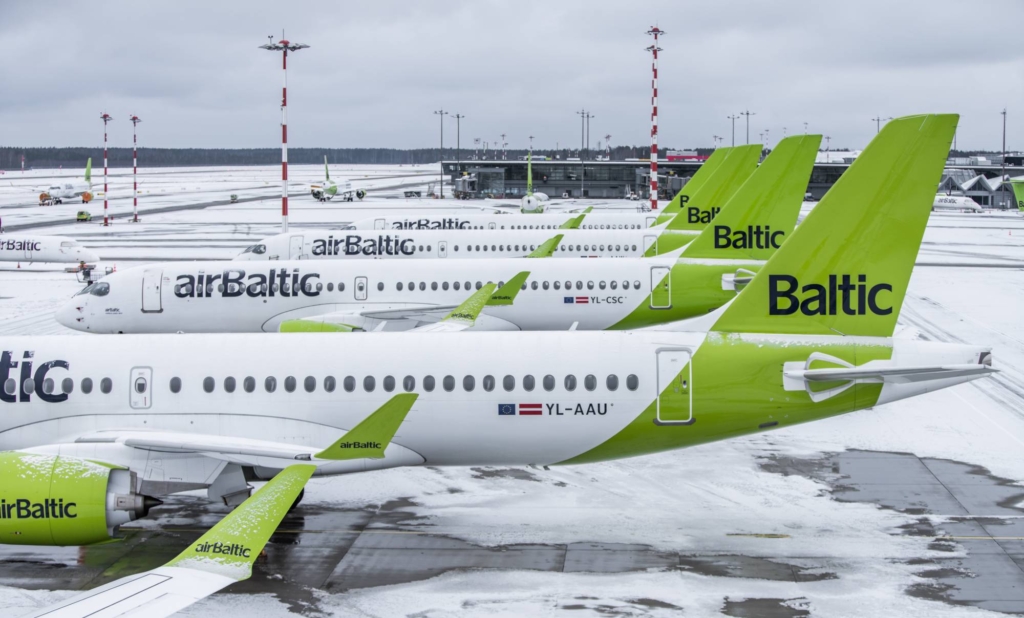
In Europe, airBaltic is a big advocate of the aircraft and is currently the largest A220 customer in Europe, operating an all-A220 fleet. It currently has 52 of the aircraft type and plans to operate a fleet of 100 A220-300s by 2030.
Martin Gauss, former president and CEO of airBaltic, has previously expressed interest in a stretched version of the plane, but with a new CEO in place, it’s unclear whether that interest remains.
How Airbus acquired the A220 programme for a single dollar
Airbus’ A220 was “born from a bold vision and a determination not to compromise on performance, comfort, or efficiency”, says the OEM.
Airbus acquired a majority stake in the then-struggling A220 platform (formerly known as the CSeries) from Canadian manufacturer Bombardier for a dollar in 2018. By 2020, it had increased its share to 75% and that same year expanded production to Mobile, Alabama.

The current Airbus A220 family
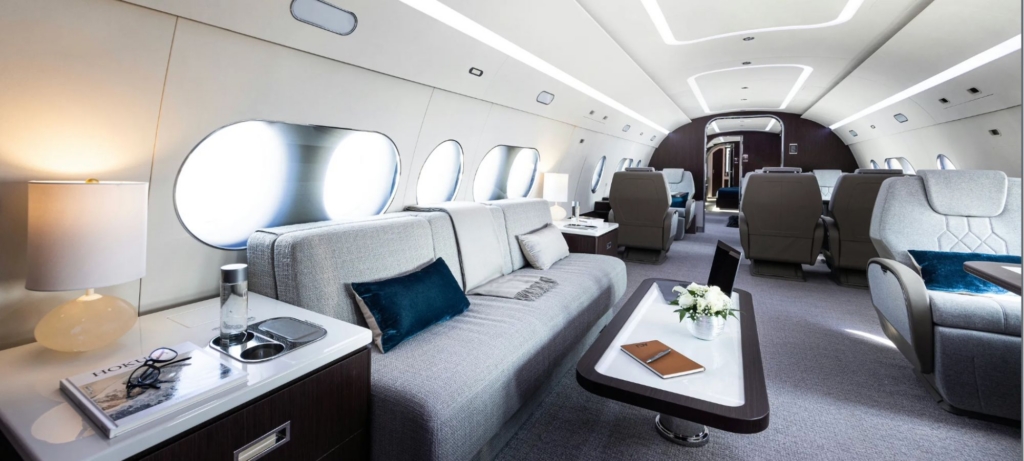
Currently, there are two variants of the aircraft: the A220-100, which accommodates up to 120 passengers and the A220-300, which seats between 120 and 160 passengers. The A220 also exists in a business jet model – the ACJ TwoTwenty, boasting twice as much cabin space as any other Ultra Long Range jet.
Capable of flying up to 3,600 nautical miles, the A220 is used across short-haul hops to intercontinental flights. Its lightweight design contributes to a 25% reduction in fuel burn and CO2 emissions per seat compared to previous-generation aircraft.
The aircraft is also certified to fly with up to a 50% sustainable aviation fuel blend, a figure that is expected to reach 100% by 2030.
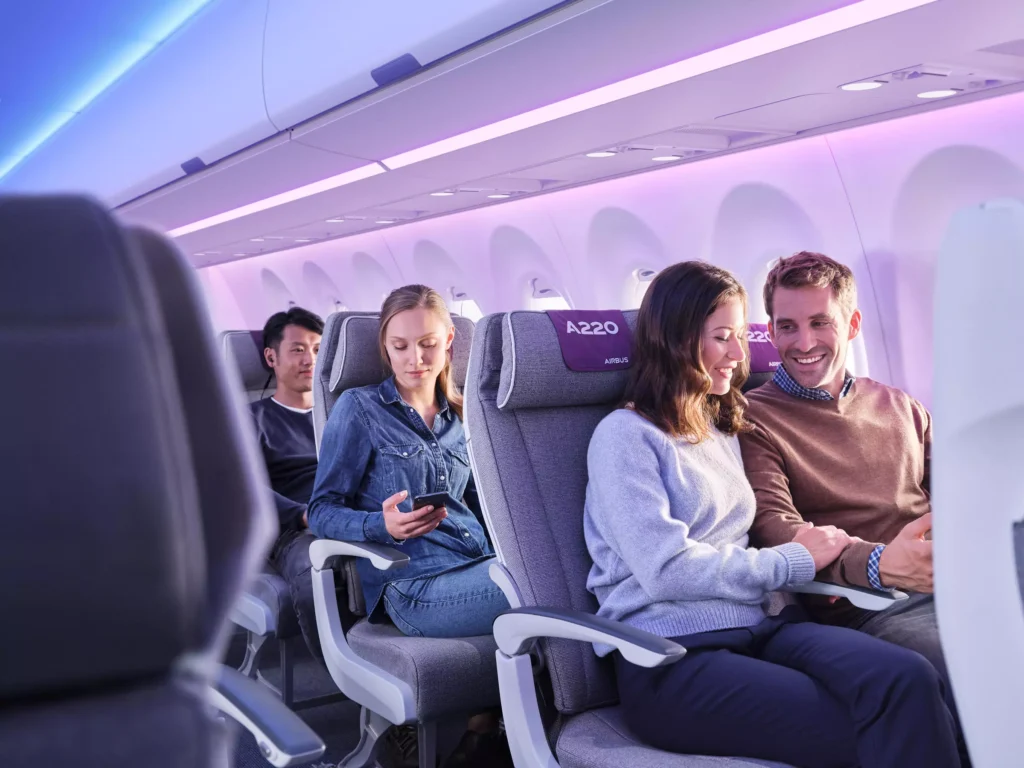
The A220 is often credited for its exceptional fuel efficiency, lower operating costs and strong performance on short to medium-haul routes. Passengers also favour it for its quieter cabins, wider seats and larger windows, making it more comfortable than comparable options. The aircraft features a 2-3 seat configuration in economy, meaning the majority of passengers are seated either by a window or the aisle.
Airbus will showcase the A220 at Singapore Airshow
Airbus has confirmed that the A220 family will be “one of the stars on display” at this year’s Singapore Airshow, which is taking place from 3-8 February.
“With its roomy cabin and famously large windows, [the A220] is redefining what a small single-aisle aircraft can be,” said Airbus in a social media post on X earlier this week.
The #A220 will be one of the stars on display at #SingaporeAirshow2026! ✈️ With its roomy cabin and famously large windows, it’s redefining what a small single-aisle aircraft can be. pic.twitter.com/kBvfrjGVk9
— Airbus (@Airbus) January 27, 2026
Whether the A220-500 ultimately moves from study to launch will depend on Airbus’s ability to secure early airline and lessor commitments, and on its confidence that a stretched A220 can improve programme economics without eroding its wider narrowbody portfolio.
What is clear is that in a supply-constrained single-aisle market, Airbus is once again testing how far the A220 can be pushed.
Featured image: kamilpetran / stock.adobe.com