Curse of the GTF: Air Austral to retire 4 year old Airbus A220s over engine issues

September 26, 2025
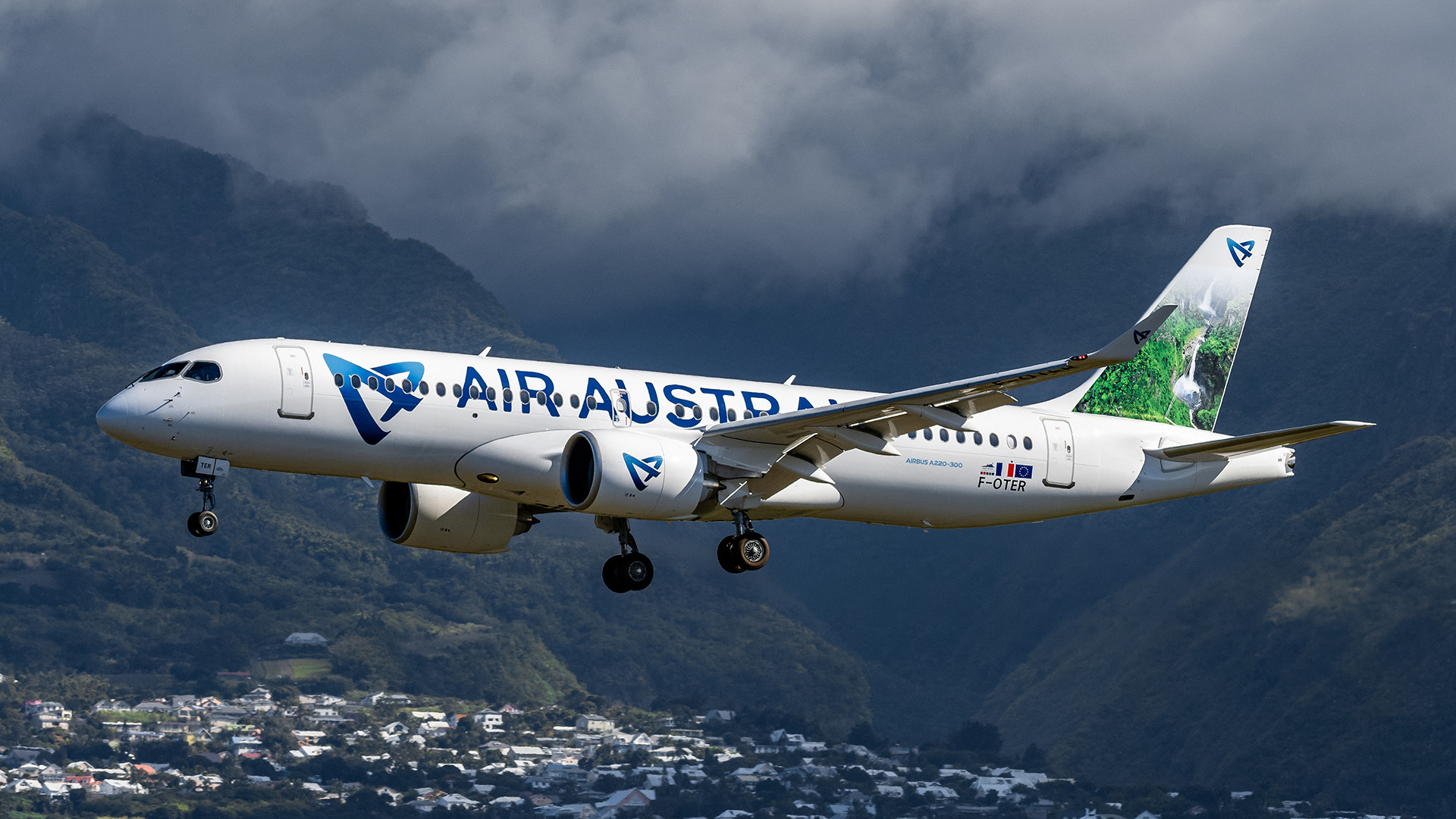
Another airline is giving up on its Airbus A220s early into the programme. Réunion Island-based Air Austral will retire all three of its aircraft following years of recurrent groundings and disruptions.
“Given the technical problems we are experiencing with this medium-haul fleet, we believe we have no other choice – and it is a forced choice – than to try to evolve towards a new module in order to stabilise the company,” said Chairman of the Board Hugues Marchessaux, during an interview with La Tribune at the IFTM TopResa trade show.
The chairman noted that the repeated downtime of the aircraft threatened to undermine Air Austral’s regional activities. He cited issues with the aircraft’s engines, which he says continue to go unresolved, as the root cause of the decision.
Air Austral lays the blame at the feet of Pratt & Whitney
Marchessaux claims four years of problems have befallen Air Austral’s A220s, largely relating to the Pratt & Whitney PW1`500G engines.
The chairman says Pratt & Whitney seems not to have a “clear vision on the short-term improvement in the availability of these engines.” He notes that two out of three of the aircraft are presently grounded, and estimates Air Austral had only 1.75 Airbus A220s available on average through the year.
Data from FlightRadar24 shows F-OMER last flew a revenue service on 17 March. In May, it was ferried to Riga for maintenance, but it hasn’t flown since.
The other two – F-OLAV and F-OTER – seem to have been in consistent service for the summer months at least. However, Marchessaux says, OLAV developed a fault and had to be removed from service this month. FlightRadar24 shows it last flew on 23 September.
“This is a major risk for the company,” the chairman added. “Air Austral was originally built on a medium-haul network, then later moved into long-haul. For us, it is absolutely essential that both networks function as well as possible, knowing that they are also interconnected.”
In getting rid of the Airbus A220, Air Austral hopes to free up cash to acquire other aircraft. The choice, Marchessaux says, is between the A320neo or the 737 MAX 8. He says aircraft availability will be very important in the decision.
Given the huge backlogs at the two main OEMs, Air Austral will be looking for a leased option for its fleet.
What’s the problem with the Airbus A220?
Pratt & Whitney recalled the GTF series engines in 2023, after discovering that contaminated powdered metal was used in the manufacture of some parts, leading to corrosion and cracking. The company is working to reinstate hundreds of engines to airline customers, but the impact on operators has been severe.
While the spotlight usually shines on operators of the widely popular Airbus A320neo family, customers of the A220 have been having a similarly difficult time.
All-A220 operator airBaltic made a heavy loss in 2024, leading to the departure of its CEO, partly attributed to massive costs relating to the GTF. JetBlue said earlier this year, GTF issues were its biggest headwind, citing an average of 11 aircraft a month on the ground.

For EgyptAir, the disruption became too much. In early 2024, it sold its entire fleet of 12 Airbus A220s to US lessor Azorra. Since then, one has been seen scrapped and scavenged for parts, as other airlines attempt to keep their fleets flying.
According to the Wall Street Journal, around 15% of the global fleet of Airbus A220s was grounded in early 2025. Pratt & Whitney will be working hard to drive down that number, but for Air Austral, it’s too little, too late.