All eyes on Africa: Growth in tourism numbers leaving rival regions in the dust

March 4, 2026

A white paper released by the Africa Travel and Tourism Association (ATTA) at ITB has revealed double-digit growth across the continent’s five biggest aviation markets.
During the first 10 months of 2026, there are 182.4 million departure seats available in Africa, a 13.7% increase on the 160.4 million available in the same period in 2025, according to ATTA’s white paper ‘Africa in the Air’.
Western Europe driving demand for travel to Africa
The paper, which was produced by OAG and released on Tuesday 3 March at ITB, underlines how Africa is now seeing a resurgence in airlift that is driving levels of growth in tourism numbers that are leaving rival regions in the dust, according to Kgomotso Ramothea, CEO of ATTA.

Speaking to Aerospace Global News on the sidelines of ITB, she said “the biggest driver of demand for travel to Africa is coming from Western Europe – in particular the UK, France, Italy and the Netherlands for whom South, East and North Africa all hold huge appeal.”
The Middle East remains the second biggest African market with 21.2 million seats currently scheduled for 2026.
Africa’s big five
OAG’s data shows that Egypt remains the biggest market with 30.9 million departure seats available from January to October 2026, a 12.6% increase on the same period in 2025, while South Africa’s 26.8 million seats for 2026 represent a 19.6% increase.
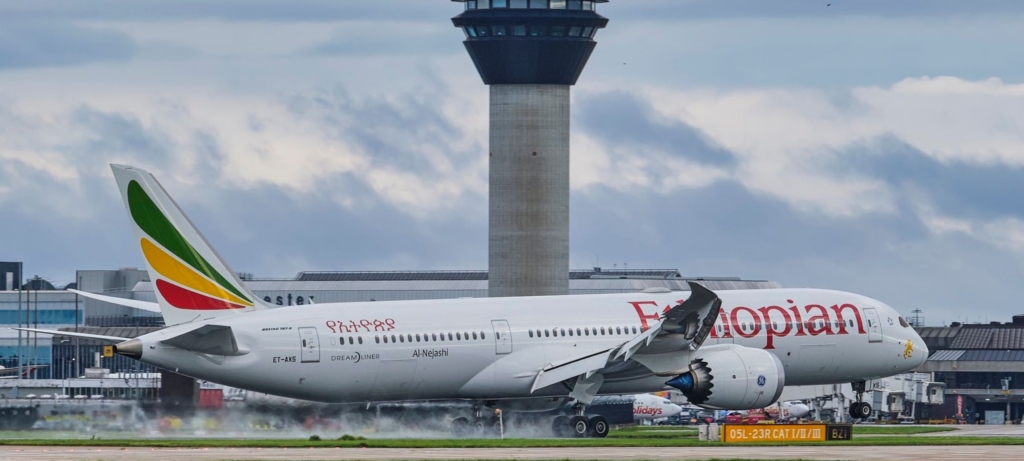
Morocco comes in third place with 22.5 million seats, an increase of 21.8% on 2025 figures, followed by Ethiopia, which saw a 31.2% increase with 17 million departure seats assigned for 2026, and Kenya’s 10.2 million seats, which represent a 22.3% increase this year.
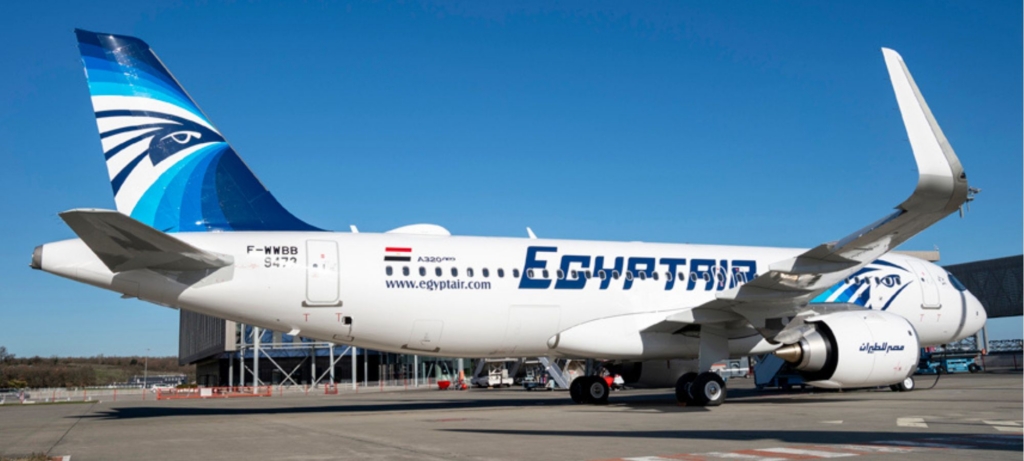
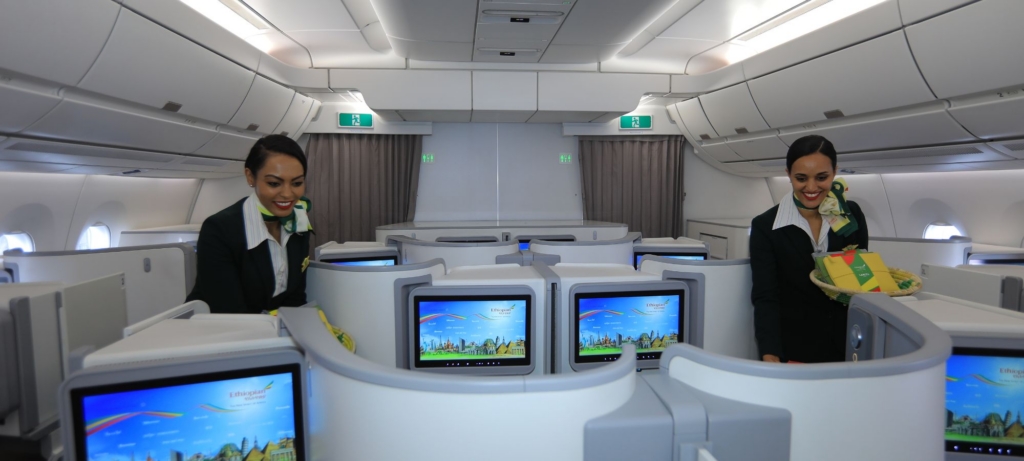
Mirroring the top five destinations, the top five African international airlines in departing seats are: Ethiopian Airlines with 23.8 million seats from January to October 2026, EgyptAir with 10.28 million seats, Safair with 10.27 million seats, Royal Air Maroc with 9.1 million seats and Air Algerie with 7.3 million seats.
North versus South Africa
Also of note, is that while North Africa continues to see a strong volume of growth with the largest number of seats (71.1 million) so far for 2026, the region’s growth levels have been outstripped by Eastern Africa, where a 24.3% jump in seats means 46.5 million departure seats are currently available for the year ahead.
South Africa’s increase of 19.1% brings its total to 35.5 million seats, while Central and Western Africa remain at about 29.2 million seats.
The growth is reiterated by the UN Tourism’s figures, which Ramothea explained “reveal that five African countries – Egypt, South Africa, Ethiopia, Morocco and the Seychelles – are among the top 20 best performing destinations globally.”
Similarly, data revealed by the International Air Transport Association (IATA) shows that passenger demand in Africa between January and April 2025 was up by 9% – more than double the global figure of 4%.
“Africa offers everything from culture and beaches to wildlife and adventure, so it is no surprise that with the world travelling again, the continent is enjoying a strong boost,” said Ramothea.
“In many cases, airlines serving the continent are flying at 90% capacity,” she said, noting that a large chunk of this is Visiting Friends and Relatives (VFR) traffic, while destinations in North Africa are appealing because of their proximity to Europe and mix of both traditional and low-cost carriers (LCCs). “Opportunities for business travel are also growing as corporations increasingly value face-to-face meetings over video calls,” Ramothea added.
North Africa’s low-cost boost
Underlining how North African destinations are a key beneficiary of LCC traffic, Ramothea explained how Morocco, which has an open skies agreement with the EU, will be served by 9.6 million mainline seats during the first 10 months of 2026 and 10.6 million scheduled on LCCs for the same period. Ryanair and easyJet both have a fair share of the market.
While Egypt doesn’t have the same arrangement, it has still benefitted from Europe’s LCC sector, with more than 9 million seats scheduled for the 2026 period, comprising about a third of the country’s 27 million-plus seats.

While Europe and the Middle East lead as Africa’s two biggest markets, Ramothea believes that North and South America still hold huge potential.
“North America is traditionally a key market for East African countries thanks to the wildlife and South Africa. However, we are seeing increased interest in West Africa,” she added.
“South America is also a key market but is currently being driven largely by South African Airways (SAA) and it’s one we are looking to grow further. There’s talk of the potential Mexico offers as a lucrative market, particularly for South Africa.”
Why easing visa restrictions is key to growth
While full implemention of the Single African Air Transport Market (SAATM) is the key to opening African skies, unlocking routes and increasing intra-African connectivity, Ramothea also underlined that easing visa restrictions has a key role to play.
Citing Algeria’s visa-on-arrival scheme for tourists visiting the southern Sahara region for up to 30 days and Rwanda’s visa-on-arrival scheme introduced in 2018 she said these only served to boost tourist traffic.

In Algeria, the move led to an immediate 10% increase in international tourism numbers in 2024 to 3.5 million, according to the Algerian Ministry of Tourism and Traditional Industry.
“Even the smallest tweaks to visas can boost tourism growth, providing they make visiting a destination easier,” Ramothea said.
What does the future hold?
Africa’s position as the UNs fastest-growing tourism destination in 2025, with growing aviation capacity, is one to be immensely proud of, said Ramothea, but the pressure is now on to ensure this success continues.
ATTA has an important role to play here. “We want to promote travel into and around Africa, and to achieve that, we are working with all our members to find a coordinated and collaborative way of positioning all African countries in a positive light, not brushing over the challenges, but addressing them. We need to understand the blockers and how destinations can overcome these, and are all singing from the same hymn sheet.”
It’s also about ensuring that revenues generated from tourism stay in the country and on the continent. “One country’s success can only mean good things for neighbouring countries, and this message needs to be shared,” she concluded, referencing Ethiopia’s sustainable growth.

“Ethiopian Airlines has become a beacon for African aviation. Construction is now underway begun on the new US$12.5 billion Bishoftu International Airport, which is set to open in 2030 as the airline’s future hub.”
Part-funded by the airline, which is contributing 30% of the total cost, the project is a strong example of public-private partnership in action.
“It is this sort of investment that Africa needs to grow tourism. With tourist boards building demand, airlines can add new routes and capacity. Pair that with further visa relaxation rules, and we can ensure Africa remains the fastest-growing tourist region well into the future for all our benefit.”
Featured image: stock.adobe.com