


From self-healing materials to cyber defence: Protecting the next generation of satellites
4 min read

Chris Range, partner, and Theo Worsley, senior associate, are patent attorneys at European intellectual property firm Withers & Rogers. Both specialise in advising innovation-led companies in the aerospace and defence sector.
With satellites providing vital services, such as boosting internet services, supporting communications networks and enabling data transfer for ground-based digital infrastructure, defending them against collision or attack is a matter of national security.
There are millions of pieces of space debris orbiting Earth, with NASA estimating there to be more than 21,000 objects larger than 10 cm known to be in orbit. If debris were to collide with a satellite, it could cause severe damage to its structure, leading to a loss of control or mission failure.
There is also a growing risk of cyber attack. With satellite vulnerability recognised as an important issue for governments globally, hardware manufacturers and developers are exploring ways to make next-generation satellites more resilient.
Protecting satellites from collisions
Satellite damage, either physically or digitally, can be catastrophic. A small piece of debris travelling at a speed of between 7–8 km per second carries enormous destructive energy, and could potentially disable critical satellite communications links and control systems.
The International Space Station (ISS) regularly carries out manoeuvres to avoid colliding with objects larger than 10 cm in diameter, which could potentially lead to multiple secondary collisions – a phenomenon known as Kessler syndrome. Satellites need to be made more resilient to damage or threat.

To help protect satellites in orbit, the European Space Agency has produced Close Proximity Guidelines setting out design principles for hardware manufacturers to improve resilience and extend the life of satellites when carrying out in-orbit repairs or refuelling. The RAF has recently launched its first-ever space squadron dedicated to defending Britain’s satellites and counter potential threats.
Space armour and self-healing materials
Technological innovations focused on improving satellite resilience are emerging too. To combat the heightened risk of collisions, for instance, advanced materials are being developed to absorb or deflect energy, whilst also preventing debris fragmentation.
US-based composites manufacturer Atomic-6 has patented an innovative hexagonal tile, which can be applied to any shape and filed to fit, as an alternative to aluminium sheeting. Made from a non-metallic composite material, the Space Armor™ system absorbs energy on impact, protecting satellites from damage caused by high-speed components of 3 mm diameter or smaller, which represent about 90 per cent of the debris present in low-Earth orbit.
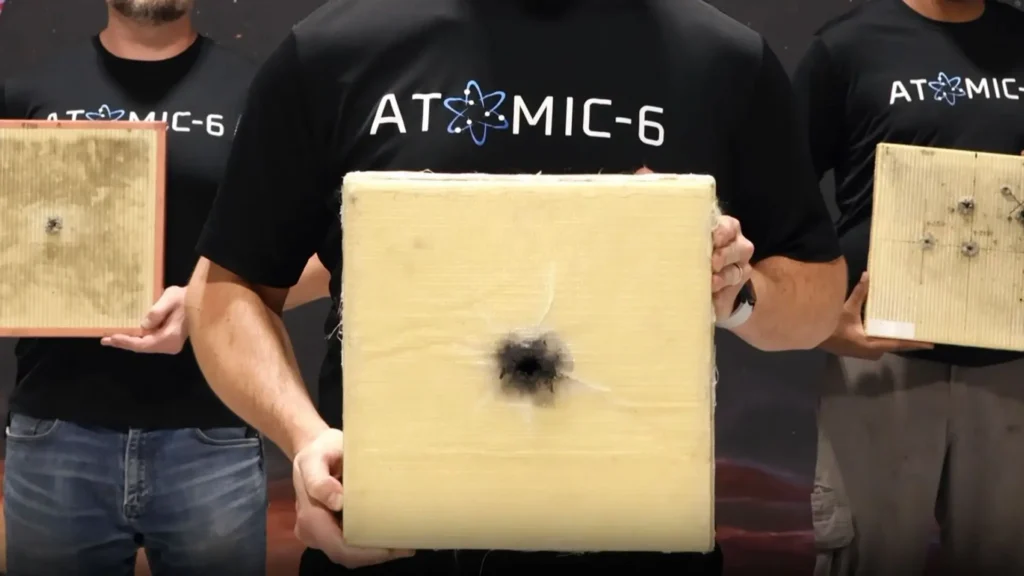
Another technology that is being explored by innovators is the use of self-healing materials. These innovative materials can protect satellites from damage caused by micrometeoroid and debris collisions in orbit.
For example, European scientists are testing a new material called HealTech as part of Project Cassandra, which stands for Composite Autonomous SenSing AnD RepAir. Project Cassandra is just one of the European Space Agency (ESA) projects falling under their Future Innovation Research in Space Transportation (FIRST!) initiative. It can sense cracks and repair them automatically using heat.
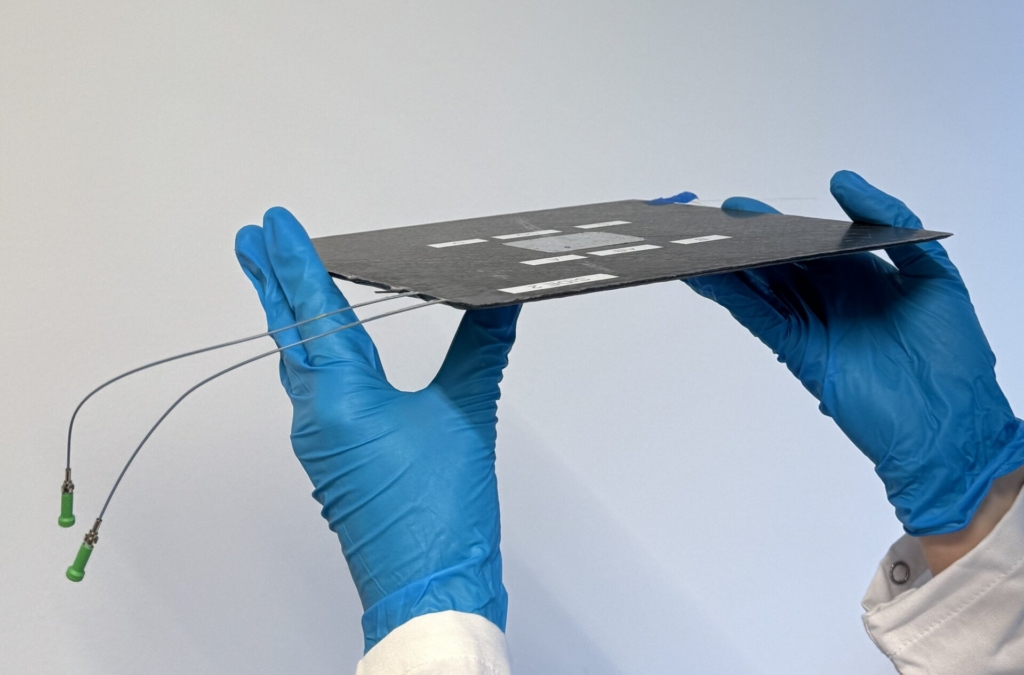
MPB Communications Inc et al. has also filed a patent in the US (US8865798B2) for a self-healing composite material and method of manufacture. Within the patent, a self-healing composite material for outer-space structures is described, in which the main matrix contains microcapsules filled with a liquid healing agent.
When a crack forms, the microcapsules break, releasing the healing agent, which then bonds to the matrix and repairs the crack. A catalyst for the healing reaction is also embedded in the matrix in separate microcapsules, ensuring that the healing agent polymerises once released. The resulting polymer fills and seals the crack, restoring the material’s composition and structure.
Innovators are also developing technologies that defend satellites against cyber threats, including solutions that authenticate commands, encrypt satellite-to-ground and satellite-to-satellite communications, detect spoofed navigation signals (EP4027172B1), and maintain secure operations across large constellations even where individual nodes are compromised.
Protecting intellectual property in space
At a time of significant geopolitical tension and greater risk of cyberattack, more R&D projects are focused on developing technologies to protect and secure satellites in orbit. To succeed in commercialising their innovations, securing patent protection is vital, as is a clear and well-considered IP strategy.
Patenting technologies intended for use in space can be complex, and there are various factors to consider, such as where the product will be manufactured and where it will be launched from. If the end market is space, securing patent protection for a method claim may be much less effective than it would be for an Earth-based technology, as the method would be carried out beyond the jurisdiction of national courts.
Innovators should consider a multi-layered approach to IP protection spanning different jurisdictions, prioritising countries with established satellite manufacturing and launch capabilities.
Sign up for our newsletter and get our latest content in your inbox.


More from


January 15, 20251 min read

January 15, 20251 min read


April 18, 20241 min read


July 22, 20222 min read


November 21, 20232 min read