


America has the world’s biggest aerospace market. It needs an airshow to match
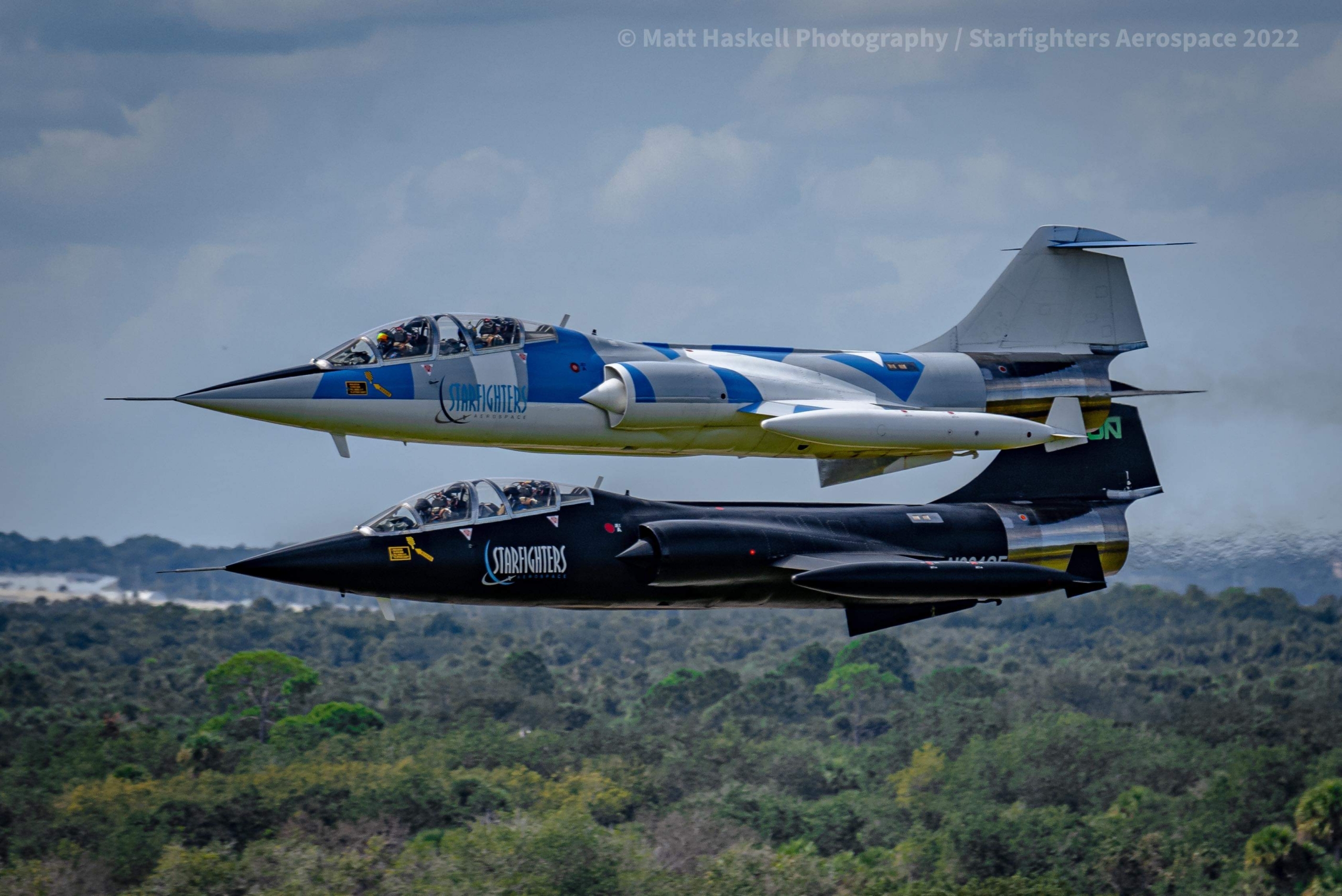
Tim Franta is CEO of Starfighters Space (NYSE American: FJET), which operates the world’s only fleet of F-104 supersonic aircraft. The company’s predecessor, Starfighters Inc., began in 1995 as an F-104 airshow flying team. It now operates seven F-104 jets from Kennedy Space Center in Florida and Midland International Air & Space Port in Texas.
On Friday, NASA Administrator Jared Isaacman shared his vision for MAX POWER, a recurring Airshow and aerospace technology exposition at Kennedy Space Center to debut on November 7-8. According to Isaacman and other officials at the announcement, the idea is that MAX POWER could one day rival the Farnborough and Paris airshows that have become must-attend global gatherings for the aerospace industry.
I could not agree more.
Four weeks ago, nine U.S. senators, several governors and the mayor of Cleveland flew to England to sell America. They were at the Farnborough International Airshow, where the US pavilion grew 22 % this year and American exhibitors accounted for roughly a third of the entire event.
Kansas and Alabama threw parties in London to court investors. Florida announced multiple international partnerships. Virginia’s governor talked up her state’s workforce. And midway through the week, the British government chose the occasion to unveil a £600 million support package for its own aerospace industry.
That is the arrangement we now accept as normal: the largest aerospace market on earth rents floor space at somebody else’s trade show.
Why the US aerospace industry needs its own global showcase
The asymmetry is hard to defend.
The US aerospace and defence industry generated $988.6 billion in sales in 2025, or 1.6 % of GDP. It supported 2.1 million jobs at wages roughly 40 % above the national average. It exported $172.7 billion in goods and posted a $109.2 billion trade surplus — the largest positive trade balance of any American manufacturing sector, in a year when trade balances were the central preoccupation of U.S. economic policy.
Hosting a similar event is not a vanity proposition.
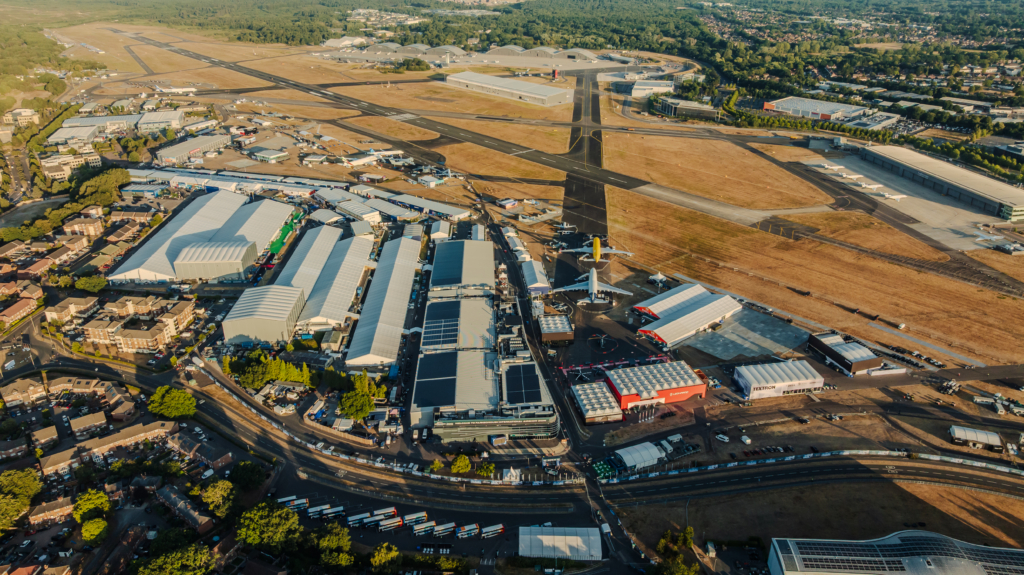
Farnborough’s organisers reported $84.7 billion in announced deals and 141,580 visitors over five days from 136 countries. ADS, Britain’s trade association, estimates these deals will generate £10.8 billion in economic value for the UK.
The 2025 Paris Airshow drew a whopping 305,000 visitors, 2,400 exhibitors from 48 countries, 400 official delegations and 15 French ministers.
Host nations don’t merely collect hotel taxes. They set the event agenda, control the event calendar, place their own companies in front of every buyer walking the hall, and schedule the event’s policy announcements for maximum leverage.
Why America’s previous attempt failed
We have tried to bring such an event to the US before, and we failed.
In May 1988, Air/Space America opened at San Diego’s Brown Field, explicitly conceived as the Western Hemisphere’s answer to Paris and scheduled for even years.
More than 300 exhibitors and some 150 aircraft turned out, including the first public display of Soviet aircraft on American soil. Roughly 400,000 people came.
It still collapsed.
Boeing, Lockheed and McDonnell Douglas largely stayed away, preferring the shows already fixed on the industry’s calendar. Paid attendance fell short of break-even. The 1990 edition was cancelled amid a public argument in which organizers said the city’s refusal to commit the airfield for multiple years scared off investors, while the city said the show was simply mismanaged.
San Diego’s attempt was not a demand failure: half a million people showed up. It was an institutional failure, with no anchor tenants, no multiyear venue, and no federal partners.
Those are fixable problems, and none of them has anything to do with whether the world wants to buy American aerospace.
The honest objection is that marketing budgets are limited and the calendar is crowded. Paris takes odd years, Farnborough even ones, while Singapore, Dubai, Berlin, and others attempt to find a niche.
But holding a US event every third year makes sense. It is frequent enough to build institutional habit, and rare enough that companies treat it as an event rather than an obligation.
The closest thing we currently have is the annual Space Symposium in Colorado Springs, which last year attracted 12,000 attendees from over 60 countries. But the Symposium lacks a flightline.
Nowhere in America can an allied procurement official watch a fighter demonstration, then walk through a packed exhibition hall to sign contracts.
What a successful US aerospace show would need
Congress would not need to write a check for a trade show. It needs to do the unglamorous work that sank San Diego.
Direct the Commerce Department’s International Trade Administration to designate and certify a single flagship U.S. aerospace exposition, as it already certifies trade missions.
Secure a long-term use agreement at a suitable joint-use or federal airfield. Write guaranteed Defense Department, NASA and FAA participation into planning cycles years out rather than negotiating it show by show. Expedite visas for delegations and exhibitors.
And publish pre-cleared export-control guidance for foreign companies bringing hardware onto American soil — this is one of the quieter reasons international exhibitors find US events harder than European ones.


