NASA charts new envelope expansion milestones as X-59 returns to flight testing

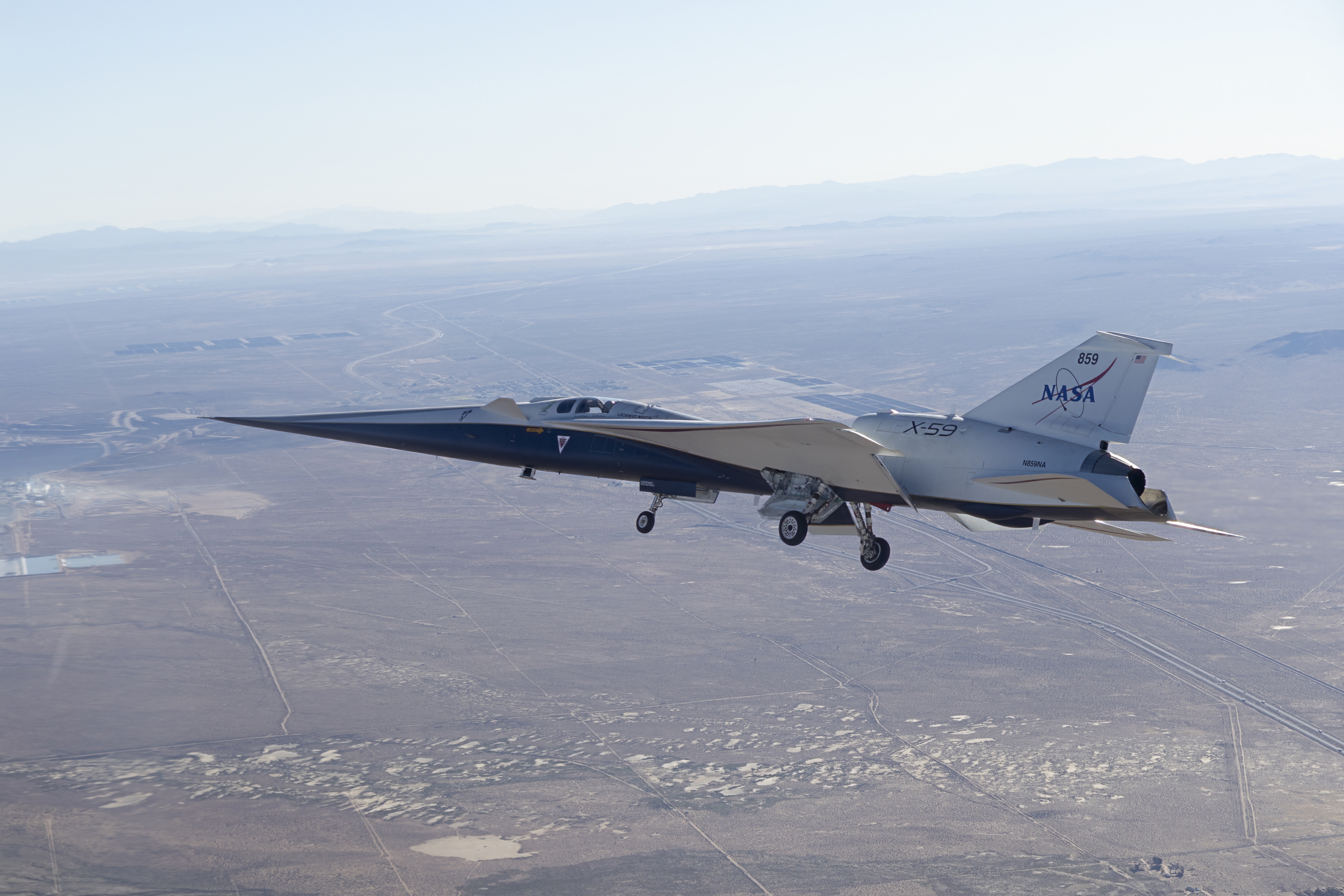
While the second flight of NASA’s experimental X-59 low-boom technology demonstrator was cut short by a vehicle system warning light on 20 March, the prospective issue proved to be a false positive, allowing the jet to quickly resume flight envelope expansion activities with back-to-back sorties on 26 and 27 March, respectively.
With NASA test pilot Jim ‘Clue’ Less at the controls, the X-59 – which was developed as part of the Quiet Supersonic Technology (Quesst) mission – was forced to return to Edwards Air Force Base (AFB) in California just nine minutes after the demonstrator took off for its second test flight on 20 March.
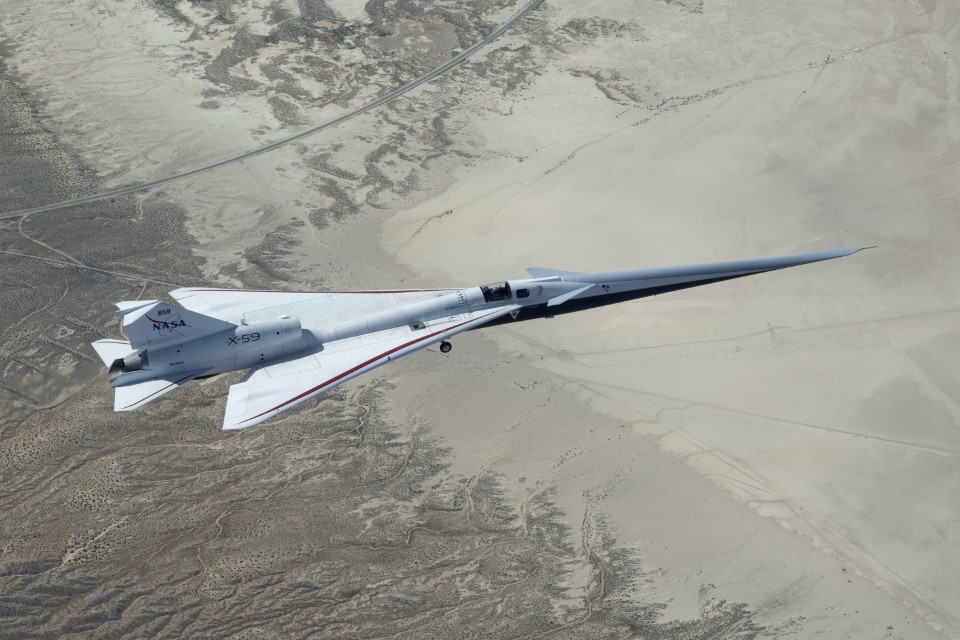
The sortie, which was expected to last for at least an hour and further expand the X-59’s flight envelope, was terminated after ‘Clue’ saw a vehicle system warning light in the cockpit, prompting an immediate return-to-base as a safety precaution. Despite the X-59’s second test flight being abbreviated, the team still badged the sortie a success.
Cathy Bahm, the project manager for the Low-Boom Flight Demonstrator at NASA’s Armstrong Flight Research Center (AFRC) – which is co-located at Edwards AFB – said: “Despite the early landing, this is a good day for the team. We collected more data, and the pilot landed safely. We’re looking forward to getting back to flight as soon as possible.”
![NASA's X-59 Quesst [registration N859NA '859'] is seen in-flight over California during the experimental supersonic aircraft's brief second test sortie on 21 March 2026. Image: NASA/Jim Ross](https://aerospaceglobalnews.com/wp-content/uploads/2026/03/X-59-Second-Flight-21-03-26-NASA-Jim-Ross-crop-1024x600.jpg)
In the spirit of returning to flight envelope expansion activities as quickly as possible, NASA confirmed on 27 March that a “post-flight investigation found the indicator’s instrumentation was incorrectly installed, creating a false positive of a problem.” The administration added that “the team resolved the issue prior to the X-59’s third flight”, which took place on 26 March.
NASA charts visible progress with latest X-59 flights
By the end of March, the X-59 managed to accomplish both its third and fourth test flights from Edwards AFB without any concern.
Both of these sorties further expanded the aircraft’s flight envelope beyond the initial 12,000ft (3,657m) altitude and 200kts (230mph or 370kph) airspeed milestones that were achieved during the type’s 67-minute maiden flight from Lockheed Martin Skunk Works’ facility in Palmdale, California, to the AFRC at Edwards, which was piloted by NASA test pilot Nils Larson.
The X-59 successfully made its third flight today, & @NASA's excited to have the quiet supersonic jet in the air again! With Flight #3, the aircraft took off+landed near @NASAarmstrong & flew for about an hour while its team evaluated performance. More flights are expected soon!… pic.twitter.com/lLhClYNksn
— NASA Aeronautics (@NASAaero) March 26, 2026
According to the public flight tracking website, Flightradar24, the X-59’s third test flight on 26 March saw the aircraft depart Edwards at 10:14 PST, with the jet remaining airborne for 54 minutes before landing back at the California base at 11:08 PST. This sortie saw the X-59 exceed an altitude of 13,000ft (3,962m) and reach a speed of 290kts (333mph or 537kph).
Flightradar24 tracking data showed the X-59 airborne for its fourth flight on 27 March, with the aircraft again being piloted by ‘Clue’. This time, the jet took off from Edwards at 10:07 PST and remained airborne for just over an hour before returning to base at 11:08 PST. The aircraft reached an altitude of 20,000ft (6,096m) and a speed of 334kts (384mph or 618kph) during this sortie.
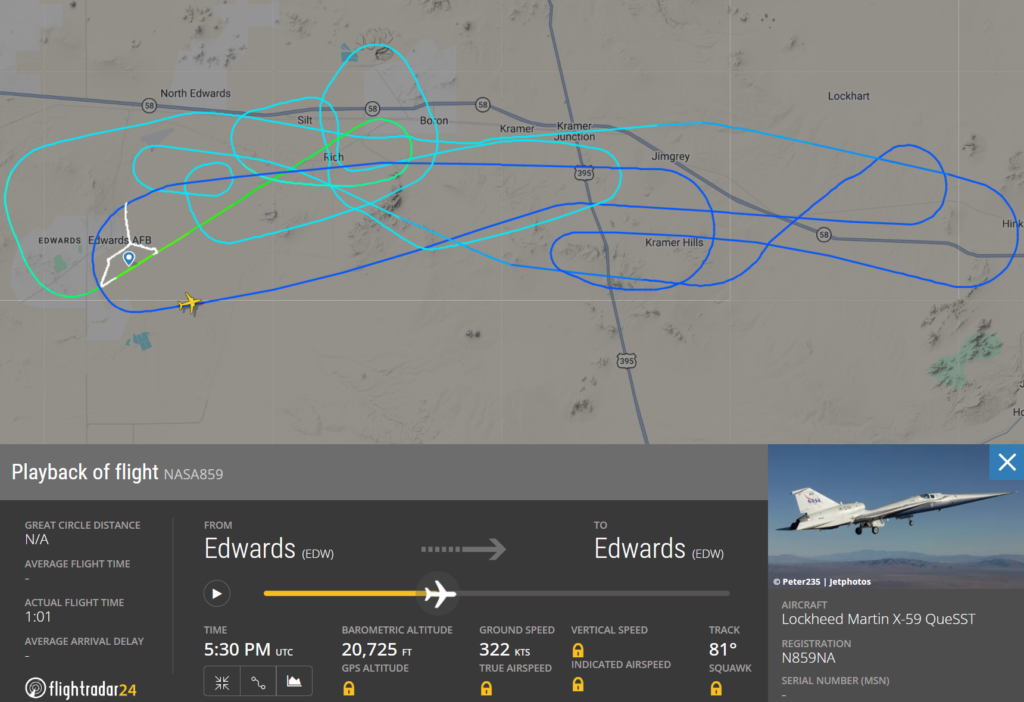
On 1 April, the X-59 completed its fifth test flight. The aircraft departed Edwards at 10:23 PST and remained airborne for 30 minutes before landing at 10:53 PST. While the jet did not chart any new altitude or speed milestones during this particular sortie, it reached an altitude of 11,825ft (3,604m) and a speed of 270kts (310mph or 500kph) before returning to Edwards.
Regardless of milestones, every mission undertaken by the X-59 during the envelope expansion phase of flight testing will provide NASA with key performance data of the aircraft’s in-flight handling and profile characteristics.
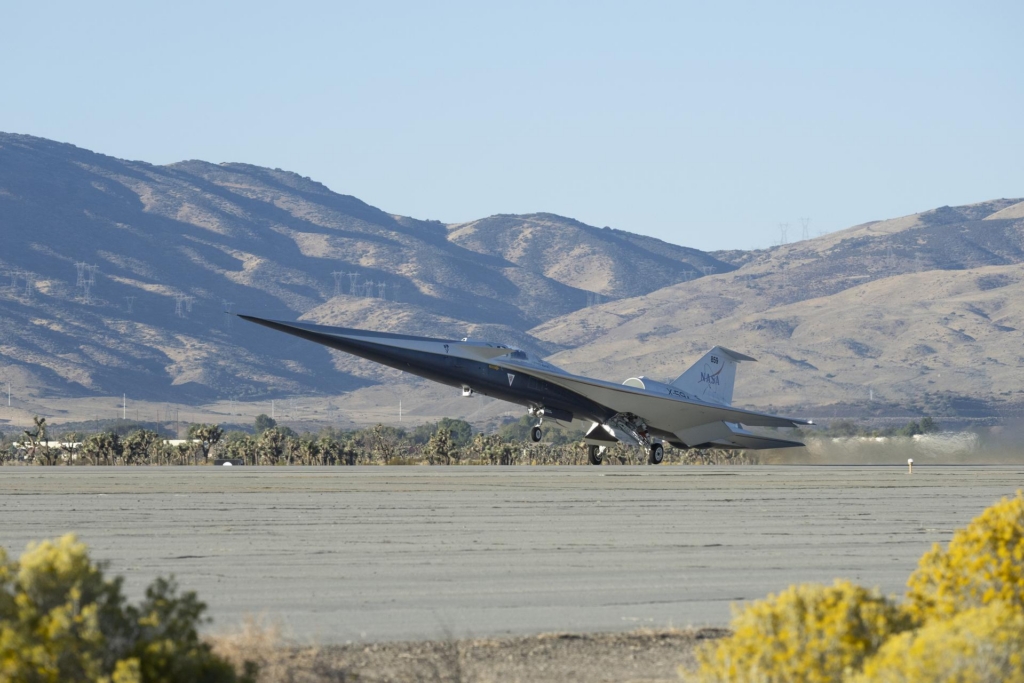
This initial phase aims to clear the jet to operate at an altitude of 60,000ft (18,288m) and speeds of up to Mach 1.5 (1,150mph or 1,852kph) before it progresses to Phase 2 of the flight test programme, which will focus on validating the X-59’s low-boom acoustic signature.
Expected to start before the end of 2026, the second phase of the X-59’s flight test programme is due to last for roughly nine months and will be carried out within the confines of the restricted test ranges surrounding Edwards AFB.
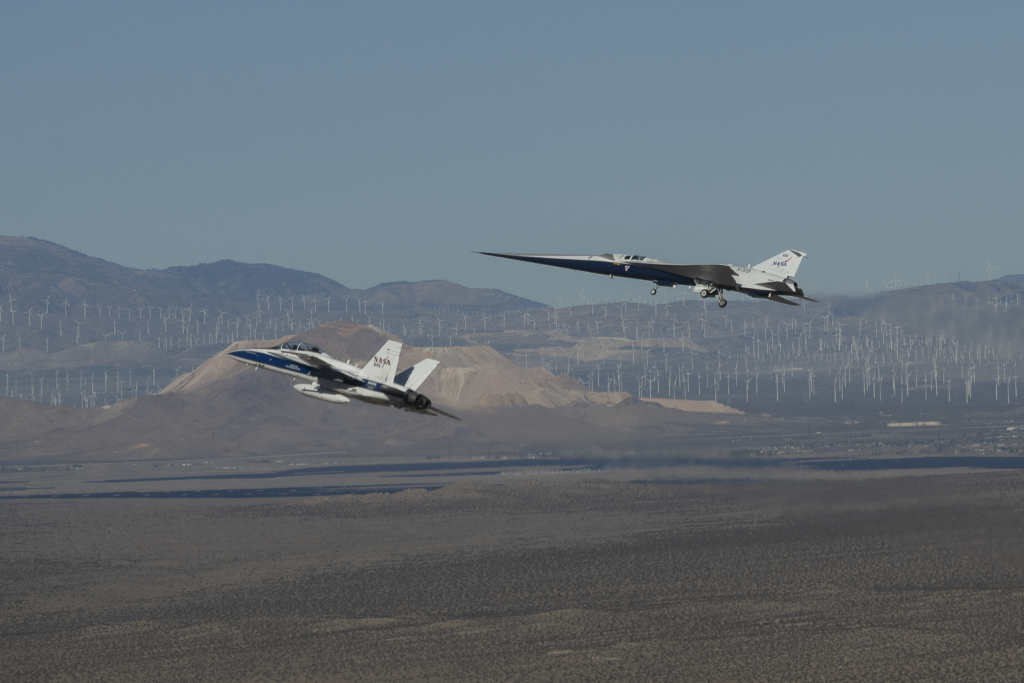
This test series will validate the X-59’s low-boom design and its ability to replace the disruptive sonic boom caused when an aircraft flies at supersonic speeds with a far quieter ‘thump’.
Once this has been completed and verified, NASA will begin the community overflight phase of the Quesst mission. For this, the X-59 will fly several supersonic missions over selected communities to gather data from the residents’ response to the quieter ‘thump’ to validate its low-boom design and inform future noise-based civil supersonic flight regulations.
What is the purpose of NASA’s unique X-59 demonstrator?
Jointly developed by NASA and Lockheed Martin Skunk Works, the X-59 represents a bold leap forward in aircraft design, combining cutting-edge aerodynamics with an innovative approach to supersonic flight.
Unlike traditional commercial supersonic jets – such as Concorde – which produce a disruptive sonic boom upon breaking the sound barrier, the X-59 is engineered to minimise this effect, replacing the thunderous boom with a quieter ‘thump’.
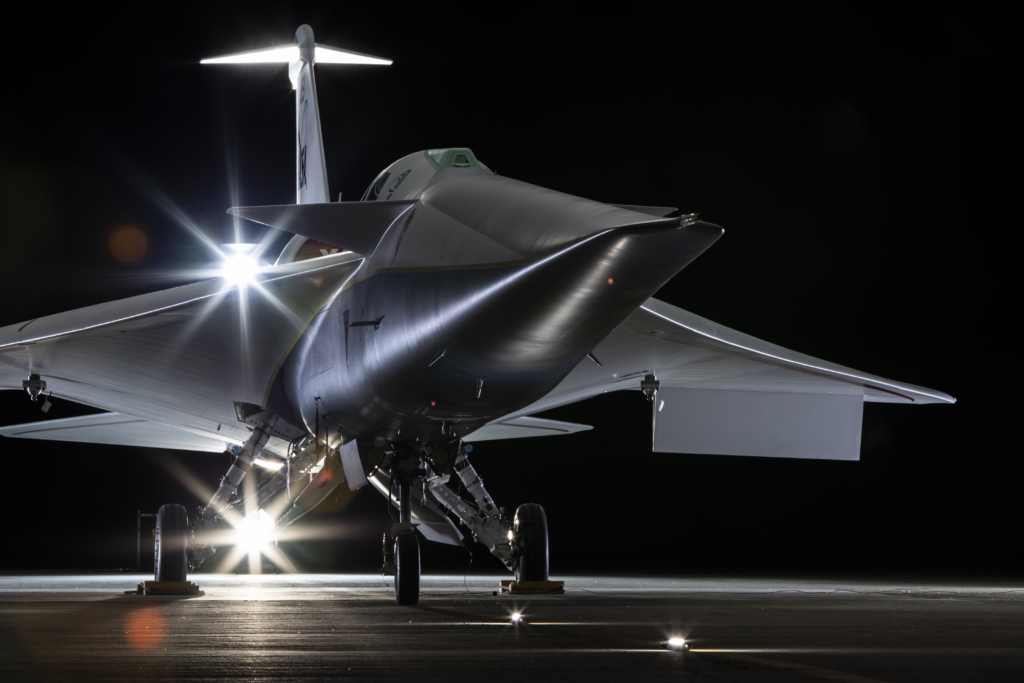
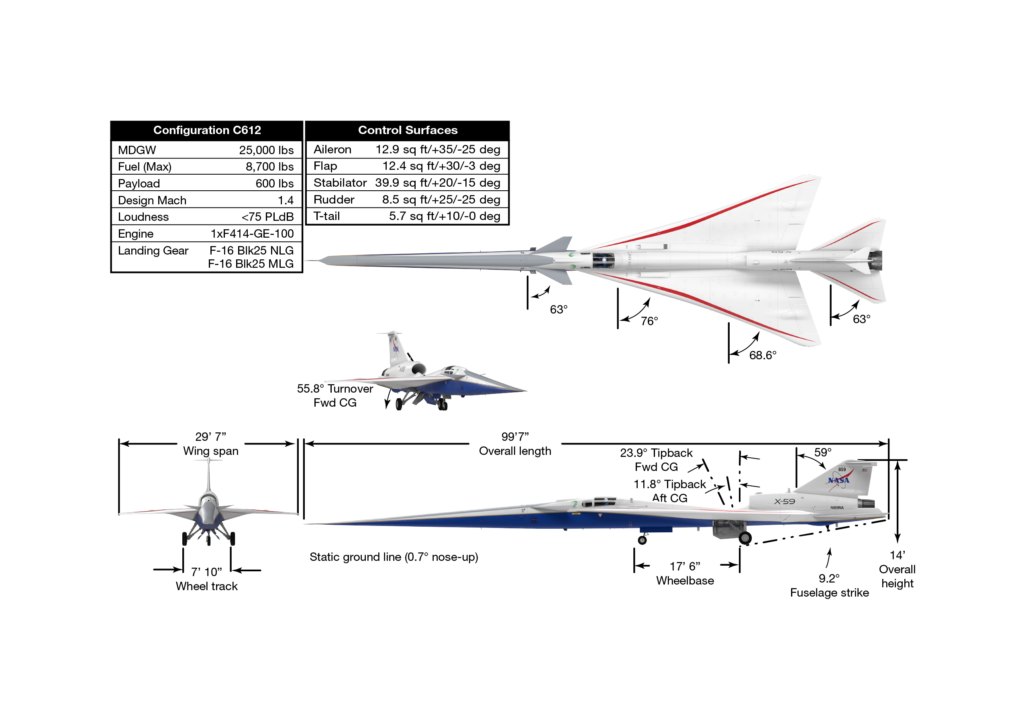
This is achieved through its uniquely long and slender, dagger-shaped fuselage – which is 99ft 7in (30.35m) long with a wingspan of 29ft 6in (9m) – along with its carefully designed vertical stabiliser and single, top-mounted F414-GE-100 afterburning turbofan engine.
The extremely slender, yet purposeful, design of the X-59 means that it lacks a forward-facing cockpit windscreen, which itself has been replaced by the innovative eXternal Vision System (XVS).
Developed by NASA Langley, the unique XVS is a suite of 4K ultra-high-definition (UHD) cameras, sensors and multifunction displays (MFDs) that project real-time forward imagery into the cockpit to provide an accurate picture of what lies ahead of the X-59 in flight.
This concept dates back to NASA’s High-Speed Research Program in the 1980s and 1990s, but earlier technology lacked the fidelity and latency required for safe flight.
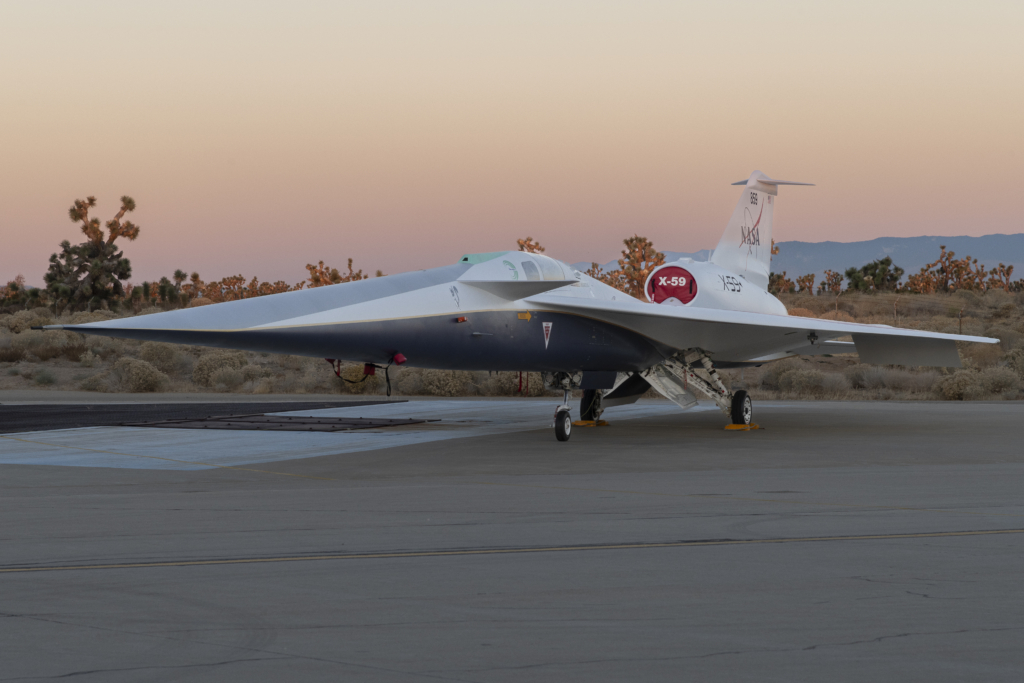
Together, these design qualities aim to reshape and separate the shockwaves generated when flying supersonic overland, so they reach the ground as a soft, neighbourhood-friendly ‘thump’ that is projected to be below 75 PLdB (Perceived Level of Noise). For comparison, Concorde’s sonic boom reached between 105 and 110 PLdB.
The aircraft’s ability to fly faster than sound without disturbing communities below has profound implications for commercial aviation, potentially unlocking supersonic air travel routes over land that were previously restricted due to noise regulations – something that was a key hindrance in Concorde’s success.
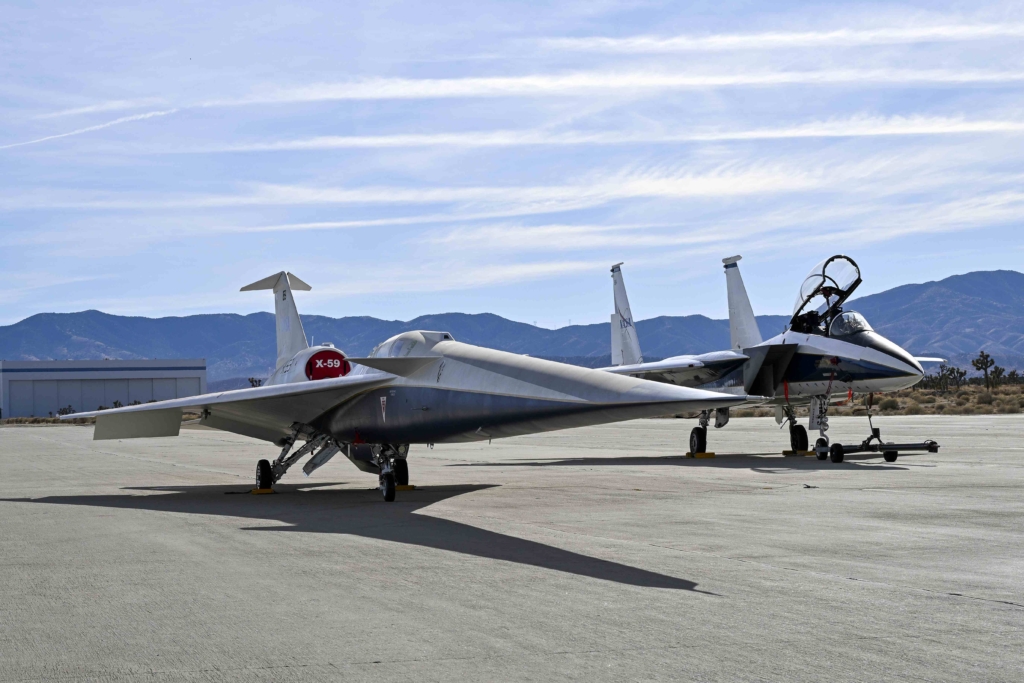
The X-59 is a key element of NASA’s Quesst mission, which aims to demonstrate that supersonic travel over land can be conducted quietly, safely and in an environmentally sustainable and economically viable manner.
By testing the X-59’s performance, technology and noise-reducing design qualities, NASA hopes to provide critical data that will enable future commercial supersonic aircraft to be certified to fly over land.
Featured Image: NASA’s innovative X-59 QueSST demonstrator cruises high above the Mojave Desert in California during its maiden flight – which lasted 67 minutes and allowed initial in-flight systems and performance checks to be completed – on 28 October 2025. Further flights will continue to expand the flight envelope of the X-59. Image: NASA/Lori Losey