


Baykar debuts large K2 Kamikaze drone with claim of ‘AI swarming’

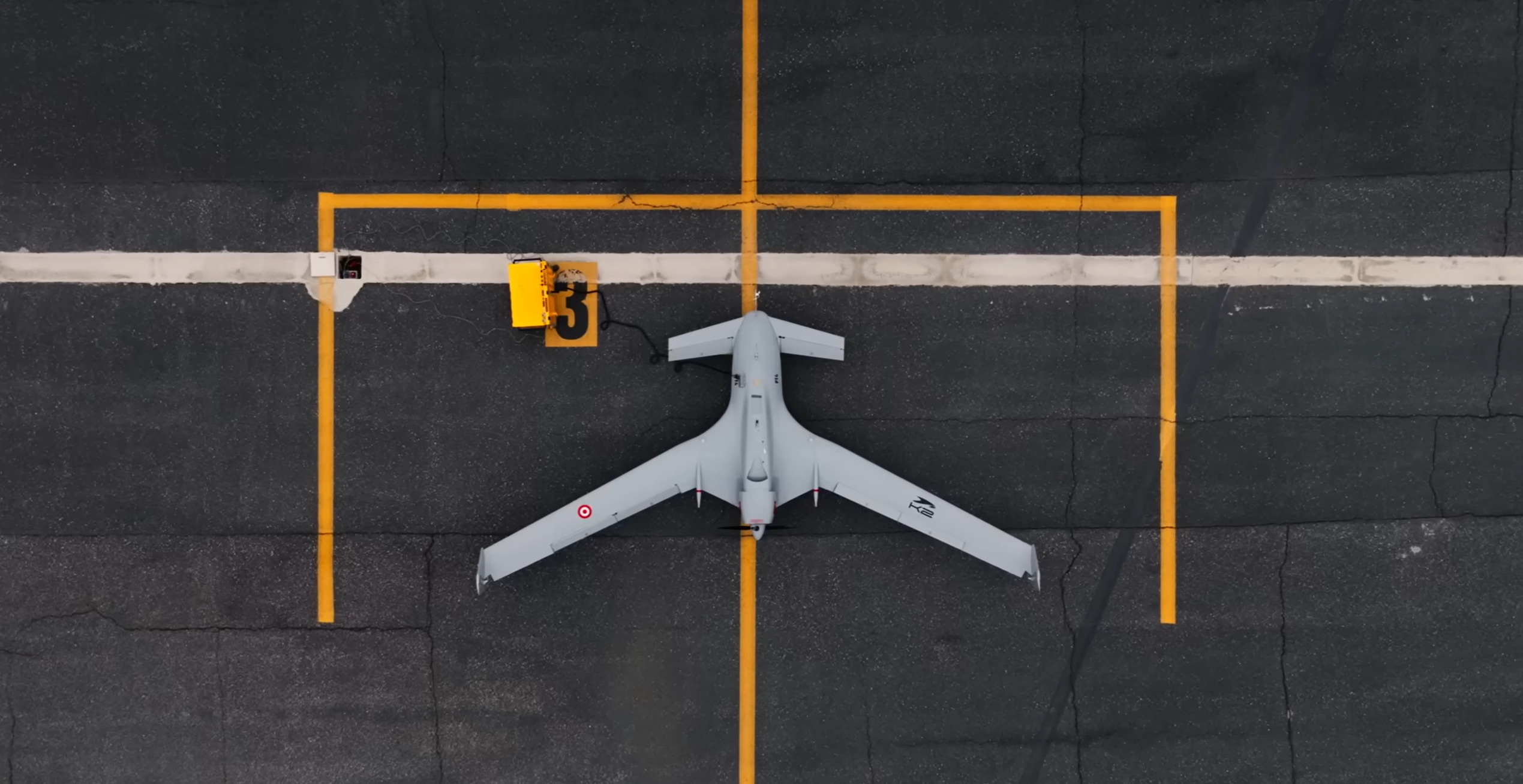
The Turkish drone company Baykar has announced the debut of a new one-way attack drone called the K2 Kamikaze UAV. Baykar claims this drone is able to “swarm,” although it’s unclear if it is workable as a swarm drone in contested environments at this point.
Baykar tests new K2 Kamikaze drone
Baykar says the new K2 Kamikaze UAV features “multi-operation capabilities and advanced AI and autonomy algorithms” and that it “successfully completed formation flight tests with 5 aircraft in varying configurations.”
According to the news release, the K2 Kamikaze completed flight tests on the 13th of March with five K2 UAVs. The drones took off from the Keşan Flight Training and Test Center and performed “‘right echelon,’ ‘line,’ and ‘V’ formation flights.”
The K2 Kamikaze is intended to be an expendable type of drone, unlike its famous TB2 Bayraktar drones. Even so, the company is researching ways to reuse them after releasing their munitions and returning to base.
The drone is intended to be a mass-produced and low-cost platform.
The new aircraft is said to be the “largest kamikaze platform in its class.” It is able to conduct short runway takeoffs and landings and comes with a maximum takeoff weight of 800 kg.
#K2 KAMİKAZE İHA ✈️🚀
— BAYKAR (@BaykarTech) March 14, 2026
✅Yapay Zeka Otonom Sürü Uçuşu
✅Yapay Zeka Görüntü Tabanlı:
Seyrüsefer & Hedefleme & Angajman
🔹2000+ km Menzil
🔹200 kg Harp Başlığı
🔹Kısa Hazırlıksız Pistlerden Kalkış
🔹800 kg Kalkış Ağırlığı
🔹Çok Defa Kullanabilme#MilliTeknolojiHamlesi 🌍🇹🇷#K2… pic.twitter.com/1JqPNZBXDB
It is designed to carry an impressive 200 kg warhead and has a range of over 2,000 kilometres, an endurance of over 13 hours, and a speed of over 200 km/h.
Get the latest aerospace defence news here on AGN.
Baykar claims K2 performed ‘swarming’ UAV tests
Baykar says the K2 test aircraft used their artificial intelligence, sensors, and software to determine their position relative to each other in the “swarm.” The claim is they operate with “AI-assisted swarm synergy.”
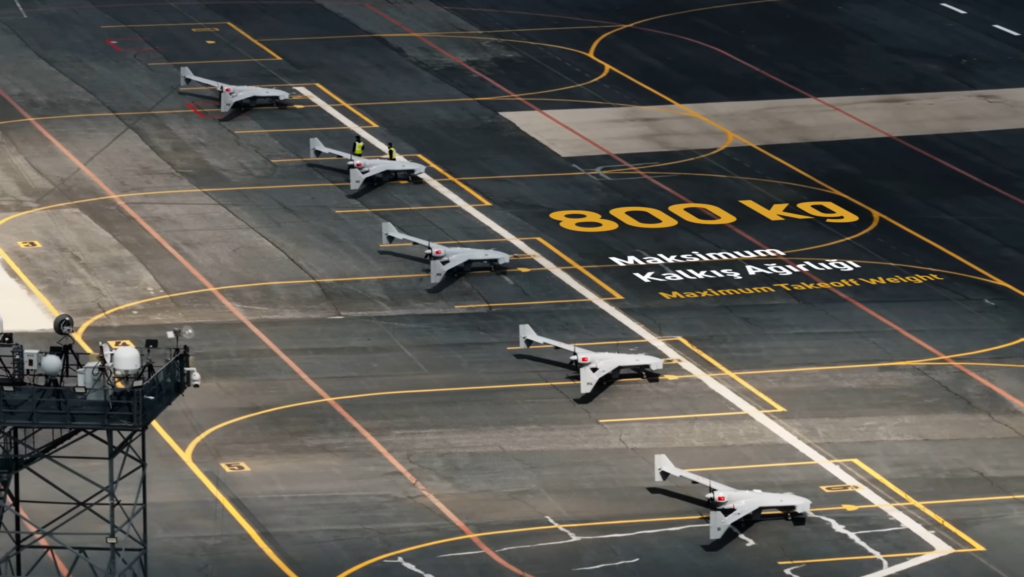
Baykar stated the K2 drones maintained “their place within the formation without error and successfully completed all assigned tasks.” It added that the new drone is able to “execute various other configurations, including the ‘Turan’ and ‘wall’ formations.”
It is unclear if this test was a true demonstration of swarming drones or not. “Swarm” has been a buzzword in the military aviation industry for years, but it is extremely difficult to do.
The large and impressive drone light shows in China are not drone swarms. Those are drones flying a preplanned route and are centrally controlled.
The Baykar demonstration appears to be that of a long-range loitering munition that can operate in small, coordinated groups. This is not full military swarming. It is also only with five aircraft, a true swarm will be many more, perhaps hundreds.
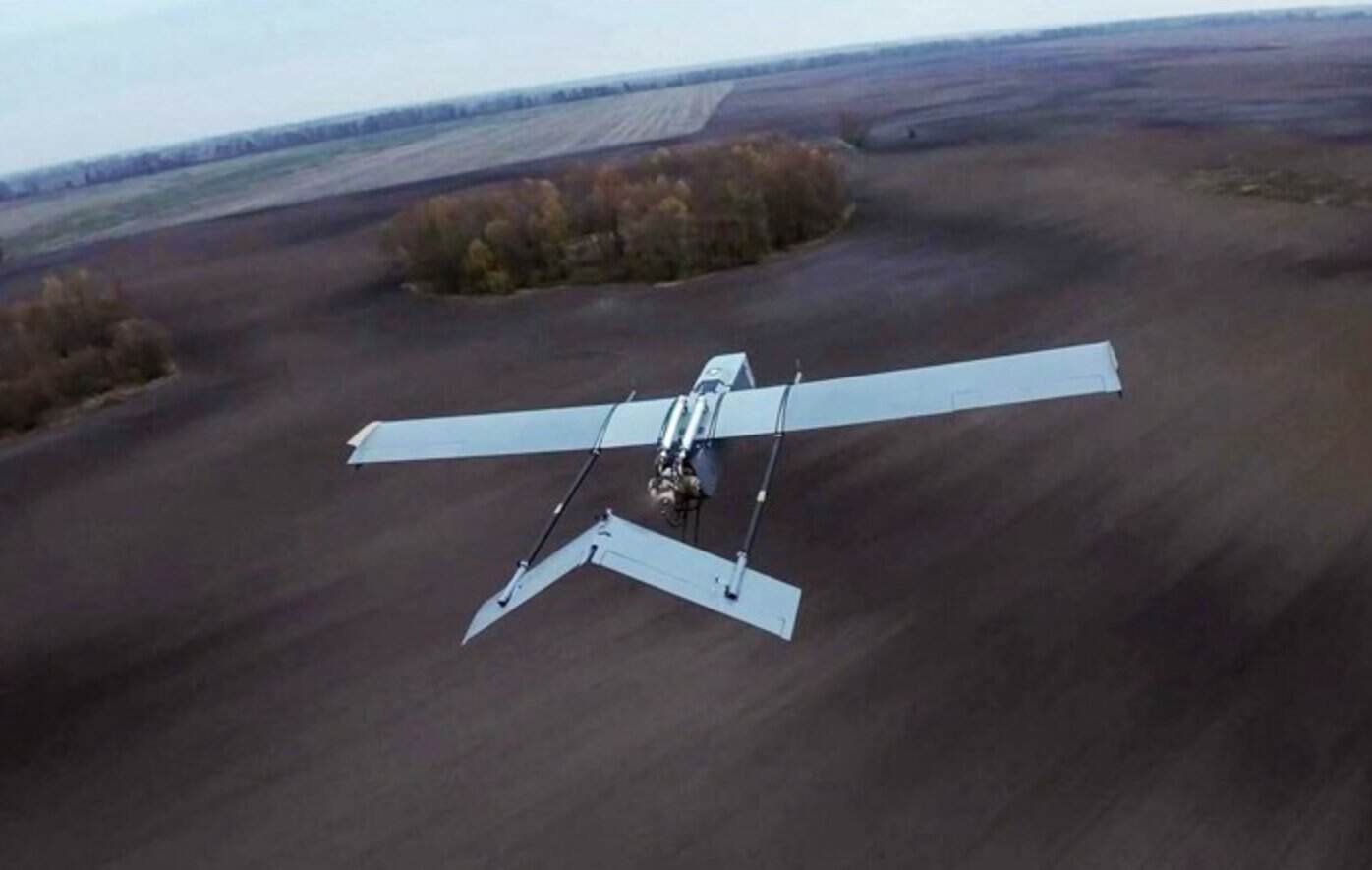
The large size of the drone also makes it appear to be more of a cruise-missile substitute than the small FPV-style swarming drone. The K2 appears to have some similarity with Ukraine’s existing and highly successful FP-2 drone, although it is larger and longer ranged.
Designed to operate in denied environments
To be a swarm in the military sense, the group of drones needs to operate autonomously, intelligently, with no central point of failure, and in contested environments.
The Baykar tests did not appear to simulate a representative EW and kinetically contested environment.
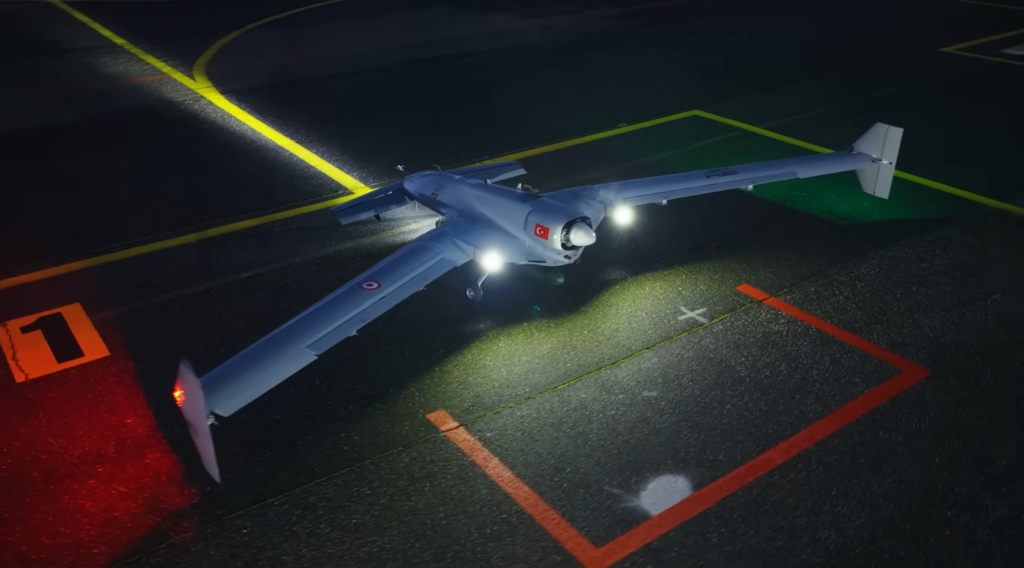
Baykar said the K2 Kamikaze’s navigation architecture is designed to operate in electronic warfare environments, including when GPS (GNSS) systems are jammed. The K2 is able to navigate by visually scanning terrain features, including at night.
Many Ukrainian drones are also designed to operate in denied environments at this stage in the war. They use various alternative navigation methods.
Baykar’s reporting looks less like a true swarm, but it does demonstrate the company is working to develop that technology. The announcement can be understood as another step in that direction.
Featured Image: Baykar


