


World’s first British Aerospace 146 quad jet to retire after 44 years of flying

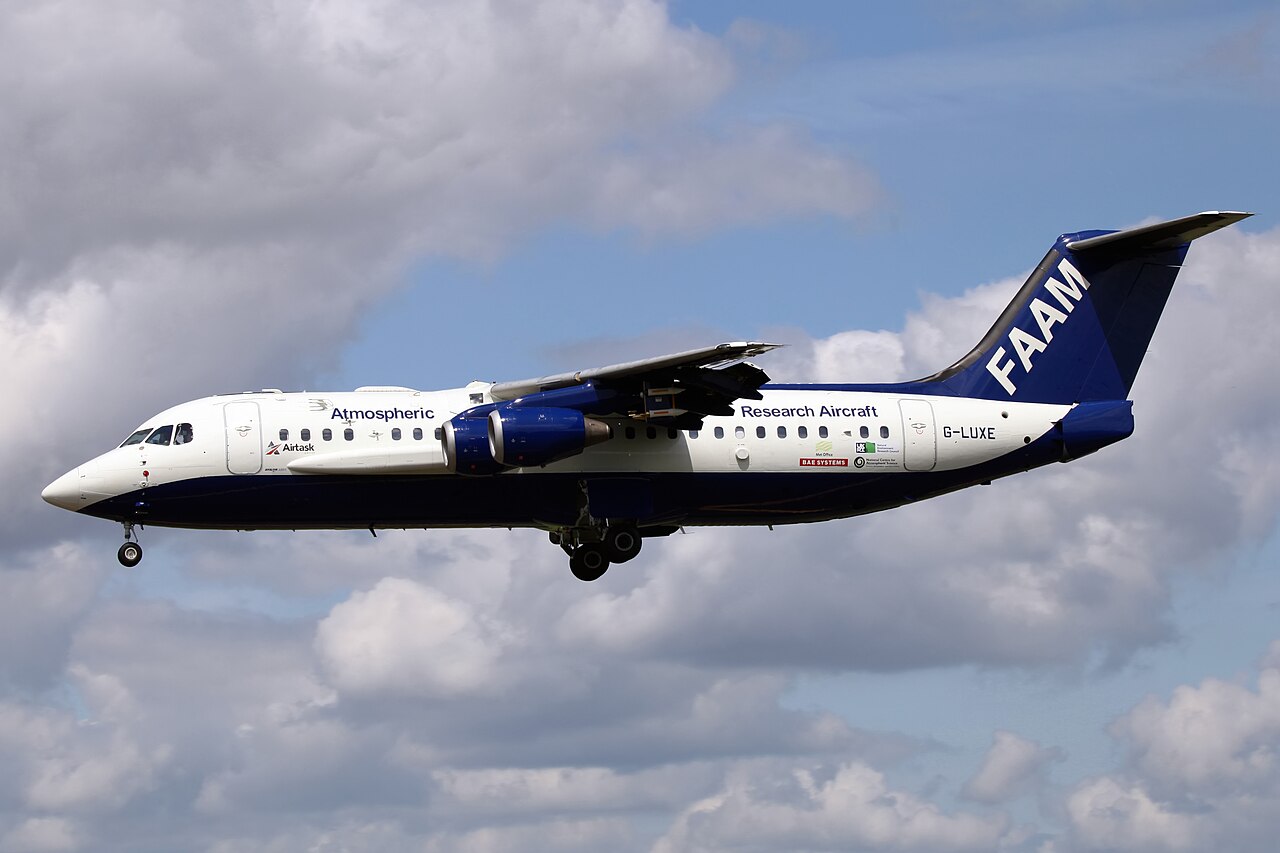
The world’s first-ever British Aerospace (BAe) 146 is being retired after over 44 years of flying. The aircraft, which first served as a demonstrator for the UK-based planemaker, is being withdrawn from use following the withdrawal of funding for the National Centre for Atmospheric Science’s airborne-based research programme. The future of the historic aircraft remains uncertain, with various options under evaluation.
World’s first British Aerospace 146 to retire from service
Since 2001, the British Aerospace 146-300 registered as G-LUXE has been funded by the Natural Environment Research Council (NERC) and operated by the National Centre for Atmospheric Science (NCAS) as part of its Facility for Airborne Atmospheric Measurement (FAAM) project.
FAAM was established in August 2001 by NERC, the UK Met Office, and the UK university community to provide a testbed for atmospheric research, with the BAe 146 taking over from the previous aircraft – a heavily modified Lockheed C-130 Hercules nicknamed ‘Snoopy’.
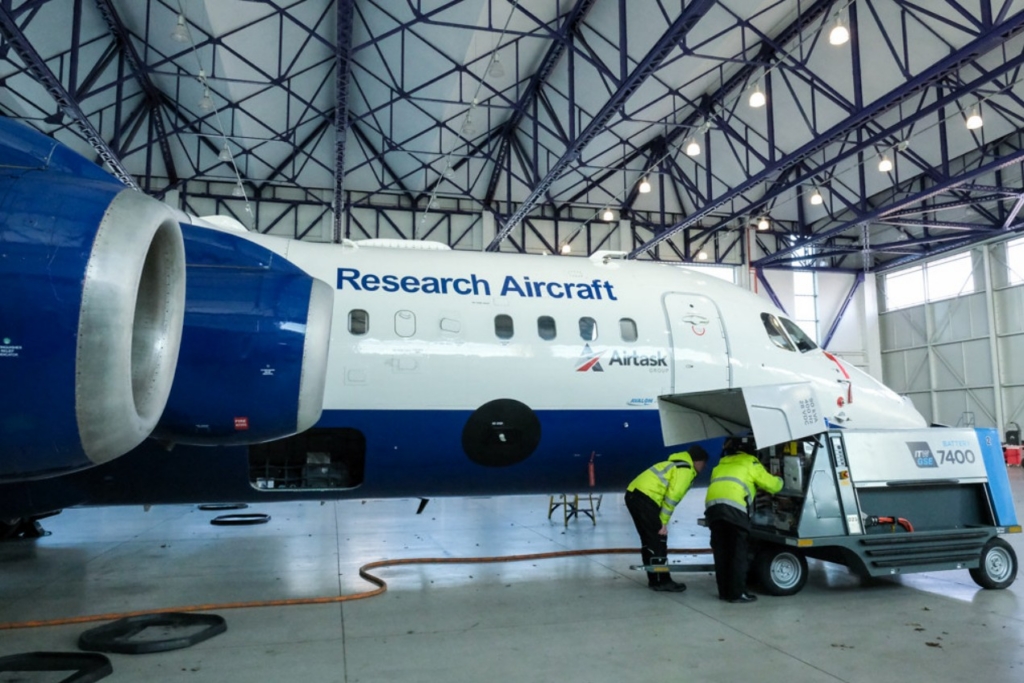
The aircraft is operated by the Airtask Group based at Exeter Airport (EXE) in Devon, UK and is owned by UK Research and Innovation (UKRI).
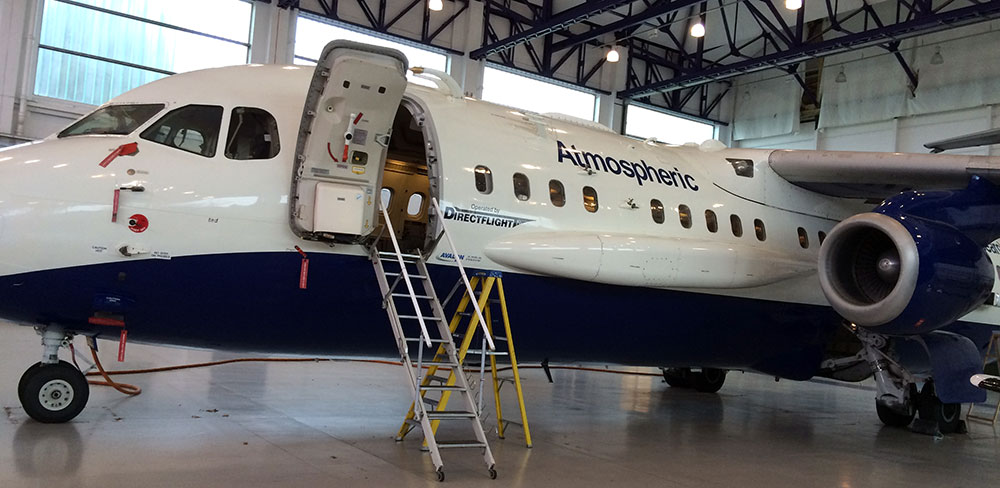
The primary purpose of the aircraft under the FAAM programme has been to operate airborne-based atmospheric research, carrying out climate studies and to measure atmospheric pollution over the past 25 years.
The vast majority of the flying hours have been used to deliver UKRI-funded research projects, while the only other significant user of the FAAM aircraft was through a partnership with the UK Meteorological Office, which ended in 2024.
The BAe 146 has been used for a variety of missions over 24 years
Since 2001, the 146 has assisted the FAAM team (as well as others that have used it) to make “significant achievements in atmospheric research ” said a UKRI statement. The plane has flown more than 10,000 hours on missions in 30 countries and has supported over 120 UK and international science projects.
This work included monitoring volcanic eruptions, collecting data on airborne pollution and conducting the UK’s first sustainable aviation fuel experiment.
However, in an age when four-engined jets have fallen out of favour, and many tasks are being increasingly replaced by unmanned aerial vehicles, NCAS has decided that the 146 is to be retired at the end of this financial year.
Following a review, NERC has concluded that the aircraft no longer offers value for money to the public because of a significant increase in costs and low planned utilisation going forward. The decision to withdraw funding will save nearly £32 million over the spending review period and avoid a further £5 million in costs, said NERC in a statement.
“This decision is part of UKRI’s commitment to ensuring long-term value for money and investing in the infrastructures and technologies that offer the greatest future impact,” added the statement.
These technologies include the use of drone technology and other unmanned aerial vehicles to provide the same quality of data that could be collected by the BAe 146 but without the expense of operating a four-engine jet aircraft.
Gideon Henderson FRS, NERC Senior Independent Member and Professor at the Department of Earth Sciences of the University of Oxford, said, “NERC is making a sensible and carefully considered value for money decision which will allow the successful long-term future of UK atmospheric science.”
“Refocusing investment on cost-effective and sustainable remote and autonomous technologies will help UK scientists continue to innovate, to discover, and to deliver understanding that will improve people’s lives.”
The interesting background behind BAe 146 G-LUXE
Being one of the last remaining British Aerospace 146s in regular use, the aircraft itself is unique. However, it is an iconic aircraft for other historic reasons too.
The aircraft was first rolled out of the manufacturer’s assembly plant located at the now-closed Hatfield Airport in the UK in June 1980.
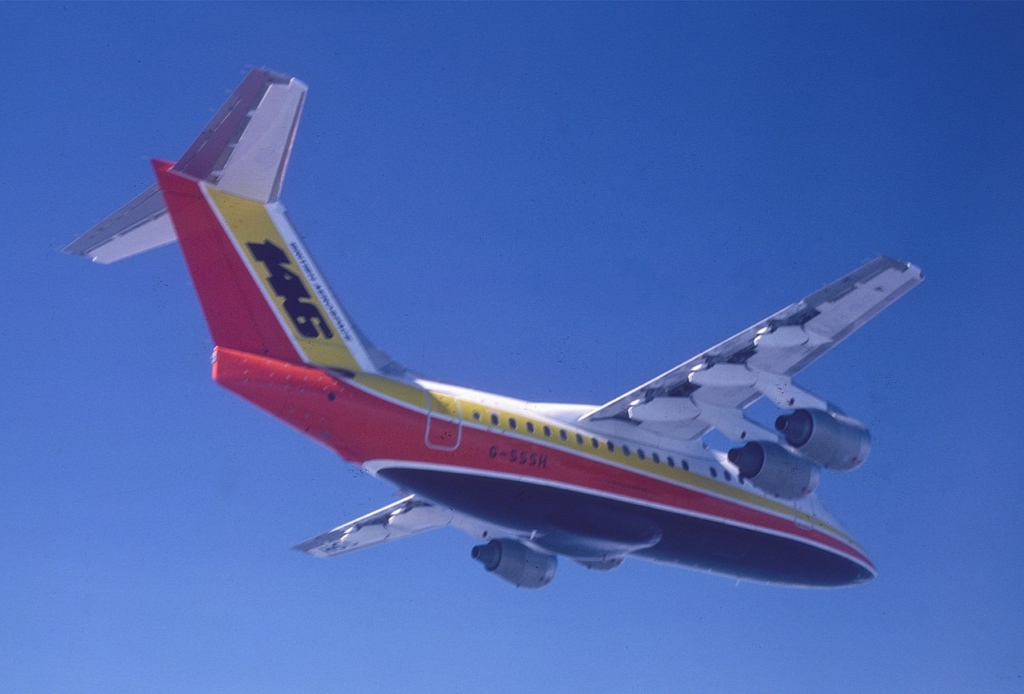
However, it was originally a short-fuselage version of the 146 known as the 146-100. Registered as G-SSSH (to highlight the quietness of its four engines), the aircraft spent six years acting as a commercial demonstrator for the type, visiting various airshows around the world.
In 1986, it was withdrawn from being a demonstrator and was heavily covered (by being lengthened ahead and behind the wing) to become the first 146-300 longer fuselage variant, which could seat up to 110 passengers. Re-registered as G-LUXE, the plane stayed with BAe Systems (the renamed British Aerospace) until 1999.
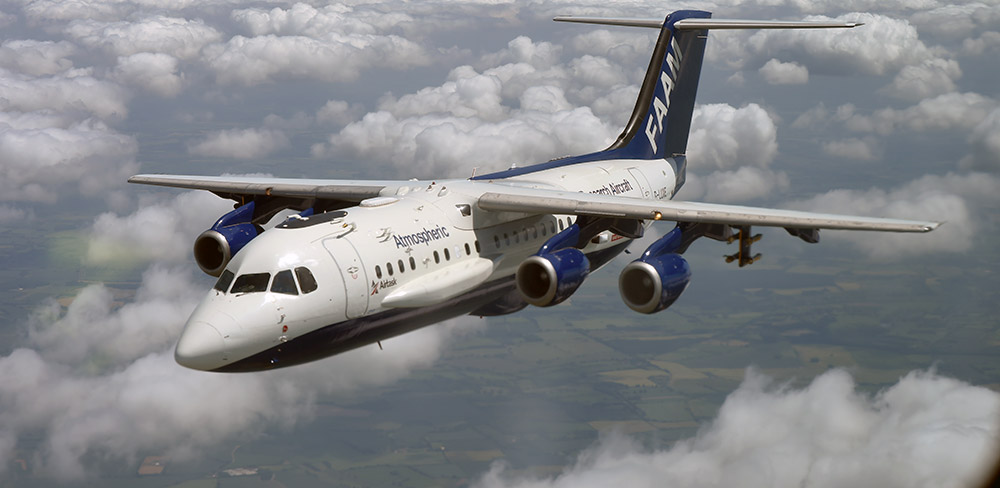
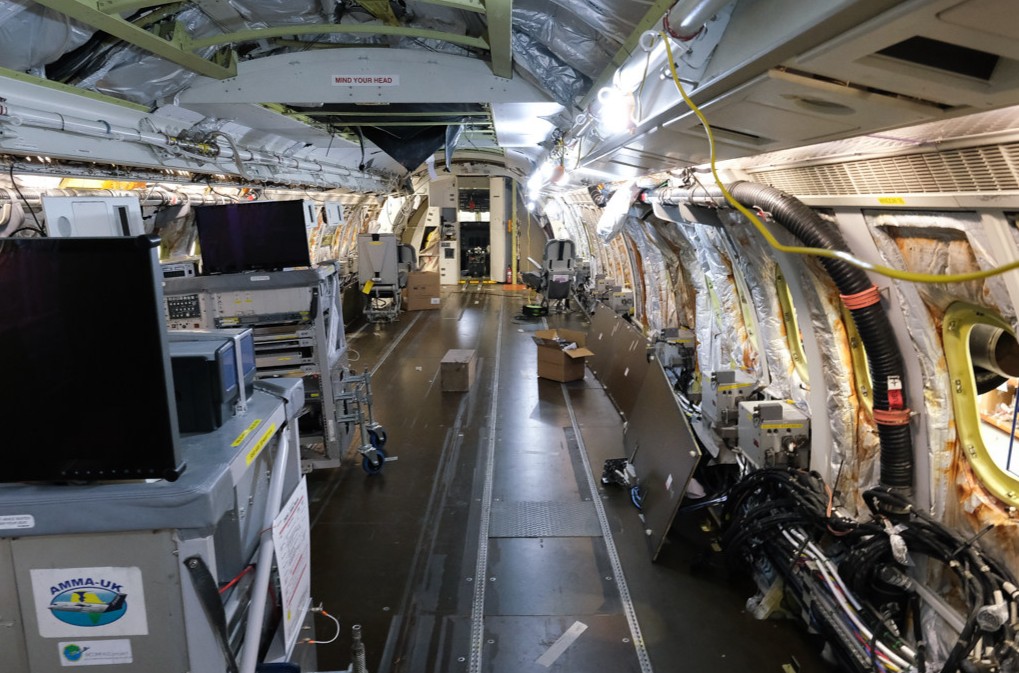
The aircraft joined the fleet of Airtask in May 2001, where it has its cabin filled with various scientific instruments to carry out FAAM missions. However, with the cessation of the Met Office contract in 2024, followed by a drop in its annual utilisation, the aircraft was parked at Cranfield Airport in Bedfordshire in August 2025, where it remains in storage.
What’s next for the world’s first British Aerospace 146?
A total of 394 BAe 146s of all variants were built at Hatfield between 1981 and 2003. However, with very few 146 aircraft left in commercial service, and with many others in storage or having been broken up, the prospects for G-LUXE may not look too promising, given its vintage and high flying hours. That said, some have found their way into museums for preservation, both in the UK and overseas.
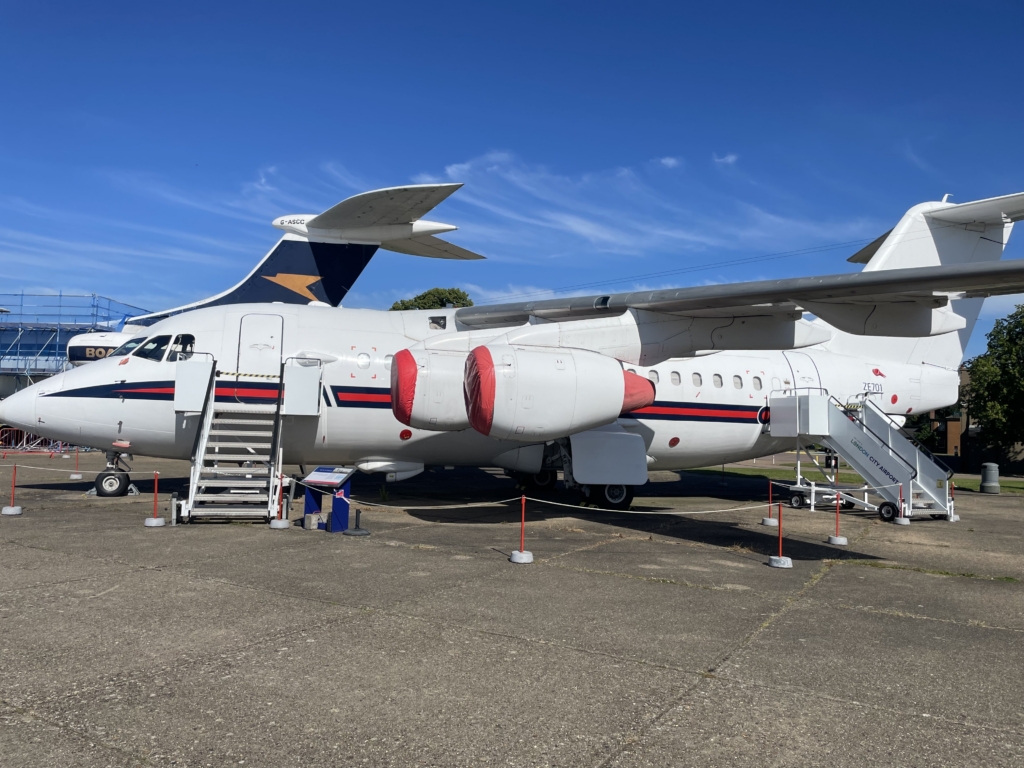
At the Imperial War Museum at Duxford in the UK, BAe 146-100 ZE701, formerly of the RAF’s No. 32 (The Royal) Squadron, joined the British Airliner Collection in 2023.
Meanwhile, the South Wales Aviation Museum has the other Royal Flight 146 ZE700. Lastly, the China Civil Aviation Museum also has a BAe 146 aircraft, specifically named “Hatfield Built,” on display.
According to UKRI, NERC, NCAS, and the University of Leeds will work together on the decommissioning of G-LUXE and the planning and delivery of it to its next home. “A number of options will be explored,” concluded the UKRI statement, without giving any further details.
Featured image: FAAM
.


