SpaceX puts Mars on the back burner as the Moon offers a faster route to settlement

February 10, 2026
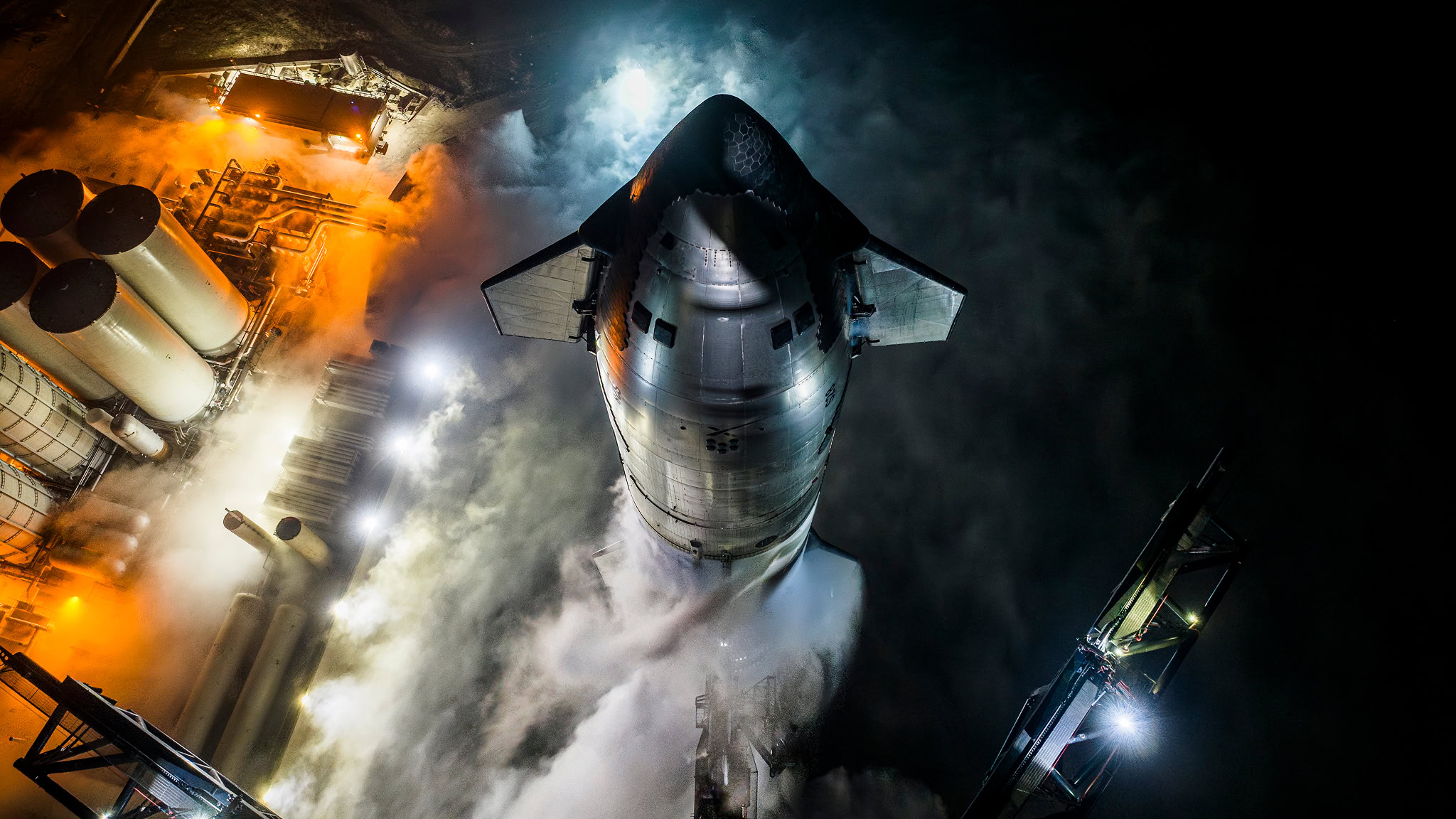
Elon Musk has indicated that SpaceX is shifting its near-term priority from Mars to the Moon, outlining plans to build what he described as a “self-growing city” on the lunar surface within the next decade.
The change in emphasis is notable. For years, Mars has been the singular focus of SpaceX’s long-term vision. As recently as last year, Musk publicly dismissed suggestions of a lunar detour, insisting the company would head “straight to Mars”. Now, he says the Moon offers a faster and more practical route to establishing a permanent human foothold beyond Earth.
“For those unaware, SpaceX has already shifted focus to building a self-growing city on the Moon, as we can potentially achieve that in less than 10 years, whereas Mars would take 20+ years,” Musk wrote on X. “The overriding priority is securing the future of civilisation and the Moon is faster.”
Why SpaceX is prioritising the Moon over Mars
The reasoning, Musk argues, comes down to physics and iteration speed.
Launch opportunities to Mars occur roughly every 26 months, with a journey time of about six months each way. The Moon, by contrast, is reachable within two days, with viable launch windows every ten days. That cadence dramatically alters development tempo.
“This means we can iterate much faster to complete a Moon city than a Mars city,” he wrote.
For a company that has built its identity around rapid testing and incremental refinement, proximity matters. The Moon allows equipment, personnel and systems to be launched, evaluated and modified on a cycle measured in weeks rather than years.
SpaceX will build a system that allows anyone to travel to Moon.
— Elon Musk (@elonmusk) February 9, 2026
This will so insanely cool 🚀💫🤩
SpaceX has reportedly informed investors that it is targeting March 2027 for an uncrewed lunar landing, while remaining a central contractor in NASA’s Artemis programme under a multi-billion-dollar contract to deliver astronauts to the lunar surface using Starship.
At the same time, Musk has pointed out that NASA will account for less than five per cent of SpaceX’s revenue this year, noting that “the vast majority” now comes from the commercial Starlink satellite network.
How SpaceX Starship could underpin permanent lunar infrastructure
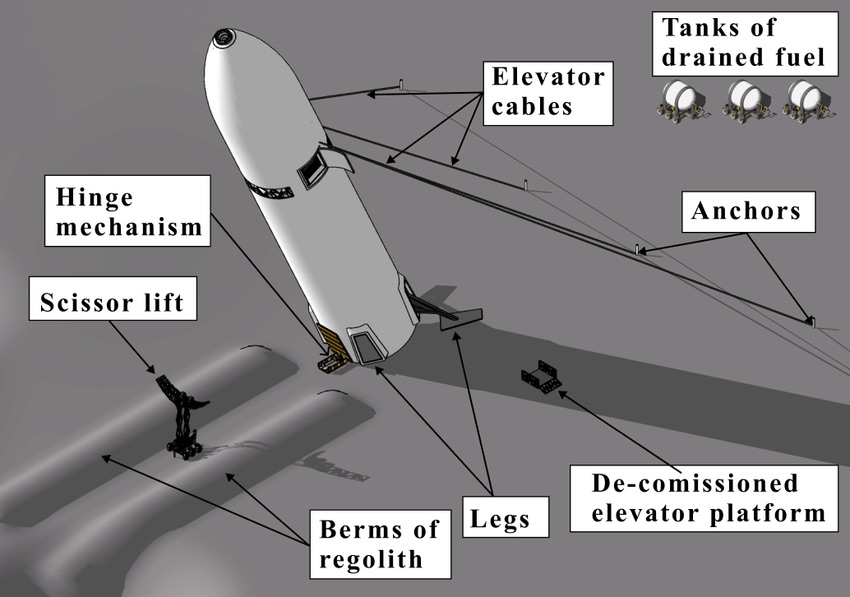
The notion of converting Starship into part of a permanent lunar base is not new. A study presented at the International Astronautical Congress examined how Starship-derived vehicles could form the backbone of early lunar infrastructure.
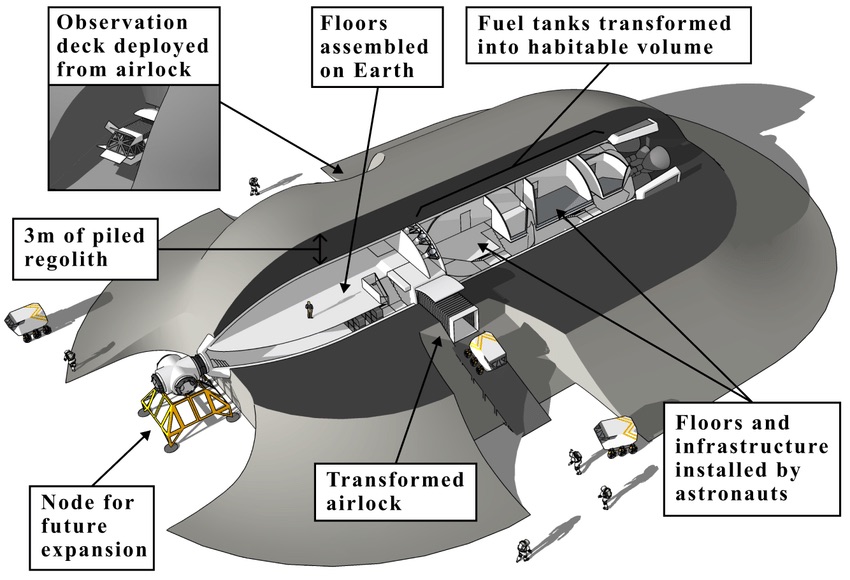
The paper explored the idea of landing Starships vertically before repositioning them horizontally to create habitable volumes, potentially shielding them with lunar regolith to mitigate radiation exposure. It also discussed robotic site preparation, modular expansion and phased settlement growth.
When one follower recently highlighted that study to Musk on X, his response was brief: “This will be awesome.”
The phrase “self-growing city” suggests a similar philosophy not a static base, but an expanding network of habitats, power systems and industrial capability delivered through repeated Starship missions.
Mars remains SpaceX’s long-term goal, but the Moon comes first
Musk insists that Mars remains central to SpaceX’s long-term objective. “Mars will start in 5 or 6 years, so will be done in parallel with the Moon, but the Moon will be the initial focus,” he wrote.
He also clarified that future Mars missions would continue to launch directly from Earth rather than staging via the Moon, citing limited fuel availability on the lunar surface.
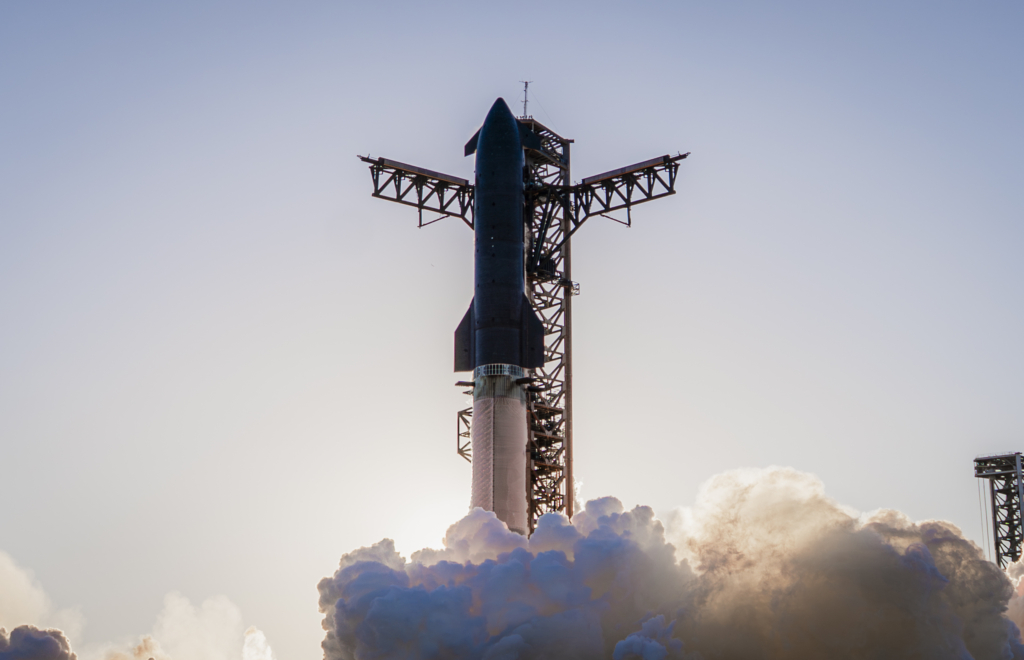
Yet his framing has shifted towards urgency rather than aspiration. The Moon, he argues, offers a quicker way to establish an off-world presence capable of safeguarding humanity against terrestrial risks.
“The Moon would establish a foothold beyond Earth quickly, to protect life against risk of a natural or manmade disaster on Earth,” he said.
How Starlink revenue underpins SpaceX’s Moon ambitions
The remarks come shortly after SpaceX completed the acquisition of artificial intelligence company xAI in a transaction valuing SpaceX at $1 trillion.
Proponents suggest the move could support ambitions for space-based computing infrastructure, although Musk has not directly linked the acquisition to lunar development.
What is clearer is the sequencing. Mars remains SpaceX’s long-term destination. The Moon, by contrast, becomes the proving ground, closer, more accessible and far more forgiving from a logistical standpoint.
That shift has been accompanied by a renewed sense of urgency in Musk’s public messaging. In one exchange on X, a follower remarked that “building factories and cities in space will be based as hell.”
Musk’s reply was characteristically unfiltered. “It will be so epic to see,” he wrote.
For Musk, the Moon-first pivot is not just about engineering efficiency or launch cadence, but about momentum and motivation. “Life cannot just be about sad things one after another,” he added. “There must also be things that make us super excited and inspired about the future. This is one of those things. Big time.”
Featured image: SpaceX