


India clears path for 114-jet Dassault Rafale deal amid Air Force fighter jet shortage

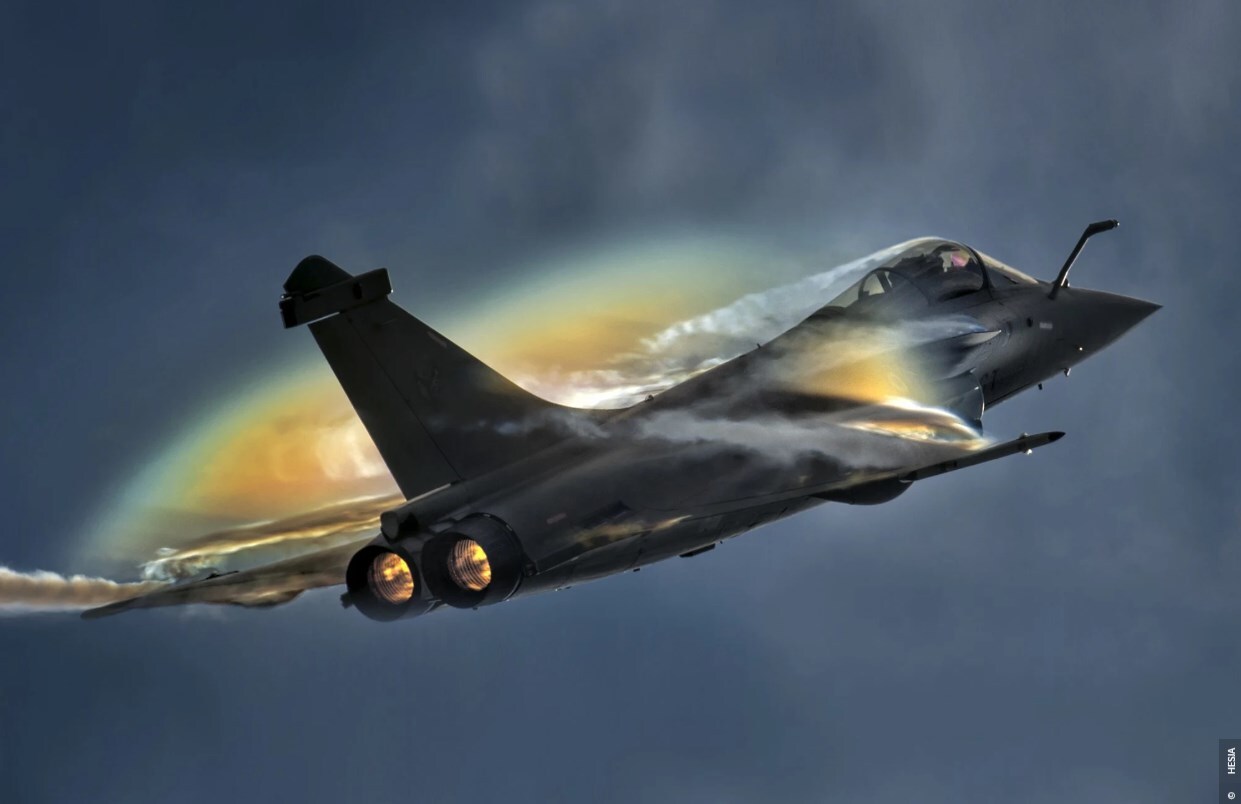
India and France are likely to sign one of the country’s largest-ever defence deals, with negotiations for 114 additional Dassault Rafale fighter jets expected to accelerate during French President Emmanuel Macron’s proposed visit to New Delhi in February.
The anticipated agreement comes at a moment of mounting urgency for the Indian Air Force, which is grappling with declining fighter squadron strength and persistent delays in indigenous aircraft programmes.
The diplomatic push follows a key procedural clearance on 16 January, when India’s Defence Procurement Board (DPB) approved the proposal to acquire the aircraft from Dassault Aviation. The move marks the first formal step towards finalising a deal that could reshape India’s combat aviation landscape over the next two decades.
Defence Procurement Board clearance puts India’s Rafale fighter deal back on track
Headed by Defence Secretary Rajesh Kumar Singh, the DPB’s approval allows the proposal to advance to the Defence Acquisition Council (DAC), chaired by Defence Minister Rajnath Singh. If endorsed there, the acquisition will require final clearance from the Cabinet Committee on Security, led by Prime Minister Narendra Modi.
Officials say the sequencing is designed to keep political momentum, commercial negotiations and military urgency moving in parallel. With the proposal already examined by the Air Force and the defence ministry, a February signing, while ambitious, is no longer viewed as unrealistic.

The procurement is expected to proceed under an inter-governmental agreement, ensuring direct state-to-state delivery without intermediaries, mirroring India’s earlier Rafale purchase.
Indian Air Force fighter squadron strength falls to critical levels
At the heart of the push lies a stark operational reality. The Indian Air Force’s fighter squadron strength has fallen to 29, well below the authorised level of 43 squadrons assessed as necessary to manage a potential two-front contingency involving China and Pakistan. Each squadron typically operates between 16 and 18 aircraft.
The retirement of the MiG-21 fleet last year further depleted numbers, leaving the Air Force struggling to maintain combat mass even as regional air forces modernise rapidly. While the long-delayed Multi-Role Fighter Aircraft programme was intended to address this shortfall through competition, procedural delays have rendered it ineffective as a near-term solution.

In contrast, the Rafale, already in frontline service, has emerged as the fastest way to plug the gap.
India currently operates 36 Rafale fighters with the Air Force, deployed across two squadrons. The aircraft form one of the most capable elements of the IAF’s combat fleet, supported by a mature logistics, weapons and training ecosystem.
In addition, India has contracted 26 Rafale-M aircraft for the Navy to operate from aircraft carriers, establishing a parallel naval aviation capability and a pricing benchmark for any follow-on Air Force order. Together, these inductions underscore the Rafale’s growing centrality in India’s air and maritime combat plans.
Make in India manufacturing to anchor expanded Rafale fighter deal
Any expanded Rafale acquisition is expected to include a substantial ‘Make in India’ component. Sources indicate that 18 aircraft would be delivered in flyaway condition, with the remainder manufactured domestically, potentially with indigenous content reaching up to 60 per cent.
🇮🇳✈️ Big boost to Make in India
— Ayaan Sheikh (@AyanSheikhsab) January 19, 2026
India plans to develop Nagpur as a second Rafale production hub, with capacity to assemble ~24 fighter jets annually.
A strong Indian supply chain with Tata, Mahindra & others will power indigenous defence manufacturing. pic.twitter.com/sd0ItMGFoF
Final assembly is expected to take place at the Dassault Reliance Aerospace Limited facility in Nagpur, with Tata, Mahindra and Dynamatic Technologies among firms likely to join the supply chain. Industrial cooperation is already expanding, with Tata Advanced Systems producing Rafale fuselage sections in Hyderabad from FY 2028.
Parallel proposals include an engine manufacturing facility in Hyderabad and a Maintenance, Repair and Overhaul hub in Jewar, Uttar Pradesh, potentially bringing close to 60 per cent of the aircraft’s manufacturing value into India.
Tejas Mk1A delays increase Indian Air Force reliance on interim fighters
The urgency behind additional Rafale inductions has been compounded by delays in the indigenous LCA Tejas Mk1A programme. Although 83 aircraft are on order and a further 97 have been cleared, deliveries have slipped due to engine availability, supply-chain constraints and production ramp-up challenges.

Air Chief Marshal AP Singh has publicly warned that delays risk widening the capability gap left by retiring legacy fighters, making interim solutions unavoidable.
Why Rafale prevailed over Su-57 and F-35
The renewed push for Rafale reflects a strategic choice after weighing offers from Russia and the United States. While Moscow pitched the Su-57E with incentives including local production and assistance on India’s AMCA programme, concerns over maturity, sustainment and sanctions exposure weighed heavily.
The American F-35, meanwhile, was never a realistic option, due to high lifecycle costs and limited scope for technology transfer or local manufacture.

By contrast, Rafale offered India a balance of capability, sovereignty and industrial participation, building on decades of experience with French combat aircraft. That legacy, coupled with assured availability and growing domestic production, ultimately tipped the scales.
The Dassault Rafale is the fastest path to stabilise combat capability
For the Air Force, Rafale represents certainty in an increasingly constrained environment. Combat-proven and highly versatile, the twin-engine fighter remains one of the quickest ways to stabilise squadron strength.
If negotiations proceed as planned, flyaway deliveries could begin around 2030, followed by locally manufactured aircraft. While timelines remain subject to approvals, the direction is now clear. With operational pressures intensifying, the Rafale has once again moved to the centre of India’s air power calculus.
Featured image: Dassault Aviation


