France plans nuclear aircraft carrier: How does it stack up against Ford and Fujian?

4 min read
As expected, France has announced it will build a new large 75,000-tonne (full load) nuclear-powered aircraft carrier to replace its current FS Charles de Gaulle. Its future air wing is
Macron confirms plans for 75,000-tonne nuclear aircraft carrier
Yesterday, while delivering a speech to French troops at a military base in Abu Dhabi, French President Emmanuel Macron announced plans to construct a new aircraft carrier. The carrier will be built at the Chantiers de l’Atlantique shipyard in Saint-Nazaire, France.
Macron spoke of “our nation’s power in the service of freedom on the seas and amid the turbulence of our times.”
Manufacturing is expected to begin around 2032, with long-lead items ordered earlier. Initial sea trials are planned for 2036, ahead of commissioning in 2038.
France currently operates the Dassault Rafale-M from its aircraft carrier (the French Navy has retired its Super Étendards). These are expected to remain in service until around 2060.
France will build new aircraft carrier, Macron tells troops pic.twitter.com/oXW969E3qD
— Sprinter Press (@SprinterPress) December 21, 2025
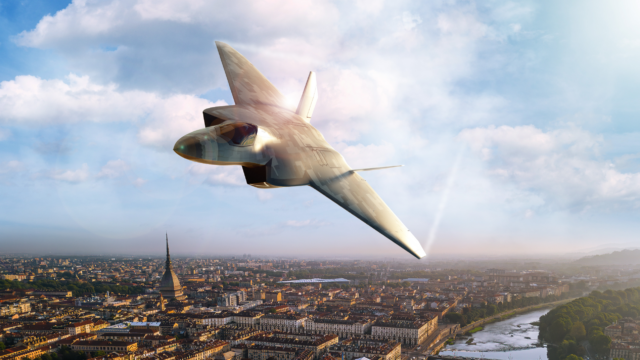
The future FCAS sixth-generation fighter programme with Germany and Spain is also a critical part of the carrier’s long-term air wing planning. France’s requirement for a carrier-capable FCAS variant is widely seen as a point of friction within the programme.
What we know about the new French aircraft carrier so far
France first launched studies into replacing its existing aircraft carrier in 2018. In 2020, the French government said it planned to build a nuclear-powered carrier with the programme called Porte Avions de Nouvelle Génération (PA-Ng). For English audiences, it is sometimes called the Future French Carrier (FFC).

Preliminary design concluded in early 2023, and the programme definition phase is running until the end of 2025. Official estimates have put the cost at around €6 billion, though defence analysts have suggested the final figure could exceed €10 billion.
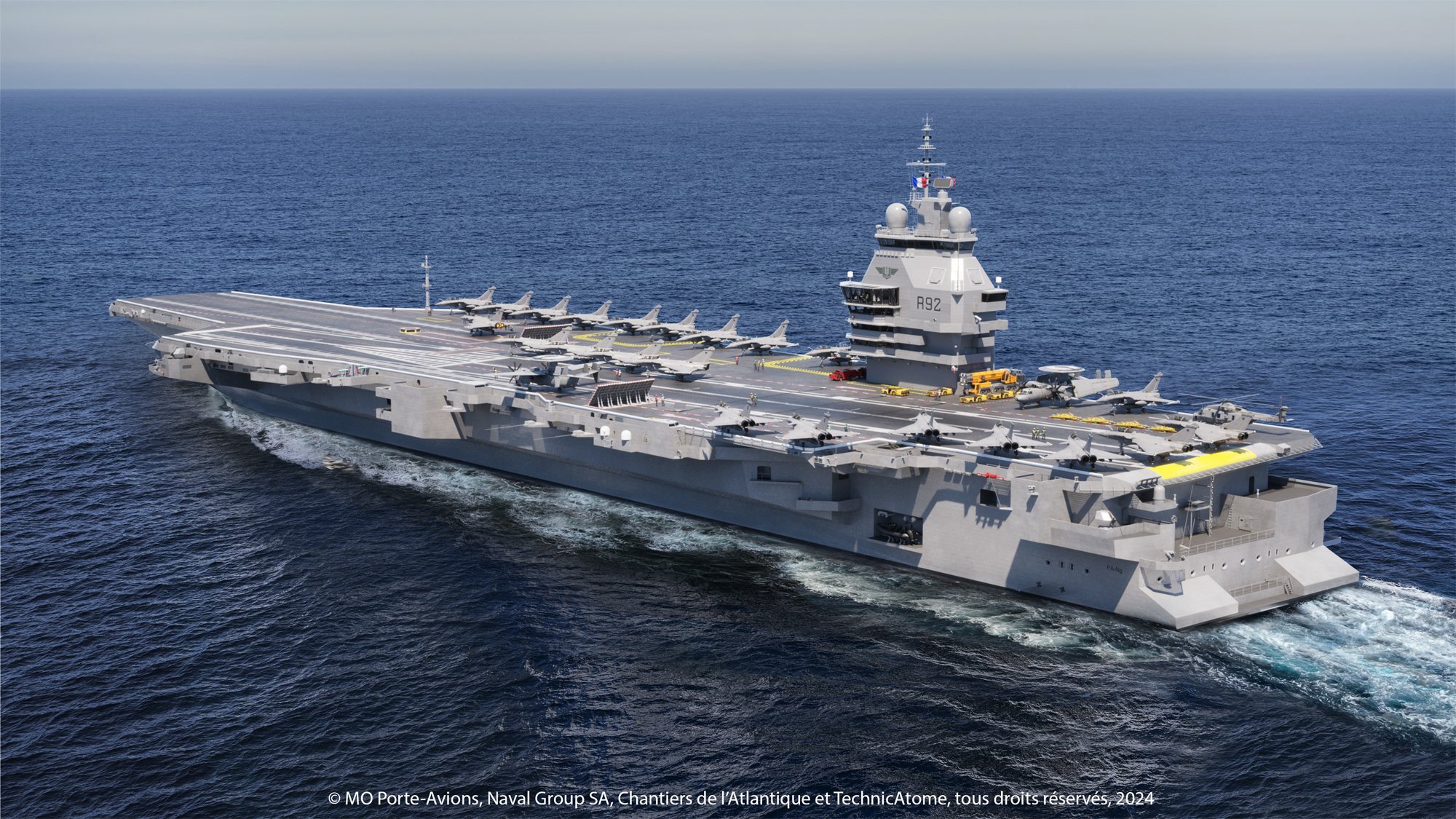
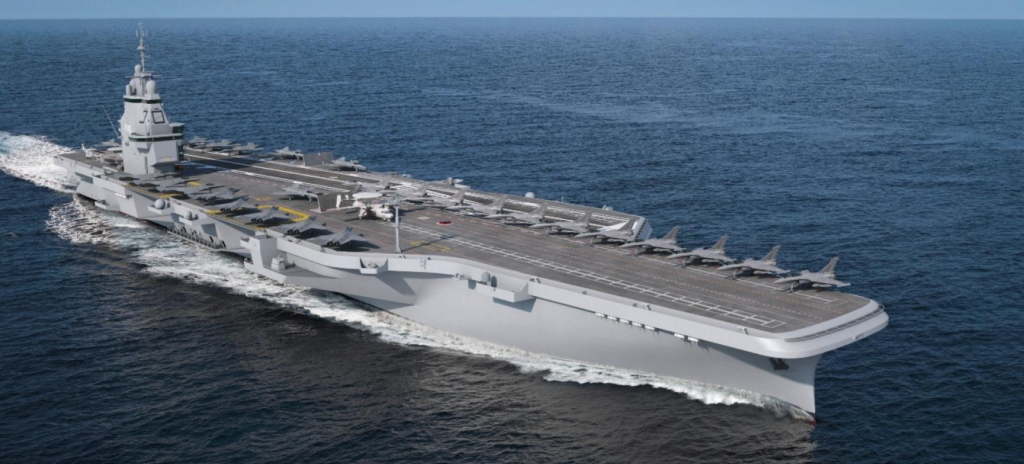
The future carrier will be nuclear-powered. It will have a displacement of 75,000 tonnes, a length of 305 metres, a maximum beam of 79 metres, and a 17,000m2 flight deck. The current FS Charles de Gaulle has a typical airwing of 26 fighter jets and displaces 42,000 tonnes.
It is expected to have the hangar space to accommodate around 30 Rafale and troubled future FCAS (also called NGF) fighter jets, along with two Hawkeye AWACS and up to two medium-sized helicopters. Like the current carrier, it is expected to be compatible with US carriers (including F/A-18s and F-35Cs).

According to Navy Outlook, she will be fitted with two 90-metre Electromagnetic Launch Systems (EMALS) and the Advanced Arrestor Gear (AAG) set developed for the Ford-class. Fortunately for the FFC, the USS Ford has already done the painful work of maturing this system.
Get the latest aerospace defence news here on AGN.
How France’s new aircraft carrier compares
France is one of only two countries to build and operate nuclear aircraft carriers, although China is expected to join the exclusive club in the coming years.
| Specification | USS Gerald R. Ford class | CNS Fujian (Type 003) | PA-Ng (PANG), France |
|---|---|---|---|
| Propulsion | Nuclear | Conventional | Nuclear |
| Displacement (full load) | ~100,000 long tons (often cited as ~100,000+) | Estimated ~80,000–85,000 tonnes | Reported ~78,000 tonnes |
| Length (overall) | ~333 m | ~316 m | Reported ~310 m |
| Beam / flight deck width | Flight deck width often cited ~78 m | Beam reported ~76 m | Beam reported ~90 m (programme figures) |
| Launch system | 4 × EMALS catapults | Electromagnetic catapults (reported 3) | EMALS planned (reported 2, with reports of additional track procurement) |
| Recovery system | AAG | Arresting gear (carrier arrestor system) | AAG planned |
| Typical / estimated air wing | 75+ aircraft (often cited) | Estimated ~40–60 aircraft | Planned around ~30 fighters plus support assets (Rafale M, future FCAS/NGF variant, E-2D Hawkeye, helicopters) |
| Status | In service (lead ship commissioned 2017) | Commissioned in late 2025 (per multiple reports) | Planned, entry into service late 2030s (programme target) |
| Notes: Fujian figures are widely reported estimates. PA-Ng/PANG figures reflect programme announcements and reporting, and may evolve as design matures. | |||
🇫🇷French President Emmanuel Macron today announced he has given the formal go-ahead to start construction of new 75,000-tonne nuclear-powered Aircraft Carrier.https://t.co/Je2sccH9Al pic.twitter.com/Y8ESOEE7dq
— Navy Lookout (@NavyLookout) December 21, 2025
By displacement, the FFC will be larger than the conventionally-powered British Queen Elizabeth class carriers (65,000 tonnes light and 80,600 tonnes full load), but smaller than the US Nimitz and Ford classes (90,000 tonnes light and over 100,000 tonnes full load).
China’s new conventionally powered Type 003 Fujian has a displacement of around 80,000 or more tonnes, India’s domestically produced Vikrant is 45,000 tonnes, and Italy’s Trieste is 38,000 tonnes. Russia is no longer an aircraft carrier nation.

New-generation fighter jets are one of the key factors that drive up the size of aircraft carriers. The Queen Elizabeth’s size growth was partly because of the change from Harrier Jump jets to the F-35B.
Much of the French carrier’s increase is due to the future FCAS 6th-generation fighter jet being much larger than the current Rafale-M aircraft.
Featured Image: MO Porte Avions
Sign up for our newsletter and get our latest content in your inbox.


More from


October 17, 20264 min read