


How Iran is getting its hands on aircraft and spare parts despite sanctions

7 min read
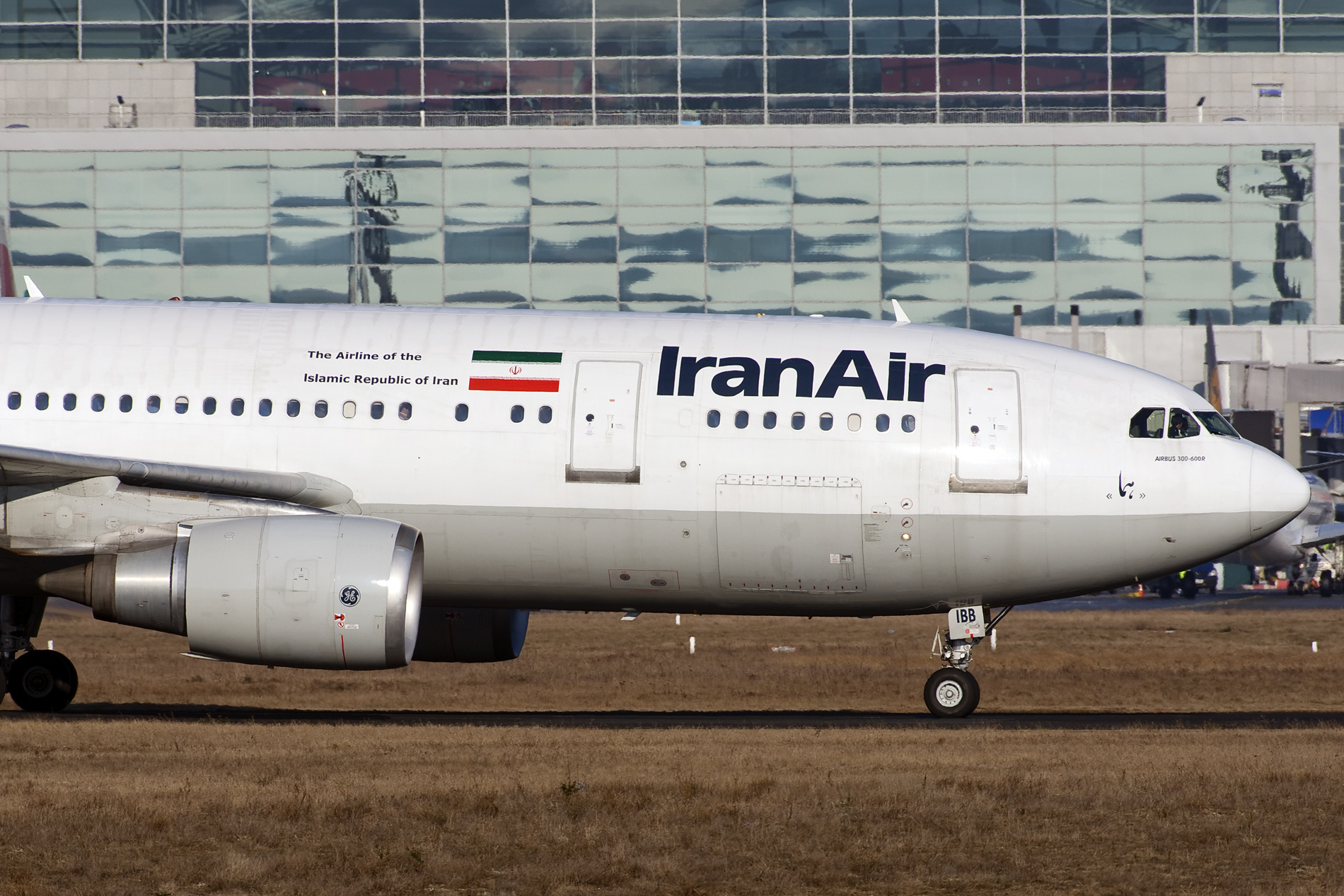
Despite strict sanctions, Iran is still able to procure needed parts and old aeroplanes to keep a domestic aviation network operating. This does not mean the sanctions “are not working,” but rather highlights the nuanced nature of sanctions.
How Iran evades sanctions to obtain aircraft and parts
A new report by Israel’s Institute for National Security Studies (INSS) has identified extensive and systematic circumvention of international aviation sanctions by Iran, revealing how the country continues to acquire aircraft, engines, and spare parts despite long-standing restrictions.
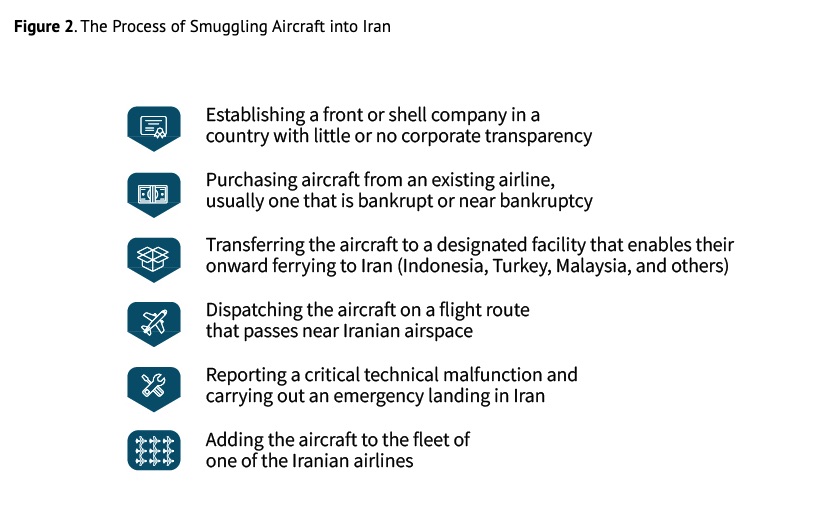
According to the report, sanctions have not eliminated Iran’s access to aviation assets, but instead pushed procurement into opaque and costly channels. These include:
- Acquisition of ageing, second-hand aircraft through global secondary markets
- Use of shell companies and third-country intermediaries to conceal the true end user
- Barter arrangements, such as oil-for-aircraft or oil-for-parts deals, that bypass traditional financial systems
- Transfers through complex ownership chains designed to evade regulatory scrutiny
- Mid-ferry diversions and indirect routing to avoid enforcement during aircraft handovers
INSS notes that enforcement is particularly weak once aircraft leave active commercial service, creating opportunities for sanctioned states to acquire airframes and components that are otherwise difficult to track.
While these practices allow Iran to keep its aviation sector functioning, the report stresses that sanctions still impose significant operational penalties, resulting in an ageing fleet, chronic parts shortages, higher maintenance risk, and limited growth potential.
Rather than preventing aviation activity outright, the report concludes, sanctions have reshaped Iran’s air sector into one that operates under constant constraint, inefficiency, and elevated safety and economic cost.
How many aircraft has Iran smuggled in under sanctions?
According to INSS, the list of illegitimate aircraft is extensive. The researchers have identified 66 aircraft that have arrived in Iran since 2015, and eight – possibly nine – that have transferred to the country this year alone.
| Year sold | Aircraft registration | OEM | Aircraft model | Seller (country) | Company purchasing |
|---|---|---|---|---|---|
| 2014 | EP-MMC | Airbus | A340 | Manas Airways (Kyrgyzstan) | Mahan Air |
| 2014 | EP-MMJ | Airbus | A310 | MIAT – Mongolian Airlines (Mongolia) | Mahan Air |
| 2015 | EP-APG | Airbus | A320 | Kam Air (Afghanistan) | Iran Aseman Airlines |
| 2015 | EP-AJA | Airbus | A340 | Asian Express Airline (Tajikistan) | Iran Government |
| 2015 | EP-CPZ | McDonnell Douglas | MD-83 | Khors Aircompany (Ukraine) | Caspian Airlines |
| 2015 | EP-CAR | Boeing | 737-400 | AC Aviatie (UK / San Marino) | Caspian Airlines |
| 2015 | EP-CAP | Boeing | 737-400 | AC Aviatie (UK / San Marino) | Caspian Airlines |
| 2015 | EP-TBI | Boeing | 757 | Tajik Air (Tajikistan) | Taban Airlines |
| 2015 | EP-TBJ | Boeing | 737-400 | Tajik Air (Tajikistan) | Taban Airlines |
| 2015 | EP-MMH | Airbus | A340 | Al-Naser Airlines (Iraq) | Mahan Air |
| 2015 | EP-MMI | Airbus | A340 | Al-Naser Airlines (Iraq) | Mahan Air |
| 2015 | EP-MMF | Airbus | A340 | Al-Naser Airlines (Iraq) | Mahan Air |
| 2015 | EP-MMG | Airbus | A340 | Al-Naser Airlines (Iraq) | Mahan Air |
| 2015 | EP-MMD | Airbus | A340 | Al-Naser Airlines (Iraq) | Mahan Air |
| 2015 | EP-MME | Airbus | A340 | Al-Naser Airlines (Iraq) | Mahan Air |
| 2015 | EP-ZAZ | Airbus | A320 | Sky Angkor Airlines (Cambodia) | Zagros Air |
| 2015 | EP-ZAR | Airbus | A320 | Sky Angkor Airlines (Cambodia) | Zagros Air |
| 2015 | EP-FQS | British Aerospace | RJ85 | Asian Express Airline (Tajikistan) | Qeshm Airlines |
| 2016 | EP-CAQ | Boeing | 737-400 | Ac Aviatie (UK / San Marino) | Caspian Airlines |
| 2017 | EP-SSL | Airbus | A319 | Khors Aircompany (Ukraine) | Qeshm Airlines |
| 2018 | EP-PAA | Bombardier | CRJ-200 | FMI Air (Myanmar) | Pars Air |
| 2019 | EP-IER | Airbus | A319 | Asia Sky Lines (Tajikistan) | Tehran Airline |
| 2019 | EP-IEP | Airbus | A319 | Asia Sky Lines (Tajikistan) | Tehran Airline |
| 2019 | EP-IEQ | Airbus | A319 | Asia Sky Lines (Tajikistan) | Tehran Airline |
| 2019 | EP-SIR | Boeing | 737-300 | Asian Express Airline (Tajikistan) | FlyPersia |
| 2019 | EP-KPA | Boeing | 737-500 | Khors Aircompany (Ukraine) | Caspian Airlines |
| 2020 | EP-MED | Airbus | A310 | Asia Sky Lines (Tajikistan) | Mahan Air |
| 2020 | EP-MDL | Airbus | A310 | Asia Sky Lines (Tajikistan) | Iran Airtour |
| 2020 | EP-FSK | Boeing | 737-500 | Smartavia (Russia) | Sepehran Airlines |
| 2021 | EP-MDH | Airbus | A310 | Asia Sky Lines (Tajikistan) | Toos Airline |
| 2021 | EP-AOB | Boeing | 737-300 | Hyperion Aviation (Malta) | Sepehran Airlines |
| 2021 | EP-PUG | Embraer | ERJ 145 | Westair Aviation (Namibia) | Pouya Air |
| 2021 | EP-PUQ | Embraer | ERJ 145 | Westair Aviation (Namibia) | Pouya Air |
| 2021 | EP-PUD | Embraer | ERJ 145 | Westair Aviation (Namibia) | Pouya Air |
| 2021 | EP-PUE | Embraer | ERJ 145 | Westair Aviation (Namibia) | Pouya Air |
| 2021 | EP-EMA | Embraer | ERJ 145 | Fly Kiss (France) | ATA Airlines (Iran) |
| 2022 | EP-JIA | Boeing | 737-300 | Reliance Air Charters (Kenya) | Karun Airlines |
| 2022 | EP-JIB | Boeing | 737-300 | Star Air (South Africa) | Karun Airlines |
| 2022 | EP-JEK | Embraer | ERJ 145 | Madagaskara Airways (Madagascar) | Asa Jet |
| 2023 | EP-MJE | Airbus | A340 | Avro Global (Hong Kong) | Mahan Air |
| 2023 | EP-MJE | Airbus | A340 | Avro Global (Hong Kong) | Mahan Air |
| 2023 | EP-MJA | Airbus | A340 | Private (Mali) | Mahan Air |
| 2023 | EP-FSL | Boeing | 737-300 | Avia Traffic Company (Kyrgyzstan) | Sepehran Airlines |
| 2023 | EP-RBD | Airbus | A310 | Asia Sky Lines (Tajikistan) | Iran Air |
| 2023 | EP-KPC | Boeing | 737-300 | Belavia (Belarus) | Caspian Airlines |
| 2024 | EP-MJF | Airbus | A340 | Avro Global (Hong Kong) | Mahan Air |
| 2024 | EP-MJC | Airbus | A340 | Avro Global (Hong Kong) | Mahan Air |
| 2024 | EP-MMU | Airbus | A340 | Macka Invest Company (Gambia) | Mahan Air |
| 2024 | EP-DZH | British Aerospace | RJ85 | Airlink (South Africa) | Yazd Airways |
| 2024 | EP-TAE | Boeing | 737-300 | Asian Express Airline (Tajikistan) | ATA Airlines (Iran) |
| 2024 | EP-DOA | Boeing | 737-300 | Sky Golden Lachin (Tajikistan) | Caspian Airlines |
| 2024 | EP-TAU | McDonnell Douglas | MD-87 | Kam Air (Afghanistan) | Taban Airlines |
| 2024 | EP-LED | McDonnell Douglas | MD-82 | Kam Air (Afghanistan) | KIsh Air |
| 2024 | EP-NFC | Boeing | 737-300 | Unknown / Tayaran Jet (Comoros / Bulgaria) | Karun Airlines |
| 2024 | EP-LEE | Boeing | 737-300 | Asian Express Airline (Tajikistan) | Chabahar Airlines |
| 2024 | EP-PAO | Boeing | 737-400 | CSDS Aircraft sales and Leasing (USA) | Pars Air |
| 2024 | EP-RBA | Boeing | 737-500 | Smartavia (Russia) | AVA Airlines |
| 2025 | EP-MJG | Airbus | A340 | Macka Invest Company (Gambia) | Mahan Air |
| 2025 | N99001 | Boeing | 777 | Udaan Aviation (Madagascar) | Mahan Air |
| 2025 | N99002 | Boeing | 777 | Udaan Aviation (Madagascar) | Mahan Air |
| 2025 | N99003 | Boeing | 777 | Udaan Aviation (Madagascar) | Mahan Air |
| 2025 | N99004 | Boeing | 777 | Udaan Aviation (Madagascar) | Mahan Air |
| 2025 | N99001 | Boeing | 777 | Udaan Aviation (Madagascar) | Mahan Air |
| 2025 | EP-IJC | Airbus | A330 | Haokun Energy (China) | Iran Air |
| 2025 | EP-IJD | Airbus | A330 | Haokun Energy (China) | Iran Air |
| – | C5-MIB | Airbus | A340 | Macka Invest Company (Gambia) | – |
Iran can still procure old aircraft on the black market
In October 2025, Iran International reported, citing state media, that Iran had added 11 used aircraft to its civil fleet. Iran stated it has added over 5,100 passenger seats since 2021.
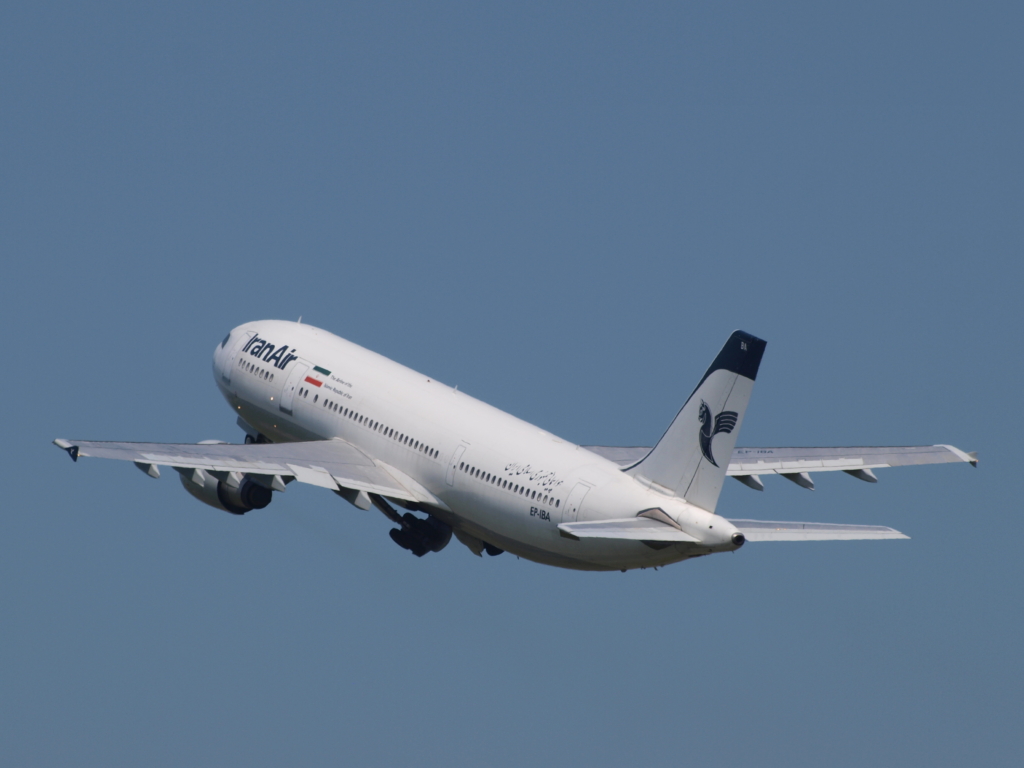
In 2025, Iran retired the last passenger A300B4 from scheduled service, which was also the oldest scheduled passenger Airbus aircraft still operating. Around 50% or 60% of the country’s civil fleet is believed to not be operational.
Iran International said, “Earlier this year, Iran took delivery of several used Airbus A330s from China under barter deals involving oil, according to domestic media reports.”
With some countries that openly do not adhere to the sanctions, like Russia and China, Iran can purchase sanctioned equipment directly. The Israel-based INSS notes that transactions don’t need to be in cash, e.g., it can barter oil for old aeroplanes.
JUST IN: Visual confirmation that the 4x ex-Turkish Airlines (red tail and wing tips) Airbus A340-300 from 🇿🇦Johannesburg arrived to 🇮🇷Mehrabad International Airport in Tehran, Iran.
— Gerjon | חריון | غريون | ኼርዮን (Deactivated) (@Gerjon_) December 29, 2022
Confirming identification, Sentinel-2 imagery shows that they were only recently parked here. pic.twitter.com/seotLTdUPl
Many countries officially follow sanction regulations, and for these, Iran needs shelf companies to disguise itself as the intended recipient. For example, in 2025. Three aircraft were transferred from Lithuania via a Madagascar-based company.
In 2022, four ex-Turkish Airlines Airbus A340s were flown from storage in South Africa, bound for Uzbekistan. However, they diverted to Tehran en route.
Why aren’t aviation sanctions working for Iran?
It should be noted that, in practice, sanctions function more as a mechanism to impose greater costs on a country; they typically do not stop a country from doing what it wants to do.
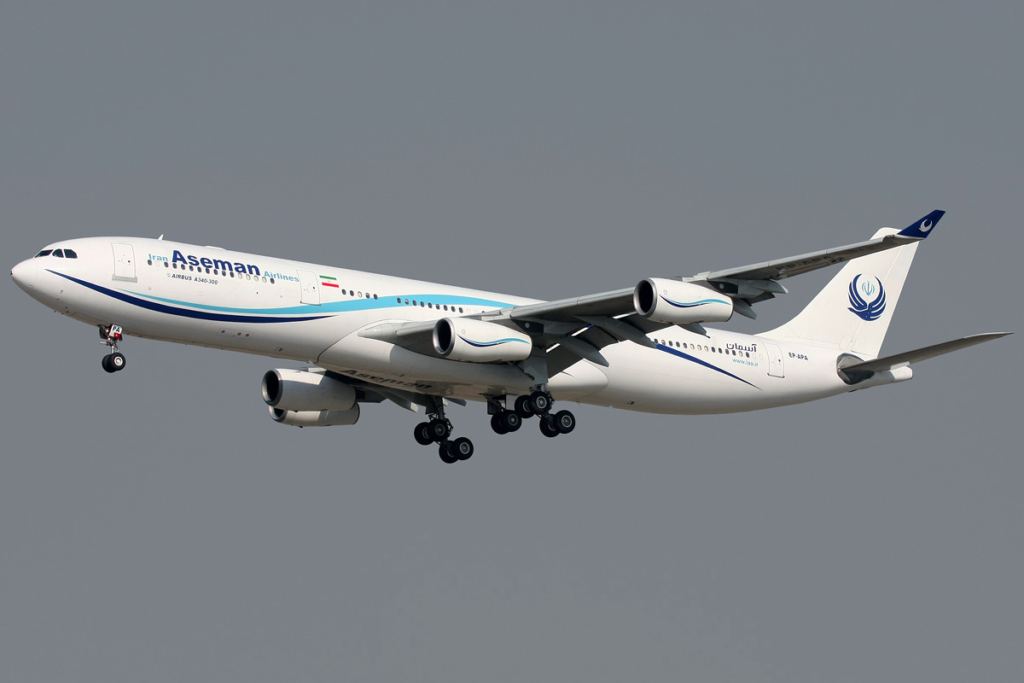
When it comes to aviation, this means Iran can’t purchase new aircraft, new engines, and the like. These can be fairly easily controlled and monitored by the OEMs.
However, it is a different matter when it comes to old and retired equipment. This is much more difficult to control. Iran has developed a sophisticated network of shell companies to purchase retired second-hand aircraft that are looking for buyers or otherwise heading to the scrapyard.
This is why the US shredded its retired F-14 Tomcats. By destroying them, it ensured Iran would not be able to purchase parts second-hand. Even so, there were court cases of Iran purchasing some components that hadn’t been destroyed.
How do you keep a “Turkey” out of the wrong hands? You “kill” it. In July 2007 the Pentagon shredded every flyable F-14A/B in the Boneyard to prevent Iran from getting spare parts.
— Air Power (@RealAirPower1) November 19, 2025
A true horror story. pic.twitter.com/wt3KY7kjVP
This means Iran can keep an aviation industry operating, even if it is old, inefficient, limited in numbers, and essentially held together by duct tape. The country’s average fleet age is 28 years, over double the global average.
Get all the latest commercial aviation news on AGN here.
Iran flies on under sweeping UN sanctions
Iran was offered sanction relief as part of the Joint Comprehensive Plan of Action (JCPOA) nuclear agreement in 2015. Iran then quickly moved to order hundreds of Boeing, Airbus, and ATR aircraft. Only a few were delivered before the US unilaterally reimposed the sanctions in 2018.

Even though European countries did not reimpose the sanctions, it was not possible to sell Airbus and ATR aircraft, as these have extensive US components.
In September 2025, the E3 countries (Britain, France, and Germany) chose to activate the snap-back mechanism in the UN Security Council. Iran’s sanctions are now UN-level sanctions and not unilateral US sanctions.
Russia is in a similar predicament, although with some notable differences. One difference is that Russia has a large domestic aviation industry and the ability to manufacture aircraft, even if they are far from ideal. Despite claims to the contrary, it remains unclear if Iran can produce aircraft domestically.
[Post text here]
— OSINT613 (@Osint613) June 23, 2024
Another difference is that Russia is a much larger country with a much greater need for a functioning air network to keep connected.
Featured Image: Wikimedia Commons
Sign up for our newsletter and get our latest content in your inbox.


More from


October 4, 20264 min read


