


Boom adapts its Symphony engine to power AI data centres moving the Overture supersonic airliner closer to reality

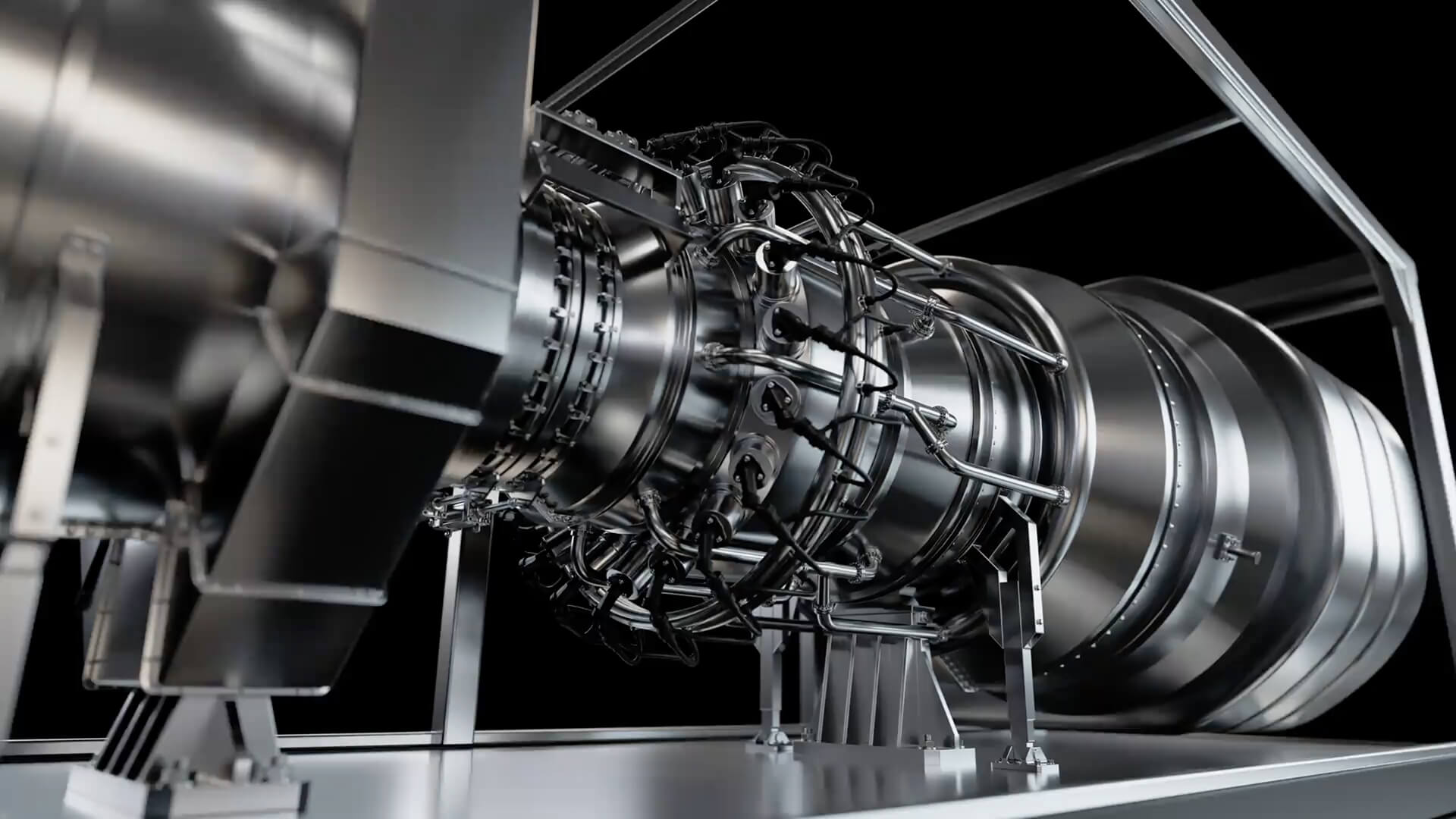
Boom Supersonic, the US aerospace firm developing the Overture supersonic passenger airliner, is moving beyond aviation with the launch of an industrial gas turbine designed to meet the surging electricity demand of AI data centres.
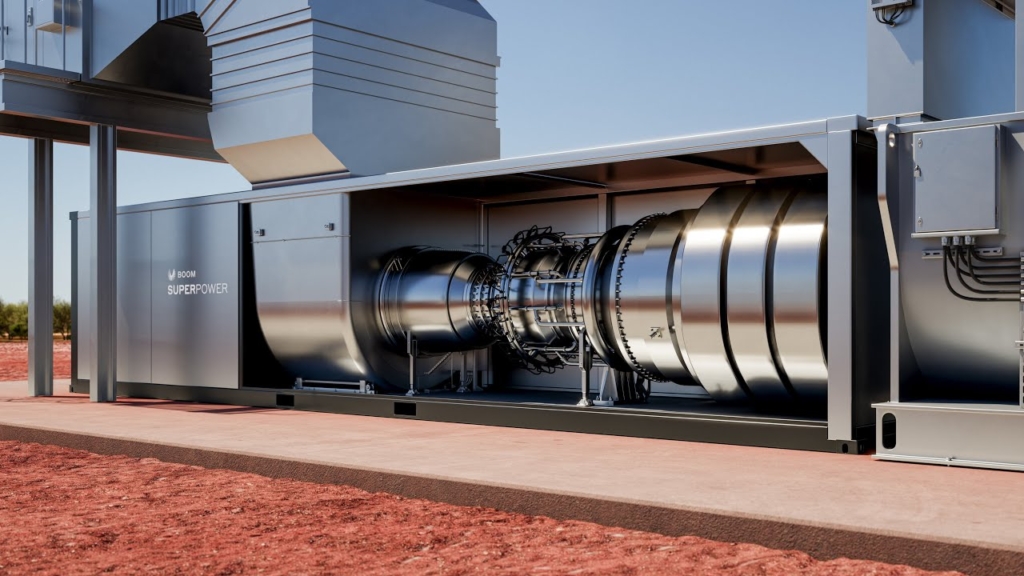
The 42 MW turbine, named Superpower, is built around the core of Boom’s Symphony engine and debuts alongside a $300 million funding round. Energy-tech operator Crusoe has become the launch customer with an order for 29 turbines, representing 1.21 GW of planned power capacity.
Boom says the combination of early revenue and fresh capital provides a self-funded path for both the Superpower turbine and the Overture programme.
Why AI data centres are driving demand for new power turbines
The move is driven by the rapid growth in AI workloads and the mounting pressure they place on the US electricity supply. Many compute providers are now turning to behind-the-meter natural-gas power plants to bypass grid congestion and long lead times for new transmission lines.

In a blog post outlining the shift, Boom founder and CEO Blake Scholl argued that existing industrial gas turbines, often derived from older subsonic engines, are not optimised for today’s needs.
They perform best in cold, high-altitude environments and can lose substantial output in the hotter climates where data centres are typically built, sometimes requiring derating or significant water-cooling.
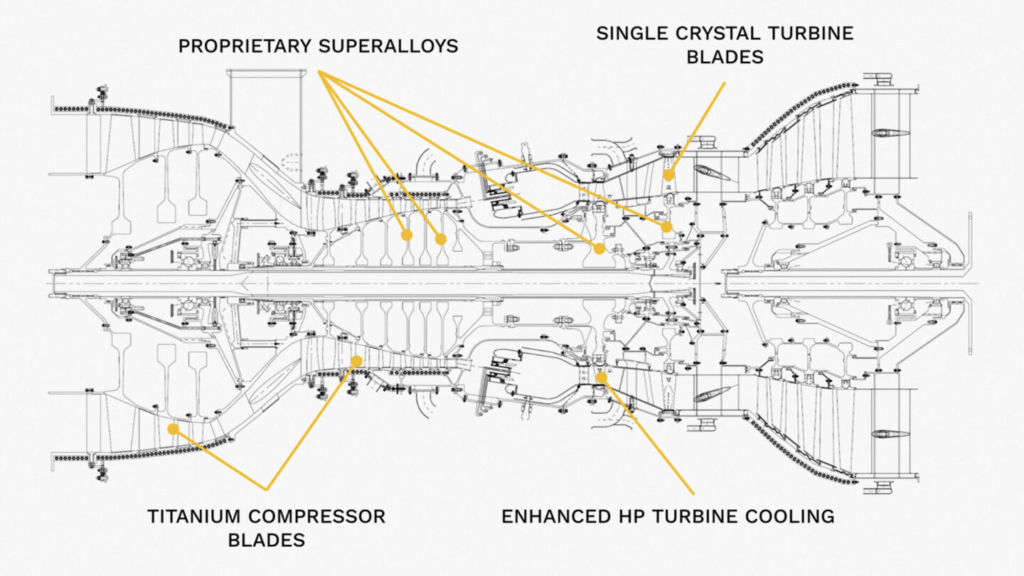
By contrast, the Symphony engine core was designed for continuous high-temperature operation at Mach 1.7. Repurposing that architecture for ground use, Scholl said, allowed Boom to develop a turbine that maintains output even in extreme heat.
“Where legacy turbines lose 20%-30% at 110°F, Superpower maintains its full 42 MW output without derate – and without water,” he said.
How Boom adapted its Symphony engine into a 42 MW power turbine
Boom says Superpower retains key elements of Symphony’s design, including:
- the same high-temperature core
- full-power operation in high ambient heat
- no water required for cooling
- a cloud-native monitoring system inherited from Boom’s XB-1 demonstrator
Operational hours from Superpower units will also count toward long-duration validation of Symphony. “Every hour a Superpower turbine spins is an hour of validation for Symphony,” Scholl said.
Boom has begun manufacturing initial turbine components and is establishing a dedicated Superpower Superfactory to scale production from raw materials to fully assembled units.
Equipment has been ordered to support 2 GW of annual capacity, with a target of 4 GW per year by 2030. Deliveries to Crusoe are expected to begin in 2027.
Scholl described vertical integration as essential to meeting demand. “If America wants to build at the speed AI requires, vertical integration isn’t optional.”
Boom raises $300M to scale Superpower and fund Overture development
The $300 million round was led by Darsana Capital Partners, with participation from Altimeter Capital, ARK Invest, Bessemer Venture Partners, Robinhood Ventures and Y Combinator.
According to Scholl, the combination of investment and turbine revenue is intended to sustain the business through its long aircraft-development cycle.
“This is the last round of capital we need to raise,” he said. “We use turbine revenue to fund the aeroplane.”
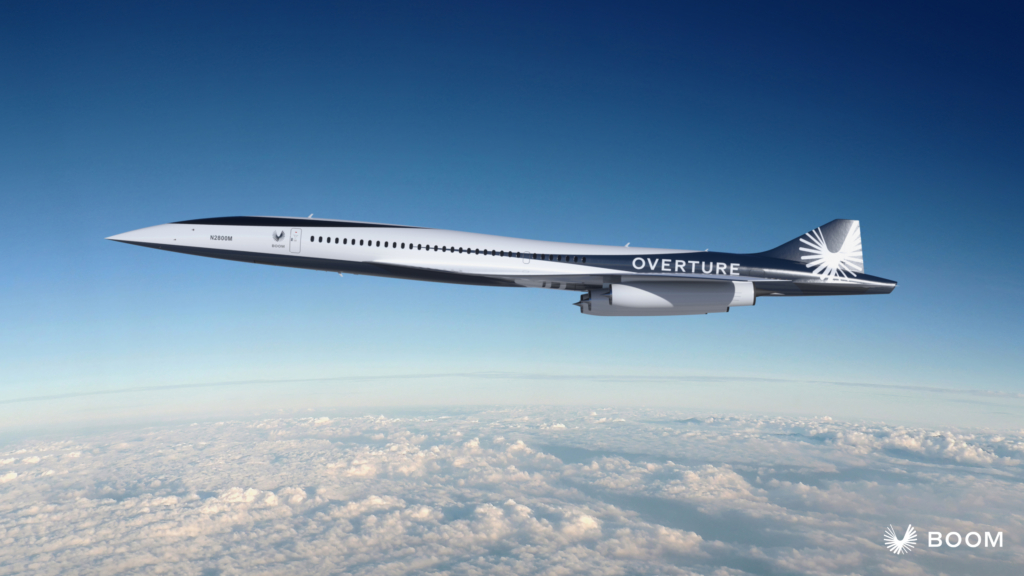
Boom frames Superpower as both a commercial product and a strategic tool to accelerate its core aerospace ambitions. The turbine programme provides:
- near-term revenue during the long road to airliner certification
- large-scale endurance data to support Symphony
- expanded manufacturing capability that can transfer into aviation production
Scholl called the development “a turning point” for the company.
Superpower turbine testing, milestones and 2027 delivery plans
From here, Boom Supersonic has set out its roadmap for the Superpower turbine:
- First fully integrated Superpower on test stand: late 2026
- First customer deliveries: 2027
- Symphony core testing in Colorado: mid-2026
- Production ramp to 4 GW/year: 2030
By adapting its supersonic engine technology for the energy sector, Boom is attempting to address two major challenges simultaneously. If its production timeline holds, Superpower could help relieve the power bottleneck facing AI infrastructure while accelerating Overture’s development through commercial-scale engine validation and a new revenue stream.


