


Why defence aviation is turning to commercial innovation to accelerate capability and cut development times

3 min read

With over 25 years in military avionics, Danny Knee brings deep expertise in mission-critical systems and defence procurement to his role at Acron Aviation. He now helps governments and industry integrate commercial innovation into military platforms to reduce timelines and strengthen capability.
The defence aerospace sector is experiencing its fastest growth since the Cold War, fuelled by a sharp rise in spending across Europe.
By the end of 2025, European Union member states are projected to have spent €380 billion on defence, up €40 billion from 2024.
Yet as demand for new and reliable capabilities accelerates in a turbulent geopolitical environment, the traditional long-cycle military development model is struggling to keep pace. This challenge is further compounded by a widening skills gap that continues to slow production rates.
To overcome these bottlenecks, military aviation is increasingly turning to the speed, efficiency and innovation of the commercial sector.
The speed gap and the defence talent shortage
Military aviation has historically relied on long, sequential development timelines, creating a risk that systems may be outdated by the time they enter service. At the same time, the industry faces a critical talent shortfall as experienced engineers retire faster than new specialists can be trained.
Commercial aviation, by contrast, evolves in far shorter cycles and benefits from a broader, more dynamic talent pool. Leveraging commercial technologies allows defence programmes to tap into this ecosystem, improving production efficiency and enabling valuable knowledge transfer.
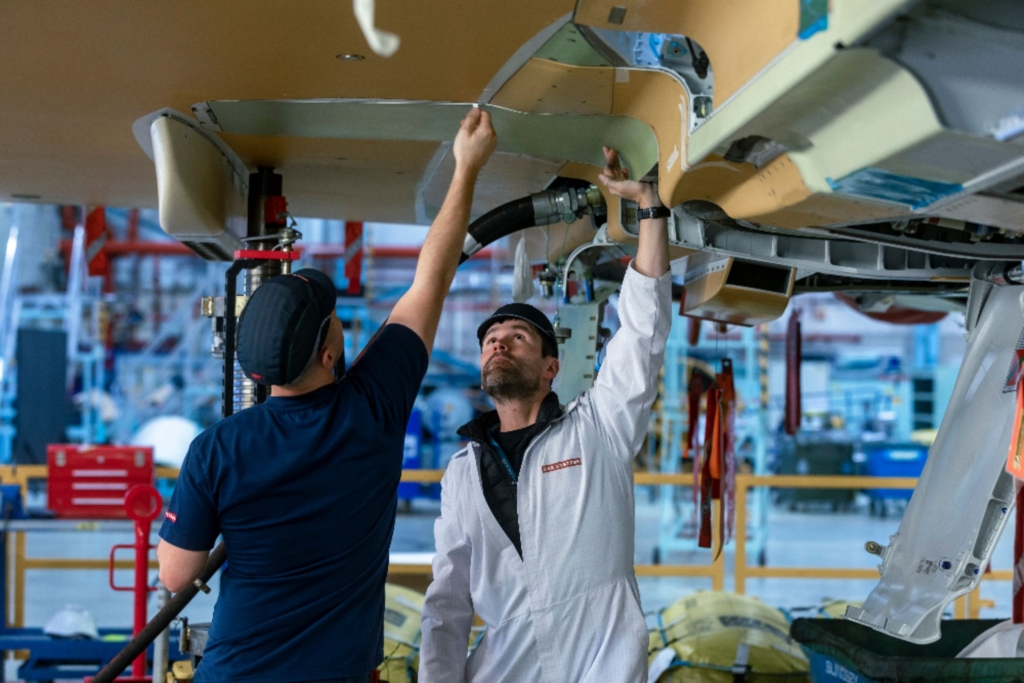
Budget constraints are also calling the sustainability of legacy development models into question. Bespoke components, extensive testing and lengthy certification processes raise costs and slow delivery. Commercially derived solutions offer a pragmatic alternative that can be delivered at a fraction of the time and cost.
How commercial innovation is strengthening military capability
Commercial aviation companies are well placed to deliver defence solutions at commercial speed. Adapting proven commercial products for military use is both cost-effective and reliable, which is why more military aviation teams are now using this route to mitigate production pressure and fill capability gaps.
When developing OEM-certified cockpit displays, surveillance systems or mission-critical avionics, commercial specialists are layering military-specific requirements for ruggedness, cybersecurity and environmental tolerance onto established commercial architectures. These solutions enhance situational awareness, mission effectiveness and intelligence gathering while maintaining high reliability.

Flight data monitoring systems, long standard in commercial operations, are being adopted increasingly across military fleets. Voice and flight data recorders, refined continuously through commercial service, now meet rigorous MIL-SPEC standards for durability and precision, allowing them to operate across fixed-wing, rotary and unmanned platforms.
Crucially, these systems are supported by full lifecycle coverage and 24/7 Aircraft on Ground (AOG) support, ensuring operational availability.
Training systems: The strongest commercial–military crossover
Training systems are a clear example of hybrid commercial–military innovation. Modern full-flight simulators now incorporate commercial gaming engines, virtual reality environments and machine-learning algorithms.
Originating in the consumer and commercial markets, these technologies have been adapted for defence use to create more immersive, effective and affordable training environments.

For pilots, this means training on devices that accurately reflect modern cockpit layouts and avionics logic, delivered on development cycles far shorter than traditional military-only systems.
The future: commercial speed as a strategic military advantage
The crossover between military and commercial aviation will only grow in importance. Budget constraints, talent shortages and the urgent requirement for new capabilities in an uncertain geopolitical climate are accelerating militaries’ adoption of commercial innovation.
The current defence boom offers an opportunity to rethink development models and recognise commercial innovation as a strategic advantage. This does not mean abandoning military-specific requirements, but rather being smarter about where resources are invested and how proven commercial technologies can be integrated.
Organisations that embrace commercial speed will deliver new capabilities more quickly, more affordably and with greater resilience, meeting critical operational needs at a pace the modern defence environment now demands.
Sign up for our newsletter and get our latest content in your inbox.


More from


January 15, 20251 min read

January 15, 20251 min read


April 18, 20241 min read


July 22, 20222 min read


November 21, 20232 min read