


What EHang’s first ever electric air taxi flight in Africa really means for the continent

4 min read

Following its African debut in Rwanda on 4 September, EHang now plans to continue exploring eVTOL applications and opportunities across the continent.
When Chinese eVTOL manufacturer EHang flew the first-ever electric air taxi in Rwanda, it signalled much more than a PR exercise. It was a statement of Africa’s intent to leapfrog mobility challenges and position itself as a global leader in the Urban Air Mobility (UAM) sector.
EHang’s EH216-S takes to the skies above Kigali
The demonstration flight, which took place during this year’s Aviation Africa 2025 Summit and Exhibition in the Rwandan capital, Kigali, was carried out in close collaboration with the Rwandan Civil Aviation Authority (RCAA).
Speaking at the summit, Jing Xiang, EHang International’s Chief Operating Officer, underlined his pride at “achieving the historic milestone”.
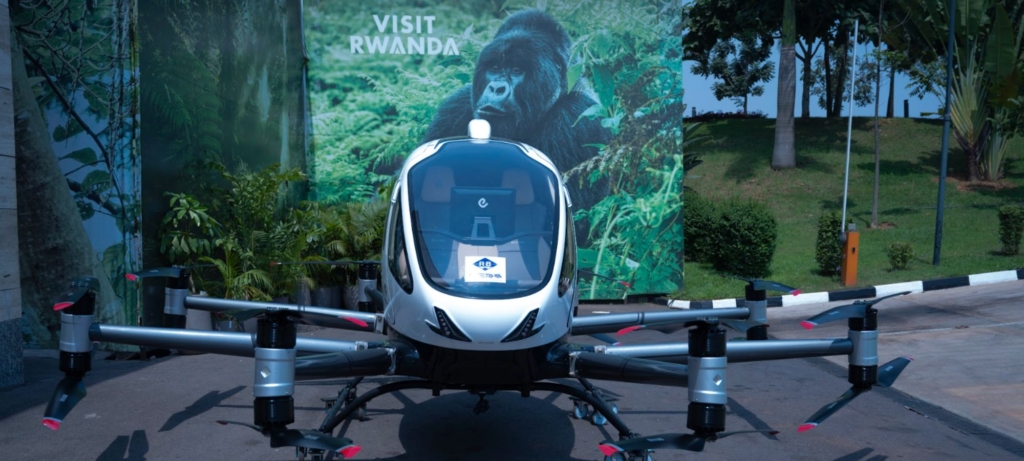
The demonstration flight was operated on an EH216-S – the world’s first pilotless human-carrying eVTOL to achieve the full suite of regulatory certifications, including its Air Operator Certificate (OC) for passenger carrying pilotless aerial vehicles from the Civil Aviation Authority of China (CAAC). The flight in Kigali follows EHang’s successful demonstration of passenger flights in Indonesia in June.
Noting that the demonstration flight in Kigali was the result of close collaboration with the RCAA and other public stakeholders, Xiang said it showcased the safety and maturity of EHang’s technology. He also noted: “We are confident that this flight marks the beginning of a new chapter for Advanced Air Mobility (AAM) in Africa, with Rwanda once again leading the way in innovation and smart mobility.”
Rwanda at the forefront of Africa’s low-altitude economy
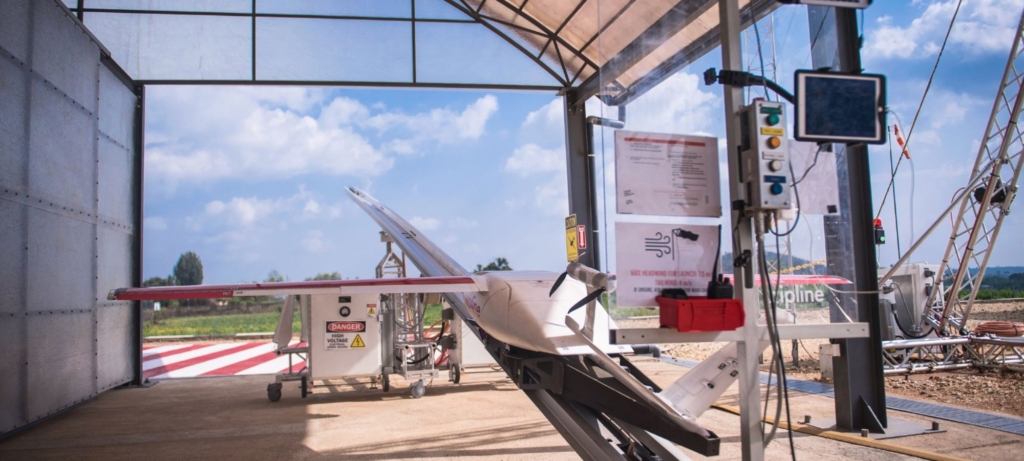
Rwanda is no stranger to UAM innovation. In 2016, the country partnered with US firm Zipline to deliver life-saving medical supplies, including blood, by drone to remote communities throughout the country. Zipline is also operational in Ghana, Nigeria, Kenya and Côte d’Ivoire and is now expanding into direct-to-consumer deliveries.
By 2026, Zipline plans to launch home delivery services in the Rwandan cities of Kigali, Musanze and Rubavu using Zipline’s latest drone, the Platform 2 (P2), which is designed specifically for urban environments.
Unlike the company’s earlier models, which dropped packages by parachute, the P2 lowers goods safely using a tether system. Zipline is currently working with local retailers to build a catalogue of goods for home deliveries and establish appropriate pricing.

Speaking at Aviation Africa 2025, President Paul Kagame, praised Rwanda’s partnership with Zipline, saying the “technology not only saves time, it also saves lives.” He also reiterated the role of drones in helping drive the future of digital commerce in Africa.
Beyond its partnership with Zipline and in line with plans to develop its low-altitude economy (all activity in airspace below 400 ft), Rwanda is currently planning a network of 30 vertiports around the country to support UAM operations.
Emerging sectors driving growth
While sectors including agriculture, energy, health, mining, construction and conservation services are already benefitting from Africa’s drone economy, emerging sectors such as e-commerce, public safety and disaster response, carbon markets, transport and linear assets and coastal and fisheries oversight are also driving growth.

As Jonty Slater, the African Drone Forum’s co-chair, pointed out, “drones in Africa compete with the absence of roads, that’s why logistics, inspection and environmental services are taking off first.”
Challenges on the horizon
While the opportunities for drones abound in Africa, there are also some major hurdles to overcome. High costs, infrastructure limitations such as poor internet connectivity and power shortages, as well as harsh operating environments, complicate operations. Fragmented regulations, particularly around Beyond Visual Line of Sight (BVLOS), night operations and payload limits, add uncertainty.
Other challenges include inconsistent risk-based frameworks, airspace data and digital services gaps, licensing and training shortages, taxation and insurance bottlenecks and long supply chains for spares and repairs. Stakeholders across Africa stress the need for greater investment in ground infrastructure, including service centres in remote areas and training facilities.
Yet, Africa’s ability to leapfrog mobility challenges with drones remains compelling. IN areas where road infrastructure is weak or non-existent, drones become the rational first and last mile solutions. They are also a practical way to create up-to-date base maps, cadastral data and asset inventories – critical foundations for infrastructure finance.
Government cooperation and collaboration to scale the industry
To unlock the full potential of drones and UAM, African governments must collaborate and cooperate on regulatory frameworks that drive innovation while safeguarding operations. There also needs to be greater investment in research, development and skills training to build a resilient, homegrown workforce.
With Africa’s first electric air taxi flight now under its belt, EHang is set to continue collaborating with local governments to expand its footprint across the continent, demonstrating how air mobility can address transportation challenges, enhance economic growth and improve livelihoods.

Mr. Rucheng Lu, Chief Engineer of EHang, noted: “With over 73,000 safe flights already completed, the first human-carrying flight in Africa marks an important step in accelerating EHang’s global expansion. We will continue to engage with African airlines, airports, civil aviation authorities, industry organisations, and aviation professionals, exploring innovative models and providing solutions that promote the development of Africa’s transportation, logistics, tourism and other sectors, and contribute to the better development of global new civil aviation.”


