Europe’s space sector has world-class talent, but politics is stalling progress

January 10, 2026

Martin Halliwell is the former Chief Technology Officer of SES, where he led global technology and R&D from 2011 to 2019. He joined the company in 1987 after early roles at Cable & Wireless and Mercury Communications, holding senior positions across engineering and operations before becoming CTO. Known for advancing flexible satellite architectures and pioneering work on reusable rocket launches with SpaceX, he later served as Strategic Advisor to the CEO. Halliwell holds an MBA and BA in Mechanical Engineering and Mathematics from the Open University and is now a Partner at NewSpace Capital.
Despite mounting public and private spending in European space, the gap between Europe and the U.S. and China has widened. This was one of the many findings of McKinsey, which in its latest report said Europe’s “competitive edge had eroded” and action should be taken “today” to get it back on track.
The authors praised the continent’s technical sophistication, but warned that something had to change.
Europe’s space capability gap is widening
The report set out a handful of changes Europe should consider making. One area it highlights, and which is worth further study, is what it calls the “complex institutional framework” that coordinates policy, disperses funds to agencies, and then allocates them to programmes in individual countries.
It hints at the inefficiency that can follow from such an approach. But we could go further, and put it more simply at the same time: European space is, much of the time, paralysed by politics.
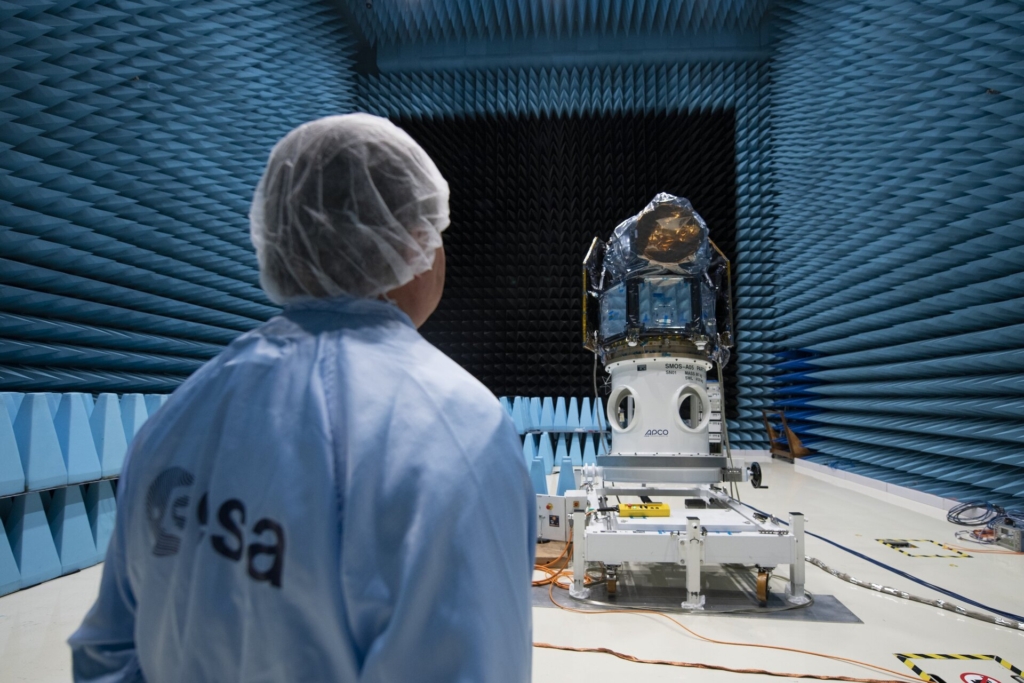
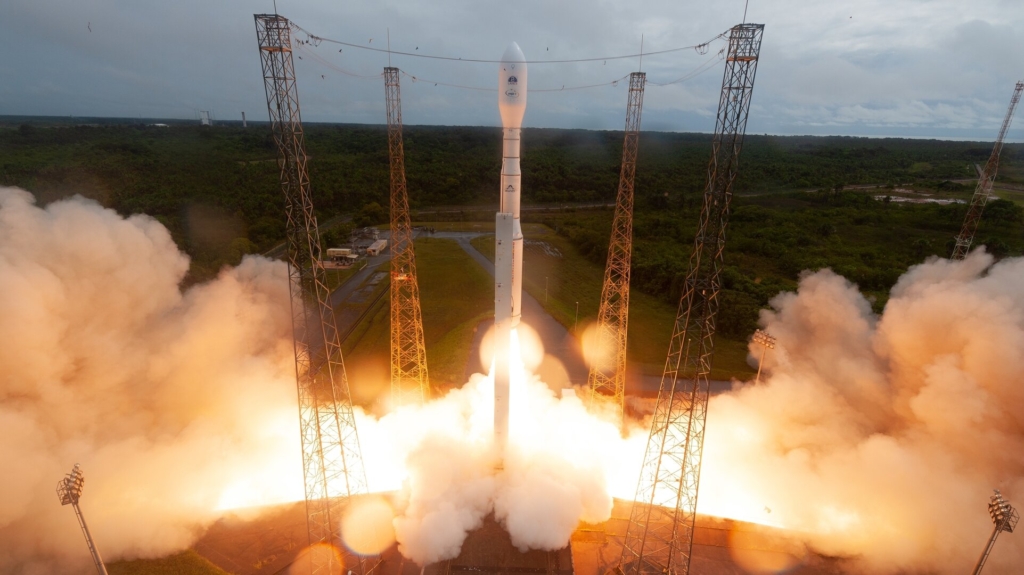
In conversations around the sector, SpaceX is brought up a lot. It provides a useful case study when thinking about developments in this area, and the role that politics plays in enabling, or stifling, innovation and growth.
Like many good engineers, Elon Musk swears by first-principles thinking, for instance, breaking down battery manufacturing to its basic costs in order to challenge the belief that batteries would always be expensive.
With SpaceX, he aimed to rebuild aerospace from scratch, integrate vertically to speed up development, and then iterate aggressively. But this was only possible because he was not tangled up in red tape.
Elon Musk is a Marmite figure, but his intelligence and talent as an engineer are rarely disputed. It is not beyond the realms of possibility that Europe could produce someone, perhaps many people, capable of building something like SpaceX.
The continent is awash with talent, nourished by its many leading research institutions and nurtured by traditions of openness and free inquiry. In theory, this should give rise to the kind of creativity and energy often associated with Musk’s company.
Why European space start-ups struggle to scale
The problem is that bureaucracy and bottlenecks soon appear. Europe’s most dynamic people struggle to secure funding, to open channels to space and defence agencies, to compete with large legacy players, and to move quickly within a pan-European system that was, to a great extent, designed to ensure fairness between different countries rather than to unleash talented individuals and allow their companies to reach their potential on the global stage.
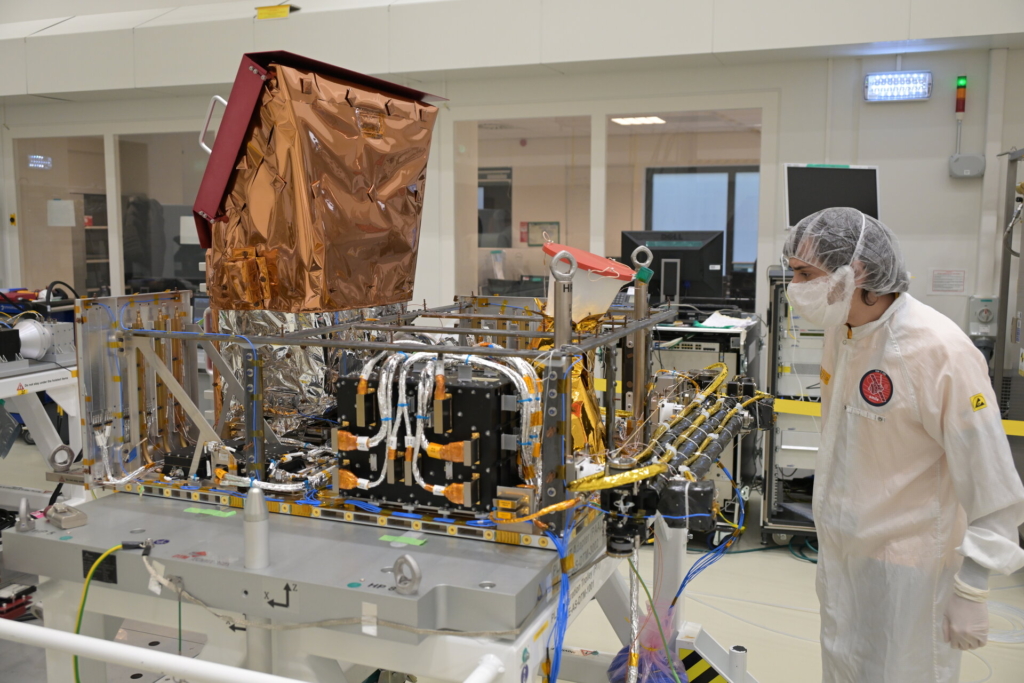
The attention paid to the Airbus–Thales–Leonardo merger is, in many ways, revealing. Billed in some quarters as an attempt to build a SpaceX rival, it is more accurately an effort by governments, stakeholders and the companies themselves to slim down oversized incumbents.
That this is seen as an exciting development is telling. Unable to create conditions in which talented newcomers can thrive, Europe instead finds itself spotlighting legacy players that have been around for decades, rather than the scale-ups and start-ups which, with the right support and under the right conditions, would be far more likely to compete with SpaceX.
Even if Europe could produce a company like SpaceX, politics would likely rear its head in other ways. It is unclear, for example, who would command a commercial satellite delivering military capabilities such as surveillance, intelligence, communications or targeting data.
With multiple nation-states, not just China or Russia, probing and testing Western satellites, Europe does not want to find itself quarrelling over sovereignty. Yet that is precisely the kind of muddle the current set-up risks creating.
Can Europe become a competitive space power?
Opportunities do exist for European companies. The continent leads the world in a range of highly specialised areas, such as advanced materials and electromagnetic interference protection, an increasingly crucial field given the rising threats to Western satellites from hostile state actors.
However, Europe will not become a major space power if it remains unwilling to do things differently, prioritising competition over fairness, and setting politics aside in favour of commercial growth and continental security. Effective public–private partnerships will be key, whether Europe hopes to catch up with China and the U.S., or merely slow the widening gap highlighted by the McKinsey report.
Space is a vital domain. It is bound up with defence, productivity and sustainability. Accordingly, Europe must recognise that what worked five, ten or fifteen years ago is no longer fit for purpose.
A revolution is not necessary. But reform aimed at making that “complex institutional framework” genuinely enabling rather than disabling is essential if Europe is to become a credible space power with the strategic autonomy it has long sought.