The air forces with the most combat fighter jets in 2026

February 7, 2026
As a numbers game, the US, China, and Russia have the world’s largest combat fleets, although there are layers of naunce that give these numbers meaning. Some air forces have old 1960s-era aircraft counted even though they may never fly again.
Challenges of counting countries’ fighter jet fleets
The United States, China, Russia, and India are believed to have the most combat jets in service. However, it is difficult to make a direct apples-to-apples comparison due to a number of factors. It also makes little sense to compare an obsolete MiG-21 or MiG-29 on a one-for-one basis with an F-35.
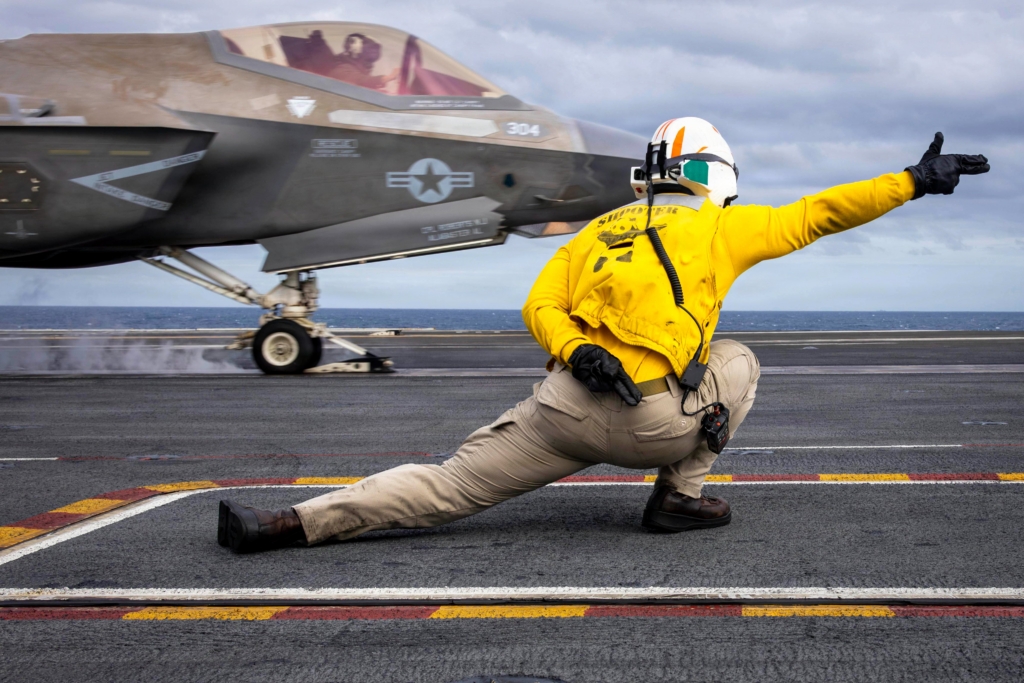
One major factor is that all United States fighter jets listed in inventory can reasonably be expected to be either operational or undergoing some sort of maintenance. They are all likely to fly again.
Aircraft that the USAF no longer wants to keep operational, but doesn’t want to fully divest, are moved to the boneyard at Davis-Monthan.
But this is not the case for all air forces. Many, like the Chinese PLAAF, do not disclose how many aircraft they have in service, and so rough estimates need to be made based on factors like serial numbers and satellite imagery.
A country like Russia no longer has the funds needed to maintain its vast stockpile of old and often out-of-date aircraft. But it also lacks a clear boneyard like the United States.
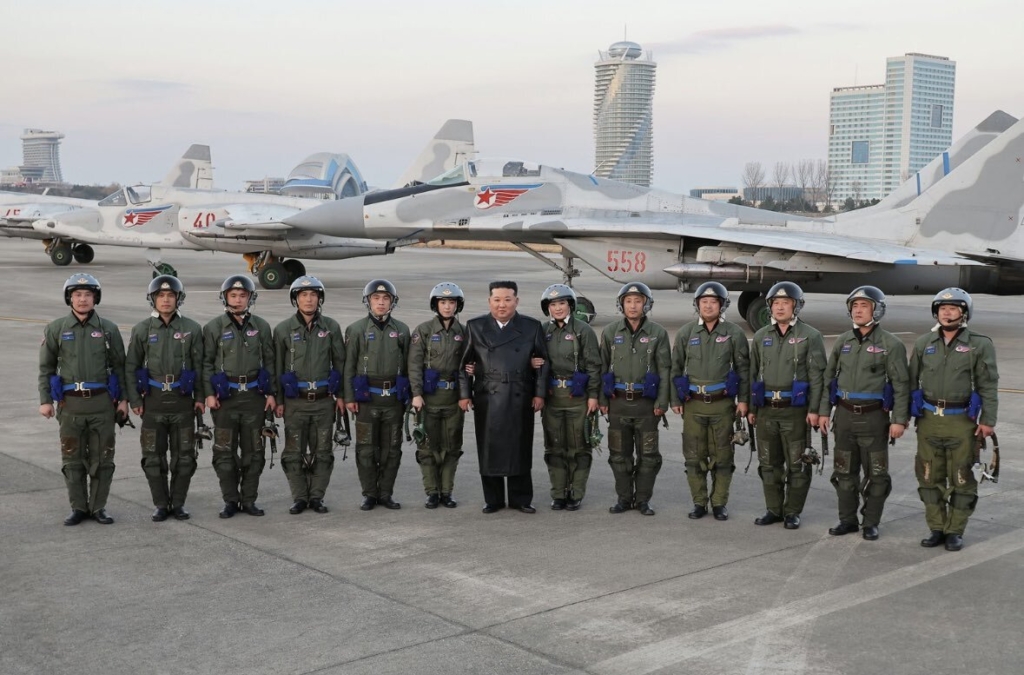
There is the risk of comparing the modestly sized fleet of modern and active fighters (e.g., the UK’s RAF) with a veritable museum park of old jets that are left to exist and otherwise rot (e.g., North Korea).
Russian aircraft may fall into disuse and be stripped for parts. These are left parked around the airbases and then counted by OSINT accounts, who add up visible combat aircraft at air bases from satellite images.
The countries with the most combat aircraft
According to FlightGlobal’s 2026 review of world air forces, the US has the most active combat aircraft, with over 2,700 in service. It is followed by China, Russia and India. Per FlightGlobal’s World Air Forces Directory 2026, these are the top 10:
| Rank | Country | Combat aircraft | Notes |
|---|---|---|---|
| 1 | United States | 2,718 | |
| 2 | China | 1,814 | |
| 3 | Russia | 1,559 | Approx. 660 core fleet including bombers |
| 4 | India | 600 | |
| 5 | North Korea | 455 | Mostly non-combatworthy |
| 6 | Pakistan | 421 | |
| 7 | Saudi Arabia | 364 | |
| 8 | South Korea | 340 | |
| 9 | Egypt | 332 | |
| 10 | Israel | 284 |
Source: FlightGlobal.
These numbers should be taken as a starting point and not at face value. FlightGlobal lists aircraft as “active” in an accounting sense, not in a readiness sense.
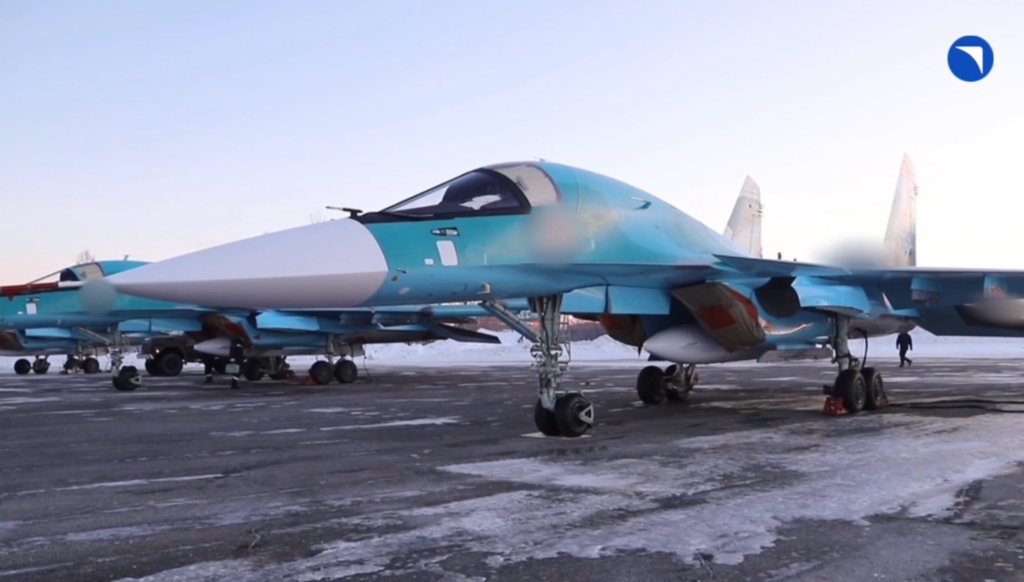
The first thing to note is that FlightGlobal’s combat aircraft category includes the strategic bombers that the US, China, and Russia operate.
The list seems to overstate and understate some air forces’ inventories considerably. The issue is the inconsistency that officially stored aircraft (e.g., the US’s boneyard) are not counted in other air forces.
North Korea’s 455 combat aircraft are extremely old and obsolete aircraft received during the early to late Cold War. Many will not be active, and North Korean pilots are known to receive very little flight training.
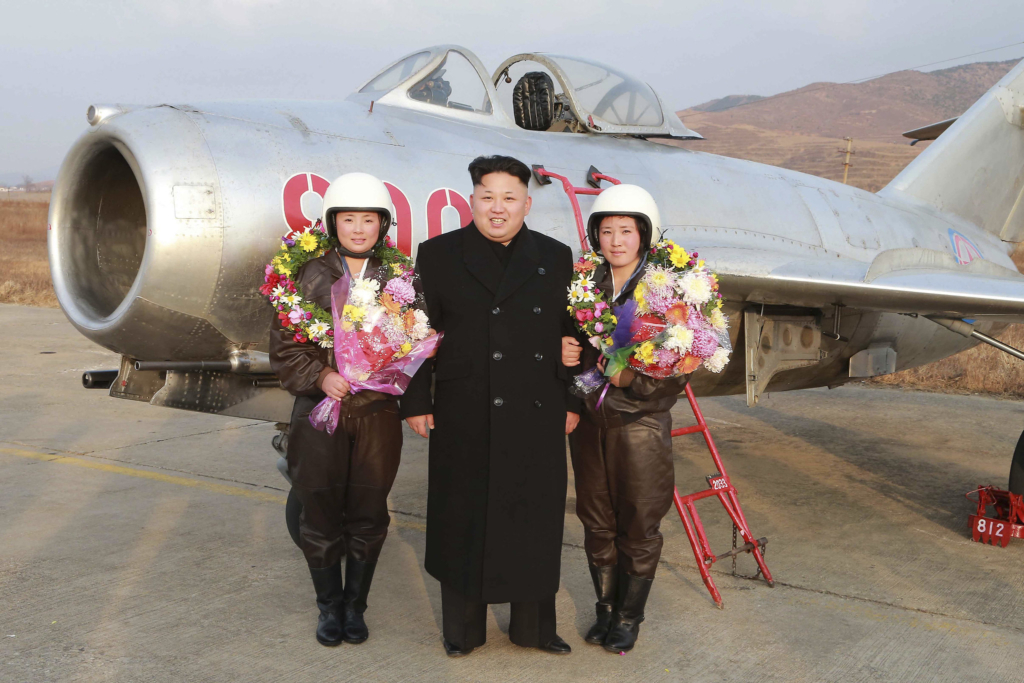
In 2024, Reuters cited the IISS that North Korea has over 400 fighters and 80 light bombers in inventory. It then added, “But many of its aircraft date back to the Soviet era, with some thought to be 40 to 80 years old and not serviceable or part of the active fleet.”
North Korea’s flightworthy fleet is likely some percentage of the number, maybe 15-25%.
The list says Russia has 1,559 combat aircraft in active use, even though many are no longer serviceable. Those that are flightworthy are generally not combatworthy in a modern, high-end fight.

Justin Bronk from the thinktank Rusi discounts Russia’s older MiG-29s, Su-24s, and Su-25s, and lists it as having a fleet of 545-560 fighter jets in service, plus 110-115 strategic bombers. Note that Su-24s and Su-25s are considered strike aircraft, not fighter jets as such, although they are counted as combat aircraft.
The United States has the most fighter jets of any air force
By any measure, the United States has the most fighter jets. The United States effectively operates two or three air forces, counting the Navy/Marines.
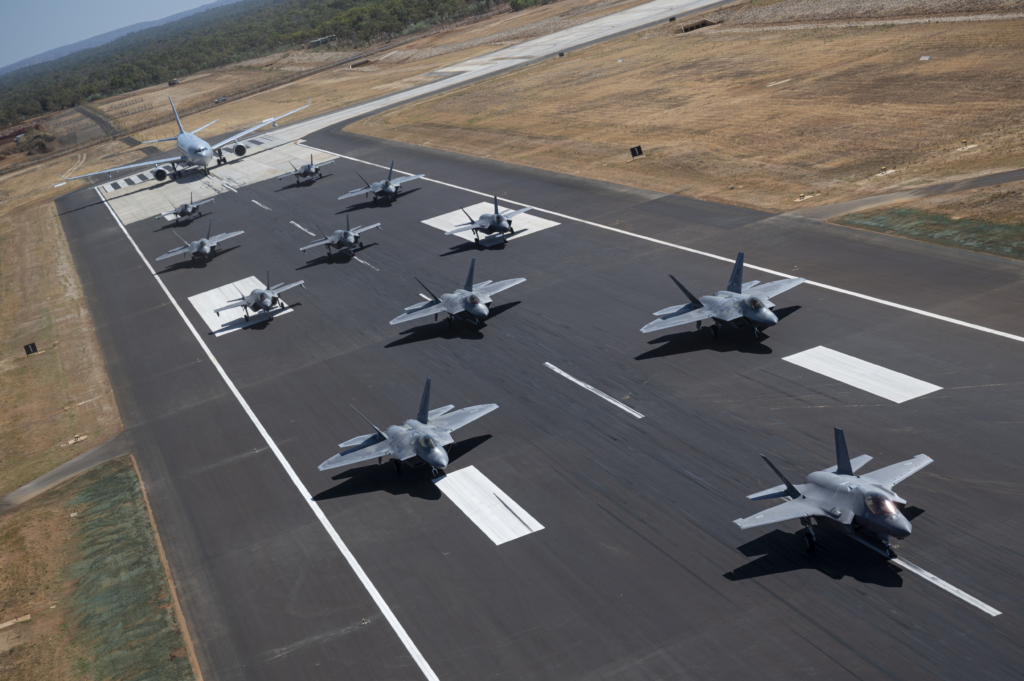
According to FlightGlobal, the US has a total of over 13,000 military aircraft, including 2,718 combat aircraft. Many of these are F/A-18s and F-35B/Cs operated by the Navy/Marines. The Navy/Marines effectively make up the world’s second most powerful force.
Overall, the US Air Force has around 4,000 non-training and non-UAV aircraft, while the US Navy/Marines operates another 3,300.
Conversely, the list only shows that the US Air Force has 439 F-35As in service, even though Lockheed had delivered over 500 to the USAF by the end of 2025. It shows the USAF has 177 F-22s in service, even though its actual inventory is around 185, counting those in deep maintenance.
Get the latest aerospace defence news here on AGN.
Most common types of fighter jets
According to FlightGlobal, the most common fighter jet is the F-16 Fighting Falcon (19% of the world’s fighter jet fleet), followed by the Su-27 Flanker series that includes updated variants like the Su-30/34/35 with a total of 1,299 (9%).
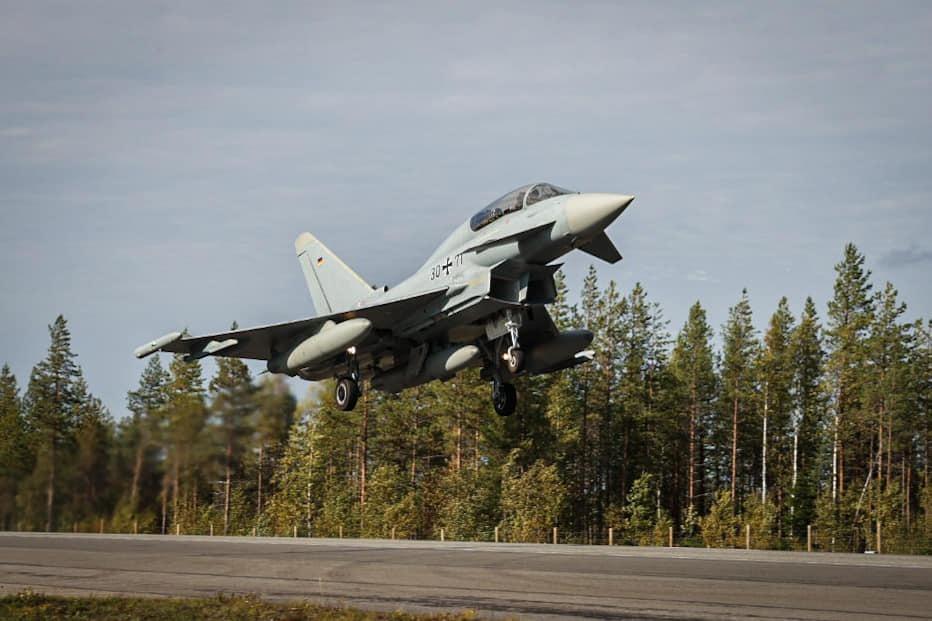
Other common fighter jet families are the F-15 (897), F-35 (883), F/A-18 (874), MiG-29 (728), J-7/F-7 (649), Eurofighter Typhoon (528), Su-24 (383), and Su-25 (371).
It should be noted that the F-35 is now likely the third most common fighter jet, with Lockheed having delivered around 1,200 by the end of 2025. China is phasing out the J-7, and as an old aircraft in service with poorly funded air forces, it is unclear how many remain operational.
The F-35 is expected to continue climbing in the rankings with around 150 more delivered annually and around 100 J-20s. The PLAAF is now believed to have received over 300 J-20s, so that aircraft may leapfrog the Su-24 and Su-25 in 2026 to take the 8th ranking.
Leading air forces are struggling to maintain numbers
As a general rule, most large air forces (like India, the US, China, and Russia) are struggling to simply maintain their numbers. The US Air Force has been shrinking since WWII and is likely to continue to shrink.

To make up for the loss of mass, the USAF is increasingly turning to combat UAVs (CCAs). The US reportedly only plans to purchase 185+ of its next-generation F-47, around 10% of the planned F-35 procurement.
There is a similar story with India, which has been struggling to replace the numbers left by retiring its MiG-21s with French Rafales and Indian Tejas.
China rivals the US in fighter jet production, but it also has to replace its huge stockpile of old J-7 and J-8 fighter jets. The total number of fighter jets in service has been largely stable or possibly declined over the last five years.
Justin Bronk estimated China produced 220-280 fighter jets in 2025 (almost all for domestic use). The China-watching OSINT account, Hurin, put the count at 222-232, with around 200 going to the PLAAF and 50 to the PLANAF.
My estimates
— Hûrin (@Hurin92) January 17, 2026
◾ J-35/A ~ 20-30
◾ J-10A/B/C = O
◾ J-10CE ≈ 12 (2025-26 so far)
◾ J-16/D ~ 60
◾ J-15T/DT/DH ~ 30
◾ J-20/A/S ~ 100
In all Airforce is getting ~ 200 new 4+/5th gen fighters annually while Navy ~ 50 https://t.co/ZrSl0ylw6R pic.twitter.com/iPFhIrc2DB
Russia’s fighter jet production over the last five years has likely ranged between 24 and 35 fighter jets, with a few exported. Coupled with losses in Ukraine, this is woefully inadequate to replace its on-paper vast combat jet fleet as they age out. That said, its core fleet, based on the Su-30/34/35 and Su-57, has likely grown modestly.
Featured Image: Lockheed Martin