Wizz Air adds at-seat ordering and tests inflight WiFi in major low-cost shake-up

March 26, 2026
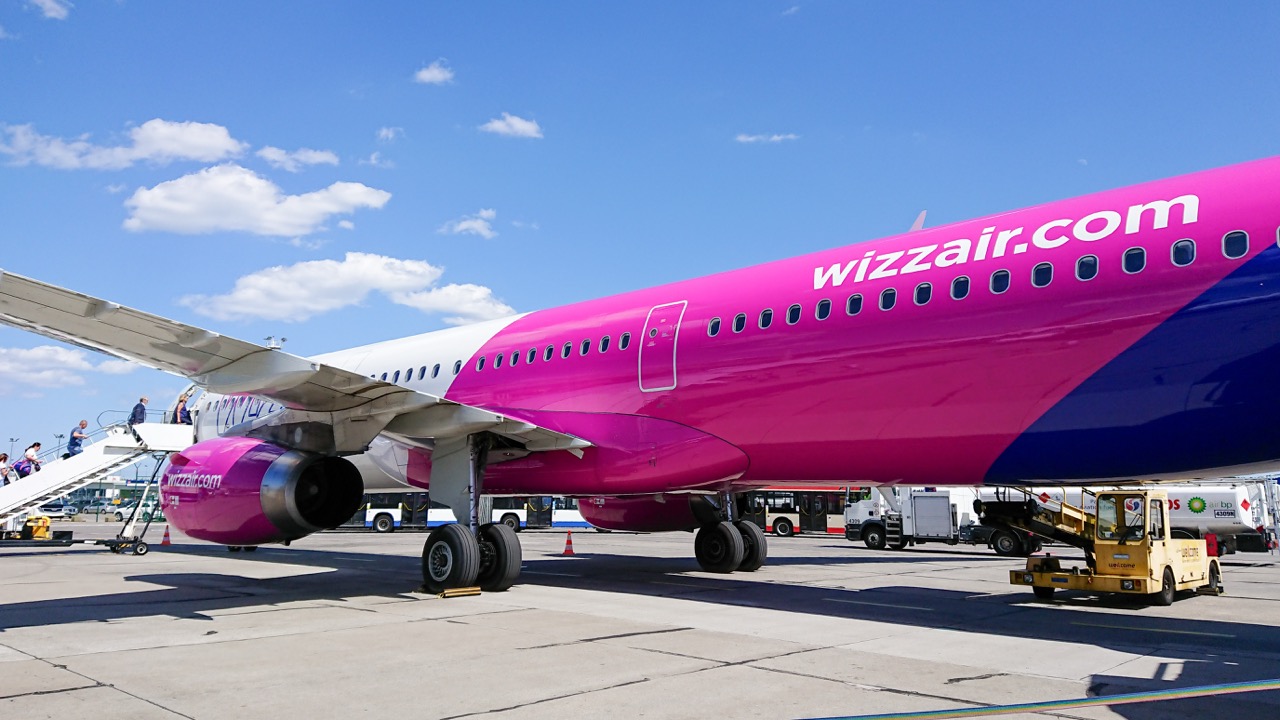
Wizz Air is testing a new integrated digital cabin ecosystem that combines onboard retail and low-bandwidth connectivity, as the European low-cost carrier explores ways to enhance passenger services and operational efficiency.
The initiative — developed with digital cabin specialist Immfly and inflight retail provider gateretail — includes Bluetooth-enabled at-seat ordering across the airline’s fleet and a new connectivity trial using the Iridium satellite network.
The project combines connectivity, onboard retail and operational data into a single platform, supporting both passenger services and airline operational decision-making.
Bluetooth at-seat ordering rolled out across the Wizz Air fleet
The first element of the programme is a fleet-wide rollout of Bluetooth-enabled in-seat ordering across Wizz Air’s more than 260 Airbus A320 and A321 aircraft.
Passengers who download the Wizz Air mobile app before boarding will be able to browse and purchase food, beverages and boutique items directly from their personal devices during the flight.
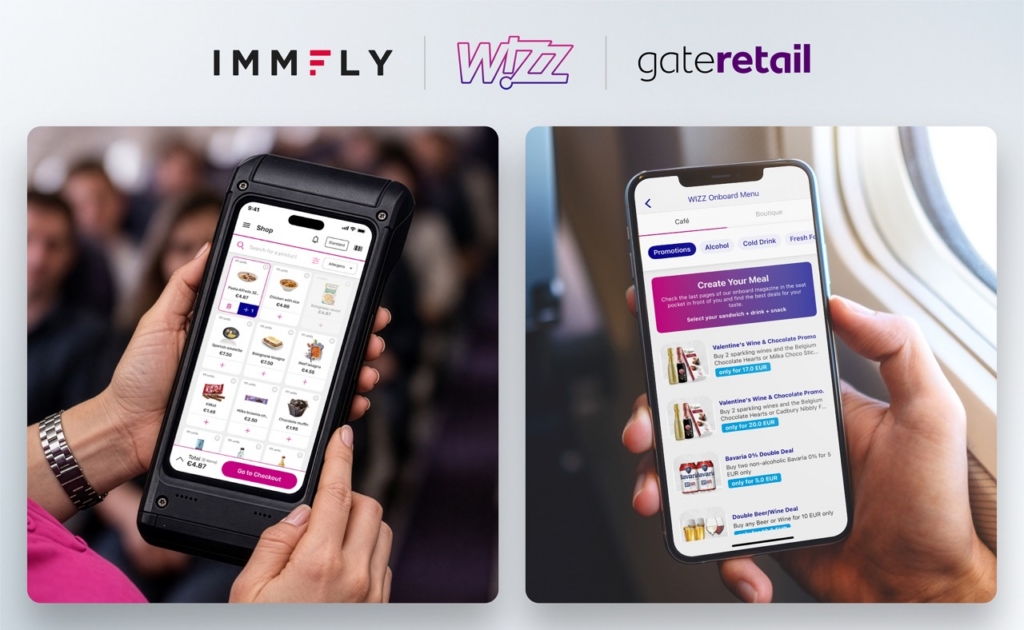
Unlike traditional onboard WiFi retail systems, the Bluetooth-based approach does not require an internet connection. Orders are transmitted directly to cabin crew, enabling airlines to reduce service wait times and offer more personalised retail options.
The solution is powered by Immfly’s digital cabin platform and integrated with gateretail’s inflight retail systems, which the companies say will help translate passenger demand into a more efficient onboard sales experience.
“This launch is about rethinking what the onboard experience looks like in a low-cost environment,” says Ian Malin, Chief Commercial Officer at Wizz Air. “We are investing in smart, scalable technology that gives customers more control and more choice, from ordering at their seat to staying connected in the air.”
Iridium connectivity trial launched on five Wizz Air aircraft
Alongside the retail rollout, Wizz Air is taking a significant step toward inflight connectivity, launching a six-month trial of a lightweight, low-bandwidth system powered by Immfly’s Equilux server and the Iridium satellite network.
The trial, which will run on five UK-based aircraft through the summer, is designed to test whether connectivity can finally work at scale in a low-cost model, long considered one of the industry’s toughest challenges.
Rather than offering full streaming WiFi, the system focuses on delivering essential services using minimal bandwidth via Iridium’s global satellite network, keeping costs and complexity down.
Even so, it unlocks a range of new onboard capabilities, including:
- Wireless in-flight entertainment purchases such as movies, TV shows, podcasts and games
- Messaging packages, including WhatsApp bundles
- In-seat ordering for food, drinks and boutique products
- Live payment authorisation via satellite connectivity
- Flight information, moving map displays and destination content
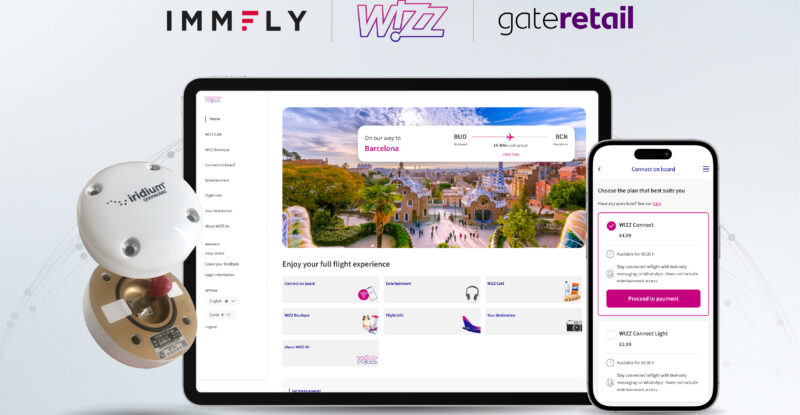
Beyond passenger-facing features, the digital cabin platform also provides operational tools for Wizz Air’s crews and operations teams.
Crucially, the platform goes beyond passenger experience. It also feeds real-time operational data to crew and airline systems, supporting smarter decision-making around route planning, fuel use and day-to-day operations.
If successful, the trial could pave the way for a broader rollout, potentially bringing a new generation of cost-effective connectivity to Wizz Air’s wider fleet, and signalling a shift in what passengers can expect from low-cost flying.
Low-cost airlines often don’t provide inflight WiFi
Inflight connectivity has long been a tough sell for low-cost airlines, where every added cost must justify itself through ancillary revenue.
The expense of installing and operating onboard connectivity systems has kept many LCCs and ULCCs on the sidelines. Today, just 43% of low-cost airlines offer inflight WiFi compared to 89% of legacy carriers.
That gap is exactly what companies like Immfly are trying to close.
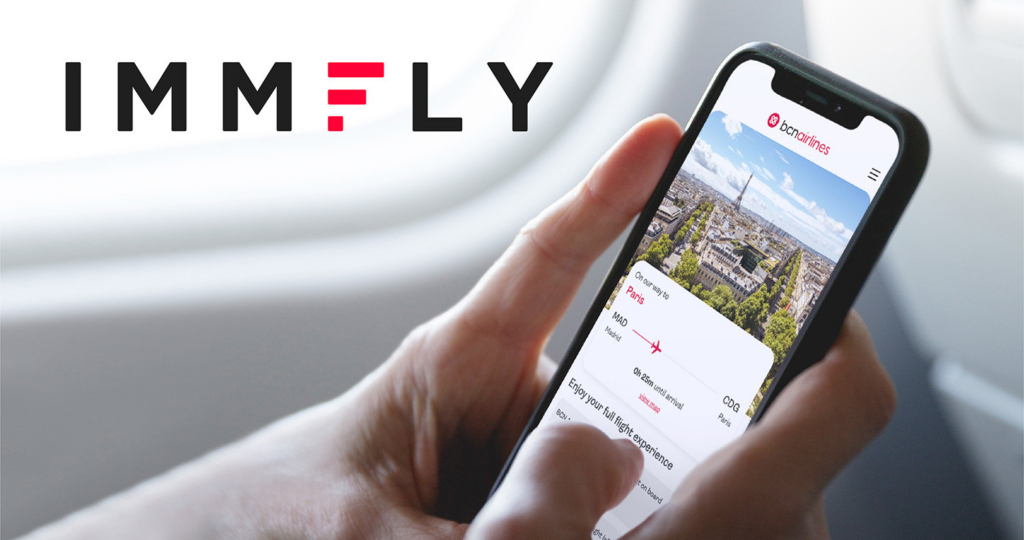
By working with onboard retail and connectivity partners, the company is developing lighter, lower-cost systems designed to make connectivity viable within the low-cost model, not just as a passenger perk, but as a revenue driver.
Its Equilux server is central to that approach. Installation can be completed in as little as 24 hours, reducing aircraft downtime, while the unit itself weighs just 2.5 kg, around 75% lighter than traditional embedded systems, helping to minimise fuel burn.
If solutions like this prove effective, they could finally unlock scalable connectivity for low-cost airlines, something the industry has been chasing for years.
Featured Image: CuteIdeas | stock.adobe.com