COMAC C929: China’s answer to Boeing’s Dreamliner inches closer to 2030 maiden flight

February 12, 2026
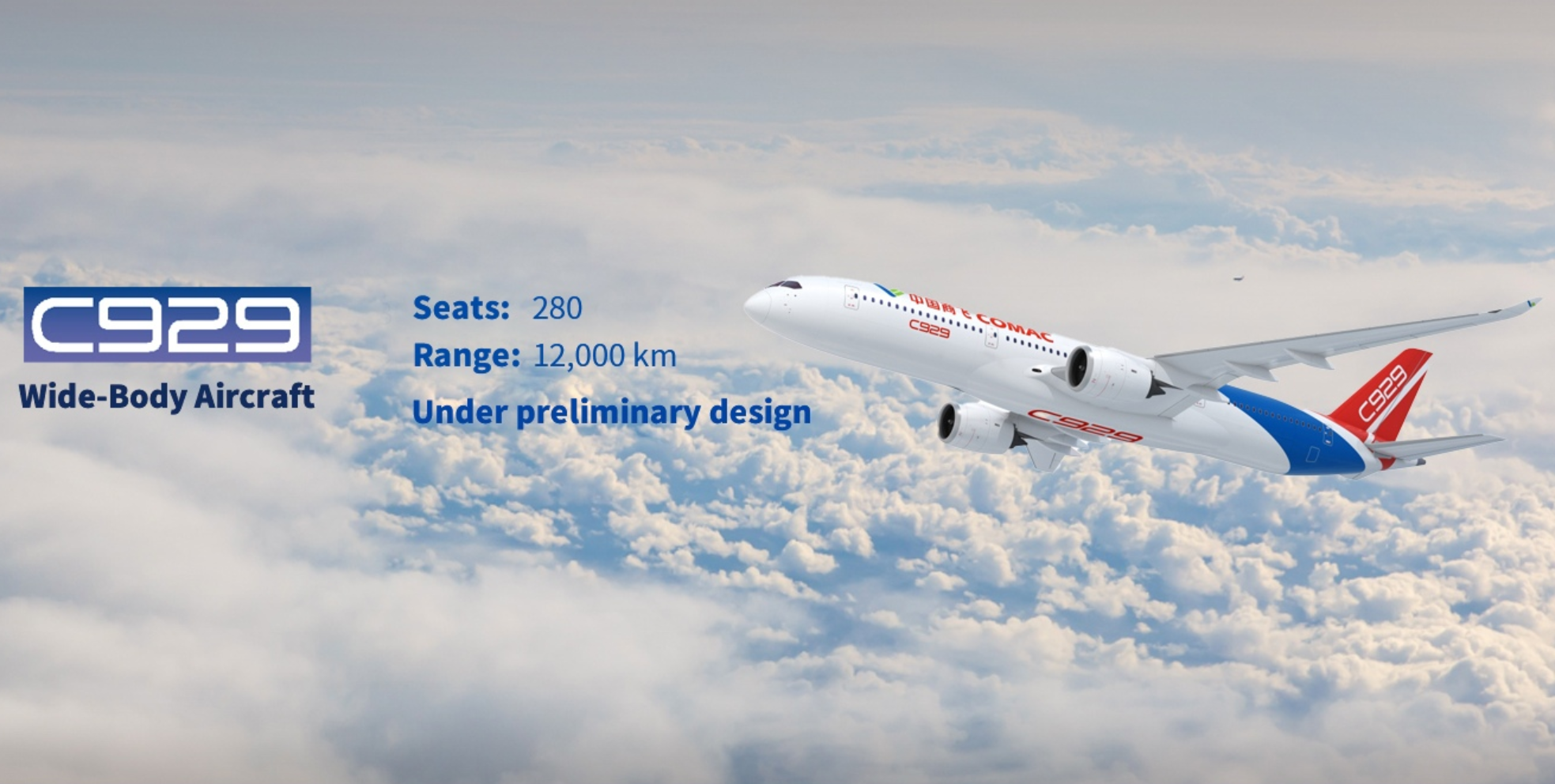
A provisional new agreement for China’s widebody C929’s ‘brain’ has been reached, but questions about its turbofan ‘heart’ remain.
New ‘brain’ agreed for China’s widebody C929
China’s state-run COMAC is moving forward to build its mid-widebody commercial airliner, the COMAC C929.
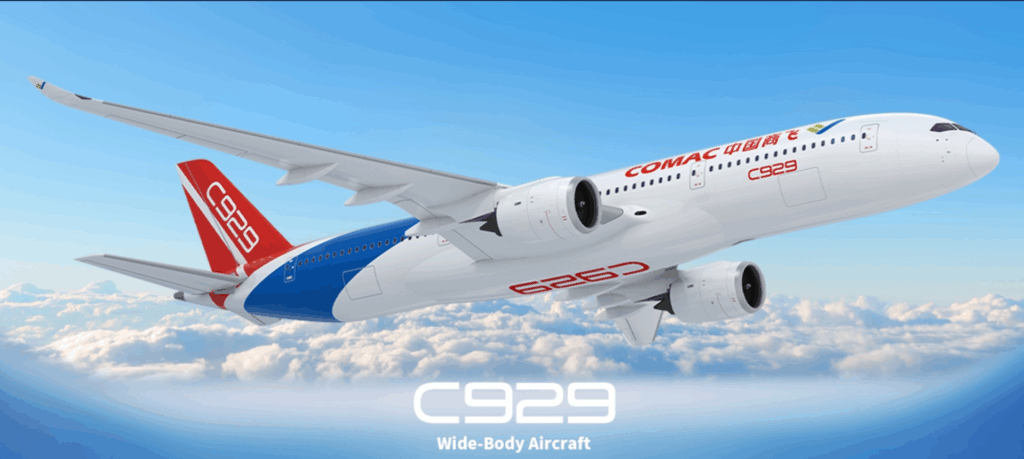
According to reporting by a Yicai news report, COMAC has signed a letter of intent with Aviage Systems on developing the C929’s core avionics processing system. This is the ‘brain’ for the upcoming Dreamliner challenger.
Aviage is equally owned by the US company, General Electric, and China’s AVIC. Aviage already supplies avionics to COMAC’s C919 narrowbody airliner.
Air Data News wrote, “The agreement covers the aircraft’s central avionics computer, which manages key electronic functions such as navigation, communications, flight control, and system monitoring.”
C929’s upcoming domestic Dreamliner-sized engine ‘heart’
The South China Morning Post reported, “After Comac secures core flight-system supplier for its widebody jet’s ‘brain’, sourcing the ‘heart’ of the C929 remains a lofty challenge.”
C929 development revving up… Avioption LOI for avionics 'brain' at Singapore Airshow 2026.
— Fahad Naim (@Fahadnaimb) February 3, 2026
Wind tunnel tests started recently, suppliers like Guanglian on cargo door/fuselage, AECC CJ-2000 targeted engine. Prelim design phase, 280 seats baseline, 12,000 km range.
Faster than… pic.twitter.com/3RPxCM9T5m
A bigger challenger for the C929 is propulsion, the engines. The smaller C909 and C919 got around this by using Western engines, the General Electric CF34-10A and CFM International LEAP-1C, respectively.
China wants the C929 to enter service with a domestic Chinese engine, and COMAC has not yet announced a powerplant for the C929.
Previously, China was cooperating with Russia to produce a version of the PD-35 engine for the aircraft. But China quietly cut Russia loose following international sanctions on Russia.
Last month, AGN reported China had achieved a new 35.2-ton thrust in a test run for its CJ-2000 turbofan engine underdevelopment.
Wow ! CJ2000 has produced 35.2T thrust in tests
— Hûrin (@Hurin92) January 11, 2026
Will compete with the likes of PW4K and Trent1000 Class.. last frontier yet to be conquered in aircraft engines https://t.co/1HivzsWboH pic.twitter.com/4jz2FVNtEL
This is a similar thrust to that generated by the GEnx-1B and Trent 1000, which power the Boeing 787 Dreamliner.
Progress is being made on these engines, but the development of modern bespoke engines is notoriously painstaking and long.
Without an engine, the C929 can’t fly, and so the development of the CJ-2000 is perhaps the most critical factor when it comes to estimating when the C929 flies and enters service. Some estimates envision the maiden flight in 2030 and the type entering service in the 2035s, although this is speculative.
Get all the latest commercial aviation news on AGN here.
The COMAC C929: A 787 Dreamliner challenger?
The COMAC C929 is intended to break Airbus and Boeing’s duopoly on widebody commercial airliners.
The C929 is expected to have a maximum capacity of up to 440 people and a typical seating capacity of around 280 passengers.
中国商飞上海飞机设计研究院拍摄的C919、C929展示样机。 pic.twitter.com/0aH8byGigR
— 🇨🇳北方的COMPASS (@bifnghnzi191498) February 11, 2026
This will make it a direct competitor with the Boeing 787 Dreamliner as well as the Airbus A330neo and A350-900.
It is planned to have a range of up to 12,000 km (6,500 nautical miles), allowing it to fly long-haul routes. The range is respectable, but shorter than the 787, A350, and A330neo ranges.
The 787 has an advertised range of 6,330 to 7,565 nautical miles, depending on the variant. The A350-900 is advertised with an 8,500 nautical mile range, while Airbus says the A330-900 (A330neo) ranges 7,350 nautical miles.
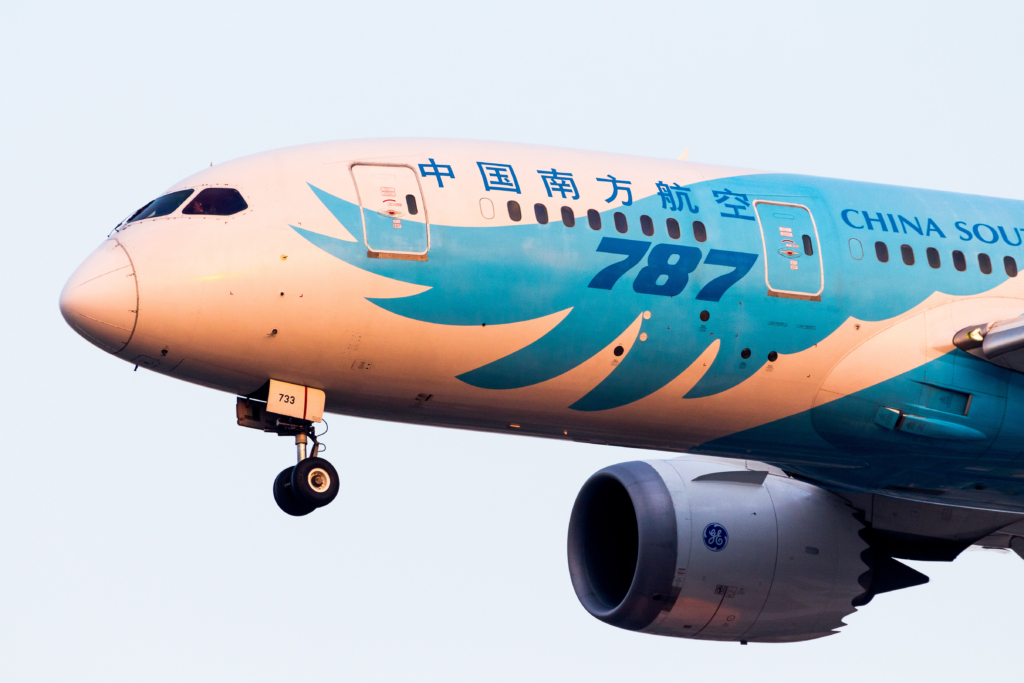
The C929 will also come with around 50% advanced lightweight materials, that’s a lower share than the 787 and A350 but higher than the 777X.
As the C929 is a Chinese state program, initial iterations don’t need to be better than the 787 or A350; they need to be good enough for China’s airlines.
China’s airlines will provide it with a large guaranteed customer base for it to grow and mature before competing directly with the 787 and A350 on open markets.
This is a cycle the smaller C919 is currently going through. That said, as a long-haul airliner, the C929 has challenges not faced by the C919.
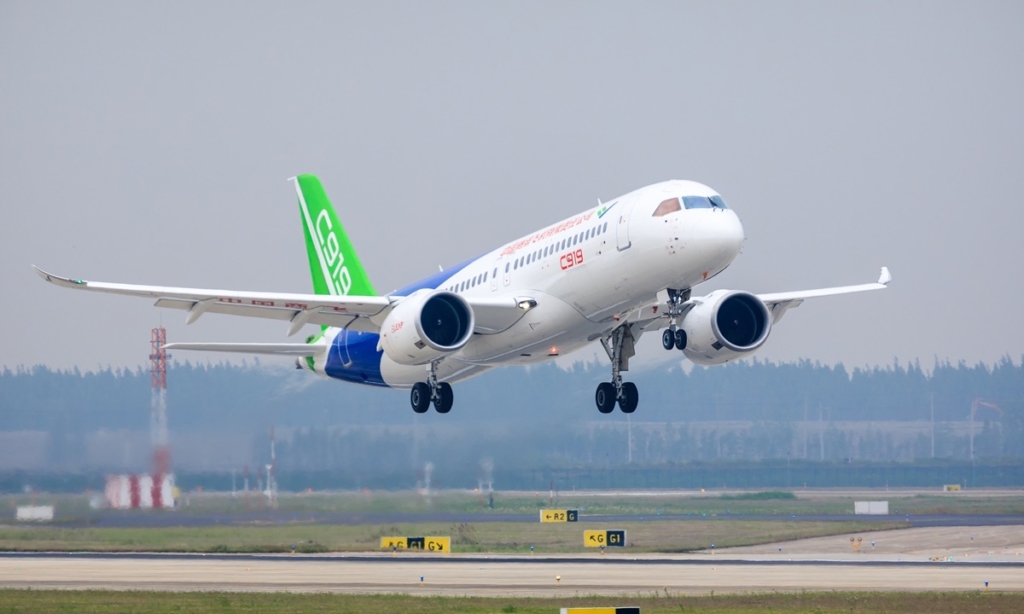
The C919 can operate domestically and in some of China’s near-abroad without EASA/FAA certification. However, to serve European and US markets on long-haul flights, it will need to have ETOPS and EASA/FAA approval.
Without that approval, even with state backing, its competitiveness will remain constrained relative to the 787 and A330neo/A350.
Featured Image: COMAC