Why the US banned F-22 exports — and what that decision cost

November 29, 2025

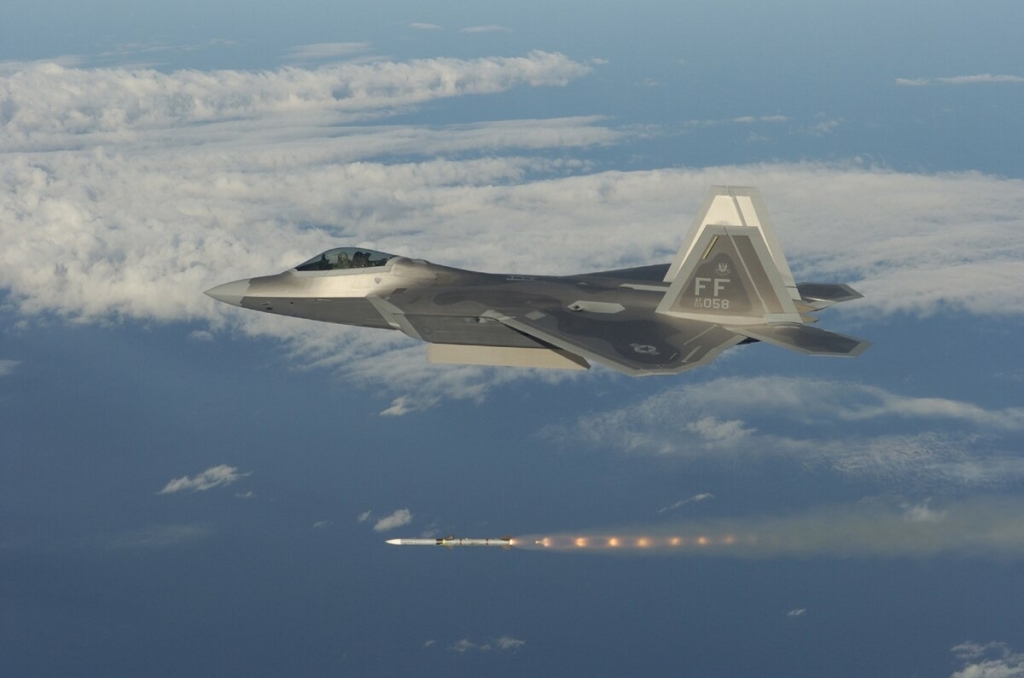
The US banned the export of the Lockheed Martin F-22 Raptor to ensure its cutting-edge technology didn’t fall into Russian or Chinese hands. The ban on sales, coupled with a dramatic reduction in USAF orders, meant the aircraft went out of production in 2009, and the USAF fell back on the F-15 upgraded as the F-15EX.
Why Congress banned the export of the F-22
The F-22 Raptor first entered service in 2005, representing a generational leap over previous aircraft, including the F-15 family that it was built to replace. The F-22 was built as a dedicated air dominance fighter and to be a ‘silver bullet’, allowing the US to easily establish air superiority.

After entering service, the F-22 dominated wargames, including every other type of fighter jet it went up against, like the new Eurofighter, F-15s, and other aircraft. The advantage of the F-22 was so great that rare occasions when it was bested by another jet were considered reportable news.
The concept of fighter jet generations was popularised to highlight just how advanced the F-22 Raptor was and why it cost so much. It was not only the first 5th-generation fighter jet, but it also set the standard of what it meant to be a 5th-generation fighter.
The Eyes of The Raptor 👁️👁️
— Lockheed Martin (@LockheedMartin) May 19, 2023
The F-22 has a sleek aerodynamic design and increased thrust allowing it to cruise at supersonic airspeeds without using afterburner, otherwise known as supercruise. #RaptorNation #FighterFriday pic.twitter.com/WkC4dvEXyv
The US Congress banned the export of the F-22 in 1998 through the “Obey amendment.” The amendment states, “None of the funds made available in this Act may be used to approve or license the sale of F-22 advanced tactical fighter to any foreign government.”
Congress banned the export of the F-22 because the jet was the pinnacle of American engineering and was an ace the US wanted to keep exclusive access to. But the bigger concern was the inherent risk that the technology could fall into enemy hands, no matter how reliable and trustworthy the ally is.
US bans on high-end weapons are common
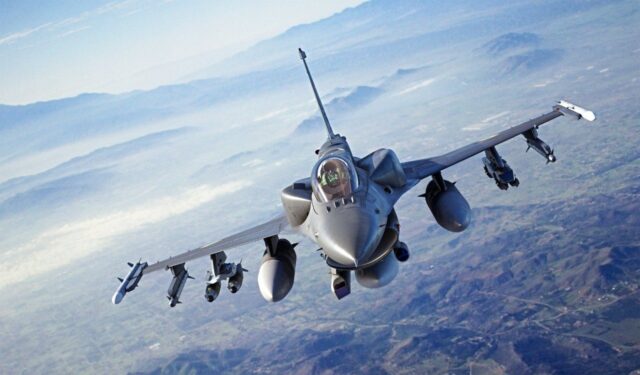
It is common for the US to export ban or at least be highly restrictive on who it sells its most advanced weapons to. For a time, the US even refused to sell the F-16 Fighting Falcon to Latin American countries, until it relented in the 1980s and sold it to Venezuela (something it soon regretted) and Chile.

The F-16 became the lower-end fighter jet that the US was willing to sell to a large range of allies and partners. At the same time, it greatly limited the export of the more capable F-15. During the Cold War, the US had a policy of only selling the F-15 to NATO members and very close non-NATO allies, namely Australia, Japan, and Israel.
Did you know the F-15EX can launch an AIM-120 farther than any other USAF fighter? Its speed and altitude performance gives it a reach few aircraft can match. Bigger, roomier, and able to fly farther than both the F-22 and F-35, the F-15EX is built to carry heavy loads and stay… pic.twitter.com/ecap1ibb9q
— Air Power (@RealAirPower1) October 15, 2025
In practice, Australia and NATO countries choose to purchase other fighter jets, and the F-15 was only purchased by Japan and Israel. As the F-15 aged and the F-22 was developed, the US relaxed export restrictions and sold it to allies in the Middle East, like Saudi Arabia.
The F-35 was built in partnership with the UK, Italy, the Netherlands, and other allies and was always intended to be an export aircraft. Even so, the US remains very selective as to which countries it exports the aircraft to. For example, the US kicked Turkey out of the F-35 programme after Turkey purchased Russian S-400s.

Now, the F-22 is starting to age, and the US is working on developing the Boeing F-47 6th-generation air dominance fighter. It’s an open question if the US will export this aircraft.
Trump has indicated it will be available for export, adding (arbitrarily) that export models would be 10% downgraded, as reported by the UK Defence Journal. In practice, this is a decision for later administrations.
Get the latest aerospace defence news here on AGN.
The limited pool of possible export customers
There was only ever a limited number of potential export customers for the F-22. A large limiting factor is that European NATO countries, like the UK, France, Germany, and Italy, were more interested in focusing on their own domestic Eurofighter Typhoon and Rafale fighter jets. Strategic autonomy is why France has not purchased the F-35.

The same dynamics that doomed the F-22 Raptor in the US were also impacting other countries. The jet was expensive, incredibly specialised (which makes it difficult to use for other roles), and it was the post-Cold War period. The peace dividend that resulted in many US defence programmes being cut was even greater in other countries.
Put another way, the period between the collapse of the Soviet Union and the rise of China and the Russian invasion of Ukraine in the 2020s was possibly the worst time for such an expensive high-end jet to make its debut on the export market.
The Israeli Ministry of Defense signed a Deal yesterday with Boeing worth $5.2 Billion, on the procurement of at least 25 F-15IA Fighter Jets, the Israeli Variant of the F-15EX “Eagle II” Multirole Strike Fighter. The Delivery of the First Squadron of Aircraft is expected to… pic.twitter.com/VS7yOIf7Fh
— OSINTdefender (@sentdefender) November 7, 2024
Making matters worse for the F-22, the US also developed the more capable F-35. The F-35 was designed for a much larger range of roles than the Raptor, something much more attractive to smaller air forces that lack the massive budget of the United States Air Force and its ability to purchase bespoke, specialised aircraft.
The pool of countries with the requirements for such a high-end and expensive fighter jet is small, while the list of countries the US considered trusted enough allies was even smaller.
A 2009 article by Government Executive stated, “Japan is considered the most likely customer for the F-22, particularly as North Korea continues its ballistic missile testing. South Korea, Australia and Israel have also have expressed interest in buying the plane.”
Lost sales and the end of the F-22 Raptor programme
The United States Air Force originally intended to purchase 750 F-22 Raptors, but in the end, it only purchased 187 serial production examples. At one point, the US Navy showed an interest, but then walked away from the program while also cancelling the ambitious McDonnell Douglas A-12 Avenger II.

As the USAF was the only customer, Lockheed Martin was only able to sell 187 Raptors. Exports could have helped and kept the programme alive for longer, but there was no replacing the loss of the bulk of the USAF orders.
According to Reuters writing in June 2009, Japan had expressed interest in two squadrons of F-22s. That would have translated to between 40 to 60 Raptors.
#News: USAF CofS Gen. David Allvin has announced that the first F-47, America’s next-gen air dominance fighter, will make its maiden flight in 2028. Built by Boeing to replace the F-22, the F-47 is expected to reach Mach 2, fly over 1,800 km, and operate alongside autonomous… pic.twitter.com/bhCGSUD05g
— Air Power (@RealAirPower1) November 12, 2025
In 2020, The Times of Israel reported the US had approved the sale of F-22s to Israel, a report that turned out to be false, or just didn’t go anywhere. The article noted, “Israel had previously expressed interest in buying the F-22, but the US declined.” It also added, “the White House plans to sell as many as 50 units of the Lockheed Martin-made jets for roughly $10.4 billion.”
As stated, the F-22 has not been sold to Israel, but the reporting does show Israel may have been interested in around 50 of the jets. Without the F-22, Japan and Israel have had to continue to rely on their F-15s and upgrade them, while also purchasing the F-35.
Northrop Grumman has delivered around 2,000 fighter #AESA radars across the F-22, F-16 and F-35 programs, on top of decades of work on other airborne AESAs. That is 30+ years of development, almost 25 years of continuous production and millions of flight hours of operator… https://t.co/1lFLYXFJeg pic.twitter.com/6nIR3WxN6Z
— AirPower 2.0 (MIL_STD) (@AirPowerNEW1) November 20, 2025
In 2008, Reuters reported Australia was mulling purchasing the F-22 but did not provide a number. It would likely have not been more than a couple of dozen based on the size and composition of the Royal Australian Air Force.
Had the US permitted the export of the F-22, it’s possible or likely 100+ would have been exported to Japan and Israel, with the possibility of a few dozen more sold to South Korea and Australia. These sales could have resulted in a decrease in F-35 sales to these countries.

The sale of 100+ more jets would have greatly benefited the F-22 programme. Importantly, it would have kept the production line running and left the option open of the USAF purchasing more jets later.
One of the most important things in the aviation industry is to keep the production line running, because once it’s shut down, it is incredibly difficult to restart.
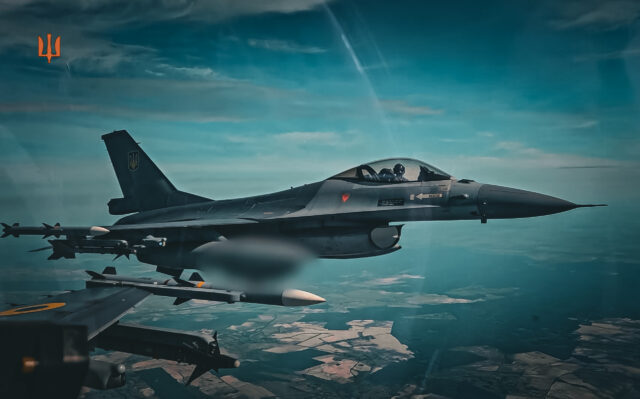
Featured Image: United States Air Force