Vertical Aerospace says Valo is eVTOL’s ‘category killer’, but how does it compare to rivals?

March 30, 2026

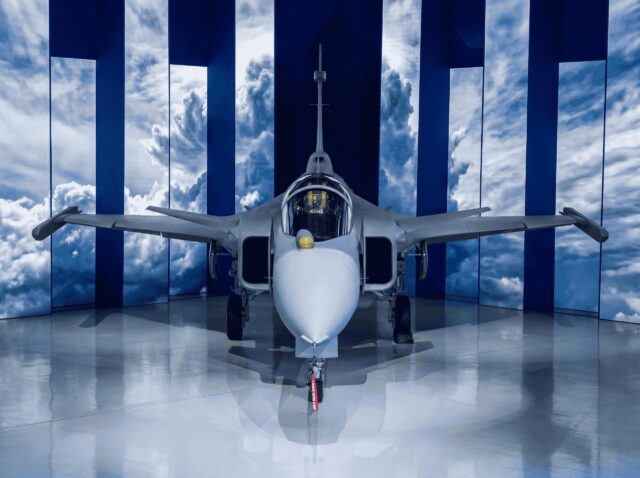
Vertical Aerospace has made one of the boldest claims yet in the electric aviation race, describing its new Valo eVTOL as a ‘category killer’ during its earnings call last week.
Vertical reported continued progress in 2025, completing key piloted flight phases, advancing transition testing, and launching its Valo eVTOL, while reopening its order book amid renewed customer interest.
Financially, the company strengthened its position with over $175 million raised, but expects increased cash outflows of around $195 million over the next 12 months as it pushes toward certification and scales manufacturing.
When asked if this strong financial position was the thing that sets Vertical apart from its competitors, company Chairman Dómhnal Slattery made it clear it’s not just the numbers that make sense.
“Valo, as designed, is the category killer in this space,” Slattery said. “It is not a minimum viable product that we believe some of our other competitors are developing.”
Valo eVTOL is designed for passengers, not just certification
A central part of Vertical’s argument is that Valo has been designed with practical, day-to-day operations in mind, rather than simply meeting minimum certification thresholds.
“We fundamentally believe, and I mean fundamentally, that we’ve got the best product in terms of the size, shape and scale and its capabilities,” said Slattery. “We’ve believed that for a very long time. We’ve now shown the physical embodiment of that to our stakeholders, particularly in the United States.”
Key to this are two unique design features of Vertical’s production aircraft, Valo, which the company believe sets it apart from its competitors.
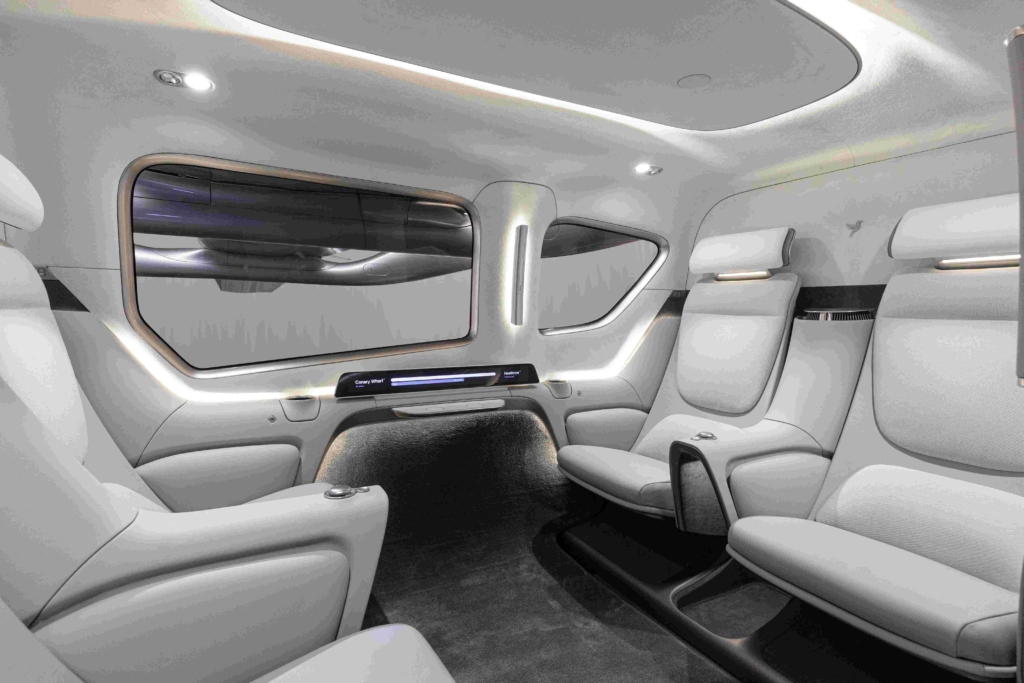
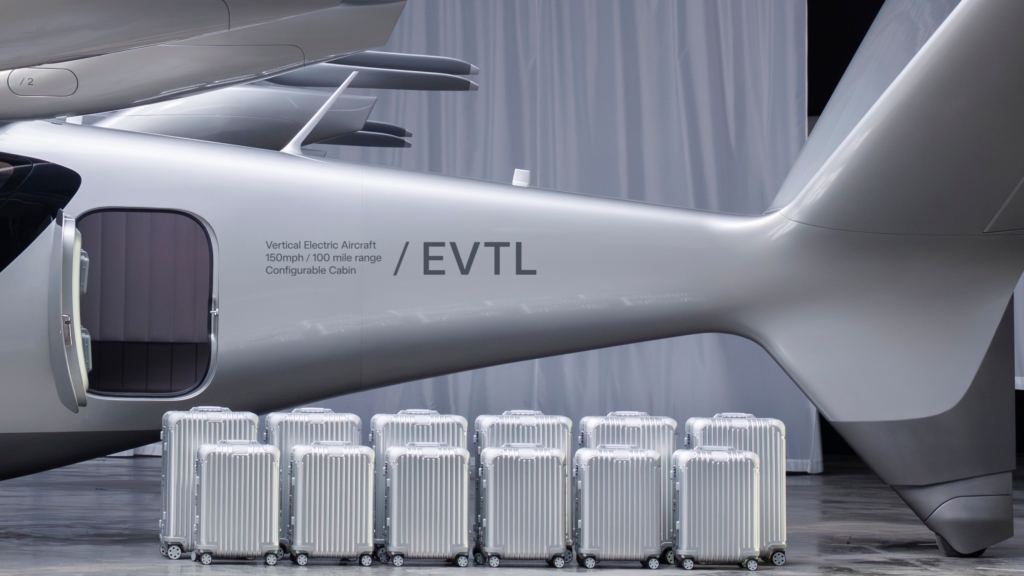
First is the huge amount of baggage the aircraft can carry. Valo is designed to house six full-sized checked bags and six carry-on cases for a capacity of 12. The second is the physical barrier that separates pilot from passengers, which Vertical says will add safety to its operations.
“People have sat in the aircraft,” added Slattery. “People have seen the quantum of baggage that the aircraft actually takes. They’ve seen the cockpit and the segregation, which provides a very safe environment for the pilot.”
These features suggest Vertical is looking more to a mini-airline experience than air-taxi hops, but they come with trade-offs as well.
How Vertical’s Valo compares to rival eVTOL platforms
Other eVTOL rivals such as Joby, Archer and EVE are in different stages of the certification journey, but have taken a somewhat different approach to passenger comforts.
| Manufacturer | Final design revealed? | Baggage capacity | Passenger capacity | Barrier to cockpit | Payload capacity |
|---|---|---|---|---|---|
| Vertical Aerospace (Valo) | Yes | 1 checked bag + 1 carry-on per passenger | 4–6 + pilot | Yes | ~1,100 kg (target) |
| Joby Aviation (S4) | Yes | 1 carry-on + personal item per passenger | 4 + pilot | No | ~450 kg |
| Archer Aviation (Midnight) | Yes | 1 small carry-on per passenger (payload constrained) | 4 + pilot | No | ~450 kg |
| Eve Air Mobility (Eve eVTOL) | Not yet | 1 carry-on per passenger (flexible cabin storage) | 4 + pilot | No | ~450–500 kg (est.) |
Among the leading developers, Vertical Aerospace and Archer Aviation have publicly unveiled what they describe as their final production designs, while Joby Aviation has gone a step further by flying an FAA-conforming aircraft, meaning its configuration is effectively locked for certification testing.
The key difference is that a final design reflects the intended product, whereas a conforming prototype is built to regulatory standards and must match what will actually enter service. As such, EVE could change its design, but the other companies have already shown us what’s likely to enter service.
The biggest differentiator here is that Vertical is designing Valo to be a true airport shuttle aircraft. Passengers wanting to be connected to their long-haul flight by air taxi could need to transport more luggage, and Valo has been created to give that flexibility.
Conversely, other eVTOLs are being built as true air taxis, with barely any payload available for luggage at all. Standard passenger weights are usually calculated on an average of 75kg per person, although modern regulators have noted the increase in human size and tend to use 80-84kg as more indicative of contemporary loads.
If all four passengers and the pilot were at the top end of that range, it would leave only a few kilos for luggage.
As for the cockpit barrier, that’s a nice design touch and will certainly improve security for future pilots and passengers. However, that’s not a prerequisite for providing aviation services, and many smaller aircraft do not have a locking cockpit door.
Are Vertical’s design choices adding up to an eVTOL ‘category killer’?
Vertical’s argument ultimately hinges on payload. Designing Valo around a target payload of over 1,000 kg enables those headline features, checked baggage, higher passenger capacity, and a more conventional cabin experience.
But as ever in aviation, payload does not come for free. It typically comes at the expense of range, efficiency, or both, and that trade-off becomes clear when comparing the published performance targets of leading eVTOLs.
| Manufacturer | Aircraft | Published range | Typical mission profile |
|---|---|---|---|
| Vertical Aerospace | Valo | ~100 miles (160 km) | Airport transfers, longer urban/regional routes |
| Joby Aviation | S4 | ~100–150 miles (160–240 km) | Regional and extended urban missions |
| Archer Aviation | Midnight | ~20–50 miles (32–80 km) typical, up to ~100 miles max | High-frequency short urban hops |
| Eve Air Mobility | Eve eVTOL | ~60–100 miles (100–160 km) | Urban and peri-urban networks |
What emerges is not a clear winner, but a set of distinct design philosophies.
Valo sits in the middle on range, but at the upper end of payload and flexibility. That aligns neatly with Vertical’s ambition to position the aircraft as a true airport shuttle, capable of handling passengers and their luggage in a way that more closely resembles conventional aviation.
By contrast, Joby Aviation is pushing range further, potentially opening up regional routes beyond dense urban centres, while Archer Aviation is optimising for short, repeatable sectors where turnaround time and utilisation matter more than carrying capacity. Eve Air Mobility sits somewhere between the two, with a focus on scalable network operations.
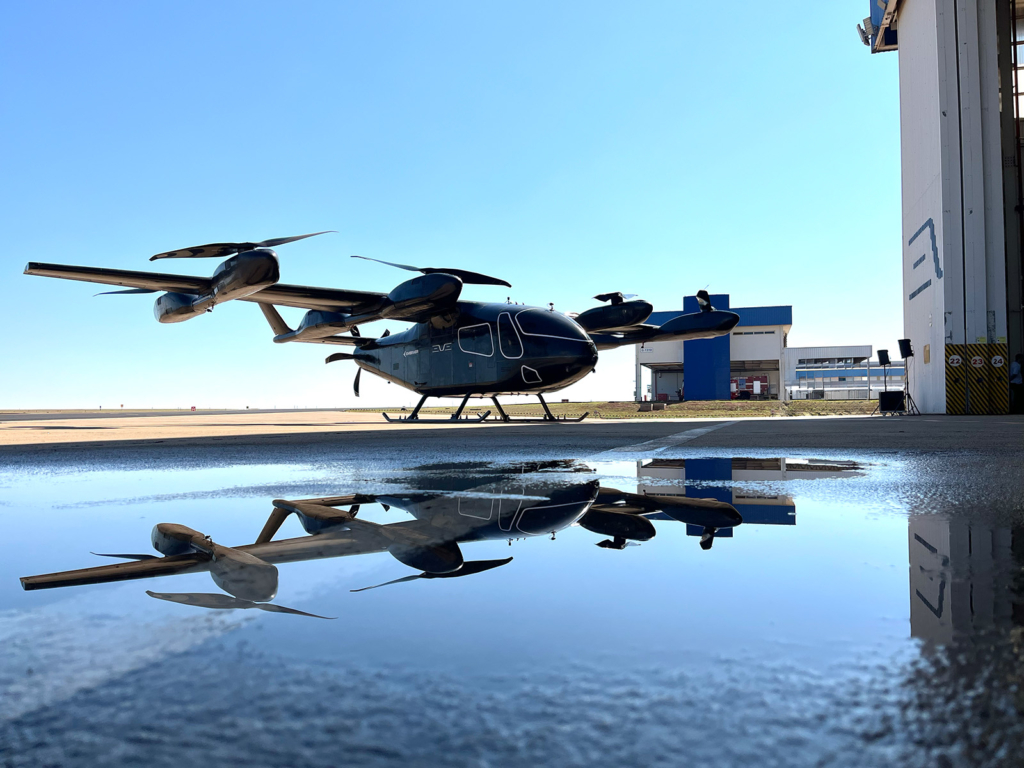
Crucially, these aircraft are not just different; they are being built for different missions.
There is also the possibility that things will change a lot between here and entry into service. While Valo and Midnight have been presented as final designs, and Joby has already flown a conforming aircraft, things like cabin layouts, payload assumptions and operational models are still evolving. Early deployments may yet reshape what operators and passengers actually value.
The result is that Vertical’s differentiators, baggage capacity and cockpit separation are meaningful, but not universally decisive. They are advantageous only if the mission demands them.
Featured image: Vertical Aerospace