US Air Force reactivates stored KC-135 amid tanker losses over Iran

April 6, 2026
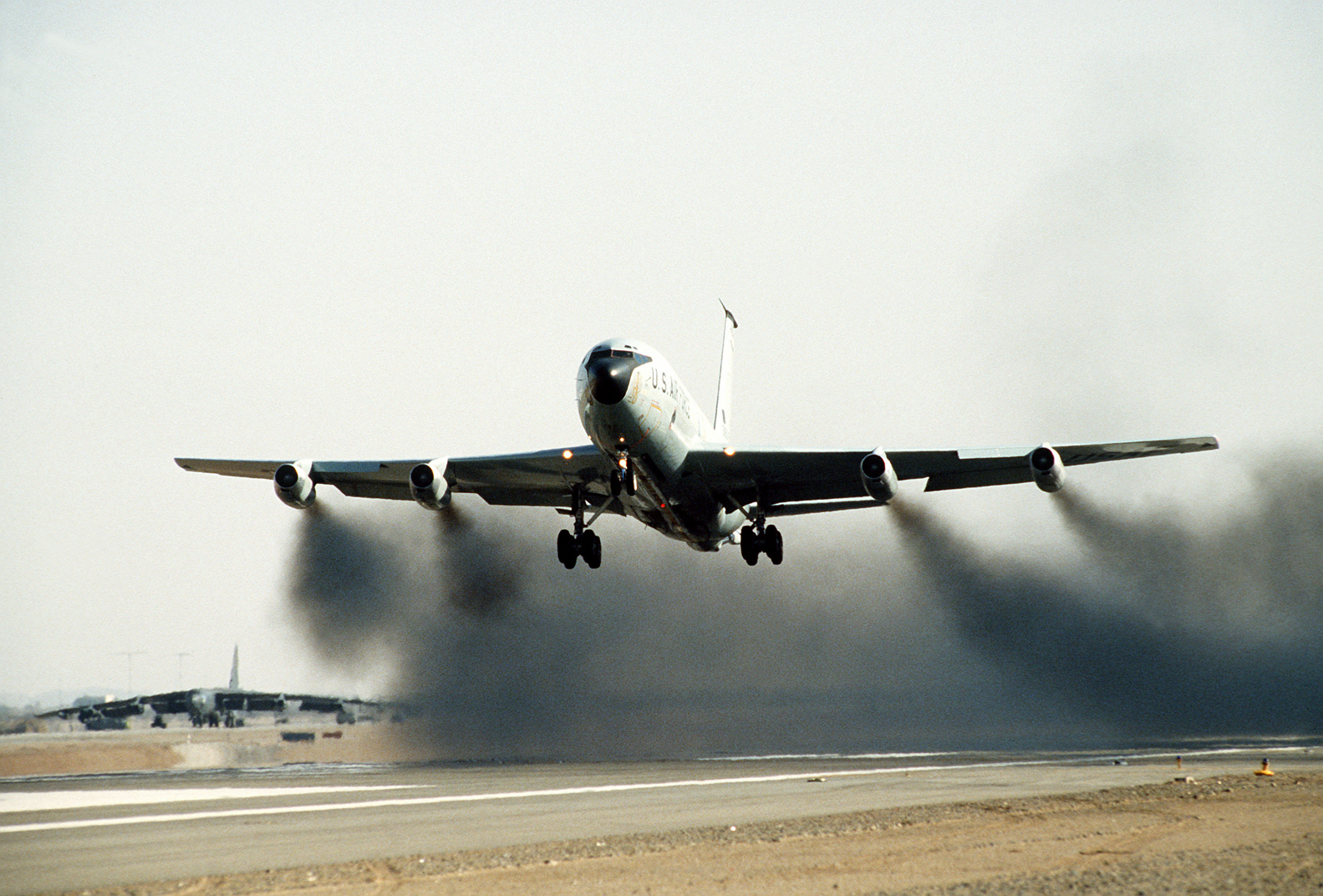
The US Air Force appears to be reactivating one of its KC-135 Stratotankers that had been stored at Davis-Monthan. It is unclear if this is related to losses in the Iran conflict and whether more reactivations will follow.
US Air Force pulls mothballed KC-135 from boneyard
According to reports, the US Air Force appears to be moving to replace the KC-135 Stratotankers it has lost in the air campaign over Iran. One was destroyed with the loss of the crew after a mid-year collision. The other KC-135 in the mid-air incident suffered damage to its tail.
BREAKING: Good news for Stratotanker lovers. Following the loss of multiple KC-135Rs to surface-to-air and ballistic missiles of the IRGC in Iraq and Saudi Arabia, the U.S. Air Force is reactivating a number of retired and stored KC-135Rs from the 309th AMARG at Davis-Monthan Air… pic.twitter.com/WQuodAFVAm
— Babak Taghvaee – The Crisis Watch (@BabakTaghvaee1) April 3, 2026
There are various reports of more KC-135s damaged or destroyed on the ground.
On the 3rd of April, FlightGlobal reported that the US Air Force has pulled a KC-135 out of long-term storage. It appears the aircraft will be returned to service, possibly to replace tankers lost in the Iran campaign.
Open-source flight tracking shows that two KC-135s (registered 58-0018 and 58-0011) flew from Davis-Monthan to Tinker AFB in Oklahoma. This is where the Oklahoma City Air Logistics Complex is located, and it is likely to carry out the work of returning the tired old jets to service.
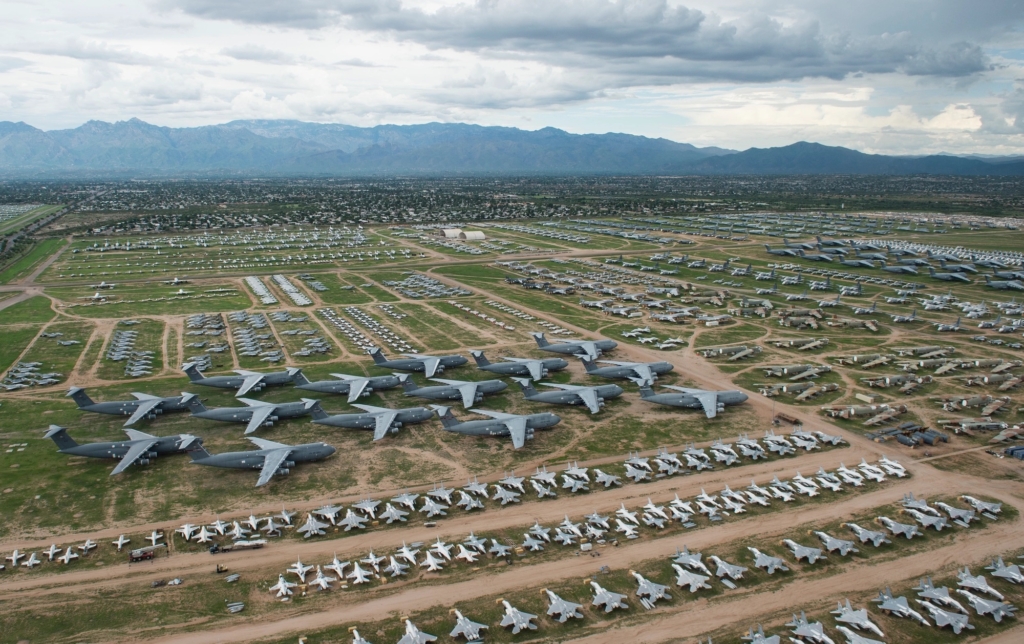
One of these aircraft (58-0018) is already in active service, the other (58-0011) has been in storage since last year. The Air Force has not yet confirmed it is reactivating the Stratotanker. According to AMARC Experience, there are 128 KC-135 tankers at the boneyard, although some of these may have been stripped for parts.
Get the latest aerospace defence news here on AGN.
How quickly can the US replace aircraft losses?
For most air forces around the world, the loss of aircraft means that the air force will be unable to replace the loss until new aircraft can be built or procured. But with the US Air Force, there is depth with a number of airframes thanks to the massive Davis-Monthan Air Force Base ‘boneyard.’
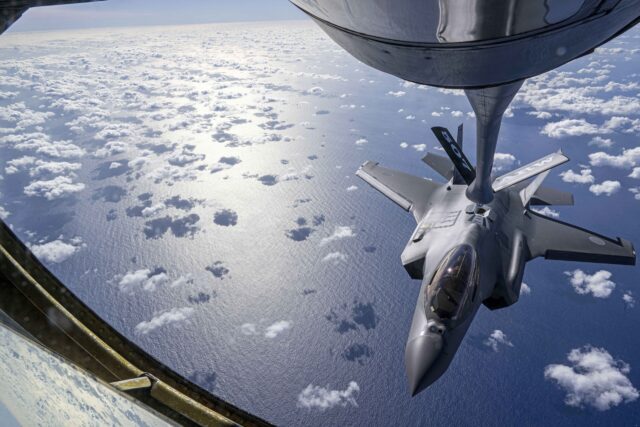
U.S. Air Force KC-135 Stratotanker and KC-46 Pegasus aircraft extend the reach of fighter jets and bombers by refueling them mid-flight during Operation Epic Fury. pic.twitter.com/hsWHWb5OuW
— U.S. Central Command (@CENTCOM) April 2, 2026
The boneyard has almost 4,000 aircraft of various descriptions in various types of storage. Some airframes are mothballed and are kept ready to return to service, while for many, it is little more than a scrapyard.
It’s not just KC-135s; in 2024, the USAF pulled a stored B-1B Lancer “Lancelot” out of retirement to replace the loss of another Lancer in 2022.
The Air Force has recently mothballed a number of its rickety old Sentries, and it is unclear if it can pull one out of retirement to replace it.
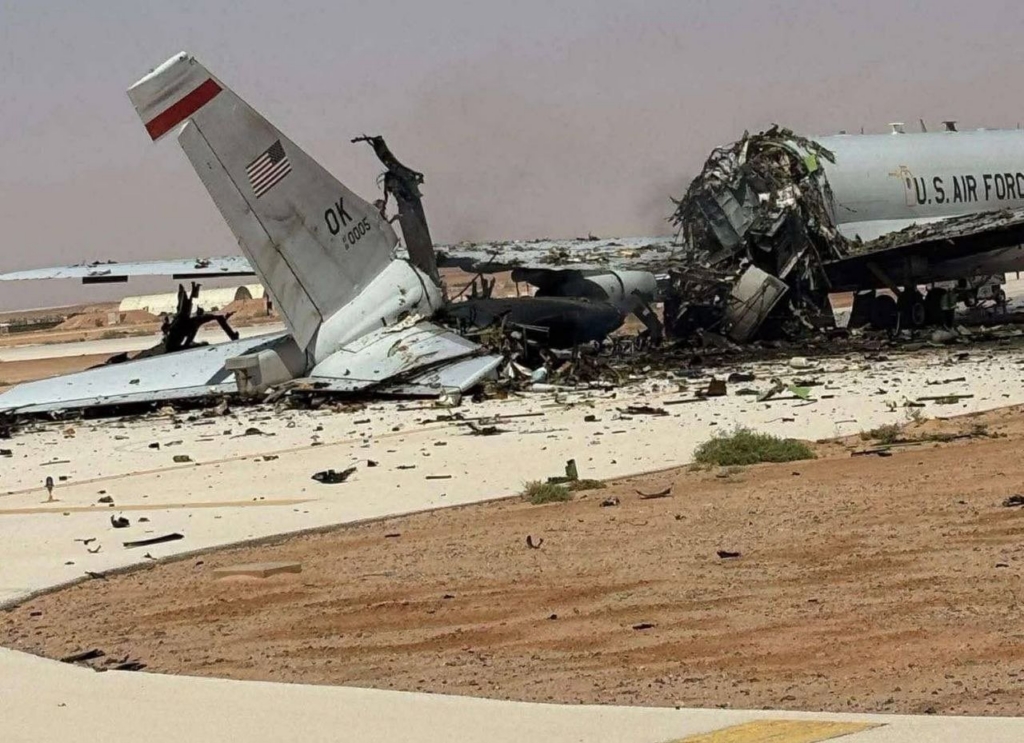
The US Air Force has lost a rare Boeing E-3 Sentry airborne warning and control aircraft on the ground in Saudi Arabia to an Iranian attack.
Future of the US tanker fleet
The US Air Force currently has a fleet of over 370 KC-135s and around 100 of its new KC-46 Pegasus tankers. As the Pegasus is in production, KC-135 losses can be replaced with new aircraft if the Air Force wants.

However, the KC-46 is only intended to be a partial replacement for the KC-135. Tankers are one of the cornerstones of the USAF’s ability to project power, but they are becoming increasingly vulnerable.
For example, the Chinese J-20 Mighty Dragon is believed to have been designed to hunt down and destroy fighter jet enablers like the KC-135.
The US is considering next-generation tankers that would be more survivable in contested environments through its NGAS programme. It is also funding JetZero to build a blended wing demonstrator aircraft that could serve as a tanker.

Funding constraints are threatening its ambitious NGAS programme and this is forcing the service to purchase more KC-46As.
Featured Image: US Air Force