How USAF engineering breakthroughs returned damaged B-2 Spirit stealth bomber to service

December 9, 2025
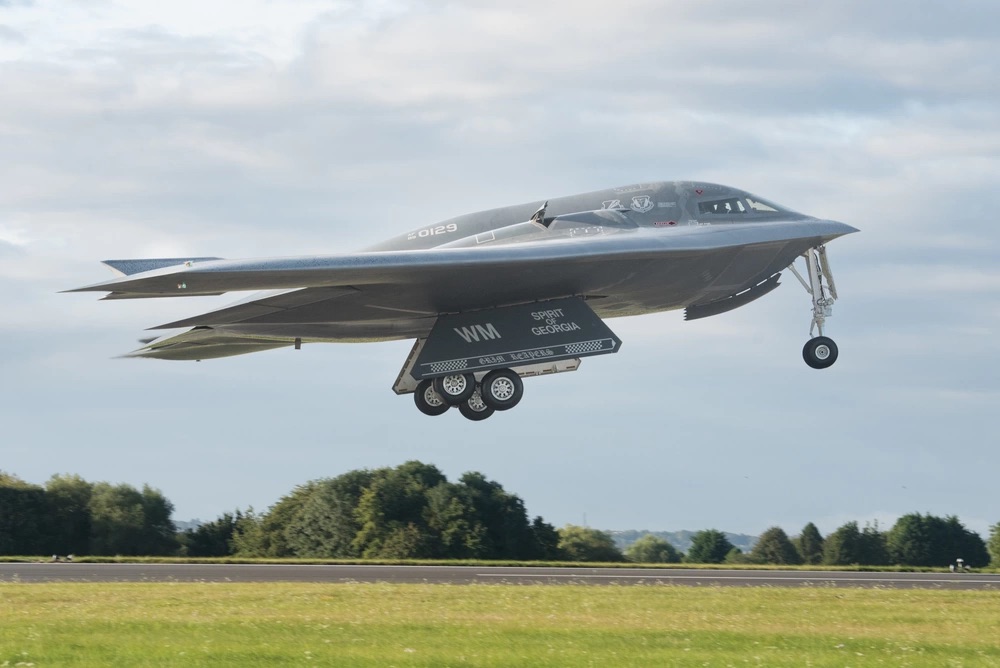
When a B-2 stealth bomber is damaged, the consequences are never minor. With only 20 in existence, any serious incident threatens one of America’s rarest and most capable aircraft.
And four years ago, the “Spirit of Georgia” looked perilously close to being written off.
On a September night in 2021, a hydraulic failure forced tail number 89-0129 into an emergency landing at Whiteman Air Force Base, Missouri. The left landing gear collapsed, the wing scraped along the runway, and millions of dollars’ worth of composite structure were destroyed in seconds.

“It was significant structural damage,” said Col. Jason Shirley of the Air Force Life Cycle Management Center, who led the recovery effort. “There were serious questions whether the aircraft could ever fly again.”
Many assumed that the world’s most advanced stealth bomber might become its most expensive museum piece.
Instead, the repair turned into a masterclass in rapid engineering and creative problem-solving. On 6 November 2025, the Spirit of Georgia returned to the air.
How engineers began restoring the damaged B-2 bomber using digital scans and rapid analysis
The first challenge was simply lifting the 170,000-lb bomber without causing further harm. Maintainers resorted to giant industrial airbags to raise the aircraft high enough to manually lock the gear and tow it into a hangar, an approach borrowed more from civil engineering than frontline aviation.
Then the forensic phase began.
Technicians used laser dimensional scanners normally reserved for precision manufacturing. The scans revealed that critical load-bearing structures remained aligned, avoiding weeks of dismantling and giving engineers the confidence to map a viable repair plan.
Finite Element Method simulations then confirmed that major wing spars had not been overstressed. Suddenly, what looked like a total loss became salvageable.

Those steps alone saved an estimated 52 million dollars and cut nine months from the programme schedule. Crucially, they meant the aircraft could eventually fly again.
After temporary patches and structural reinforcements, the B-2 ferried itself in September 2022 to Northrop Grumman’s Palmdale facility, the only location capable of fully rebuilding a stealth wing.
Inside the composite repair breakthroughs that rebuilt the B-2 bomber’s damaged wing
The team faced a pivotal decision: manufacture a new composite wing-skin panel from scratch or take an unconventional route. They chose the latter. Engineers sourced a donor panel from a retired B-2 test article, avoiding months of production lead time and subtly reshaping the Air Force’s philosophy on composite sustainment.
Traditionally, B-2 repairs required curing composite patches in a pressurised autoclave. The Spirit of Georgia, however, was far too large, prompting specialists to adopt a new resin system designed to cure outside an oven — a first for the fleet.

“It required completely new ways of controlling heat in tight, sensitive spaces,” said structural engineer Matt Powers. “We custom-built heating systems, mapped temperatures with thermal surveys, and even piped cooling air through the wing to prevent damage.”
Years of fuel exposure had contaminated internal surfaces, usually a nightmare for bonding work. Meticulous cleaning brought them close to laboratory conditions, enabling reliable adhesion.
By May 2025, the wing had been fully rebuilt, including:
- a restored left wingtip
- new landing-gear door hinges and rigging
- repaired internal fuel-tank composite skins
- reinstated load-bearing lower wing structure
All were certified airworthy following an intensive approval process.
What the B-2 Spirit repair means for future stealth aircraft sustainment
With such a small fleet, extending the life of each B-2 is strategically vital. The Spirit of Georgia, now fully modernised, returns to duty with lessons that will shape sustainment across multiple US aircraft programmes.
The effort demonstrated:
- faster repairs without reliance on scarce autoclave capacity
- reduced long-term sustainment costs for composite-rich fleets
- new opportunities for life-extension upgrades
- validated use of donor structures to avoid premature retirements

Northrop Grumman programme manager Jerry McBrearty described the achievement as a “breakthrough in composite repair methodology”, one already influencing work on other platforms.
AF Global Strike Command, meanwhile, ensured rapid technical approvals and synchronised funding. “Their rapid concurrence on temporary and scarf repairs made the whole schedule possible,” said Cindy Connor of the B-2 Programme Office.
A stealth aircraft saved by teamwork as much as technology
From depot maintainers to digital modellers, logistics planners and composite specialists, hundreds of people contributed to restoring this aircraft.
The B-2’s operational world may be characterised by secrecy, yet the story of how one severely damaged bomber was saved is much more open: a reminder that American airpower is sustained not only by stealth, but by the ingenuity and collaboration that keep these rare aircraft flying.