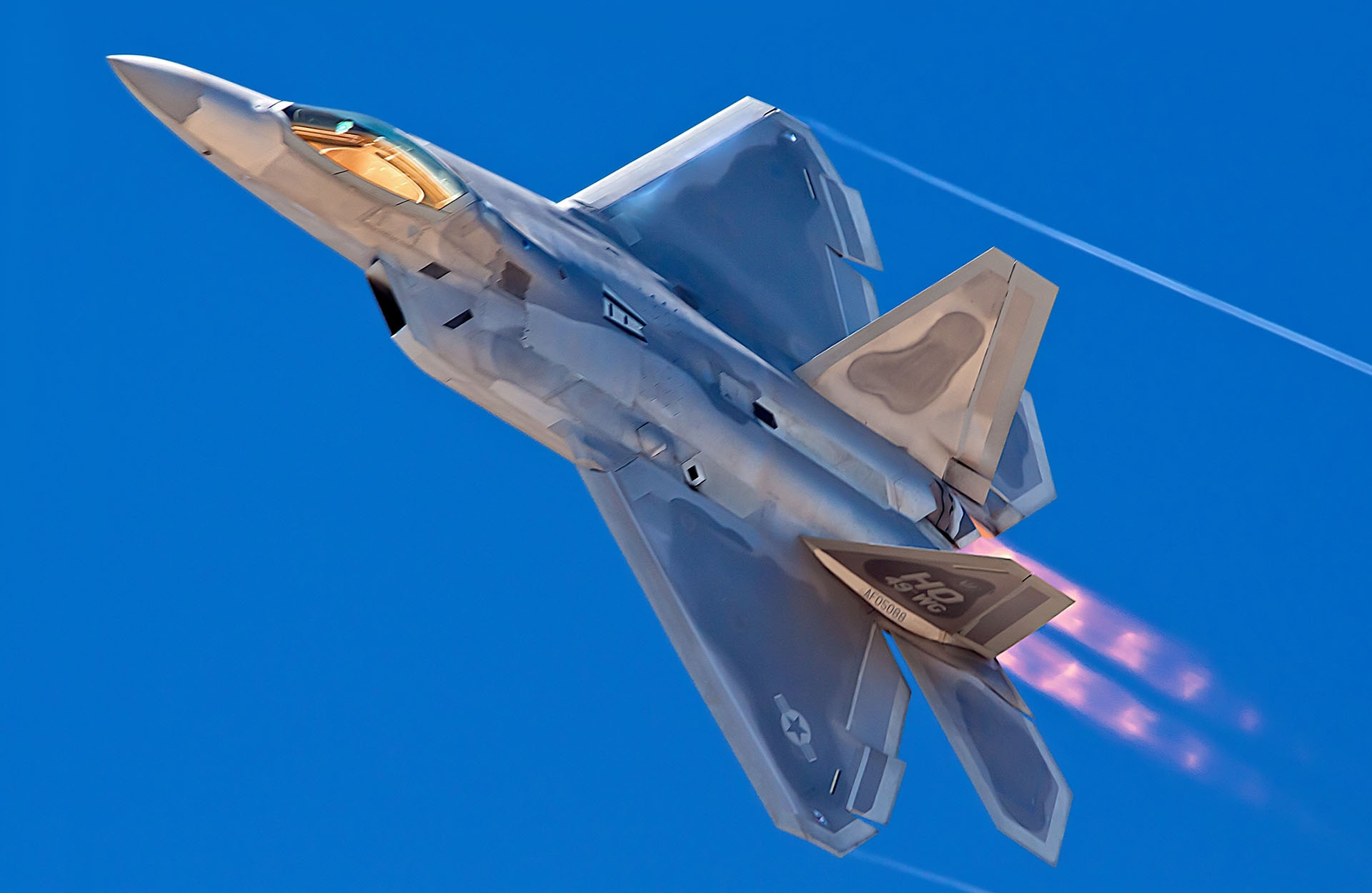
Third time lucky: USAF F-22s finally make it to the UK after two turnbacks

February 20, 2026
The current surge of US air power into the Middle East, ahead of potential strikes on Iran, is being described by observers as the most significant since the run-up to the 2003 invasion of Iraq.
In recent weeks, the US Air Force has ferried F-15E Strike Eagles, F-35s and US Navy EA-18G Growlers into the region. Attention then turned to whether the Pentagon would deploy the F-22 Raptor, its premier air dominance fighter.
That answer now appears to be yes, albeit not without difficulty.
USAF F-22 Raptors hit by tanker trouble on route to the UK
A group of six F-22s from the 1st Fighter Wing at Langley AFB began their Atlantic transit earlier this week, routing first toward the UK, where they are expected to stage before continuing onward to the Middle East.
However, two initial attempts were aborted after electrical issues were reported with their accompanying tanker aircraft.
✈️⚠️ The 6 remaining F-22s at Langley expected to fly to RAF Lakenheath are turning around, due to tankers' "electrical issues".
— MenchOsint (@MenchOsint) February 18, 2026
There was also such issue yesterday, they will try again tomorrow. (ACARS Messages via @thebaldgeek site) https://t.co/r2FHWoqbSZ pic.twitter.com/cm99MSbmMh
Open-source flight tracking accounts monitoring Coronet deployments reported that the Raptors were forced to turn back on consecutive days due to tanker issues. On the third attempt, supported by multiple refuelling aircraft, including a KC-46A operating under the call sign “ROMA 11”, the formation successfully crossed the Atlantic.
Armchair Admiral posted, “Like yesterday and the day before, ROMA 11 will take the Raptors up the East coast. Two additional tankers (ROMA 12/13) will then tow the 6x Raptors across the Atlantic. *provided they don’t break down again…”
Yesterday, OSINT account Coronet_deployments posted, “ROMA 11 flight checking in with Boston centre on 135.800, has six F-22s in tow. TREND 61 flight on Coronet East 033 enroute to RAF Lakenheath.”
A U.S. Air Force KC-46A "Pegasus" with call sign ROMA11 is on course for an Atlantic crossing, It is joined by six U.S. Air Force F-22 "Raptors" from the 1st Fighter Wing based at Langley Air Force Base, VA. This is the third attempt at a crossing with the previous two attempts… pic.twitter.com/vCpRBNu5yr
— OSINTdefender (@sentdefender) February 19, 2026
Third time’s a charm, and as of a few hours ago, all six have been observed arriving at RAF Lakenheath, joining the other six already arrived F-22s ahead of deploying eastwards.
Get the latest aerospace defence news here on AGN.
One-third of US tankers are supporting Middle East deployment
The most striking aspect of the build-up is not the fighters themselves, but the scale of tanker support.
Open-source analysts tracking aircraft movements estimate that approximately 109 US aerial refuelling tankers are currently supporting the deployment effort. That figure includes aircraft positioned within US Central Command as well as those staging through Europe.
US Military Operation to #FreeIran – Tanker Fleet
— DefenceGeek 🇬🇧 (@DefenceGeek) February 19, 2026
Update 4 – 19/02/2026 @ 20:15Z
Updated from this morning's list, factoring new arrivals from CONUS and a few tankers that have moved locations after fast-jet moves today. "RED" tankers are inside CENTCOM, "ORANGE" tankers are… pic.twitter.com/QgJ1izsfaH
OSINT account Defence Geek, closely following the US build-up, posted “My current count is 109 tankers.”
For context, that is roughly one-third of the US Air Force’s combined fleet of Boeing KC-135 Stratotanker and Boeing KC-46 Pegasus aircraft, and exceeds the total tanker inventories of most NATO European nations combined.
US military flights have dominated our most tracked flights list this week. See a time lapse of flights since Monday and how you can access the most tracked flights panel in the Flightradar24 app. pic.twitter.com/SZWL3igaLE
— Flightradar24 (@flightradar24) February 19, 2026
During Operation Iraqi Freedom in 2003, the United States deployed 149 KC-135s and 33 KC-10s. Current numbers are approaching that scale, suggesting a mobilisation footprint not seen in over two decades.
UK reported to deny US permission to launch strikes
Parallel to the military movements, reports have emerged suggesting the UK has not yet granted permission for US forces to launch strikes on Iran from British-controlled bases such as RAF Fairford or Naval Support Facility Diego Garcia.

These locations are strategically important for US bomber operations. While Washington retains the option of launching long-range strikes directly from the continental United States, doing so would significantly increase sortie duration and tanker demand.
For now, it is difficult to read much into this as the think-tank Rusi’s Matthew Savill explained last night, “It is both more and less than meets the eye.”
He explained this may not be an actual denial by the British, but is rather “permission has not yet been given.”
U.S. forces have turned Sofia International Airport in Bulgaria into a major staging ground for aerial refueling tankers to support future strikes on Iran.
— OSINTtechnical (@Osinttechnical) February 19, 2026
Seen here, a half dozen KC-135s parked on the ramp yesterday evening: pic.twitter.com/TsemqkK879
Savill elaborated, “So the UK might allow US aircraft to continue to fly to the region for now but withhold permission for use of UK facilities during strikes *for the time being*. This means that the decision may not be final: the US could come back with more information, or the situation could change.”
Whether these preparations translate into direct strikes remains uncertain. But in scale, speed and logistical complexity, this is already the most substantial US airpower concentration in the region since 2003.
Featured Image: Lockheed Martin