B-1B bombers armed with JDAMs at RAF Fairford raise questions over UK role in Iran conflict

March 12, 2026

After allowing what it described as “defensive” US operations from British bases, footage has emerged appearing to show bunker-penetrating bombs being loaded onto US Air Force B-1B Lancer bombers at RAF Fairford.
The images have fuelled debate about whether the UK is being drawn more directly into the conflict with Iran, despite the government’s insistence that its role remains strictly defensive.
Legal questions over US strikes launched from UK bases
Under the UK government’s legal position, US aircraft operating from British bases are intended to act only in defence of regional allies, such as intercepting or striking Iranian missile capabilities that threaten Gulf states.
However, Professor Marc Weller has warned that this posture may prove difficult to maintain in practice.
“Such a distinction may be unrealistic in a theatre of war,” he wrote in a piece for Chatham House.
The challenge lies in determining which Iranian military targets are linked specifically to attacks on regional allies and which are part of the broader US and Israeli campaign against Iran.
“It may not be realistic or practical to determine in each instance which Iranian missile facilities have targeted regional allies,” Weller noted.
From Iran’s perspective, the distinction may be largely irrelevant. Tehran has already warned that foreign bases supporting military operations against it could be treated as legitimate targets.
Intercepting Iranian drones may already draw the UK into the conflict
Even if British forces themselves avoid offensive operations, the legal and strategic boundaries remain blurred.
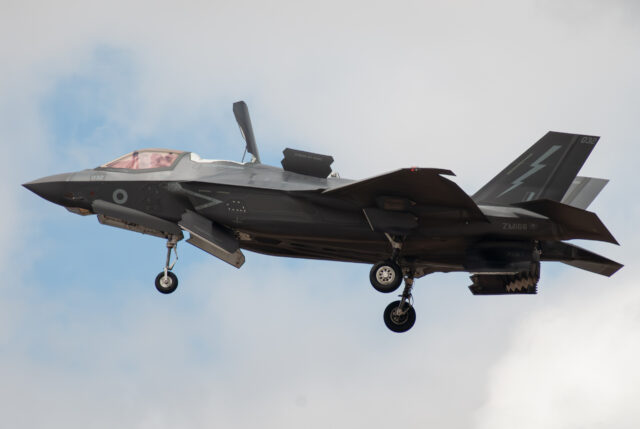
The UK has confirmed that it has had “planes in the sky” since the outbreak of the conflict, helping intercept Iranian missiles and drones targeting regional allies. The RAF’s F-35 scored its first combat kill at the start of March, taking out an Iranian drone; days later, RAF Typhoons took out two more drones in Bahrain and Jordan, with footage issued of the strike.
Weller argues that such actions already represent a form of participation in hostilities.
“Entering the theatre of conflict and shooting down Iranian drones and missiles that are unlawfully targeting regional allies may be laudable,” he wrote. “But in a sense, doing so already makes the UK a party to the conflict.”
As the US air campaign continues to expand, the presence of bomber aircraft armed with bunker-penetrating weapons at RAF Fairford illustrates how difficult it may be for London to maintain the careful legal distinction between supporting allies and becoming directly involved in the war.
UK maintains US bombers at RAF Fairford have a ‘defensive’ role
In the run-up to the conflict, the UK initially refused US requests to use British bases for offensive strikes against Iran. The restriction affected both RAF Fairford and the strategically important base on Diego Garcia in the British Indian Ocean Territory.
London instead permitted the use of its bases for logistical support and defensive operations linked to the conflict.
However, after Iranian attacks on British facilities in Cyprus, the UK government authorised the use of its bases for US operations linked to the defence of regional allies.
Prime Minister Sir Keir Starmer has insisted that the UK itself is not participating in offensive military action against Iran. British aircraft, including F-35s and Typhoons, have been deployed to defend overseas bases and allies, while HMS Dragon and various helicopters are making their way to the region with a defensive posture.
Yet the presence of US bombers at RAF Fairford armed with heavy strike weapons is raising questions about whether that distinction can realistically be maintained.
Professor Weller argues that the UK’s approach reflects an attempt to balance support for allies with the desire to avoid becoming directly involved in the war.
“The UK has taken a step closer to involvement in the US and Israeli war against Iran,” he wrote.
Weller said the government is attempting to “square the circle of credibly supporting its regional allies without becoming a party to the war against Iran”.
Footage shows B-1B bombers being armed with JDAMs at RAF Fairford
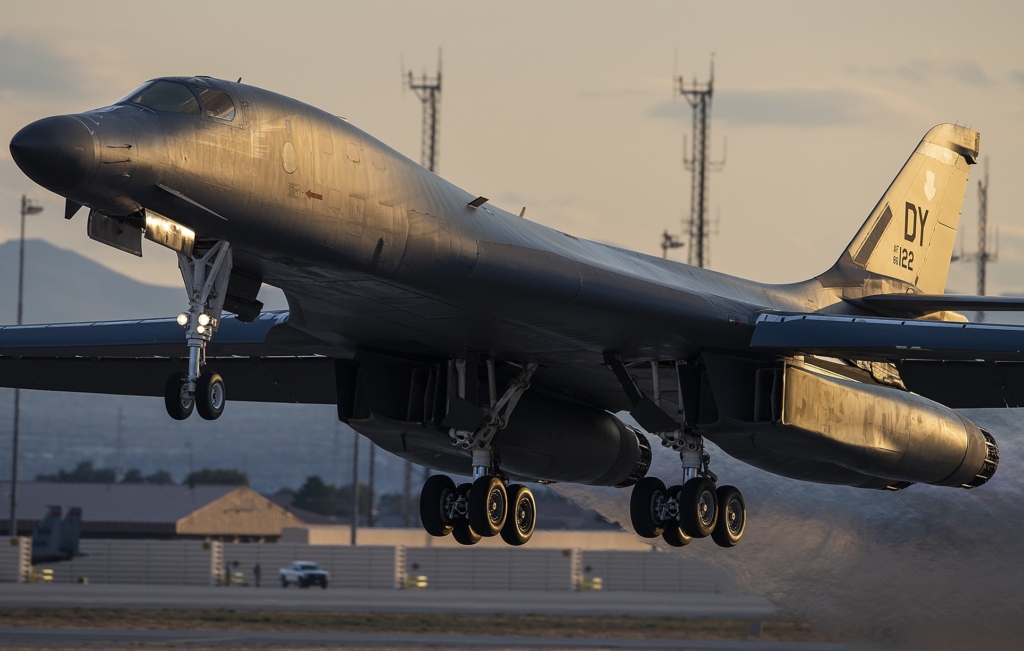
New footage from RAF Fairford appears to show US Air Force B-1B Lancer bombers being loaded with precision-guided bombs ahead of potential strike missions against Iran, offering a rare public glimpse into preparations for the expanding air campaign.
The video, posted on social media by journalist Richard Gaisford, appears to show ground crews loading GBU-31 Joint Direct Attack Munitions (JDAM) onto the bombers. Analysts say the weapons may be fitted with BLU-109 penetrator warheads, designed to strike hardened targets such as bunkers and underground facilities.
Missiles delivery systems are being removed from the B1 Lancers at RAF Fairford this afternoon, to be replaced by JDAM bombs. For those asking, the US Airforce has positioned these aircraft close to the fence in full view of media. @AJENews pic.twitter.com/fWtDRfV5g4
— Richard Gaisford (@richardgaisford) March 11, 2026
The images have quickly fuelled debate about the UK’s role in the conflict, particularly as the aircraft are operating from RAF Fairford, a Royal Air Force base in Gloucestershire that serves as a forward operating location for US strategic bombers.
US Airforce ground crew work under hatches of a B1 Lancer at RAF Fairford today. What appear to be cruise missiles sit by the warplane. Three B1 bombers returned this morning, on what is believed to be the first attack on Iran from a British base during this conflict. @AJENews pic.twitter.com/80YkxHL5rT
— Richard Gaisford (@richardgaisford) March 11, 2026
Reports have also suggested that access to some parts of the base may now be restricted for journalists as operations intensify.
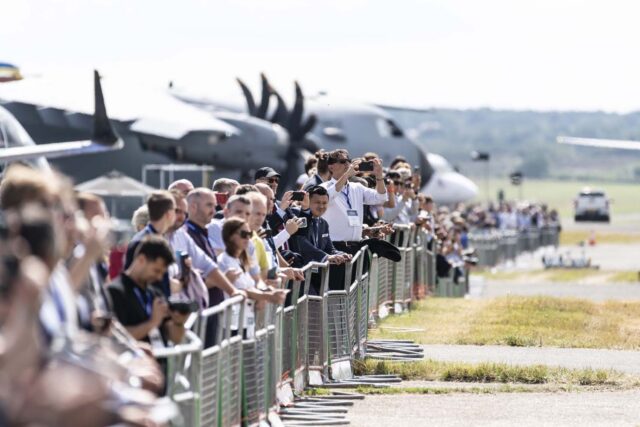
RAF Fairford has long been known among aviation enthusiasts as a location where the public can observe aircraft movements from outside the perimeter fence. While some have questioned whether the visibility of the bombers presents a security risk, open-source intelligence analyst Steffan Watkins dismissed such concerns.
“Video of loading bombs on a B-1B at RAF Fairford makes no difference to operational security. Really,” he wrote on social media.
JDAM bombs on B-1B bombers signal strikes on underground facilities ahead
The appearance of JDAM bombs on B-1B bombers may also signal a shift in how the air campaign is being conducted.
Long-range cruise missiles such as the AGM-158 JASSM allow aircraft to strike targets from hundreds of kilometres away without entering heavily defended airspace. By contrast, JDAM bombs are typically used when aircraft can approach closer to their targets.
That shift could indicate that US forces believe Iranian air defences have been sufficiently degraded in parts of the country to allow bomber aircraft to conduct direct strike missions.
The BLU-109 penetrator warhead, if confirmed, is designed to destroy hardened structures such as underground command centres, missile storage facilities and reinforced bunkers.
Such targets are widely believed to include elements of Iran’s network of underground missile bases and military infrastructure.
More nations continue to be drawn into the Iran war
The conflict is also drawing in additional international forces as regional governments seek protection from Iranian missile and drone attacks.
France is deploying a major naval task group led by the aircraft carrier Charles de Gaulle to the region.
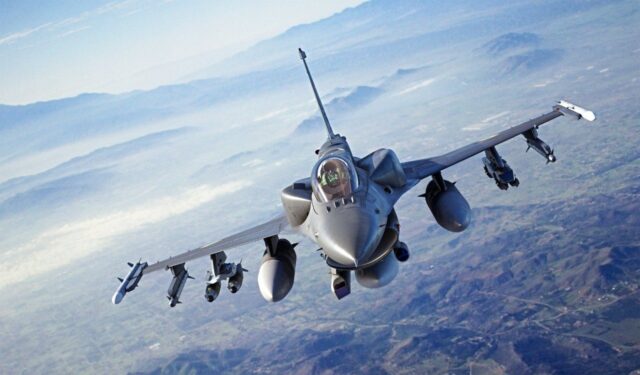
Greece has reportedly sent F-16 fighter jets and naval assets to Cyprus, while Turkey has also deployed aircraft to Northern Cyprus as tensions rise across the eastern Mediterranean.
Australia has announced the deployment of an E-7A Wedgetail airborne early warning aircraft to the Middle East, supported by tanker aircraft and transport planes.
#RAAF Royal Australian Air Force
— Armchair Admiral 🇬🇧 (@ArmchairAdml) March 12, 2026
Boeing E-7A Wedgetail 1x#7CF8F3 A30-004 – AUSSIE 051
Boeing C-17 Globemaster III 1x#7CF869 A41-206 – AUSSIE 498
Airbus KC-30 MRTT 2x#7CF868 A39-005 – AUSSIE 496#7CF866 A39-003 – AUSSIE 497
An RAAF E-7A Wedgetail, supported by two KC-30s… pic.twitter.com/uJ7BXTcU8o
Various Gulf states have also responded militarily to Iranian attacks. Qatar reportedly shot down two Iranian Su-24 aircraft during recent engagements.
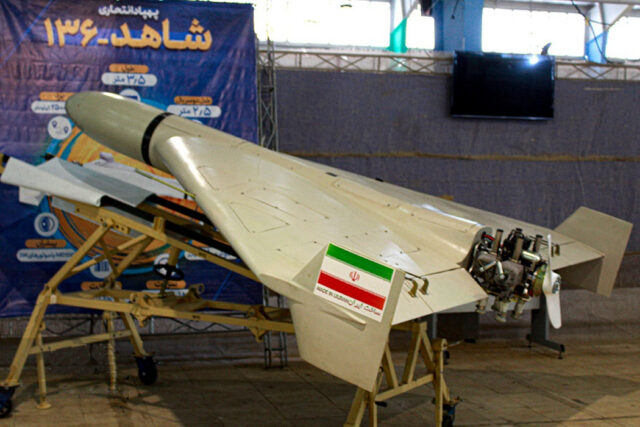
Meanwhile, Ukraine has reportedly been asked to assist regional partners in countering Iranian one-way attack drones, with discussions underway over a potential defence package to supply Saudi Arabia with systems designed to defeat Shahed-style drones.
Russia is reported to be assisting Iran in evading air defence and using its Shahed-style drones more effectively.
For now, the UK maintains that its role is defensive. But with US bombers armed for hardened-target strikes operating from British soil, the distinction between support and participation may become harder to sustain.
Featured Image: US Air Force