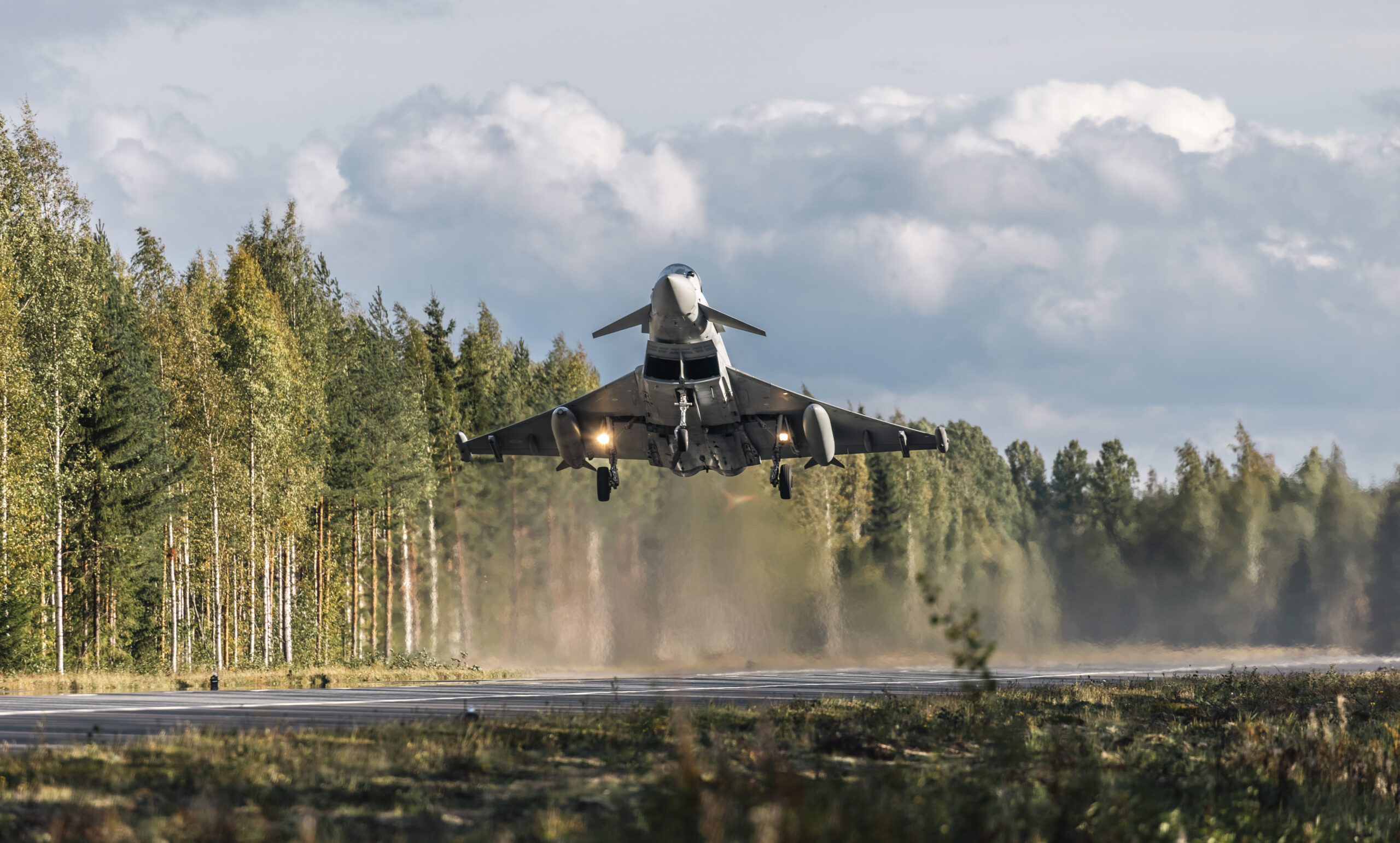
How many aircraft has the US lost in Iran and can it absorb them?

March 20, 2026

The United States has lost at least 16 military aircraft during its air campaign over Iran, including six crewed platforms, according to reporting by Bloomberg.
While the headline figure may appear significant, the composition of those losses, and the context in which they have occurred, paint a more nuanced picture of how modern air forces absorb and manage attrition.
US Air Force fixed-wing losses mount in Iran operations
The most consequential losses have involved crewed aircraft, particularly the reported downing of multiple US Air Force F-15E Strike Eagles.
Three F-15Es were shot down over Kuwait in a friendly fire incident, although all six crew members successfully ejected and survived. A separate incident reportedly saw Kuwaiti air defences down another F-15E, underlining the risks of operating in a crowded and complex air defence environment.
The Kuwaiti air defense was involved in a second friendly fire incident, downing another US Air Force F-15E. pic.twitter.com/ujpoIugF4l
— (((Tendar))) (@Tendar) March 2, 2026
More seriously, the only confirmed loss of life came in a suspected mid-air collision involving two KC-135 tanker aircraft. One aircraft managed to land with damage to its tail, while the other crashed, killing all six crewmembers.
There have also been indications of additional damage to US aircraft on the ground. Reports suggest that several KC-135s were hit during an Iranian missile strike on a base in Saudi Arabia, although most appear to have sustained only limited damage and have since returned to service.
An F-35 was also reportedly hit by Iranian fire and forced to divert to a friendly airfield, though it was not lost.
MORE: A source speaking to Clash Report says three Kuwaiti Eurofighter jets were destroyed, while two Italian Eurofighters were damaged but remain repairable. https://t.co/vUD4jP8ZEk
— Clash Report (@clashreport) March 19, 2026
Beyond US losses, coalition aircraft have also been affected. Kuwait is reported to have lost three Eurofighter Typhoons on the ground, while Italy has lost an MQ-9 drone and suffered damage to two Eurofighters, both considered repairable.
MQ-9 Reaper losses dominate US drone attrition in Iran
The majority of US losses have come from uncrewed systems, particularly the MQ-9 Reaper.
Bloomberg estimates that at least 10 Reapers have been lost during the campaign, although other sources suggest the number could be higher. Think tank CSIS has suggested 11 losses in the first six days of operations, while open-source analysts have visually confirmed several of these incidents.
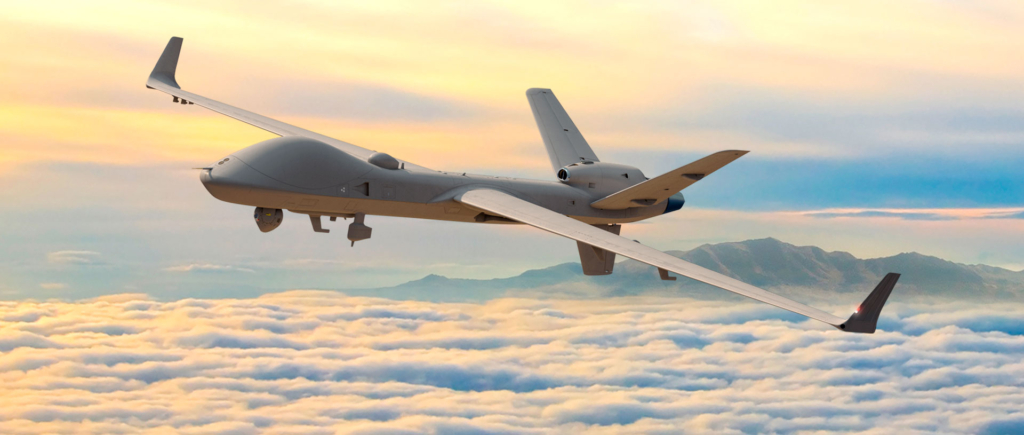
Of those listed, most were shot down, with at least one destroyed on the ground.
Such losses are not unexpected. The MQ-9 is a slow-flying platform not designed to operate in heavily contested airspace, and its continued use reflects a calculated risk rather than a vulnerability.
The US operates a fleet of around 225 Reapers and has long treated them, to some extent, as attritable assets. At an estimated cost of around $30 million per aircraft, they remain significantly cheaper than crewed platforms and are often deployed in roles where higher-risk exposure is acceptable.
Similar patterns are evident among allies. Israel has also lost multiple Elbit Hermes 900 drones during operations over Iran, reinforcing the point that uncrewed systems are often the first to be sacrificed in contested environments.
That is not an MQ-9. It is an Israeli Hermes 900. https://t.co/c8ZwelMLWN
— Oliver Alexander (@OAlexanderDK) March 1, 2026
Recent history provides further context. In early 2025, Houthi forces in Yemen shot down seven MQ-9s in just six weeks, demonstrating both the vulnerability of the platform and the willingness of operators to accept such losses in pursuit of operational objectives.
Can the US military absorb this level of aircraft losses in Iran campaign?
In isolation, the loss of 16 aircraft may appear significant. In practice, such attrition is not unusual in sustained air campaigns, particularly at the scale currently being seen over Iran.
Military aircraft losses occur regularly even outside combat. In 2025, the US recorded 14 Class A aviation mishaps, up from eight the previous year, with several incidents linked to operational activity in the Red Sea.
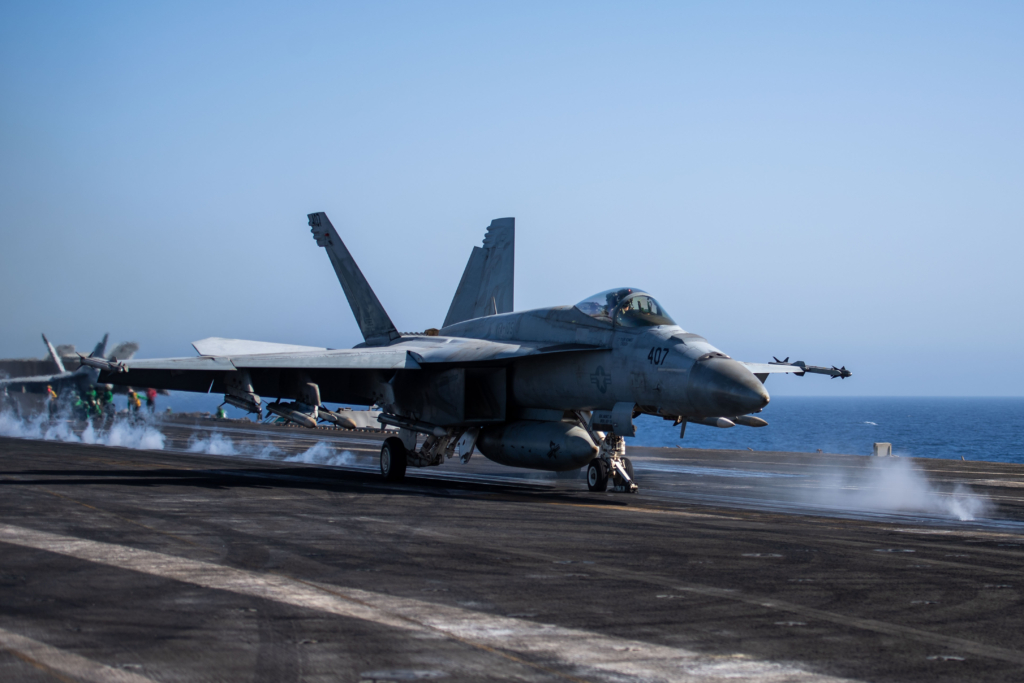
Recent years have seen multiple high-profile incidents, including F-35 and F-16 crashes, as well as carrier-based losses involving F/A-18 Super Hornets. Friendly fire incidents have also occurred, including the accidental downing of a Super Hornet by USS Gettysburg in late 2024.
Historically, the current losses remain relatively modest. During the Gulf War, the US lost 44 fixed-wing aircraft, including around 20 fighter jets, over a far shorter campaign.
Crucially, the majority of current losses are concentrated among uncrewed systems, which are designed, at least in part, to be expendable.
The continued use of such platforms, despite their vulnerability, reflects a broader operational reality: in high-intensity conflicts, attrition is expected, managed, and, within limits, strategically acceptable.
Featured image: DVIDS

![NASA's X-59 Quesst [registration N859NA '859'] is seen in-flight over California during the experimental supersonic aircraft's brief second test sortie on 21 March 2026. Image: NASA/Jim Ross](https://aerospaceglobalnews.com/wp-content/uploads/2026/03/X-59-Second-Flight-21-03-26-NASA-Jim-Ross-crop-scaled-640x0-c-default.jpg)