US Air Force builds mock airfields with F-16s and C-130s to reshape basic training

January 26, 2026
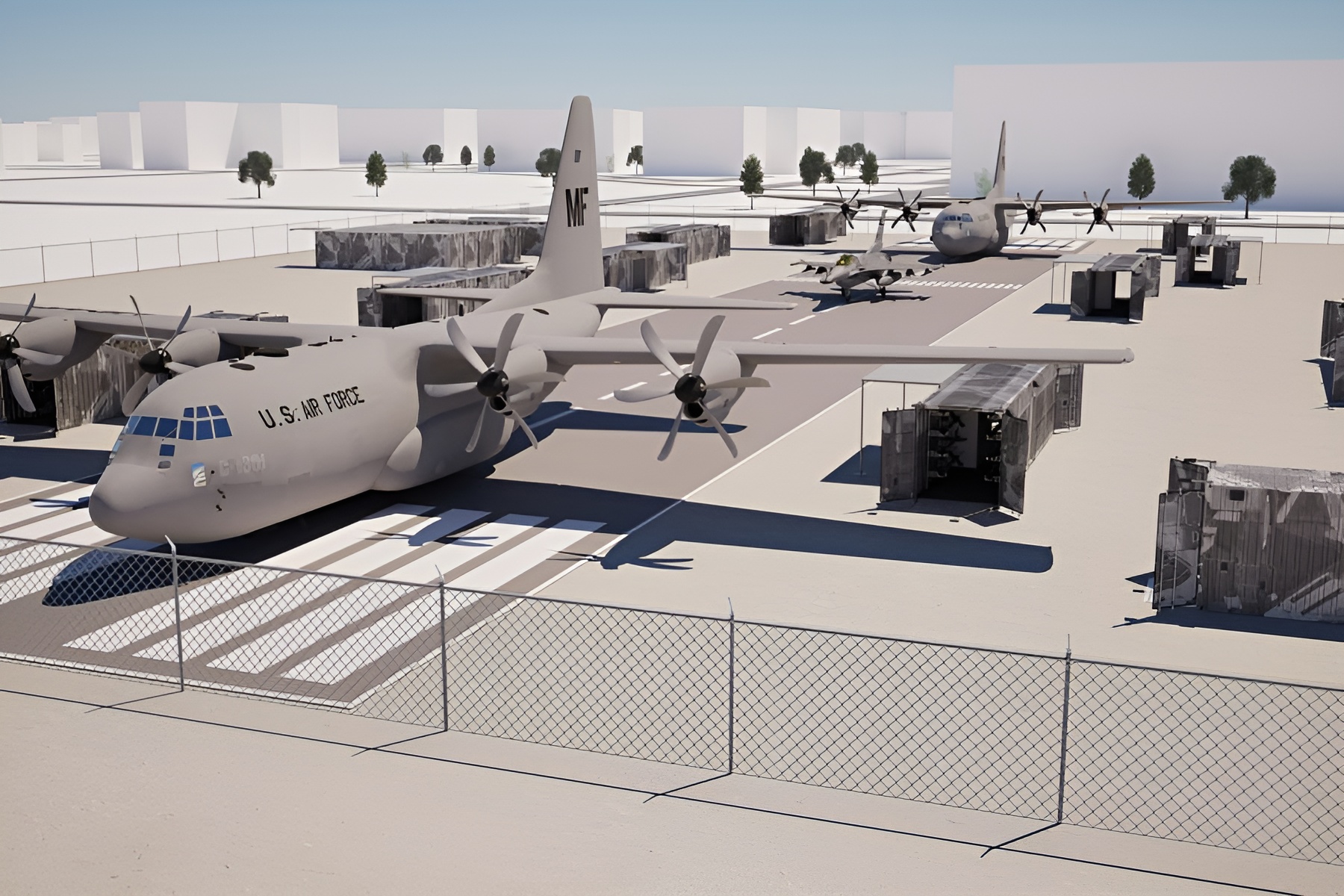
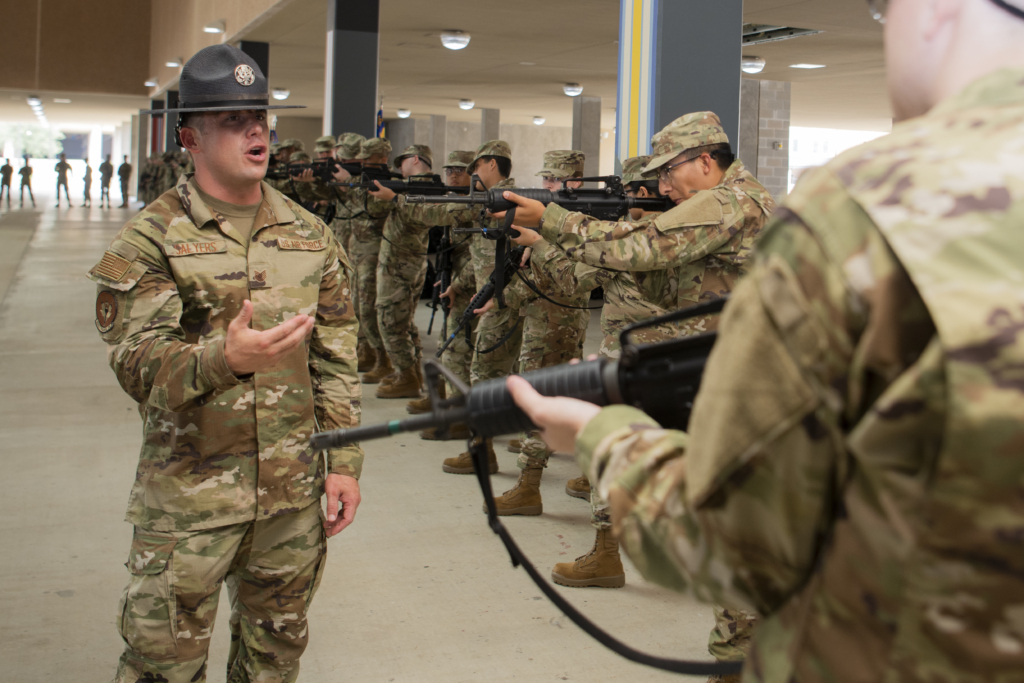
The United States Air Force is reshaping how it prepares new Airmen for high-end conflict by building full-scale mock airfields that replicate the realities of operating combat aircraft under attack, marking one of the most significant changes to basic military training in decades.
The initiative, first reported by Air & Space Forces Magazine, forms part of the Air Force’s transition to Basic Military Training (BMT) 3.0, a revamped syllabus designed to ensure Airmen understand not just drill and discipline, but how airpower is generated, sustained and protected in contested environments.
Under BMT 2.0, the service began shifting towards smaller teams and more practical events, reducing classroom time.
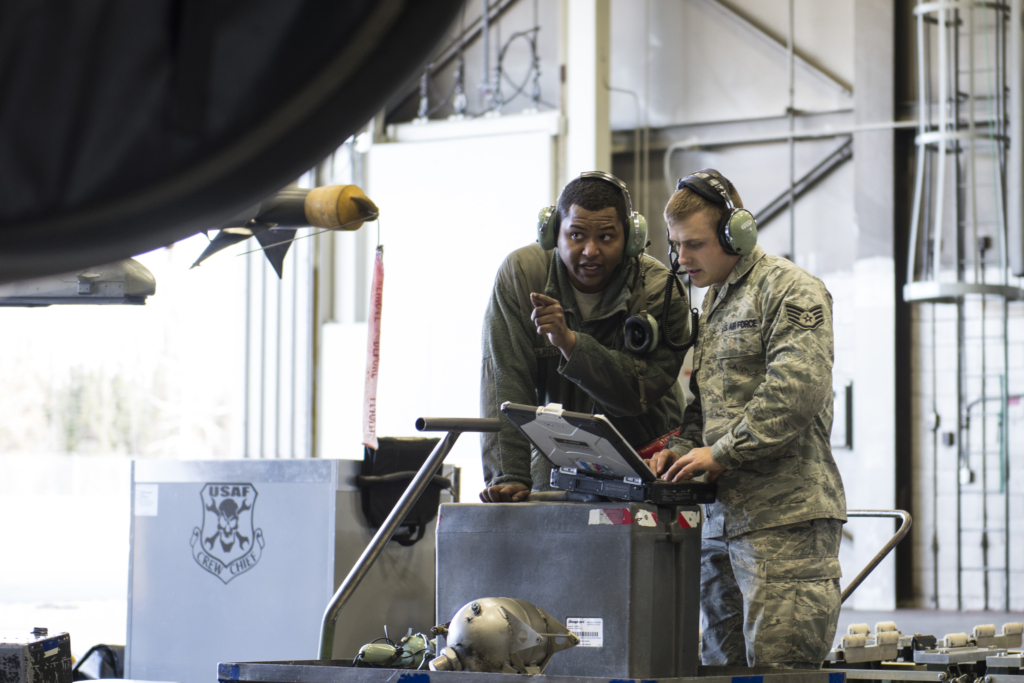
“Those practical events will only increase with 3.0,” 2nd Air Force Commander Maj. Gen. Wolfe Davidson told Air & Space Forces Magazine. “But some of those events you can’t do until you actually have the training range; you can’t put bombs on an airplane unless you have an airplane.”
At the centre of the plan are two purpose-built mock airbases in Texas, intended to expose trainees to real aircraft, real airfield infrastructure and realistic operational stressors from the very start of their careers.
The US Air Force is bringing flight line realism into basic training
For decades, basic training focused primarily on physical conditioning, customs and discipline, with technical exposure arriving much later in an Airman’s career. That model is now being overtaken by operational reality.
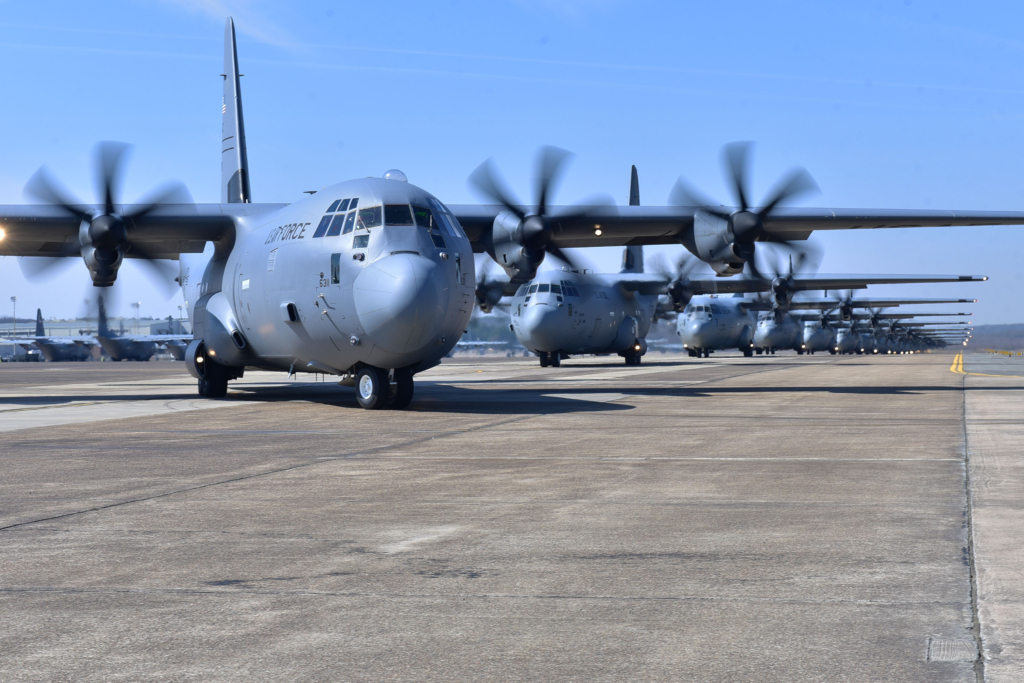
Under BMT 3.0, trainees will work on simulated airfields where they can see, touch and operate around retired F-16 Fighting Falcons and C-130 Hercules transport aircraft, learning how airpower functions as a system rather than as a collection of isolated roles.
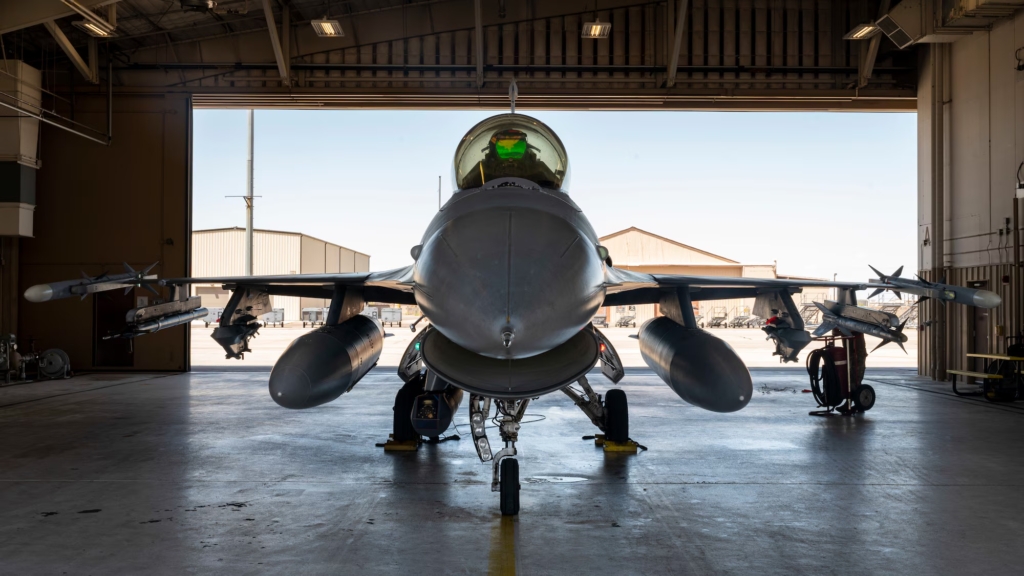
The permanent airbase training range will be equipped with one F-16 and two C-130s previously used to train maintainers at Sheppard Air Force Base, Texas. Maj. Chris Sweeney, director of logistics, infrastructure and force protection for the 2nd Air Force, told the magazine that these aircraft are now on “their third life”.
The first mock airfield, due for completion by October, will replicate a permanent operating base. It will feature a short concrete runway, full ramp infrastructure, aircraft parking areas and containerised training stations positioned close to existing training pads to allow seamless integration into daily instruction.
Airmen will rotate through hands-on tasks including aircraft arming, refuelling, casualty evacuation, cargo handling, aircraft marshalling, entry control operations and post-attack runway repair, a capability increasingly vital in an era of long-range precision strike.
Training Airmen for contested airpower and damaged airbases
A second site, scheduled for completion by the end of the year, will focus on expeditionary and austere operations, aligning closely with the Air Force’s Agile Combat Employment (ACE) doctrine.
This facility will feature dirt assault strips and degraded operating conditions, simulating forward-deployed airbases under persistent threat.
The expeditionary site will support PACER FORGE, the multi-day capstone field exercise introduced in 2022, during which trainees must sustain air operations while facing simulated attacks, infrastructure damage and logistical disruption.
Together, the two sites are intended to give Airmen a realistic understanding of what it takes to keep aircraft flying when bases are targeted, supply chains are strained and operating conditions deteriorate.
Retired F-16s and C-130s sit at the heart of mock airfield training
Although the F-16s and C-130s assigned to the mock airfields are no longer flight-worthy, their presence is deliberate.
Trainees will load inert AIM-9 Sidewinder missiles, rocket pods, chaff and flares onto the fighters, handle heavy refuelling hoses and practise damage assessment using standard Air Force repair manuals.
Each training station is designed around short, high-intensity scenarios that prioritise teamwork, communication and decision-making rather than technical mastery.
“This is about providing basic context for what it takes to sustain airpower; we call it DOGS — defend, operate, generate and sustain airpower,” Davidson said. “That is the fundamental concept of how Airmen fight from an airfield.”
Instructors say the shift is intended to break down traditional divides between “operators” and “support” roles, ensuring every Airman understands how their actions contribute directly to sortie generation.
US Air Force invests $30m in mock airfield training
The Air Force has allocated around $30 million across fiscal years 2025 and 2026 to build the initial permanent mock airbase, covering an area slightly larger than a football field. The site is being treated as a proof-of-concept.
Longer-term plans envisage a formal military construction programme that would double the size of the training range, add additional operational environments and expand the number of aircraft and systems on site.
Total costs for that expansion are expected to remain below $100 million, with potential funding requests beginning in fiscal year 2028.
The move reflects a broader shift within the US Air Force as it prepares for operations against near-peer adversaries capable of striking airbases with missiles, drones and cyber attacks.
Rather than treating base defence, aircraft sustainment and runway repair as specialist skills learned years into service, the Air Force is embedding these concepts at the foundation of training, signalling that airfields themselves are now viewed as frontline assets.
Featured image: USAF