Report: The US Air Force needs at least 200 B-21 Raider stealth bombers to counter China

February 12, 2026

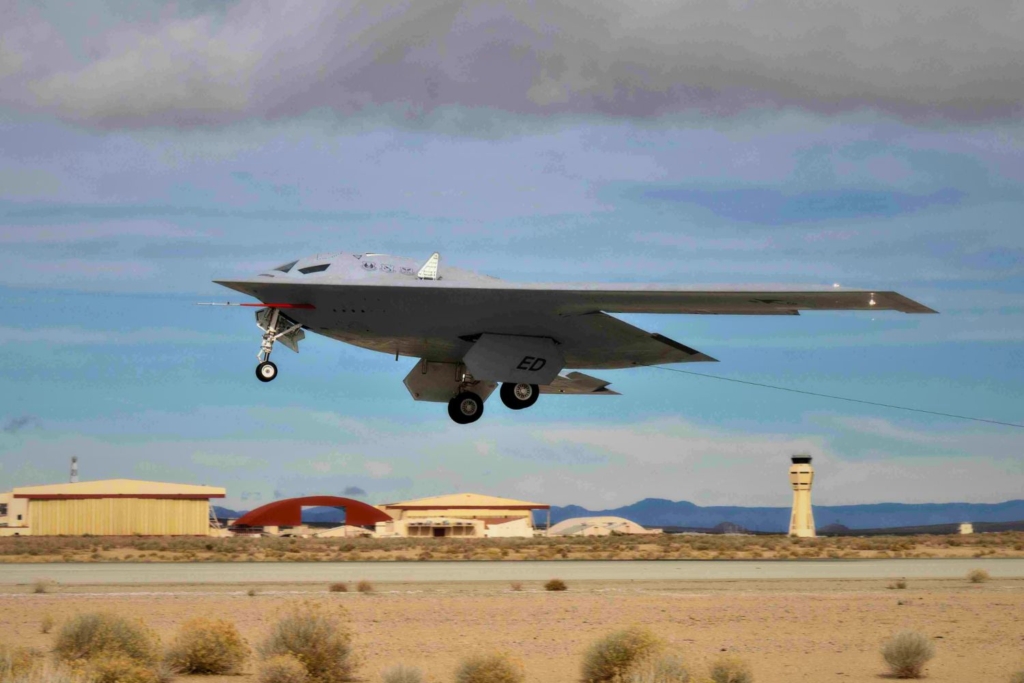
The United States should field at least 200 B-21 Raider stealth bombers to restore its ability to deny China operational sanctuary in a Taiwan conflict, according to a new study from the Mitchell Institute for Aerospace Studies.
The report, Strategic Attack: Maintaining the Air Force’s Capacity to Deny Enemy Sanctuaries, argues that while the US retains the most advanced stealth aircraft in the world, it lacks the capacity and sortie generation required to sustain penetrating strikes in a prolonged conflict with the People’s Liberation Army.
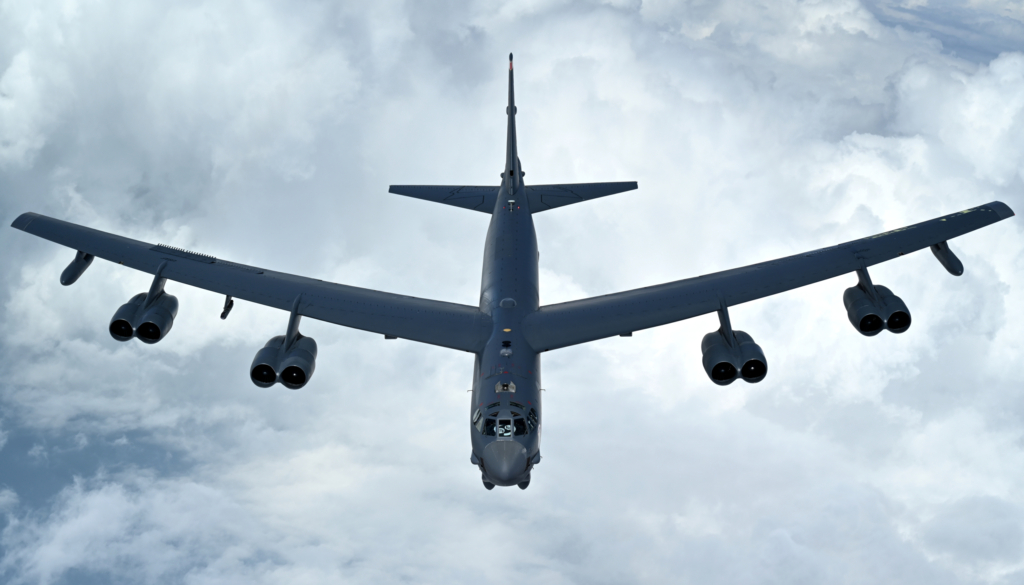
While the Air Force plans to acquire at least 100 B-21s, the study cites multiple independent analyses recommending a force of 200 aircraft, complemented by retained B-52Hs, to generate the sortie capacity required for sustained penetrating strikes.
The issue, the authors argue, is not technological superiority but mass and tempo. Penetrating aircraft must be available in sufficient numbers to collapse an adversary’s ability to continue launching long-range missile and air attacks.
At present, the Air Force operates 19 B-2 stealth bombers, 76 B-52Hs and roughly 45 B-1Bs. After accounting for maintenance and readiness rates, fewer than 50 bombers may be mission-capable at any given time.
That force, the study contends, cannot sustain the operational tempo required to dismantle China’s mainland strike infrastructure in a prolonged conflict.
200 B-21 Raiders, more F-35s and faster development of the F-47
The report argues that expanding the B-21 fleet alone is not sufficient. The Air Force must also sustain robust procurement of F-35A fighters and accelerate development and fielding of the Next Generation Air Dominance platform, designated F-47.
Only around 20% of the Air Force’s current fighter inventory is stealthy, and the overall fleet has declined sharply since the Cold War.

The authors caution against truncating F-35A purchases or slowing F-47 acquisition to meet budget ceilings, warning that force sizing should be driven by operational demand rather than fiscal constraint.
Together, B-21 bombers, F-35As and F-47s would form what the study describes as a “sanctuary denial force” capable of penetrating heavily defended airspace and holding hardened targets at risk.
Sanctuary denial and a potential US-China conflict
The concept is straightforward but strategically consequential: an adversary should never believe its most critical military infrastructure lies beyond the reach of US airpower.
The report argues that denying a Chinese fait accompli against Taiwan is not enough. Even if an initial assault were blunted, Beijing could continue generating air and missile attacks from protected bases deep inside mainland China unless those sanctuaries are directly threatened.
During the Cold War, the US structured its bomber force around precisely that requirement. Long-range aircraft were sized to penetrate Soviet air defences and hold hardened, high-value targets at risk. That capacity, the study suggests, was a pillar of deterrence.
Today, China is building the opposite condition: a sanctuary protected by layered air defences, long-range missile forces, hardened facilities and dispersal strategies designed to blunt US intervention in the Indo-Pacific.
“Allowing the PLA to operate from sanctuaries would cede to China a combat mass advantage that the DoW cannot match,” the report states.
Stand-off weapons alone cannot replace penetrating bombers
The report does not dismiss long-range stand-off weapons, but it warns against designing a force overly reliant on them.
Stand-off strikes depend on complex kill chains, increase cost per effect and may lack the payload required to defeat hardened, deeply buried targets.
Only penetrating stealth aircraft can deliver the largest bunker-busting munitions and operate within contested airspace to dismantle an adversary’s war-sustaining infrastructure.
Recent US strike operations against fortified facilities in Iran are cited as evidence that certain targets can only be held at risk by aircraft capable of penetrating defended airspace.
However, the authors stress that China’s air defence architecture is significantly denser and more capable than those encountered in the Middle East. A Western Pacific campaign would require repeated, large-scale penetrating attacks, not isolated strike packages.
From 400 bombers to 141: how the US bomber fleet shrank
By historical standards, the US bomber force is now at an all-time low.
In 1990, the Air Force maintained a bomber inventory of more than 400 aircraft. Today, the total force stands at 141, the result of three decades of post-Cold War drawdowns.
Those reductions were justified in a permissive security environment. The Mitchell Institute argues that they are increasingly misaligned with a strategic landscape defined by peer competition and rapidly expanding Chinese military capability.
Those reductions leave today’s 141-aircraft bomber force struggling to generate sustained penetrating mass in a Pacific scenario.

The Air Force plans to procure at least 100 B-21 Raiders, but the Mitchell Institute argues that figure is driven more by budget ceilings than operational requirement. Multiple independent analyses cited in the report recommend a force of at least 200 B-21s, complemented by retained B-52s, to restore credible sanctuary denial capacity.
The logic is not simply survivability. It is sustained tempo. Penetrating aircraft must generate enough sorties, at sufficient density and over sufficient time, to collapse an adversary’s ability to continue launching long-range strikes.
Possessing stealth platforms in small numbers, the report argues, is insufficient.
Mitchell Institute warns budget limits threaten B-21, F-35 and F-47 procurement
The paper repeatedly warns against “buying to budget”, acquiring aircraft at rates dictated primarily by fiscal constraints rather than operational demand..
It calls for substantially increased investment, including accelerating B-21 production, sustaining higher F-35A procurement rates and fully resourcing development of the Next Generation Air Dominance fighter, recently designated F-47.
The authors also caution against overbalancing toward long-range stand-off weapons. While such systems reduce exposure to dense air defences, they rely on complex and potentially fragile kill chains and can increase cost per effect. Moreover, they may lack the payload and penetration required to defeat hardened, deeply buried targets.
In the study’s framework, stand-off strike should supplement penetrating forces, not substitute for them.
Operation Midnight Hammer showed the limits of stand-off weapons
The report references recent US strike operations against hardened targets in Iran as evidence that sanctuary denial remains central to deterrence. In June 2025, stealth aircraft were used to deliver penetrating munitions against fortified facilities, demonstrating that certain targets can only be held at risk by aircraft capable of operating inside contested airspace.
However, the authors stress that China’s integrated air defence system is significantly denser and more capable than those encountered in Middle Eastern theatres. A Western Pacific campaign would require repeated, large-scale penetrating attacks, something current inventory levels may struggle to sustain.
Why 200 B-21 bombers may determine US deterrence against China
The question the report ultimately raises is not historical but strategic: can the current US bomber force deny China sanctuary at scale?
In a Pacific conflict defined by distance, dispersed basing and attrition risk, sortie capacity becomes the decisive metric. Mass is not a function of technology alone, but of how many penetrating aircraft can generate sustained effects over time.
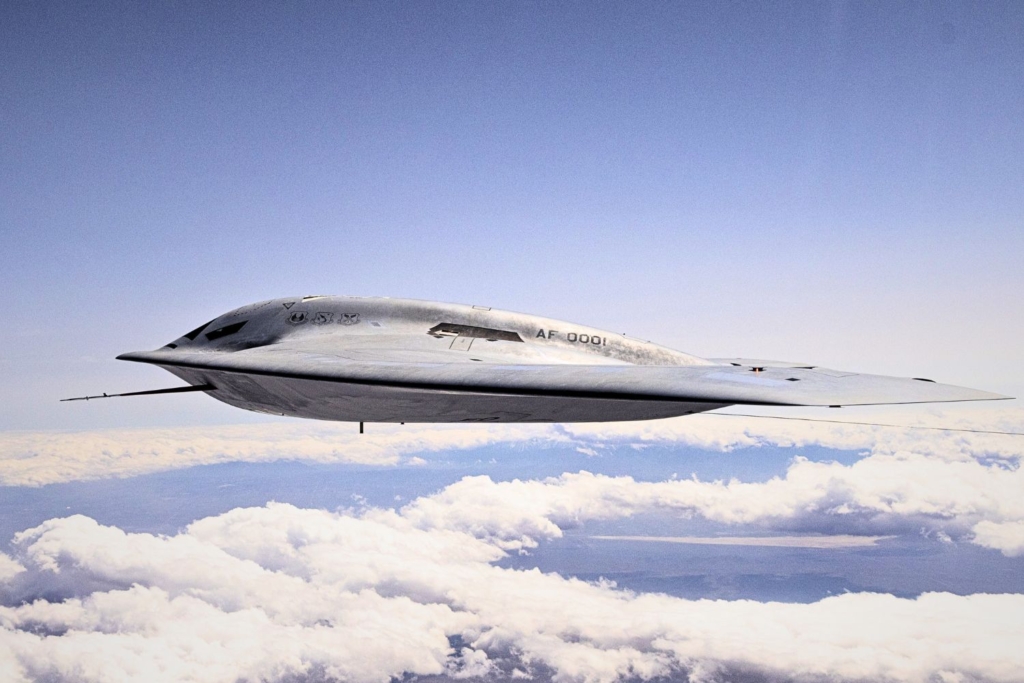
A force of 200 B-21s, integrated with sufficient numbers of F-35As and F-47s, would more than double current penetrating strike capacity and restore the ability to fight “from the inside out”, directly targeting the centres of gravity that sustain Chinese military operations.
Without that scale, the study warns, the United States risks presenting an adversary with windows of opportunity in which hardened sanctuaries remain intact.
Deterrence depends not simply on owning stealth aircraft, but on owning enough of them to convince a peer adversary that no sanctuary is safe.
Featured image: US Air Force