What we know about the GCAP 6th gen fighter jet Tempest so far

April 11, 2026

With the first GCAP/Tempest demonstrator in building, the UK, Italy, and Japan are ploughing ahead with developing their shared 6th-generation fighter jet. While setbacks are to be expected, the service date of 2035 remains the stated aspiration.
Temptest aims for an in-service date of 2035
The stated aim is for Tempest to enter service by 2035 and for it to remain in service beyond 2070. Of the three partner nations developing the jet, Japan is seen as having the most urgent need.

Thinktank Rusi’s Justin Bronk testified to the British International Relations and Defence Committee in 2025. Bronk said that Japan feels it needs the next-generation fighter quickly to counter emerging Chinese capabilities and threats in the late 2030s and 2040s.
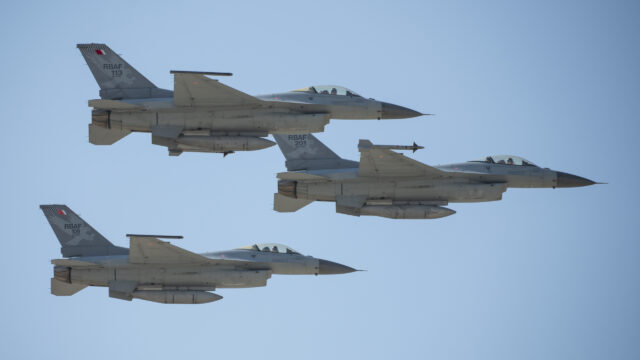
Japan wants to replace its F-2s (licence-built Japanese versions of the F-16) and eventually its F-15Js. It will complement its fleet of F-35s.
The United Kingdom is not considered to be in the same hurry, as it believes its Eurofighter Typhoons and F-35s are sufficient to continue overmatching Russia’s future fighter jets into the 2030s.
Tempest & GCAP are inspiring transformative innovation to deliver advanced power, digital and sustainable solutions with transformational benefits. Discover how. https://t.co/ZOJTM5dNSu#RollsRoyce pic.twitter.com/r4VccijVvk
— Rolls-Royce (@RollsRoyce) January 14, 2026
Many Western analysts assess that beyond around 2035, Russia will become increasingly dependent on advanced Chinese technology. This gives the UK more breathing room to develop Tempest than Japan feels it can afford.
Edgewing joint venture set up for GCAP
Much like how the Eurofighter Consortium was established to build the Eurofighter Typhoon, the UK, Japan, and Italy founded Edgewing as an international joint venture to develop Tempest in mid 2025.

Edgewing is 33.3% owned by BAE Systems, 33.3% by Leonardo, and 33.3% by Japan Aircraft Industrial Enhancement (JAIEC). JAIEC is itself an industrial consortium that includes the Society of Japanese Aerospace Companies and Mitsubishi Heavy Industries.
Edgewing says Tempest will be the “cornerstone of strategic defence and security partnerships, the programme will deliver the capability to defeat the future threats of 2040+.”
While cooperation between the three companies appears to have been relatively harmonious, it is not without its expected drama and internal competition.
Pushing the boundaries to pioneer a superior next-generation combat air system✈️
— Edgewing (@EdgewingLtd) December 11, 2025
At Edgewing, we are embracing new tools, technologies, & practices to envision a system that has never been built before. Find out how we aim to shape the future of defence👇https://t.co/qK9a76QDXu pic.twitter.com/WN9G3bsXZf
For example, Italy’s Minister of Defence Guido Crosetto has repeatedly accused the British of not sharing cutting-edge technology with its partners. Crosetto has called this “madness.”
Tempest as part of GCAP: A system of systems
As a 6th-generation fighter, the Tempest will be a system of systems. It is perhaps better not to think of it as a fighter jet in the traditional sense, but as a super-connected, supercomputing, command centre able to penetrate enemy air defences while controlling and communicating with a hive of complementary systems.
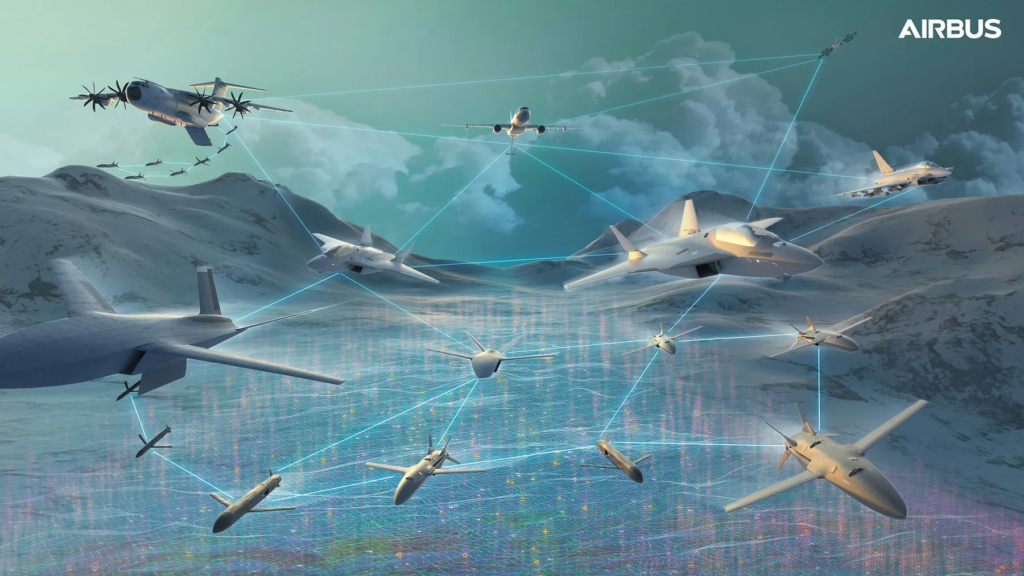
It is expected to have a massively improved sensor fusion that combines radar, infrared, and electronic warfare systems in a single, real-time picture to create a god’s-eye view of the battlespace.
Unlike the US Air Force’s NGAD programme, Tempest does not yet have a clearly branded, USAF-style loyal wingman drone programme (called Collaborative Combat Aircraft by the USAF).
Like other 6th-generation fighter jets, Tempest is planned to be part of a networked combat system. Besides loyal wingmen drones, it will coordinate with combat cloud infrastructure and artificial intelligence.
Our mission is to pioneer a superior and connected next-generation combat air system ✈️
— Edgewing (@EdgewingLtd) October 7, 2025
In doing so, we aim to advance the global defence ecosystem to protect our futures.
See how we are doing this 👇https://t.co/VyfJIXpFcE pic.twitter.com/UdwynRVGL1
Its engines, built by Rolls-Royce, are to produce higher thrust and electrical power for its vast array of sensors as well as directed energy weapons (aka lasers). It will carry a diverse range of weapons, including hypersonic missiles.
Tempest is emphasising a digital revolution in aircraft that aims to shorten development timelines and allow for rapid updates.
Get the latest aerospace defence news here on AGN.
Role and requirements of Tempest
While the F-47 is billed as an air dominance successor to the F-22, the Tempest is expected to be built for a broader mission scope, while also being very powerful in air combat. It is intended to replace the Eurofighter, not the F-22.

The F-47 is being optimised for air dominance, which is when an enemy cannot meaningfully contest the air at all. It is built for the hardest possible fight, while Tempest is being optimised for flexibility.
It should be noted that while British and Japanese requirements for Tempest overlap substantially (which allowed them to combine their efforts), they do not align perfectly.
Tempest demonstrator is already being built
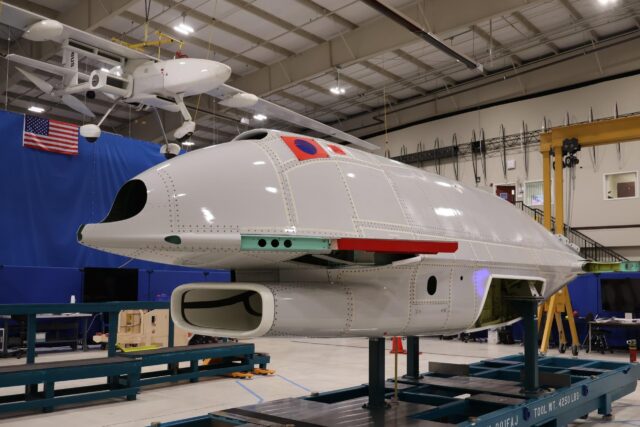
The manufacturing of the first Tempest demonstrator is currently underway by BAE Systems, with BAE saying that two-thirds of its structural weight is now in manufacturing.

BAE said in mid-2025, “The aircraft’s main structure, wings and tail fins are all taking shape using pioneering robotic and digital manufacturing and assembly technologies at BAE Systems’ sites in Lancashire.”
This will be the first piloted supersonic aircraft of its kind developed in the UK in 40 years.
As can be expected, the British ejection seat specialist, Martin Baker, is leading in ejection seat trials for the demonstrator.
Meanwhile, Rolls-Royce has been carrying out aerodynamic engine testing in Filton, Bristol. The work is ongoing to harness a new advanced manufacturing process to produce an engine duct uniquely shaped to slow the air from supersonic to subsonic speeds at the engine face.
This is part of the Tempest’s all-aspect stealth design to limit its IR signature.
Secure development with German questions
Of the four known 6th-generation fighter jets being developed by Western countries, GCAP (Tempest) is arguably the second most secure in its development.
The most well-funded and secure is likely the US Air Force’s Boeing F-47, whose prototype is in building and is expected to fly in 2028.

Meanwhile, the US Navy’s F/A-XX programme was mostly put on ice in FY 2026 funding to focus on the F-47. However, in January 2026, Congress moved to restore F/A-XX funding, although funding remains a question.
The other European next-generation fighter jet is the Franco-German FCAS, which is further behind in its development cycle than Tempest. Additionally, the ongoing Franco-German rift is threatening to collapse the programme in its present form.
Uncertainty over the FCAS project could offer more possibilities for GCAP. For one, it would remove or set back the GCAP’s main future European rival.
Another major factor will be what Germany decides to do. France’s Dassault has said it will push on with a next-generation fighter jet with or without Germany.
Germany could then look to develop a next-generation fighter jet alone, or more likely in partnership with Sweden’s Saab. However, a major issue is that experts believe there is only a demand for two advanced next-generation European fighter jets.
'The Future of Combat Air'✈️
— BFBS Forces News (@ForcesNews) September 11, 2025
👀Impressive full-scale model of 🇯🇵🇬🇧🇮🇹GCAP fighter jet on display at #DSEI UK 2025. pic.twitter.com/d6F7H3p26E
Germany could seek to join the GCAP project, but it is unclear how such a large industrial partner could be accommodated at this late stage. Worksharing has already been largely agreed upon between Japan, the UK, and Italy.
It’s possible Germany could settle for a lower contribution to the programme. It could also focus on other systems, like loyal wingman drones for the fighter. For now, one of the bigger potential questions for the Tempest/GCAP programme remains Germany.
Featured Image: Leonardo