8 military aircraft will fly over the Super Bowl: Here’s how it’s planned

February 6, 2026
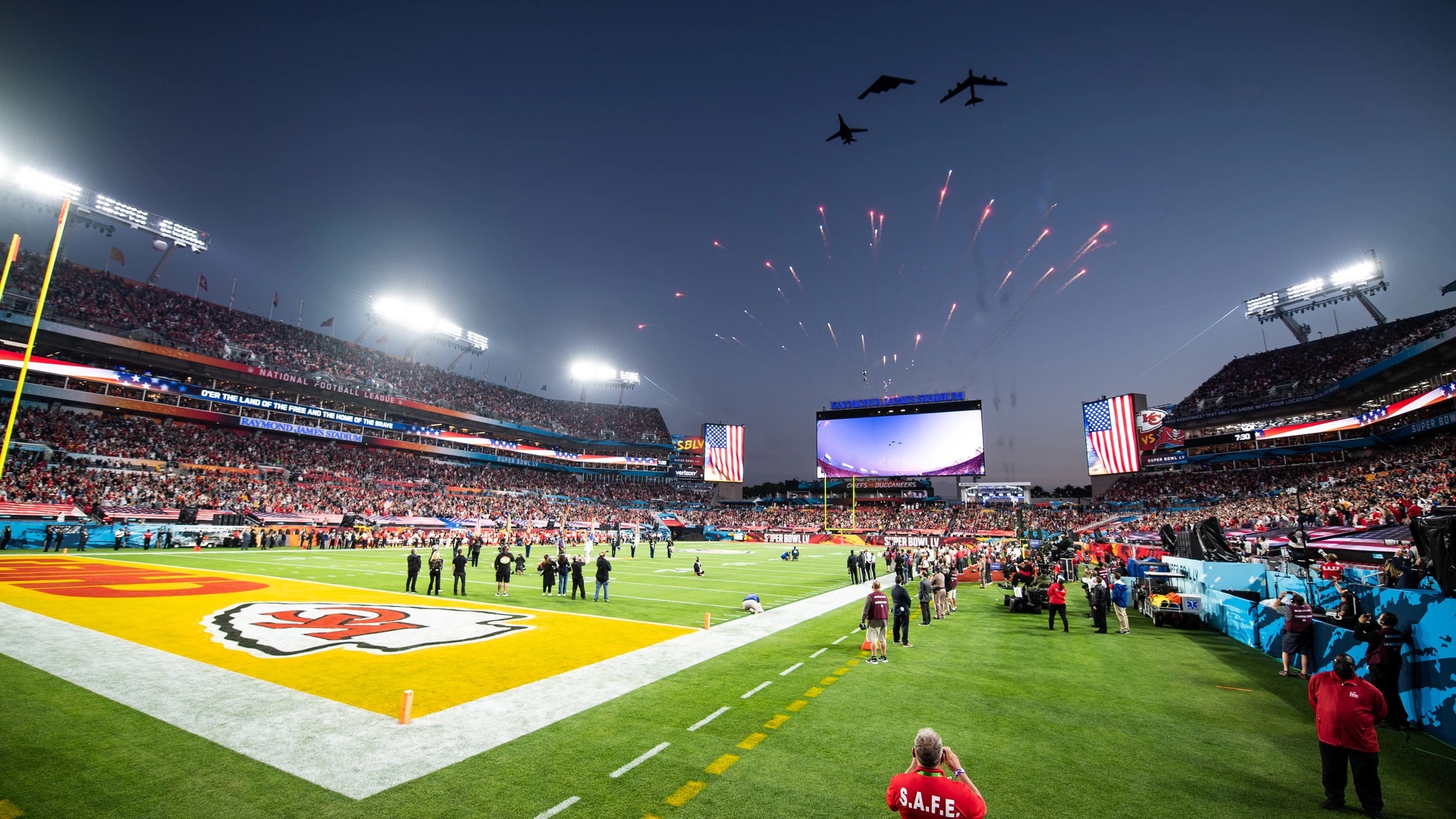
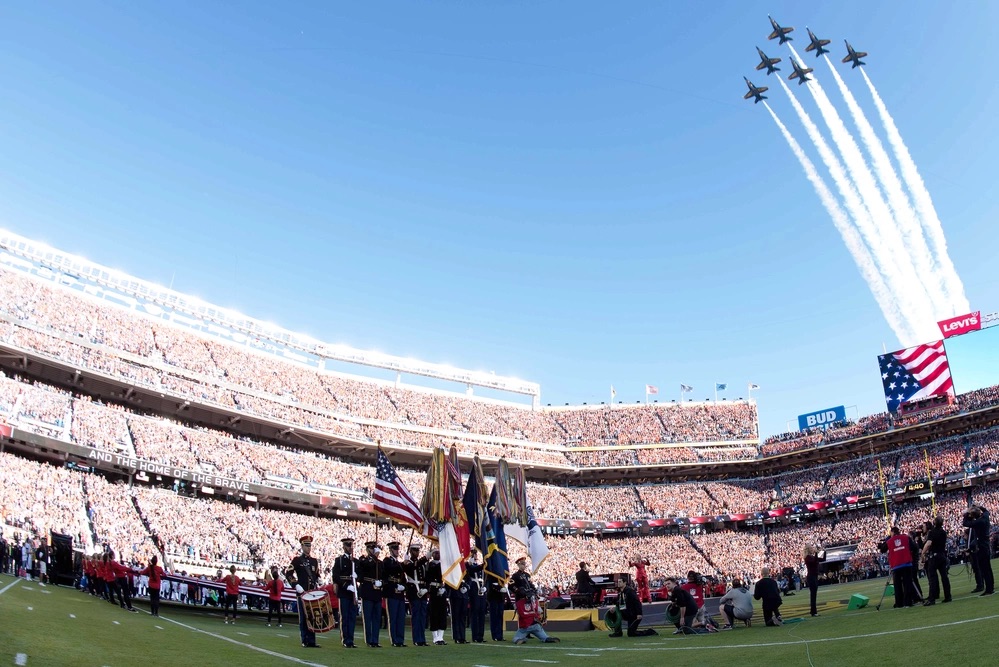
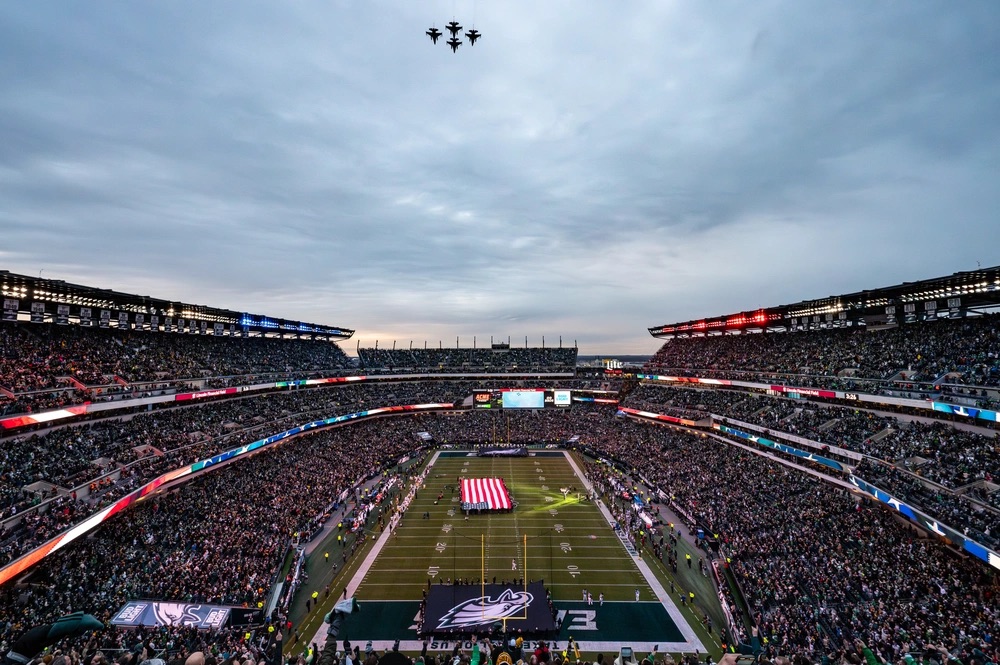
When the Super Bowl kicks off on February 8, 2026, millions of viewers will be focused on the action inside Levi’s Stadium in Santa Clara, California. But just seconds before kickoff, eight military aircraft will streak overhead in a precisely timed flyover that is the result of months of planning, coordination, and rehearsal.
This year’s flyover for Super Bowl LX will be one of the most complex yet. The formation will pass directly over Levi’s Stadium at the exact moment the national anthem reaches its final line, in some of the busiest civilian airspace in the United States, surrounded by major airports serving San Francisco, San Jose, and Oakland.
From the outside, it looks ceremonial. Behind the scenes, the US military treats the Super Bowl flyover like a time-critical air operation, with no margin for error.
The US military plans the Super Bowl flyover months in advance
Super Bowl flyover planning typically begins six to eight months before game day, often as soon as the host city is confirmed.
According to reporting by Military.com, preparations for Super Bowl LX accelerated last summer once it became clear that the flyover would be a joint effort between the United States Air Force and the United States Navy.
Early planning focuses less on aircraft and more on constraints. Planners must assess the stadium location, surrounding terrain, nearby civilian airports, and available military bases that could support aircraft staging, fuel, and maintenance. In the Bay Area, those constraints are significant.
Once the operational framework is established, planners determine which aircraft types are available, which units can support the mission, and how many aircraft can be safely integrated into the airspace. Every decision must balance symbolism, logistics, and operational feasibility.
How Super Bowl flyover aircraft hit the stadium at exactly the right moment
The defining challenge of any Super Bowl flyover is timing. Aircraft are required to pass directly over the stadium at a precise second, synchronised with the live performance of the national anthem.
This moment is known as “time over target,” a concept borrowed directly from combat aviation. Once the aircraft launch and commit to the inbound route, there is very little flexibility.
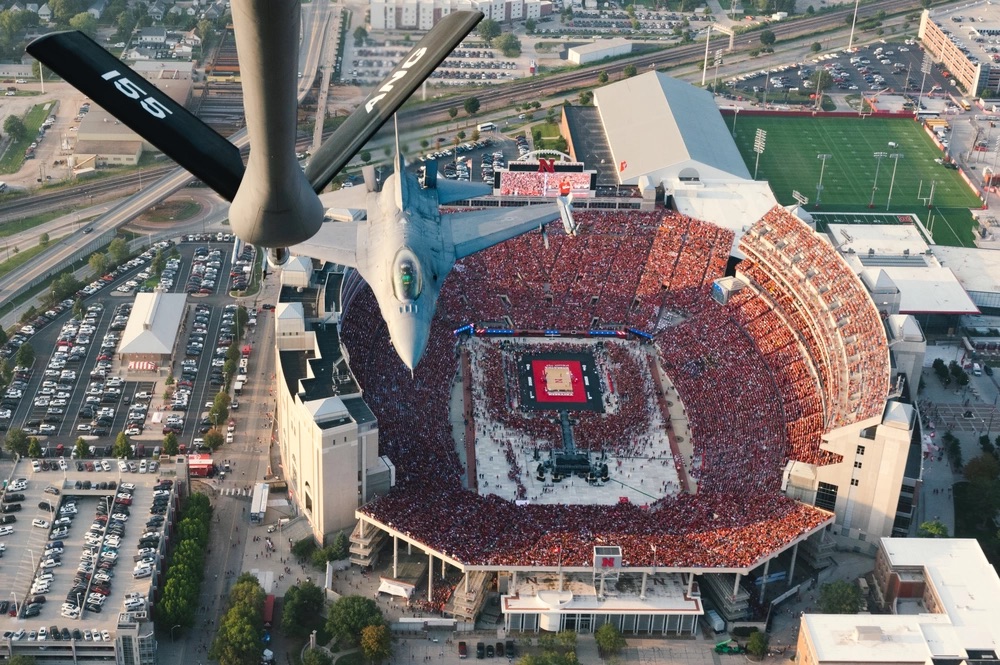
“When you think of combat operations, where you have to be over a certain point of time and things have to go just right, that’s exactly how it is at an event like the Super Bowl,” explains Air Force Sports Outreach Program Manager Katie Spencer to Military.com. “You have to hit your time over the target… and nothing duplicates something that is high stress, high stakes like the Super Bowl.”
To achieve that precision, planners work backwards from the anthem’s expected tempo, calculating departure times, routes, speeds, altitudes, and wind conditions. Aircraft cannot simply slow down or circle if there is a delay inside the stadium, making coordination with the NFL and broadcast partners critical.
Which aircraft will fly over Super Bowl LX in 2026?
The Super Bowl LX flyover will feature eight aircraft drawn from both services, marking the first Air Force–Navy joint flyover at a Super Bowl and reflecting the US military’s 250th anniversary year.
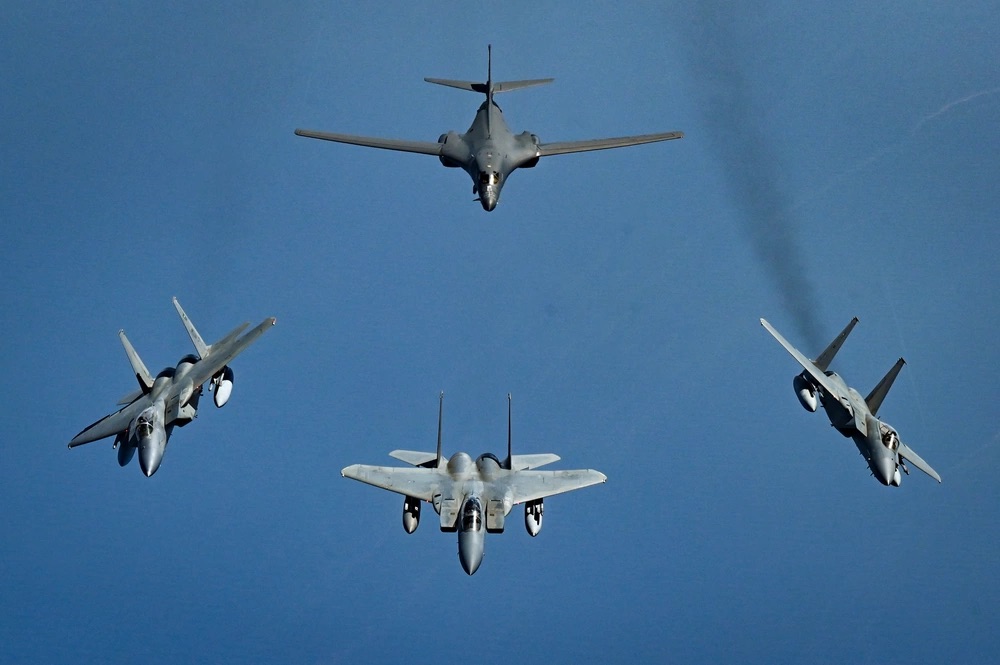
US. Air Force aircraft
- Two B-1B Lancer strategic bombers from Ellsworth Air Force Base, South Dakota
- Two F-15C Eagle fighters from the Fresno Air National Guard Base, California
US Navy aircraft
- Two F/A-18E Super Hornet multi-role fighters
- Two F-35C Lightning II fifth-generation fighters from Naval Air Station Lemoore, California
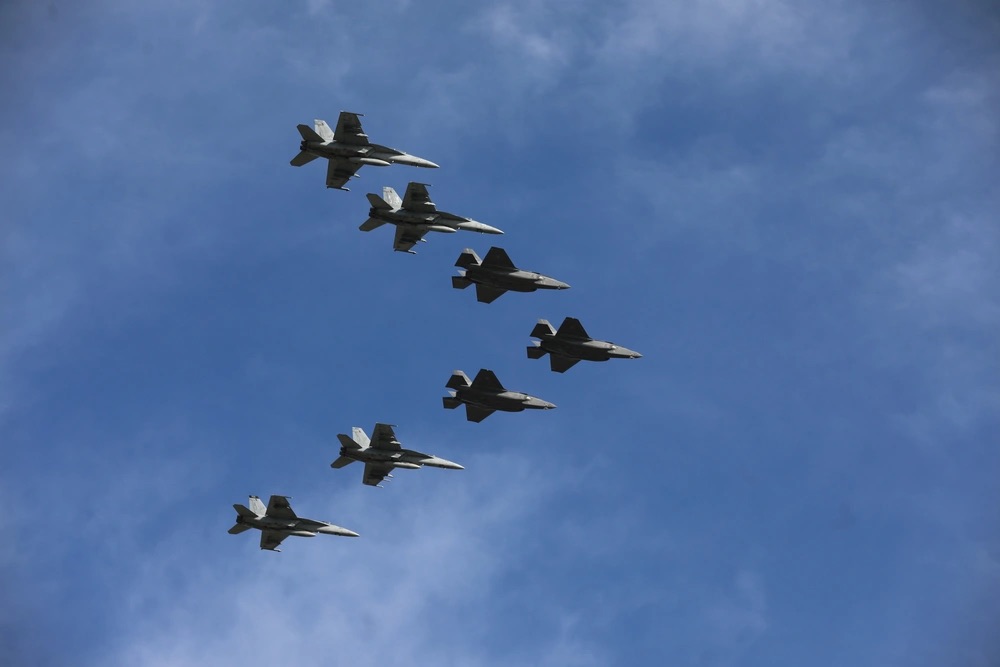
Together, the formation represents a cross-section of airpower, from legacy air superiority and strike platforms to modern stealth aircraft.
How the FAA and military keep the Super Bowl flyover safe
Safety is overseen by dedicated aerial controllers from Air Combat Command, working closely with the Federal Aviation Administration. Temporary flight restrictions are established around the stadium, and civilian air traffic flows are adjusted to create a protected corridor for the inbound formation.
Controllers coordinate directly with pilots, air traffic control facilities, and NFL timing officials. In the final minutes before the flyover, communications are continuous, with contingency plans in place for weather, air traffic disruptions, or unexpected delays inside the stadium.
As Military.com reports, even highly experienced controllers describe the final approach as intense, particularly in congested airspace like Northern California. Once aircraft are inbound, however, there is little human intervention left to make. At that point, the planning either holds together, or it does not.
Why the Air Force and Navy conduct Super Bowl flyovers
While flyovers are often viewed as ceremonial displays, the military sees them as valuable training opportunities. The combination of compressed timelines, high visibility, complex coordination, and absolute timing precision closely mirrors the pressures of real-world operations.
Spencer told Military.com that events like the Super Bowl help reinforce the proficiency that allows forces to operate “anywhere, anytime.” They also serve a public-facing role, connecting the armed forces with a massive civilian audience and highlighting the people, aircraft, and capabilities behind defence.
For the pilots involved, the flyover lasts only seconds. For planners and controllers, it represents months of work distilled into a single moment, when aircraft pass overhead on cue, and the mission is complete.
Featured image: US Air Force