Blended-wing aircraft for India? SpiceJet makes an unexpected bet with Natilus

December 17, 2025
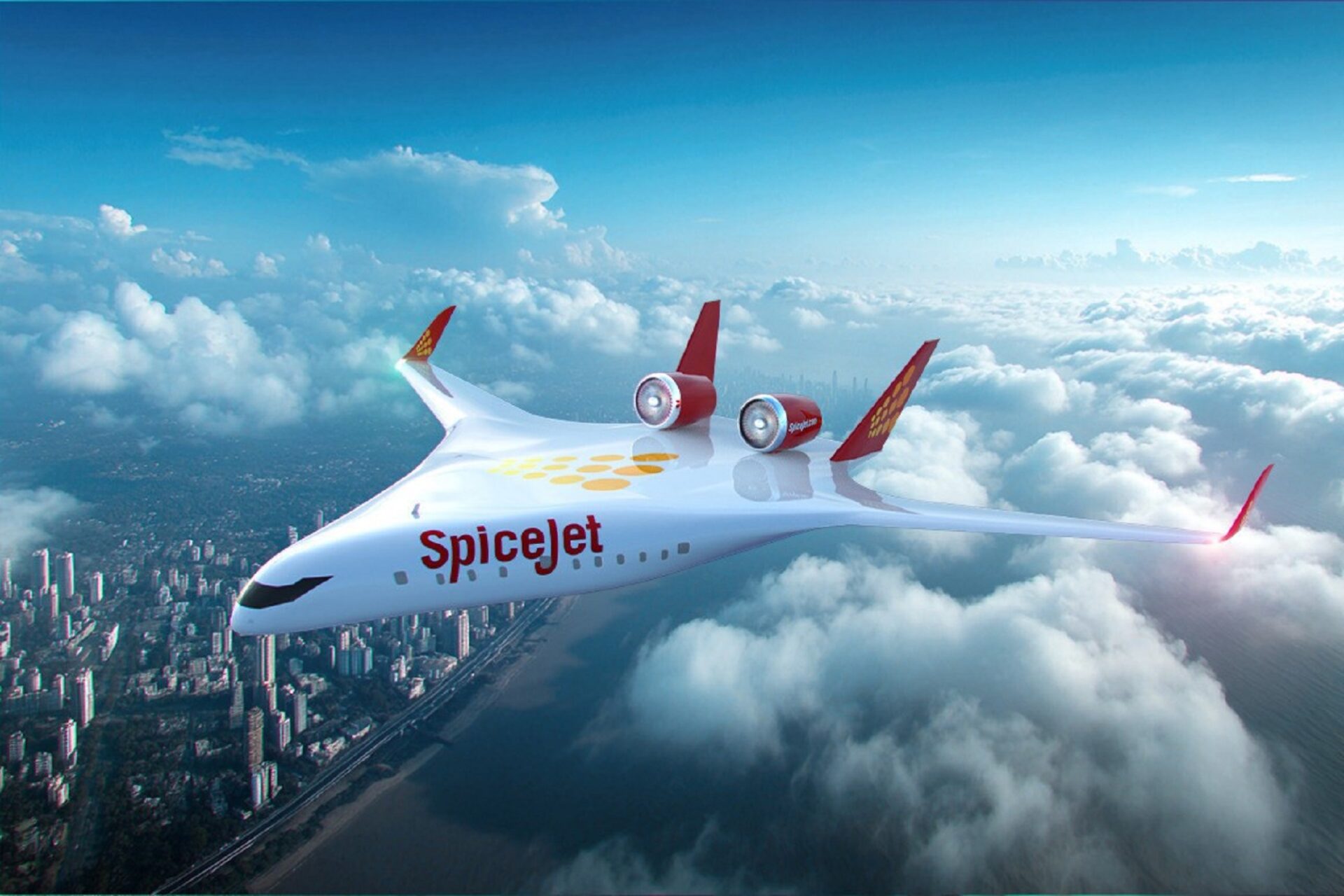
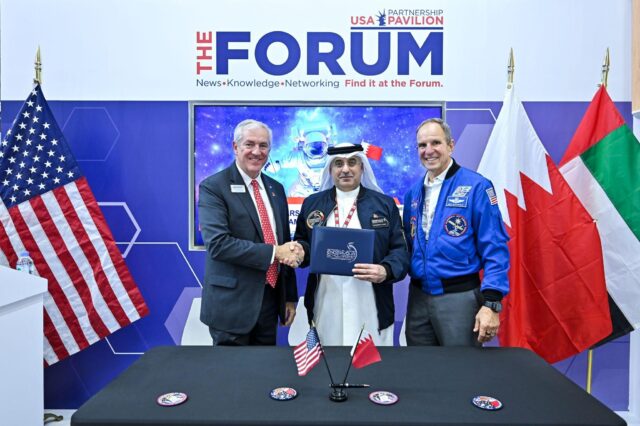
SpiceJet has quietly positioned itself at the centre of a potential shift in how short- and medium-haul flying could evolve in India, partnering with US aerospace start-up Natilus to bring its blended-wing body passenger aircraft into the country and supporting the jet through the Indian certification process.
The low-cost carrier will become Natilus’s first customer for the Horizon aircraft in India.
Subject to certification by the Directorate General of Civil Aviation (DGCA), SpiceJet plans to acquire up to 100 aircraft. If realised, the move would represent one of the earliest airline commitments globally to a blended-wing-body design for mainstream passenger operations.
Why Natilus is pitching blended-wing aircraft for India’s booming air travel market
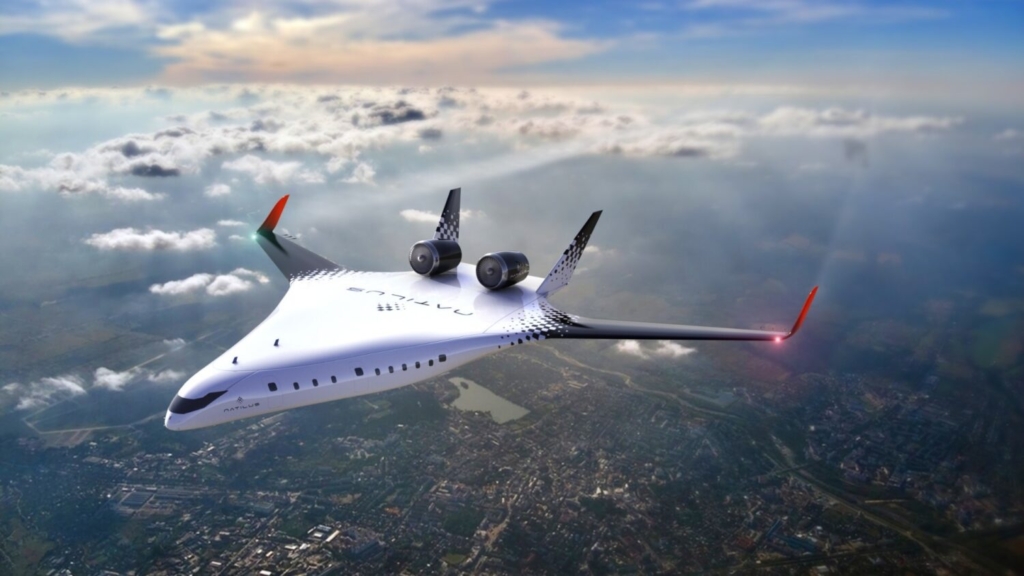
Founded in 2016, Natilus develops blended-wing-body (BWB) aircraft, a configuration in which the fuselage and wings are merged into a single lifting surface.
The company argues that the design can significantly reduce fuel burn and emissions while increasing usable cabin volume, without requiring changes to existing airport infrastructure.

India has emerged as a natural target market. Domestic air travel continues to expand at double-digit rates, with passenger numbers rising more than 10% year on year. Industry forecasts suggest Indian airlines will need more than 2,200 additional aircraft by 2040 to keep pace with demand, creating space for new entrants alongside established narrowbody types.
SpiceJet’s involvement gives Natilus both a local airline partner and a pathway into one of the world’s fastest-growing aviation markets.
Natilus establishes Mumbai base to support Horizon certification in India
As part of its India entry, Natilus has established a wholly owned subsidiary, Natilus India, headquartered in Mumbai.
The unit will be led by Ravi Bhatia as regional director and will oversee in-country operations, regulatory engagement, and the development of industrial partnerships.

Natilus said the subsidiary will also explore sourcing aircraft components and structures from Indian manufacturers, aligning with the country’s broader ambition to grow its domestic aerospace supply chain.
The company is pursuing FAA Part 25 certification for the Horizon in the United States, while working in parallel with the DGCA on the Indian approval process.
What Natilus’s Horizon blended-wing aircraft offers SpiceJet
The Horizon is Natilus’s first passenger aircraft and is designed to sit broadly in the same payload class as the Boeing 737 and Airbus A320 families.
In a high-density configuration, it can carry up to 240 passengers, though the company typically positions it as a 200-seat aircraft for domestic and regional operations.
Natilus claims the blended-wing design provides around 40% more interior volume than conventional tube-and-wing aircraft. Fuel consumption is projected to be around 30% lower, with corresponding reductions in emissions and operating costs.
“As an airline at the forefront of embracing technological innovation, SpiceJet is the ideal customer for Horizon as we look to meet the needs of India’s underserved market,” said Natilus CEO Aleksey Matyushev. “With our new subsidiary, we look forward to exploring partnerships with premier Indian OEMs and bringing innovative new aircraft to valued customers like SpiceJet.”
A key selling point for airlines is compatibility. Natilus says the Horizon is designed to operate from existing gates, taxiways and runways, avoiding the infrastructure penalties that have historically constrained more radical aircraft designs. Quieter operations also form part of the pitch, particularly for congested metro airports.
“In line with our commitment to encouraging innovation and sustainability in aviation, SpiceJet is proud to support Natilus in developing this next-generation aircraft,” said Ajay Singh, Chairman and Managing Director of SpiceJet. “Once certified, the Horizon, with its efficiency and compatibility with existing airport infrastructure, could be a strong fit for our future fleet.”
Natilus’s cargo-first strategy ahead of Horizon passenger aircraft
Natilus’s roadmap has followed a cargo-first strategy. Its first aircraft, the Kona, is a regional blended-wing freighter that remains on track for customer deliveries in the late 2020s.
The company sees cargo operations as a way to mature the technology before scaling it to passenger service.
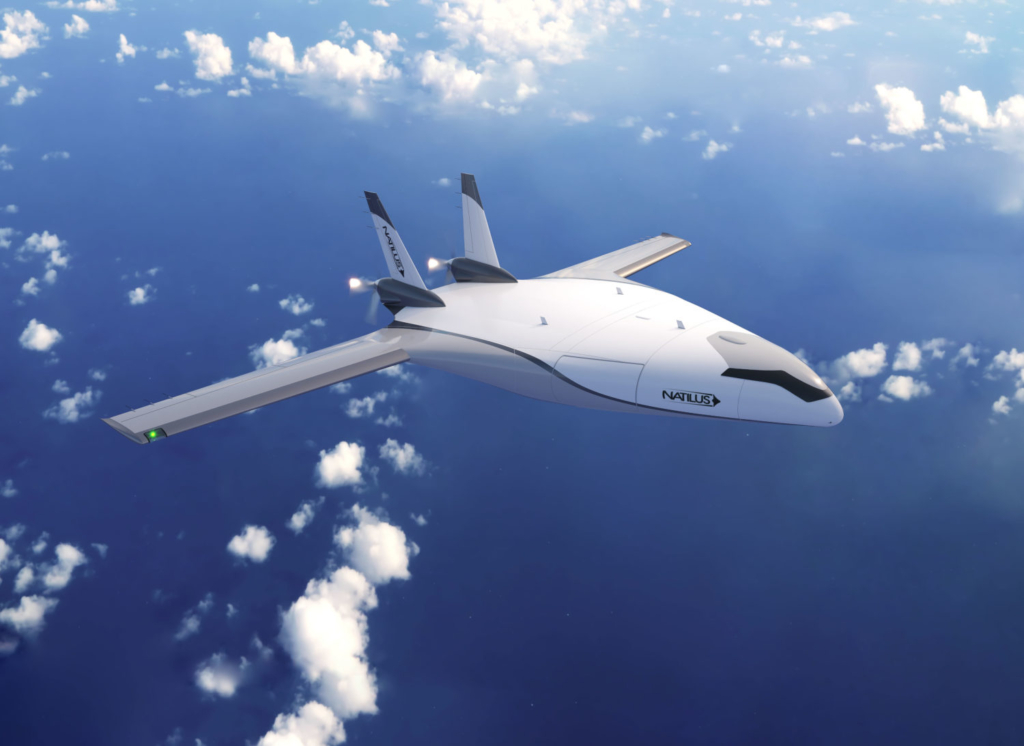
The Horizon is expected to follow in the early 2030s, aligning with the next major fleet renewal cycle for many airlines and with growing pressure on carriers to meet long-term emissions targets.
Globally, Natilus says it has secured more than 570 pre-orders across its aircraft programmes, representing an order book valued at around $8.7 billion.
Natilus turns to AI-driven manufacturing for Horizon aircraft
Earlier this year, Natilus announced a partnership with Palantir Technologies to deploy an AI-driven operating system across its design, engineering and manufacturing activities.
The collaboration is intended to improve supply-chain resilience, accelerate production, and enable data-driven decision-making across the aircraft lifecycle.

Over time, Natilus plans to use the platform to offer operators insights into predictive maintenance, disruption recovery and real-time aircraft performance, feeding back into product optimisation.
“The commercial aviation industry is looking for real solutions to become more sustainable, more efficient and more profitable,” Matyushev added. “With the Horizon, we are introducing improved aviation economics that benefit the industry while helping safeguard our planet for future generations.”
What the SpiceJet–Natilus partnership signals for India’s future fleets
For now, the SpiceJet–Natilus partnership remains an early-stage commitment, with certification, testing and industrial scale-up still ahead.
Blended-wing aircraft have long promised step-change efficiency gains but have struggled to progress beyond concept studies and military demonstrators.
Even so, the agreement sends a clear signal. As India’s aviation market expands and airlines look beyond incremental upgrades, there is a growing appetite to engage early with unconventional designs that could reshape fleet economics over the coming decades.
Featured image: Natilus