A microwave-sized satellite just made plasma in space, and it could make future electronics faster and more efficient

January 14, 2026

When a satellite no bigger than a microwave oven generated plasma hundreds of kilometres above Earth, it marked a quiet but significant moment for the future of semiconductor manufacturing.
UK start-up Space Forge has successfully produced and controlled plasma aboard its ForgeStar-1 spacecraft in low Earth orbit (LEO), becoming the first commercial company to demonstrate a core semiconductor manufacturing process on a free-flying, autonomous satellite.
The achievement moves space-based manufacturing closer to practical reality, not to build finished microchips in orbit, but to improve the materials that ultimately power technologies on Earth.
At the heart of the demonstration is plasma, a superheated, electrically charged gas that plays a central role in gas-phase crystal growth. This stage is among the most demanding and defect-sensitive steps in producing high-performance semiconductor materials.
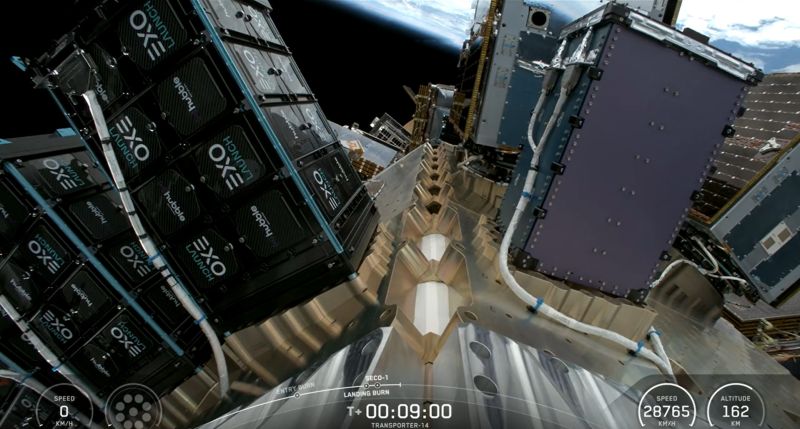
Until now, experiments of this kind have largely been confined to tightly controlled research facilities aboard the International Space Station. ForgeStar-1 shows that similar extreme conditions can be created, stabilised and monitored on a dedicated commercial platform without human intervention.
“This proves the essential environment for advanced crystal growth can be achieved on a dedicated, commercial satellite,” said Joshua Western, chief executive and co-founder of Space Forge. “It opens the door to a completely new manufacturing frontier.”
Why low Earth orbit matters for semiconductor manufacturing
Semiconductors underpin modern life, from power electronics and communications networks to defence systems and high-performance computing. Yet manufacturing them on Earth involves persistent physical constraints.
Gravity drives convection in molten materials, causing uneven flow during crystal growth. Container walls introduce impurities, while even trace contamination, particularly nitrogen, can degrade advanced materials such as gallium nitride or silicon carbide.
Low Earth orbit removes many of these limitations at once. In microgravity, buoyancy-driven convection and sedimentation largely disappear, allowing atoms to arrange themselves into more uniform crystal structures. The natural vacuum of space is far cleaner than most terrestrial fabrication environments, while thermal conditions are more stable.
Scientists note that crystals grown under these conditions can exhibit lower defect rates, improved uniformity and better electrical and optical properties once processed back on Earth.
This does not mean entire microchips will soon be manufactured in orbit. The focus, at least for now, is on the earliest and most critical stages of production: growing ultra-pure crystal “seeds” that can later be expanded at scale using established Earth-based techniques.
What ForgeStar-1 has demonstrated in orbit
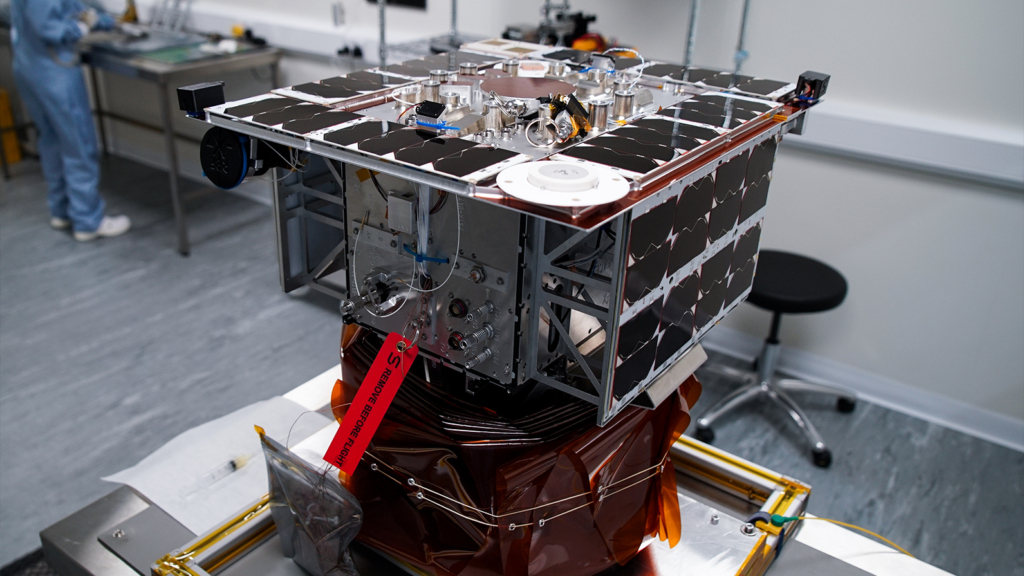
Launched in mid-2025, ForgeStar-1 is designed as a compact, self-contained manufacturing testbed.
In December 2025, it activated its onboard furnace and generated plasma at temperatures approaching 1,000°C. The experiment was not intended to produce usable material, but to validate that the system could create and sustain the extreme, stable conditions required for gas-phase crystal growth in microgravity.

According to Space Forge, the test confirms that plasma behaviour can be controlled autonomously in orbit. Over the remainder of the mission, the satellite will carry out systematic parameter sweeps, adjusting variables to understand how plasma responds in the absence of gravity.
The resulting data will feed directly into the design of future missions aimed at growing actual semiconductor materials in space.
The mission also addresses sustainability. As ForgeStar-1 naturally decays from orbit, its trajectory is being tracked using onboard systems and external support from the UK’s Science and Technology Facilities Council.
The spacecraft is designed to burn up safely in the atmosphere, serving as a deliberate test of responsible end-of-life disposal at a time of growing concern over orbital congestion.
Target semiconductor materials for space-based manufacturing
Space Forge is targeting wide-bandgap and ultra-wide-bandgap materials, including gallium nitride, silicon carbide, aluminium nitride and diamond.
These materials are already used in high-voltage power electronics, radar systems, satellite communications and electric vehicles, but their performance and yield are constrained by defects introduced during Earth-based manufacturing.
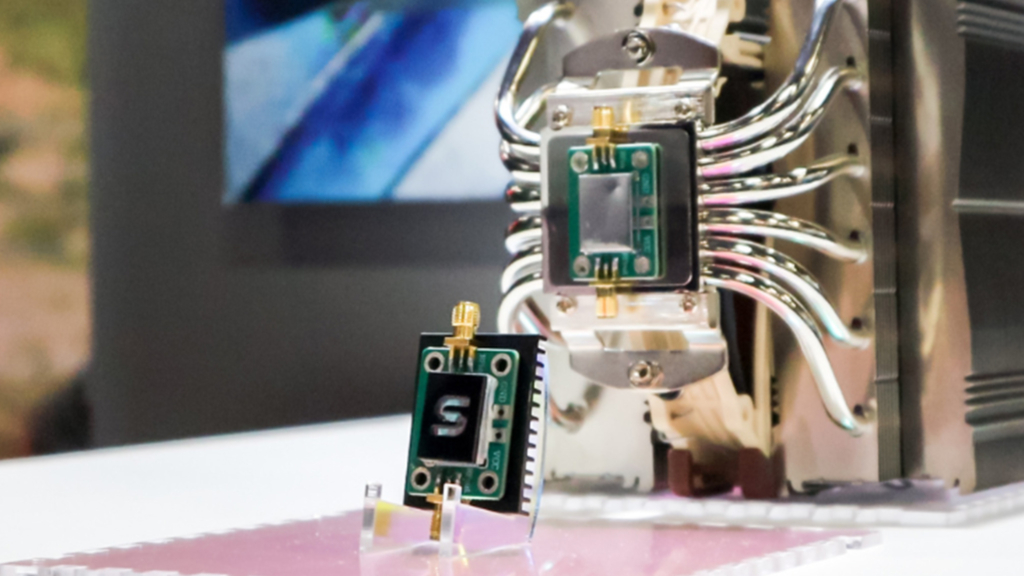
Researchers believe that reducing gravity-driven fluid motion during crystal growth can significantly improve both quality and yield. Modelling studies suggest that, as launch costs fall and processes are refined, orbital fabrication could become economically viable for high-value, low-mass products such as semiconductor wafers.
For now, Space Forge is not claiming commercial volumes. Its stated aim is to produce materials of a quality that cannot be achieved on Earth, then return them for terrestrial scaling.
Space Forge’s hybrid model for space-based semiconductor manufacturing
Rather than replacing terrestrial fabrication plants, Space Forge is pursuing a hybrid model. Space-grown crystal seeds would be returned to Earth and expanded using conventional manufacturing techniques at facilities such as the Centre for Integrative Semiconductor Materials.
This approach reflects a broader consensus from industry workshops and academic studies, which argue that microgravity manufacturing delivers the greatest benefit when it complements existing supply chains.
The value lies in improving the most defect-sensitive stages of production, not in recreating the entire semiconductor ecosystem in orbit.
Semiconductors are particularly well suited to this model because they are strategically important, high-value components where even incremental improvements in performance or durability can carry outsized economic and security implications.
From experiment to reality: Space Forge advances space manufacturing
Interest in space-based manufacturing is growing as geopolitical tensions, supply-chain vulnerabilities and surging demand place pressure on terrestrial semiconductor production.
By demonstrating plasma generation on a free-flying commercial satellite, Space Forge has shifted the discussion from laboratory theory to operational engineering.
The brief flash of plasma aboard ForgeStar-1 does not yet signal an industrial revolution in orbit. It does, however, show that space is no longer just a place to deploy advanced electronics.
It is beginning to look like a place where the most critical materials behind those technologies can be made better, before returning to Earth to be turned into the chips that power the modern world.
Add a button.
Featured image: Space Forge