Saudi Arabian airline flynas agrees to establish a new low-cost carrier in Syria

February 9, 2026
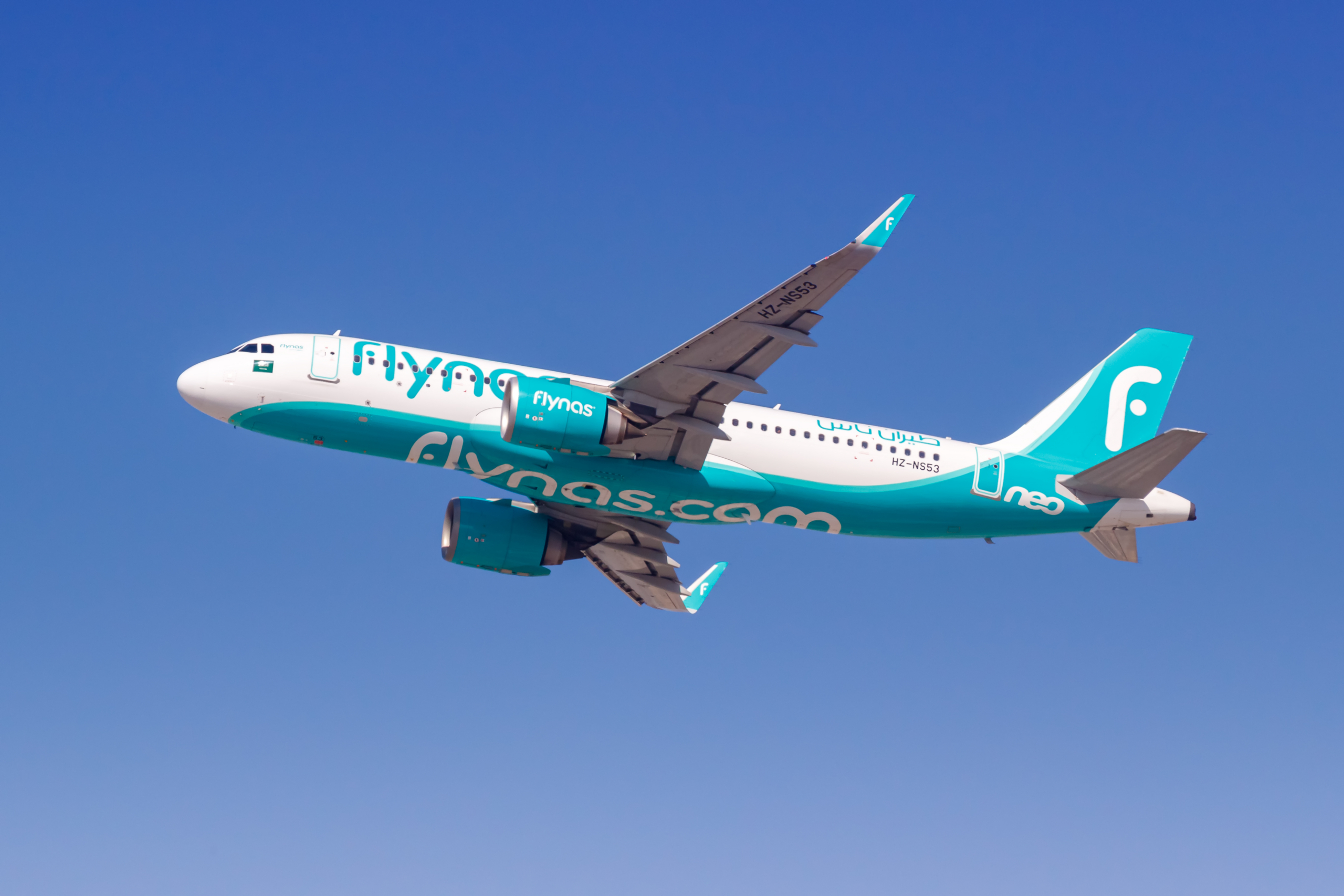
Middle Eastern countries, Syria and Saudi Arabia, have signed a multibillion-dollar investment agreement under which the countries will establish a new low-cost airline.
To be launched as a joint venture, Saudi carrier flynas will set up a new subsidiary, known as flynas Syria, to improve air connections to the country, which has been seeking more international flights since the fall of the Assad regime in 2024.
The new carrier will be a joint venture, with 51% ownership held by the Syrian General Authority of Civil Aviation (GACA) and Air Transport and 49% by flynas. Operational activities are scheduled to commence in the fourth quarter of 2026.
The parties also signed an agreement that will see Saudi Arabia launch an investment fund to develop the international airport in the northern Syrian city of Aleppo, which will serve 12 million passengers annually, according to the two governments.
Flynas to establish new Syrian low-cost carrier – flynas Syria
On 7 February, the Syrian Civil Aviation Authority and the Saudi airline flynas signed an agreement to establish flynas Syria, a new low-cost airline scheduled to begin operations in late 2026.
The new airline is being set up primarily to restore air connectivity from Syria to key markets across the Middle East, Europe and Africa after years in the aviation wilderness.
In the past, Syria was hit by crippling Western sanctions. These sanctions were imposed against the regime of the former president, Bashar Al-Assad, and hugely restricted aviation activities in the country and forced the state-owned airline Syrian Airlines to almost cease operations completely.
However, since the removal of Assad, the aviation sector in the country has begun to open up once more.
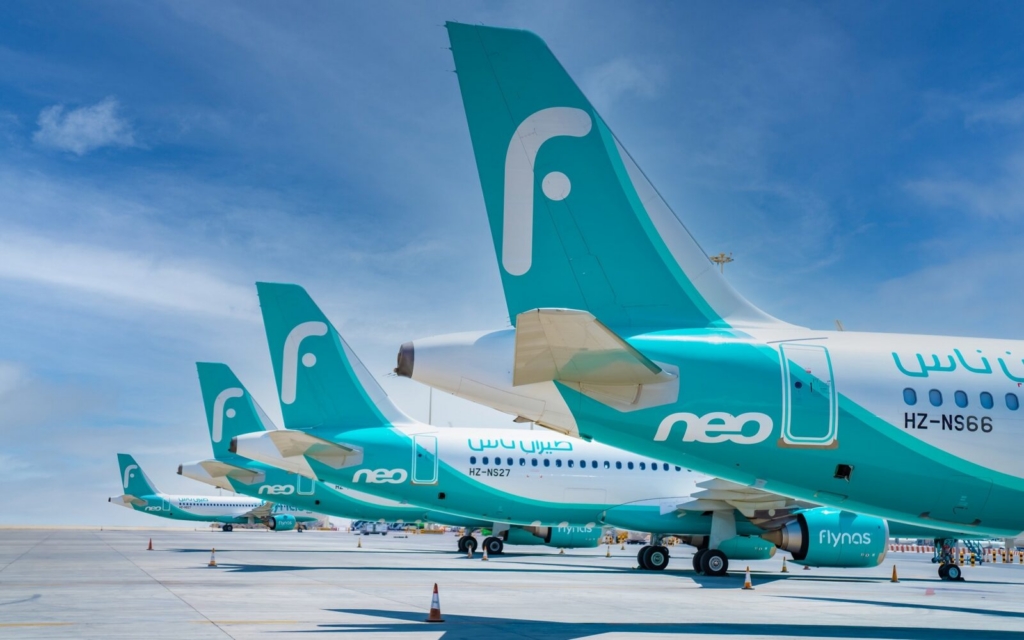
The agreement was signed on 7 February in Damascus, in the presence of the current Syrian President, Ahmad Al-Sharaa, as well as representatives of a broader Saudi-Syrian investment coalition, coordinated with the Saudi Ministry of Investment.
Officials stated that all licensing, regulatory, and operational requirements for flynas Syria will be completed in coordination with the relevant aviation authorities.
According to a statement, the new operator will use the low-cost carrier (LCC) model to boost passenger traffic at Damascus Airport (DAM). While details of flynas Syria’s initial fleet were not specified, it is largely expected that the new carrier will operate aircraft supplied from the flynas single-aisle fleet, which currently comprises 67 Airbus A320s.
In addition to its 67 Airbus A320 family aircraft, flynas also operates two Airbus A330s and three Boeing 737-800s on wet lease from Smart Wings. In July 2024, the carrier placed orders for 75 new A320neos and 15 A330-900neos aircraft to bolster its fleet by 2030.
Syria reaffirms its commercial aviation aspirations
“The establishment of flynas Syria represents a strategic step within an ambitious national vision aimed at rebuilding and developing Syria’s civil aviation sector on modern economic and regulatory foundations,” said Omar Hisham Al Hosari, Chairman of the General Authority of Civil Aviation and Air Transport of the Syrian Arab Republic.
“This partnership reflects the State’s orientation toward smart cooperation models with reliable regional partners, ensuring the transfer of expertise and the development of national capabilities,” he added.

Meanwhile, Khalid Al-Falih, the Saudi Minister of Investment, said that the new airline would form part of that country’s commitment to supporting high-quality cross-border investments in the region.
“The aviation sector is a key enabler of economic development, and the establishment of flynas Syria will serve as a model for constructive investment cooperation,” he said.
“This partnership enhances economic integration and market connectivity, and supports development goals by advancing air transport infrastructure, ultimately serving the mutual interests of both nations and promoting regional economic stability”.
Syria rebuilds its commercial airline sector after Assad
Since the fall of the Assad government in December 2024, Syria has slowly been rebuilding its commercial airline industry. With the relaunch of state-owned Syrian Airlines in early 2025, plus the growth of private carrier Cham Wings, the country has been reestablishing international and regional links, albeit slowly.
The arrival of flynas Syria later this year is expected to accelerate this recovery. Flynas made history on 5 June 2025 when it restored flights to Damascus and became the first Saudi carrier to resume scheduled flights to the Syrian capital.
This month alone, the airline will operate 23 flights per week from Riyadh (RUH), Jeddah (JED), and Dammam (DMM) to Syria’s capital, Damascus. These operations include two daily direct flights from Riyadh, one daily flight from Jeddah, and two weekly flights from Dammam.
Speaking about the establishment of flynas Syria, Bander Almohanna, the CEO of flynas, commented, “This milestone represents a significant leap forward in flynas’ ambitious growth strategy.
It will positively impact the company’s financial performance and reinforce investor confidence in our ability to create long-term value. We are proud to bring our pioneering expertise in low-cost aviation to the Syrian market,” he confirmed.
Air connectivity from Syria has been expanding slowly
According to data obtained from Cirium, air connectivity in Syria this month shows a schedule of around 500 weekly passenger flights, collectively offering nearly 82,000 seats.
Traffic is concentrated at Damascus International Airport, the busiest of Syria’s airports and the one where most international flights are operated, while Aleppo also boast some international services.
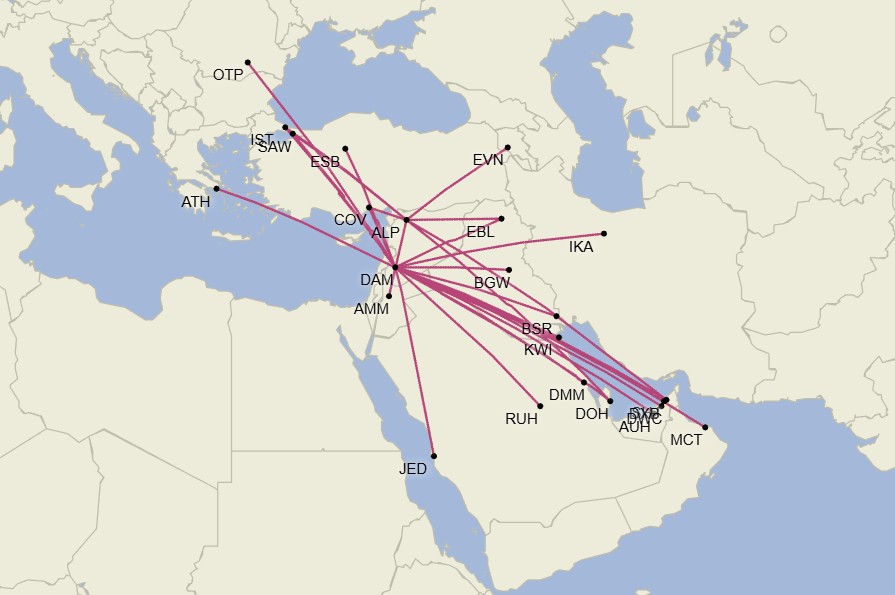
As reported by Aviaciononline, the Damascus to Kuwait route is the busiest in the Syrian market, with 65 weekly flights operated by Cham Wings, Syrian Air, flynas, and Jazeera Airways. At the other end of the scale, the schedule to Tehran in Iran is limited to a single weekly flight.
Meanwhile, Aleppo Airport (ALP) maintains 27 weekly flights, primarily connecting the northern region of Syria with Amman in Jordon and Istanbul in Turkey.
The UAE and Saudi Arabian markets represent the largest volume of operations to Syrian airports currently, while connections to Istanbul via Turkish Airlines and Pegasus offer 29 weekly flights, serving as the primary link to the European continent through the Turkish city.
Featured image: Markus Mainka / stock.adobe.com