Saab Gripen E launches Meteor missile in first Brazilian Air Force live firing

December 1, 2025
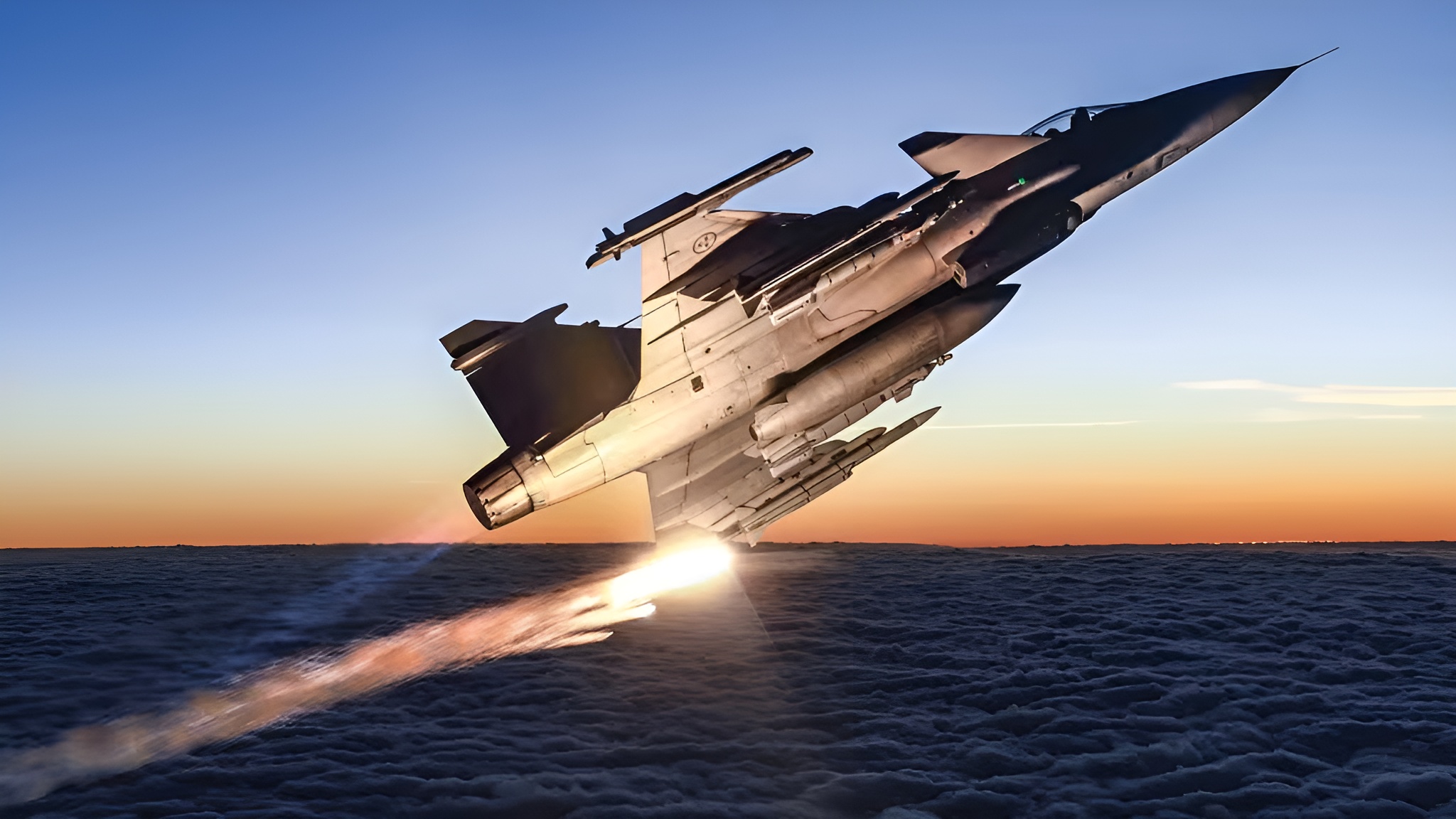
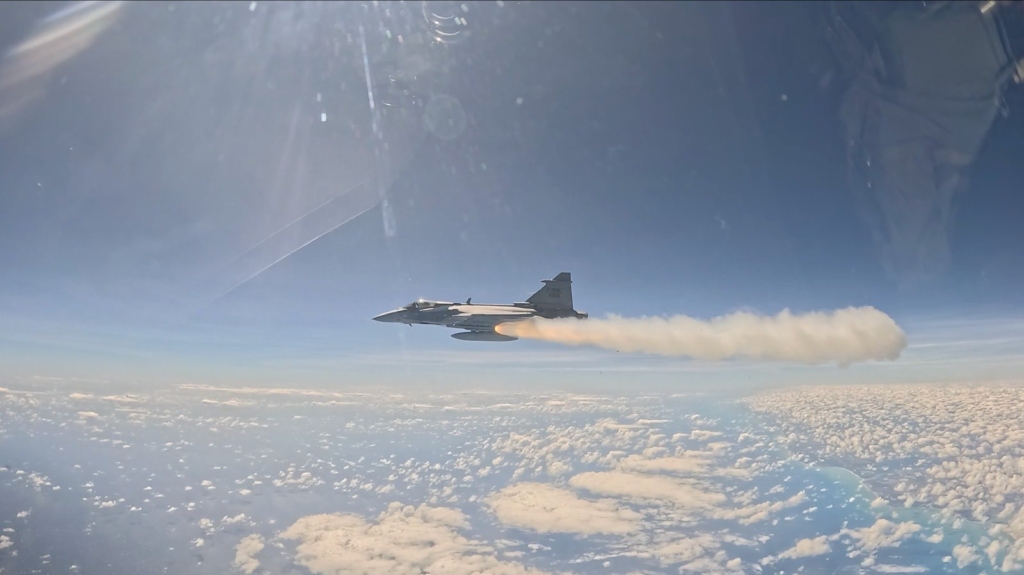
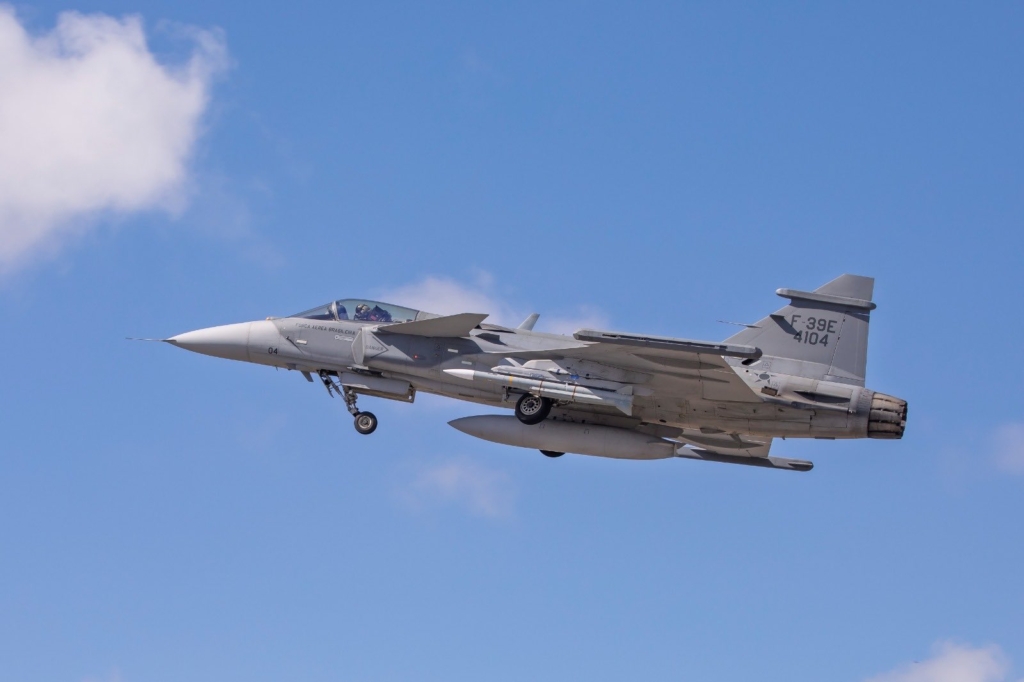
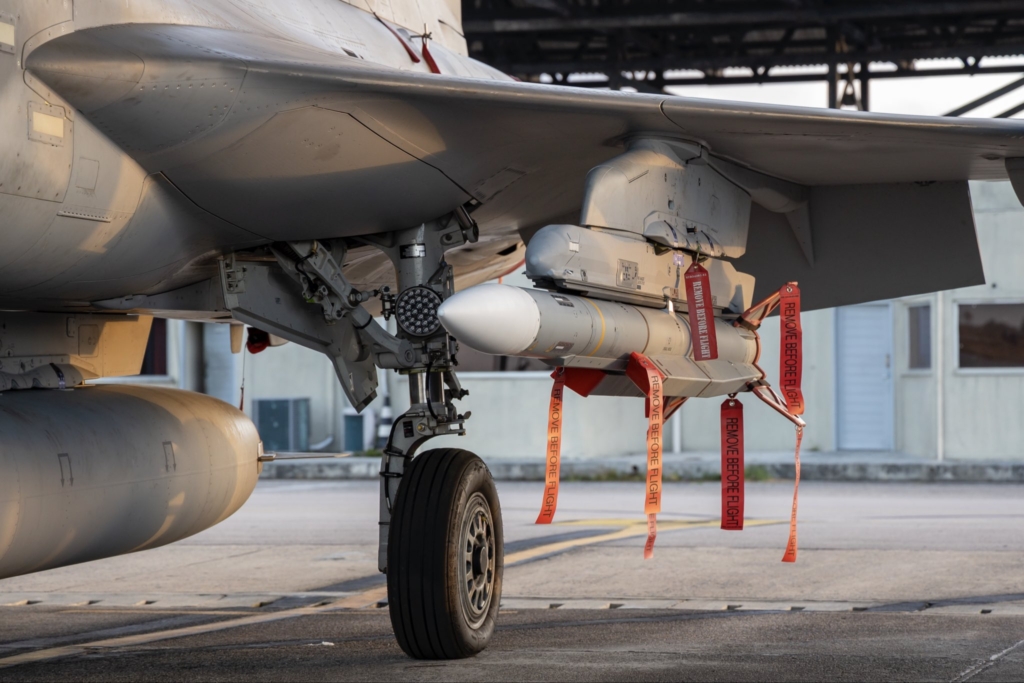
Brazil has crossed another major threshold in its fighter modernisation programme. The air force has completed its first live firing of the MBDA Meteor beyond-visual-range air-to-air missile from the Saab Gripen E, just days after taking delivery of its eleventh aircraft.
The back-to-back achievements mark the most significant advance in Brazil’s future air-defence capability since the Gripen programme began in 2013.
The Meteor firing took place during the BVR-X Technical Exercise at Natal Air Base in November. Four F-39E fighters took part in the live-fire phase alongside a large supporting force of airborne early-warning, aggressor, maritime patrol and rescue aircraft. The missile was fired against manoeuvrable Mirach 100/5 targets designed to simulate high-speed combat aircraft.
The Brazilian Air Force (Força Aérea Brasileira, FAB) said the event demonstrated the maturity of the Gripen–Meteor pairing and consolidated Brazil’s entry into the small group of nations capable of engaging airborne threats at extended ranges.
Brazil integrates Meteor missile on Gripen E as BVR capability expands
Argentina, Colombia and Chile have traditionally been the region’s air-power benchmarks, but the Meteor alters the strategic balance in South America. Developed by a European consortium including the UK, France, Germany and Sweden, the missile is designed to intercept fighters, cruise missiles and drones in contested electromagnetic environments.
Unlike traditional air-to-air missiles powered only by rocket motors, Meteor uses a variable-flow ramjet engine. This allows the missile to accelerate during the terminal phase of flight and maintain thrust until impact, expanding the no-escape zone against manoeuvring targets. A two-way data link enables mid-course updates from the launching aircraft or other friendly platforms, including the ability to redirect the missile to a new target.
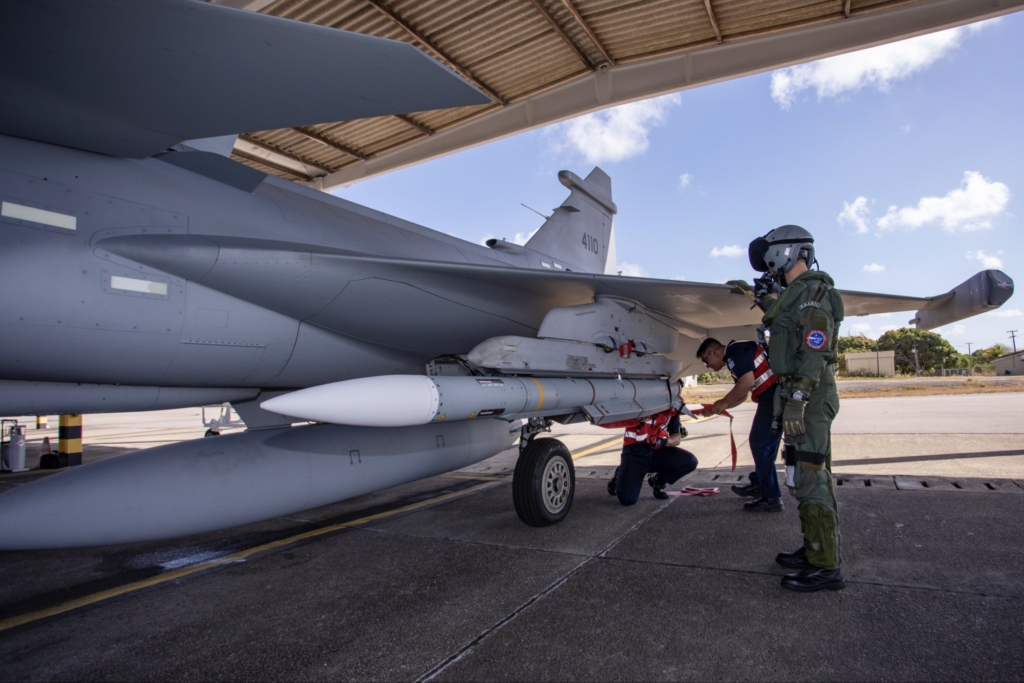
Ahead of the BVR-X live-fire test, pilots trained with Saab and MBDA and completed simulation work on Gripen’s mission-trainer system at Anápolis. The campaign involved multiple military organisations and research agencies, including the Institute for Operational Applications, which defined firing profiles, validated performance and analysed the missile’s behaviour. The findings will directly inform Brazil’s doctrine and operational planning.
“The preparation of the pilots of the 1st GDA for the real launch campaign of the BVR-X Technical Exercise missile has already begun with training provided by Saab. From this, we had several operational training sessions of the Meteor missile and, with the proximity of the BVR-X, we carried out a specific preparation using the main simulation tool of the Gripen,” said Major Aviator Gregor Gaspar, of the 1st GDA.

FAB expects the Meteor firing to be one of the milestones required for the Gripen to achieve Full Operational Capability by 2026.
Brazil’s BVR-X exercise tests Gripen E, Meteor and full air-defence network
The scale of the EXTEC BVR-X exercise reflects how tightly the Gripen programme is woven into wider operational planning. AMX A-1M fighters played the aggressor role, E-99 AEW&C aircraft monitored the operational area, and A-29 Super Tucanos provided airspace surveillance.
P-3AM and P-95BM aircraft tracked maritime activity, while the H-36 Caracal stood by for rescue operations. Telemetry and target monitoring were conducted at the Barreira do Inferno Launch Center.
FAB officials said the campaign recreated realistic combat scenarios and that the successful firing significantly enhances Brazil’s deterrence posture by providing a modern long-range engagement capability.
Brazil receives 11th Gripen E as fighter modernisation programme accelerates
Days before the missile test, Brazil’s modernisation programme reached another milestone with the arrival of aircraft 4111 at Anápolis Air Base on 19 November following a short ferry flight from Navegantes. The delivery brings the fleet to eleven aircraft — ten assigned to the Jaguar Squadron and one for testing at the Gripen Flight Test Centre.
The latest arrival also highlights the industrial dimension of Brazil’s programme. Built in Linköping and assembled using components manufactured in Brazil, the aircraft reflects the extensive technology and production transfer at the heart of Brazil’s 36-jet contract.
Fifteen aircraft will eventually be produced domestically. The Brazilian production line began operating in 2023 at Embraer’s Gavião Peixoto facility, and more than 350 engineers, pilots and technicians have trained in Sweden under the transfer-of-technology programme.
Brazil’s Gripen fleet continues to expand its capabilities. Recent testing has included air-to-air refuelling from the Embraer KC-390 Millennium and the integration of advanced sensors and electronic-warfare systems. Brazil is also considering the purchase of up to 12 used Gripen C/D fighters from Sweden as a stopgap as older AMX and F-5 aircraft retire.
Gripen E becomes latest combat-proven Meteor carrier after Typhoon and Rafale
With Gripen E now fully integrating the Meteor, Brazil joins Sweden, France and the UK in operating the world’s most advanced air-to-air missile on a frontline fighter. The pairing now sits alongside Typhoon and Rafale as the only platforms with combat-proven Meteor capability.
FAB officials say the successful test and continued aircraft deliveries form the foundation of a modern, multi-role fighter force. As the industrial ecosystem matures, Brazil is moving closer to full operational capability and positioning itself as a regional hub for fighter production and development.