Saab strengthens GlobalEye bid with Canadian partnership as AEW&C decision nears

March 24, 2026
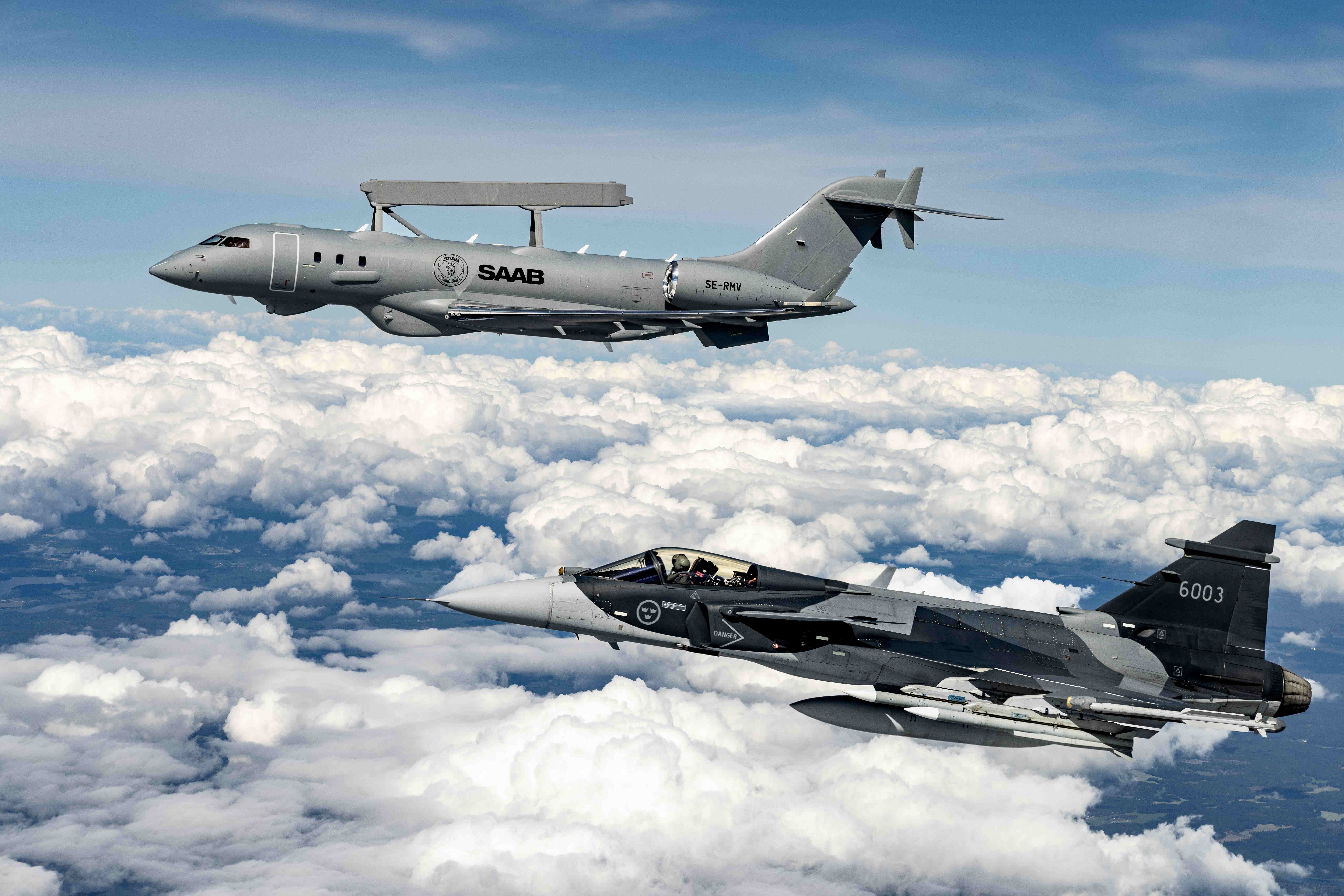
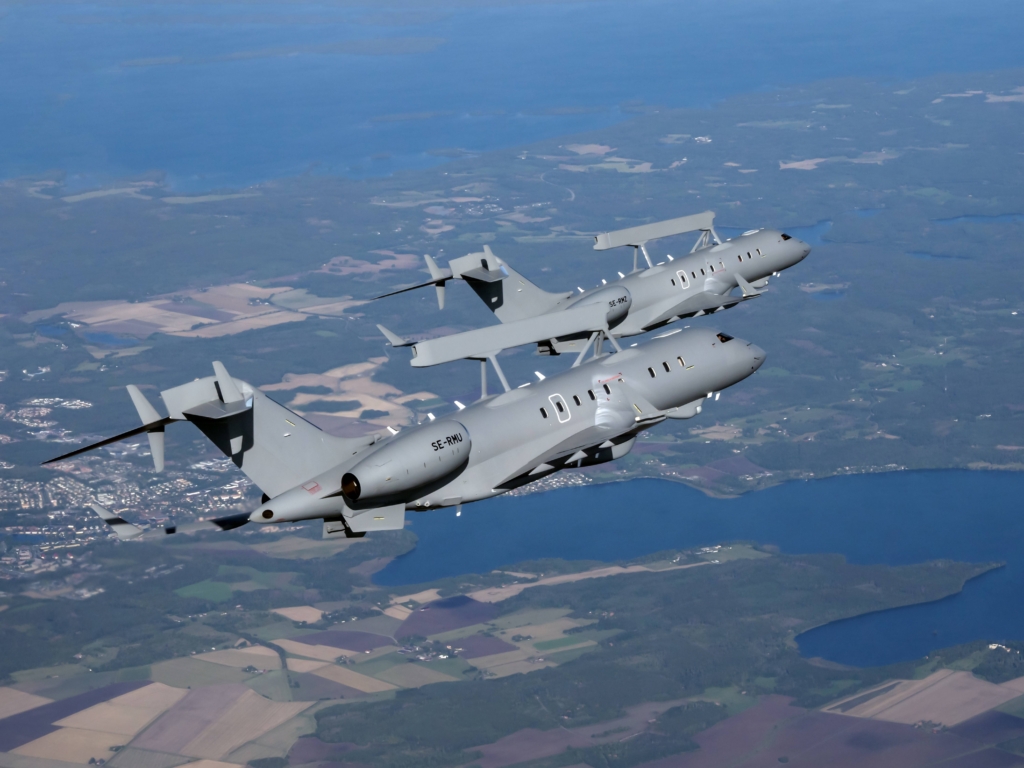
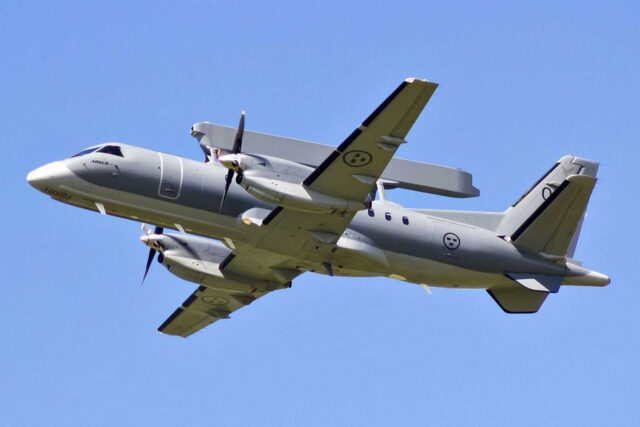
As Canada advances plans for a new airborne early warning fleet, Saab has moved to strengthen its GlobalEye bid by partnering with Canadian AI company Cohere to integrate advanced artificial intelligence capabilities into its system.
The agreement, structured as a memorandum of understanding, is directly tied to Canada’s ongoing AEW&C programme but also carries broader implications for how modern airborne surveillance systems are designed and operated.
At its core, the partnership is focused on embedding AI-driven tools into GlobalEye’s mission systems, an effort that could reshape how crews process information, manage missions and respond to threats in real time.
For Saab, the move is as much about competitiveness as it is about meeting a specific requirement. “Working with Canadian companies like Cohere on emerging technologies strengthens our global supply chain and enhances Saab’s international competitiveness,” said Micael Johansson, the company’s President and CEO.
Cohere, for its part, sees the partnership as an opportunity to push AI into one of the most demanding operational environments. “Through Saab’s deep engineering heritage and our advanced enterprise-grade models, we’ll explore pushing the boundaries of what AI can truly deliver for aerospace,” said co-founder Ivan Zhang.
Saab leans on ‘made in Canada’ GlobalEye platform to strengthen AEW&C bid
Saab’s pitch to Canada is built as much around industrial strategy as it is around capability, with GlobalEye positioned deliberately as a solution rooted in Canadian industry.
At the heart of the aircraft is the Bombardier Global 6000/6500 business jet, a Canadian-built platform that gives Saab a direct link into the country’s aerospace sector. That choice is central to its offer, aligning closely with Ottawa’s long-standing emphasis on domestic content, job creation and sovereign capability in major defence procurements.
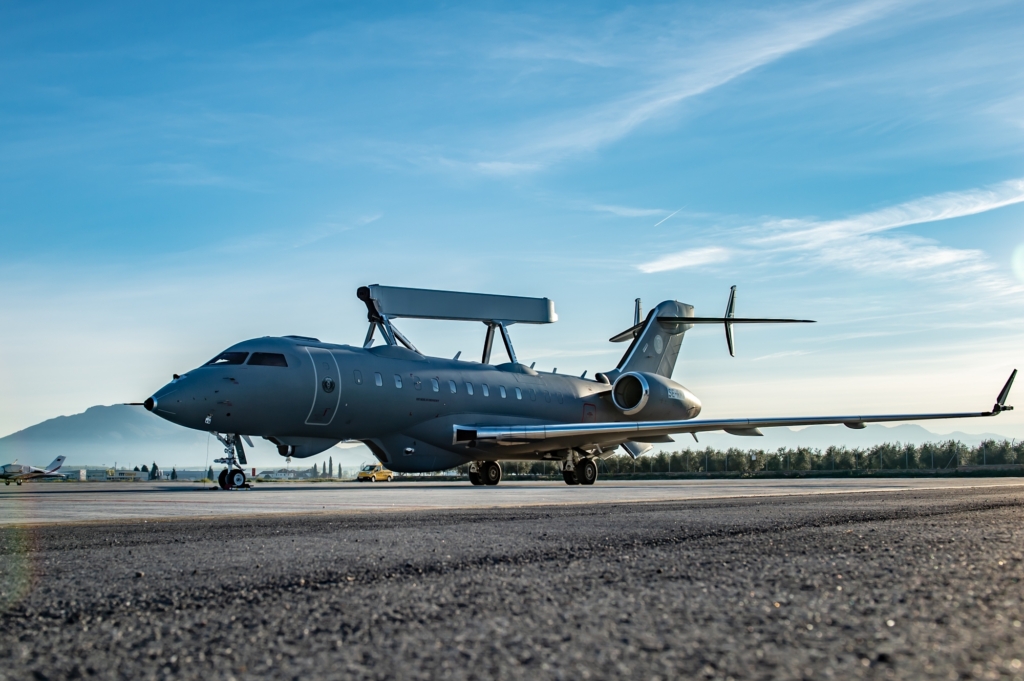
By combining a locally produced airframe with Saab’s Erieye Extended Range radar and mission systems, the company is framing GlobalEye not simply as an imported platform, but as one that can be integrated into Canada’s own industrial base.
Saab has been explicit about this approach, highlighting its partnership with Bombardier as a way to maximise domestic involvement and embed Canadian companies within its global supply chain. The aircraft’s performance, including long endurance and multi-domain surveillance capability, supports the operational requirement, but the industrial proposition is equally central to the pitch.
The addition of Canadian AI firm Cohere further reinforces that positioning. By bringing advanced data processing and mission support capabilities into the system through a domestic partner, Saab is strengthening its argument that GlobalEye can evolve as part of a sovereign, Canada-based ecosystem rather than a standalone acquisition.
In that sense, the platform is being presented not just as an airborne early warning aircraft, but as a vehicle for wider industrial participation and long-term capability development within Canada.
How AI could enhance GlobalEye’s mission systems and operator performance
At its core, GlobalEye is already a data-intensive platform, designed to collect and process vast amounts of information across air, sea and land domains. The challenge is not just detection, but turning that data into clear, actionable insight in real time.
This is where artificial intelligence is expected to add significant value.
Through its partnership with Cohere, Saab is exploring how AI can be integrated directly into GlobalEye’s mission systems to support faster and more effective decision-making. One key area is data fusion, helping operators make sense of multiple sensor inputs simultaneously by identifying patterns, filtering noise and prioritising the most relevant information.
AI-driven mission support tools could also assist crews by highlighting emerging threats, recommending responses and reducing the cognitive workload in high-pressure environments. In practical terms, this means operators can focus on decision-making rather than data interpretation.
Predictive analytics could allow GlobalEye operators to anticipate component failures before they occur, improving aircraft availability and reducing downtime, particularly important for long-duration missions in remote regions.
Crucially, Saab and Cohere are developing these capabilities for “on-premises” deployment within secure aerospace environments. For missions such as NORAD, where data sensitivity is paramount, this ensures that AI tools can operate without relying on external cloud infrastructure.
Canada’s AEW&C requirement driven by Arctic surveillance and NORAD commitments
Canada’s push for an AEW&C capability is rooted in its need to monitor vast and sparsely populated northern airspace, where ground-based radar coverage is limited.
Under its updated defence policy, Ottawa has committed to developing a sovereign airborne early warning capability to support both national defence and NORAD operations.
The requirement has gained urgency as activity in the Arctic increases, including Russian long-range aviation patrols and growing strategic interest in polar routes.
Unlike many allies, Canada currently operates no dedicated AEW&C aircraft and relies on partner nations for airborne surveillance. A domestic fleet would provide persistent coverage and greater operational autonomy across its northern approaches.
Saab, Boeing and Northrop compete for Canada’s AEW&C programme
Canada’s AEW&C programme, expected to be worth more than $5 billion, has attracted interest from several major defence manufacturers, each offering a distinct approach to capability, cost and industrial participation.
Boeing is offering the E-7A Wedgetail, based on the 737 airliner and selected by a growing number of allied air forces, including the United States. While the platform is well established, the UK’s Royal Air Force version is still undergoing testing and modification, with entry into service now well delayed.

Wedgetail’s appeal lies in interoperability with key partners, although the extent of domestic benefit to Canada would depend on how Boeing structures its industrial participation.
Northrop Grumman’s E-2D Hawkeye takes a different approach. Designed primarily for carrier operations, it is a highly capable platform with advanced radar and battle management systems, but with shorter range and endurance than business jet-based alternatives.
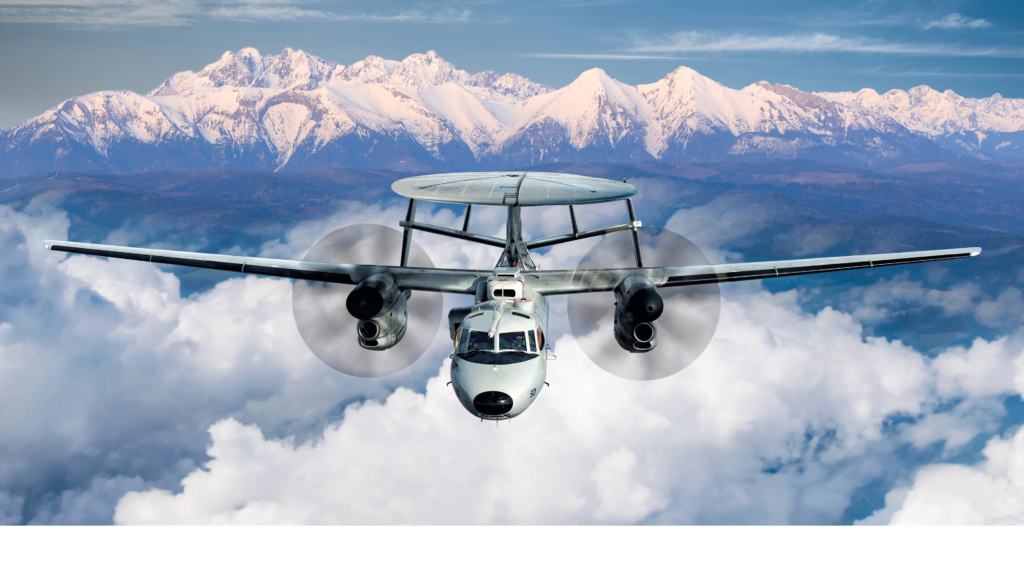
That could present limitations for Canada’s vast northern approaches, where long-duration missions are a core requirement.
Industrial participation is likely to play a central role in the decision. Canada has a long track record of tying major defence procurements to domestic economic benefits through its Industrial and Technological Benefits (ITB) policy, which requires contractors to reinvest an amount equal to the contract value into Canadian industry.
Against that backdrop, bidders are expected to show not just what their aircraft can do, but what their programmes will deliver inside Canada. Saab’s partnerships with Bombardier and Cohere serve to anchor capability, data and industrial activity within the country.
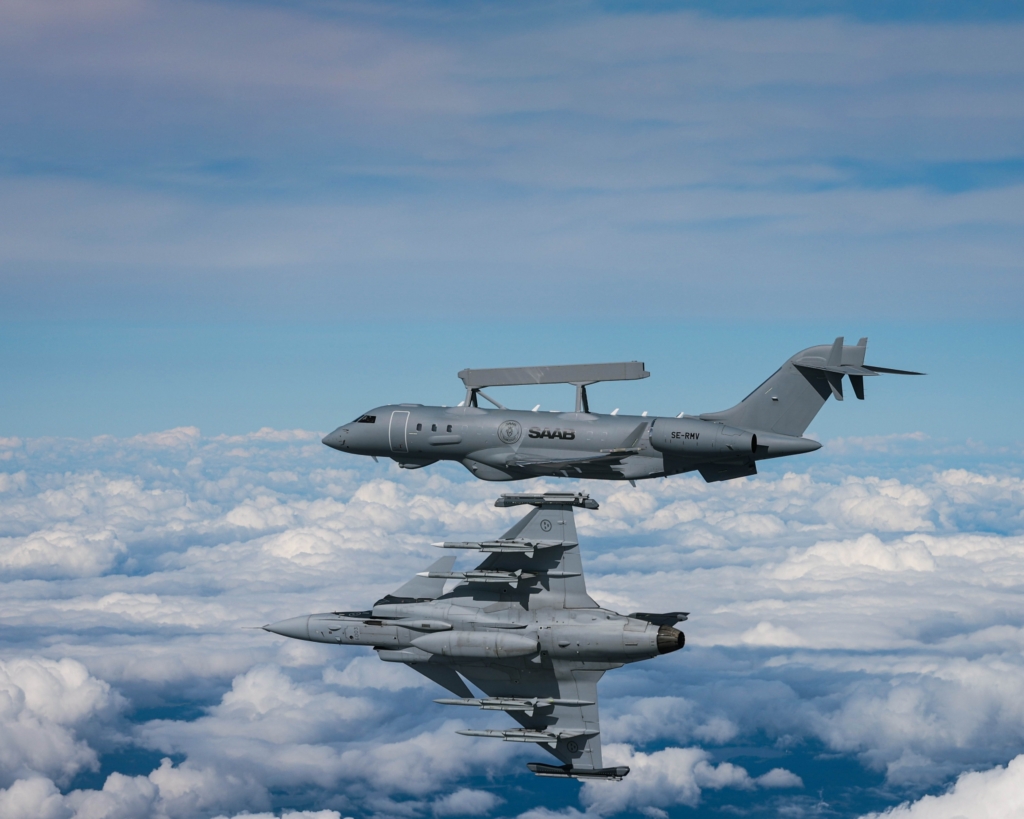
Saab has long promoted the interoperability between GlobalEye and the Gripen E as a combined surveillance and fighter system. Canada has already selected the F-35 for its future combat fleet, but Saab has pushed the Gripen E/F as part of a dual fleet. Ottawa, officially, is sticking with the F-35, but it’s no secret that talks are ongoing.
In October 2025, Saab was revealed to be weighing plans to conduct final assembly and testing of the Gripen E in Canada, ostensibly to meet Ukraine’s demand for the jet. However, it’s another play towards the ‘Make in Canada’ agenda, leaving Saab products strategically positioned for potential future orders.
“GlobalEye is a truly strategic asset… delivering increased situational awareness and rapid response capability across air, maritime, and land domains,” said Anders Carp, Saab’s Deputy CEO.
The final decision will hinge on more than performance alone, with long-term sustainment, industrial return and the ability to evolve with technologies such as AI all likely to weigh heavily.
![NASA's X-59 Quesst [registration N859NA '859'] is seen in-flight over California during the experimental supersonic aircraft's brief second test sortie on 21 March 2026. Image: NASA/Jim Ross](https://aerospaceglobalnews.com/wp-content/uploads/2026/03/X-59-Second-Flight-21-03-26-NASA-Jim-Ross-crop-scaled-640x0-c-default.jpg)