First Su-57E Felon Russian fighter jets spotted flying in Algeria

February 9, 2026
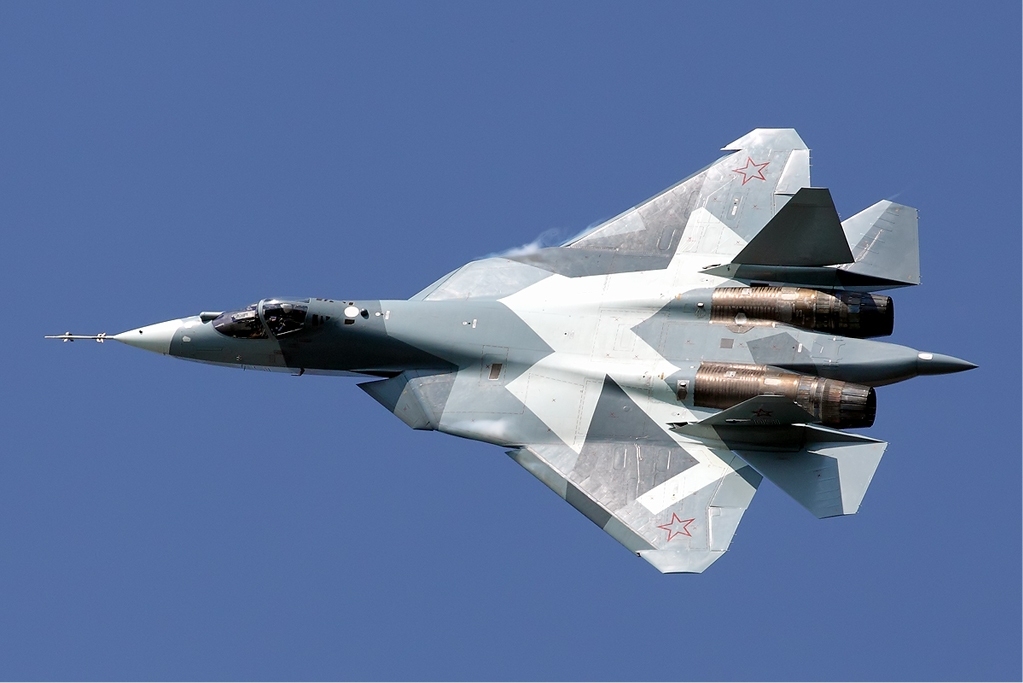
As expected, the first Russian-made Su-57E Felons have now been seen flying in Algeria. This seemingly confirms Russia’s 2025 claim that it has delivered the first two examples to Algeria.
First Su-57s spotted in Algeria
In 2025, Russia’s UAC CEO Vadim Badekha claimed that the first export deliveries of two Sukhoi Su-57 had already taken place. Now, visual confirmation has emerged showing the first Su-57Es in Algeria.
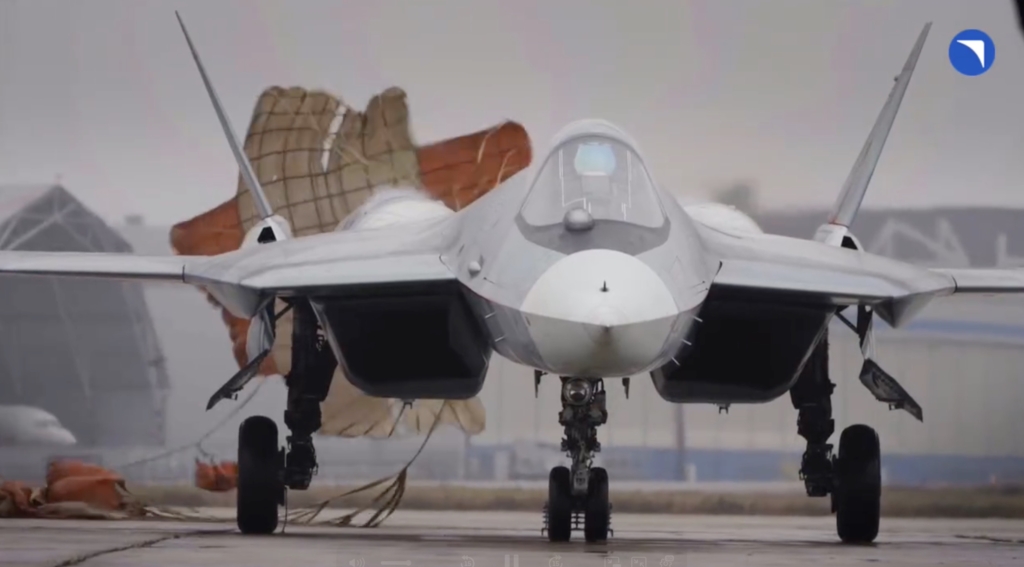
AGN previously reported that a Black Mirror leak revealed Russian documentation showing pending exports of 12 Su-57s and 14 Su-34s fighter jets to Algeria.
The Ukrainian news outlet, Militarnyi, reported, “The training of Algerian pilots at Russian training centers also took place under strict secrecy, although some information about it occasionally appeared online.”
The video seemingly showing the Su-57 flying over Algerian territory was shared by X (formerly Twitter) user @Yahia532852879.
Algeria has been lining up to purchase the Su-57 since 2019, but deliveries have been delayed due to technical issues, anemic production numbers, and complications from sanctions.
Questions remain about how many Su-57s Russia has the capacity to send to Algeria and what it will mean for its own stocks.
The Su-57 officially in the Algerian 🇩🇿 sky pic.twitter.com/8yTceTrAQv
— 12345 (@Yahia532852879) February 6, 2026
Rusi’s Justin Bronk estimates Russia only has around 20 examples in service. Some estimates suggest Russian industry only delivered 0-2 examples in 2025, with production focusing on the less-sanction-impacted Flanker series.
Russia’s dearth of Su-57 customers
The Su-57 was initially co-developed by Russia and India, but India walked away from the project, saying it didn’t meet its requirements.
Like European aerospace industries, Russia now struggles to bear the costs of developing and producing advanced fighter jets alone. And so Russia developed the aircraft with an eye for exports to help cover the program’s costs.

Only the US and China can comfortably develop their own advanced fighter jets without having to be too concerned about export prospects.
Painfully for Russia’s fighter jet industry, its fighter jets have collapsed over the last decade, especially after the US passed the 2017 CAASTA act, sanctioning countries purchasing advanced Russian, Iranian, and North Korean military gear.
Remaining Russian fighter jet customers are now limited mostly to Belarus (receiving Su-30SM), Kazakhstan, Algeria, Iran, North Korea (potentially), and Myanmar.
It doesn’t seem like Venezuela and Cuba are in a position to purchase Russian jets anymore. India is an interesting case as its Su-30MKIs are produced locally under license.
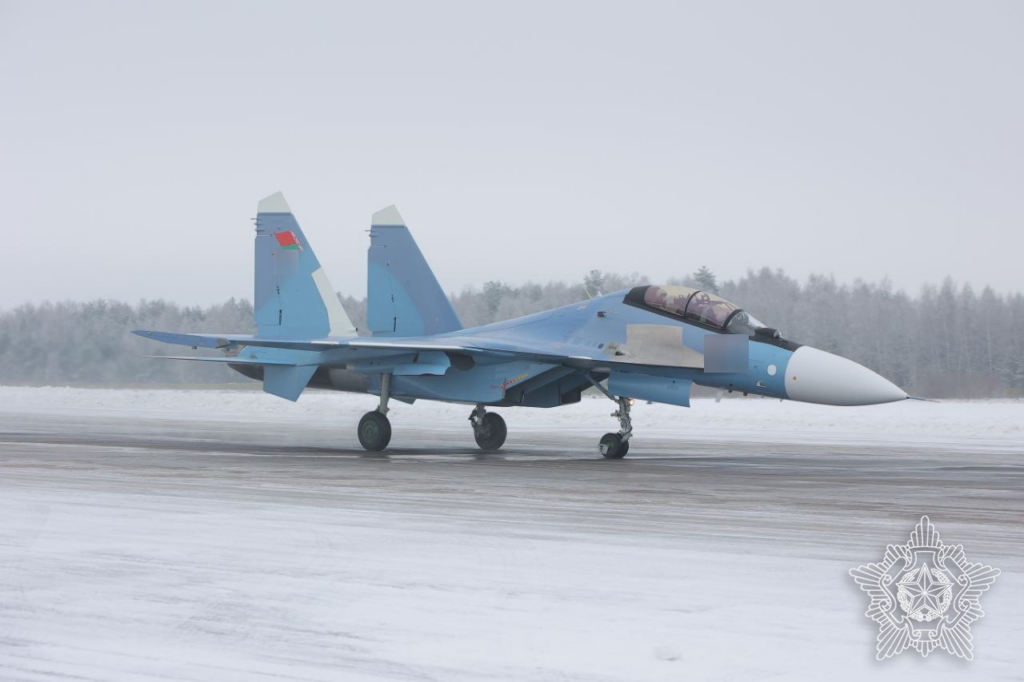
Meanwhile, other formerly loyal Russian customers like Vietnam and Serbia are looking elsewhere. Serbia has ordered Rafales, and Vietnam is considering ordering Rafales or F-16s.
Get the latest aerospace defence news here on AGN.
The thorny issue of CAASTA for Russian fighter jets
Following CAASTA, there was a wave of cancellations as countries like Egypt, Indonesia, and the Philippines cancelled their Russian orders.

Algeria remained a loyal Russian customer, with the US apparently choosing to turn a blind eye. There is some recognition in the US that Algeria is a special case.
That said, Safir reported that Robert Palladino, the US State Department’s Middle East affairs officer, said the Su-57 purchases are “very concerning.” He warned it could lead to CAATSA being triggered against Algeria.
Algeria is in the middle of a dramatic military build-up, with its military budget as a percentage of GDP exceeding that of any peacetime military. Algeria’s military build-up is aimed at its rival, Morocco, which has mulled purchasing US F-35 Lightning IIs in response.

The US can selectively implement CAATSA, as it did to allow India to purchase Russian S-400 SAMs. It remains unclear if the US will again turn a blind eye to Algeria’s new aircraft.
Featured Image: Rostec