Report: China Eastern and COMAC sign agreement to develop stretched ‘C919-800’

January 4, 2026
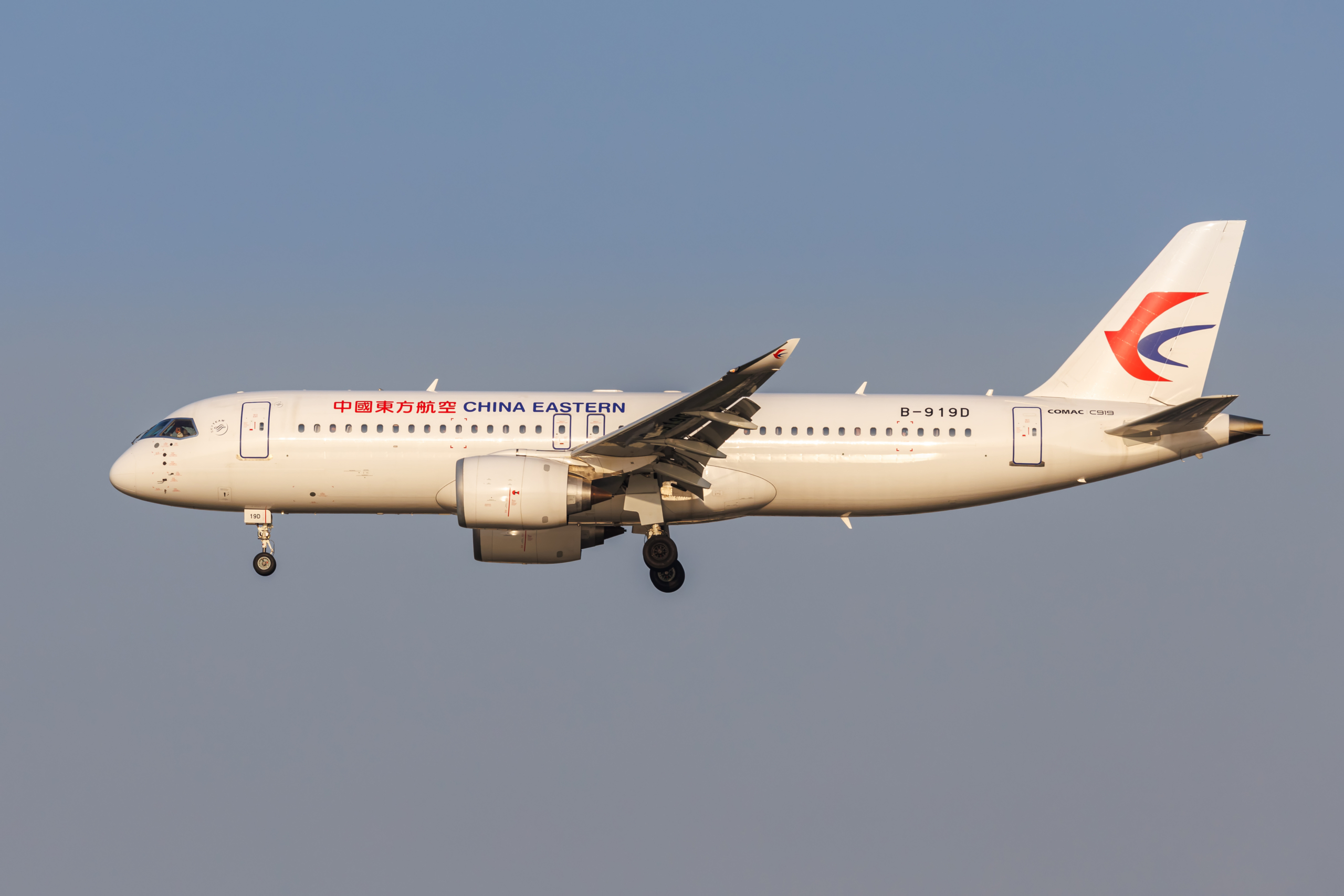
In a report by the South China Morning Post at the end of last month it emerged that COMAC and China Eastern Airlines had signed an agreement to create a stretched variant of the manufacturer’s C919 aircraft line. Citing sources, the publication noted that the aircraft would supposedly be named the C919-800.
With seats for at least 200 passengers, it would be the highest-capacity variant of the C919 line. As it stands, the largest variant is the standard and extended range versions of the C919-100, which has space for a maximum of 192 passengers.
It is worth noting, however, that the typical aircraft is configured with under 170 seats in a two-class layout.
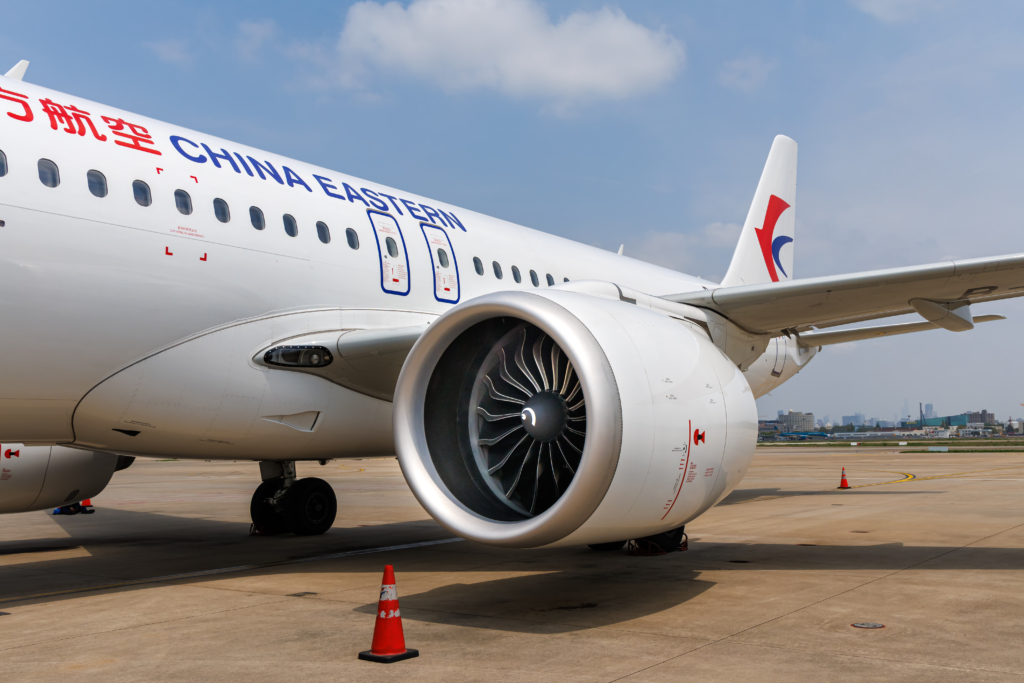
The Post says that the company has not yet revealed a timeline for the stretched variant’s certification or entry-into-service. However, Aviation Week reported in June that the manufacturer wanted a stretched C919 in service by 2030.
It is also expected that the stretched variant would also have an extended range capability (compared to the standard version), possibly flying distances of up to 4,500km.
Cooperation with China Eastern
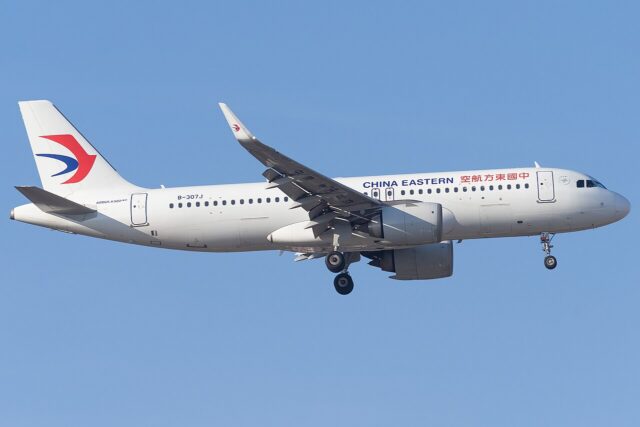
The new agreement with China Eastern Airlines will make it a key player in the development, certification and trials of the new variant, sources told the Post. China Eastern was also the launch customer for the C919 and has operated the aircraft for nearly two years now.
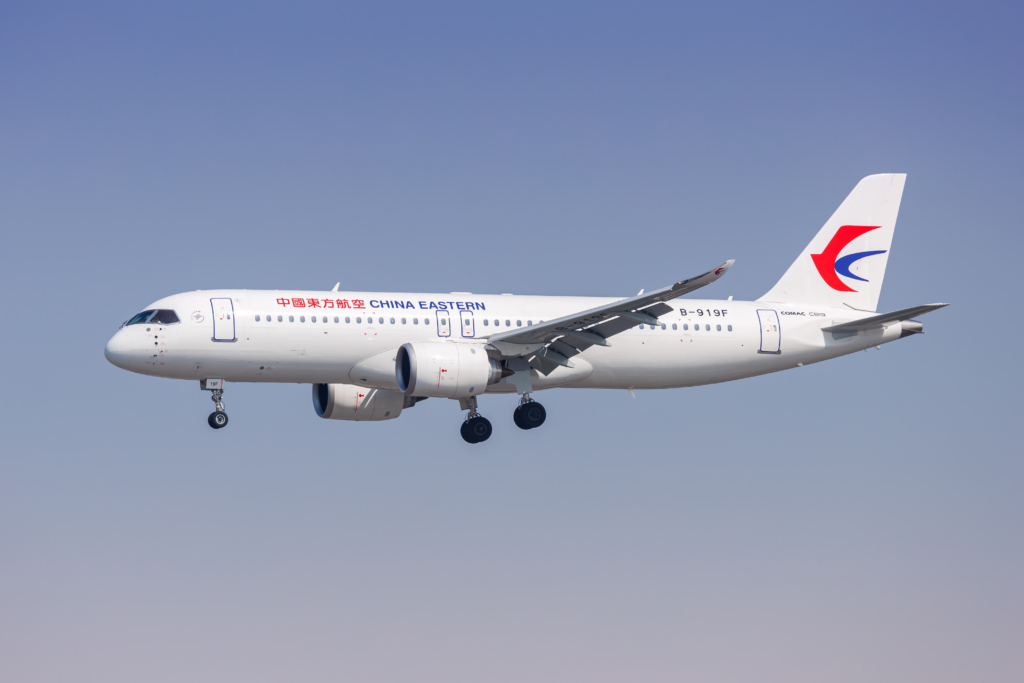
It first entered commercial service with the company in December 2022 as part of an order for five placed in March 2021. It was launched into commercial service in May the following year, operating a flight between Shanghai and Beijing. The carrier ordered a further 100 jets in September 2023.
China Eastern’s aircraft are configured with 164 seats, including eight in business class and 156 in economy.
Current C919 variants
As it stands, COMAC only produces the C919-100, with two sub-variants. It offers the C919-100 STD (standard) version which has more than 300 orders and the C919-100 ER (extended range) which has 100 orders from Air China.
However, it is currently developing a shortened C919-600 variant, dubbed the “Plateau” adaptation given its ability to operate to the highest commercial airport in the world which is located in China: Daocheng Yading Airport.
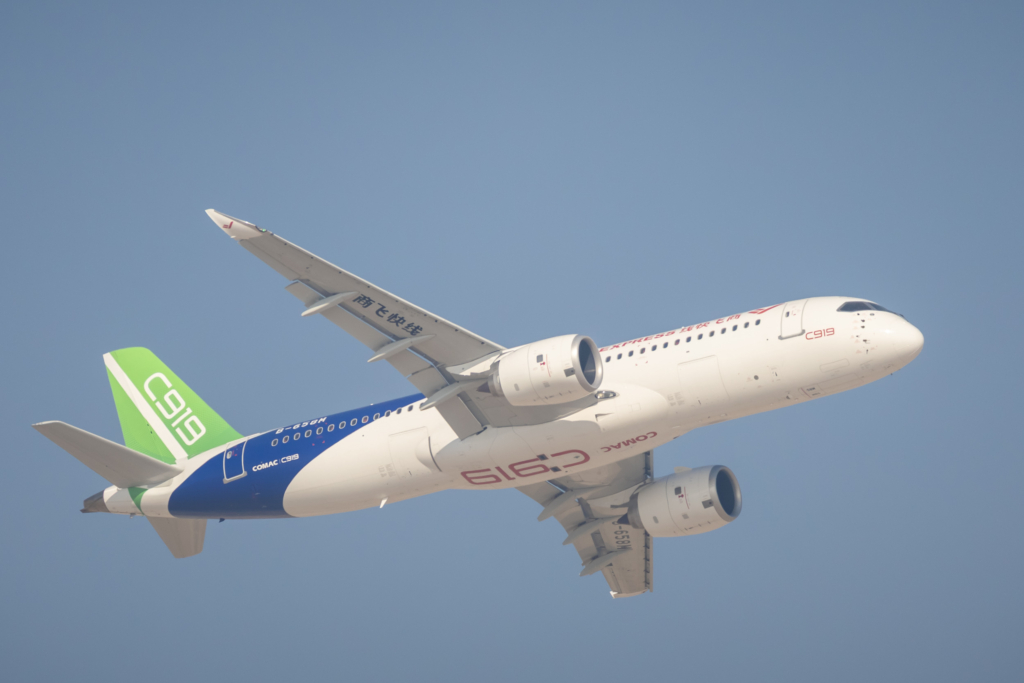
This project is being undertaken in collaboration with Tibet Airlines. The first flight for the -600 is planned for 2027, entering commercial service the following year.
The aircraft type has garnered interest worldwide, with non-Chinese airlines like AirAsia – which confirmed interest and negotiations – and Air Karachi – a Pakistani start-up – considering the type as well. No foreign airline has purchased the type yet, largely pending approval from the European Aviation Safety Agency and Federal Aviation Administration.
Chinese C919 variants
| Variant | Engines | Range | Capacity |
| C919-100 STD | LEAP-1C28 | 2,200 nm | 158–192 |
| C919-100 ER | LEAP-1C30 | 3,000 nm | 158–192 |
| C919-600 | Under development | Under development | 140–160 |
| C919-800 | Under development | 2,430 nm* | At least 200 |
* Analyst estimates.
Benefits of a stretched C919-800
A higher-capacity C919 would be of particular benefit for China given its dense population centres situated across the country. In addition, flights to other key population centres across Asia would benefit from a larger jet as airports reach their capacity limits.
The Chinese market has a higher-usage of widebody jets on domestic flights than compared to other similar markets. According to information from aviation analytics firm Cirium, this month roughly 4% of all domestic flights will use widebody aircraft.

While this does not seem like much, in the United States – a partially comparable domestic market – only 1% of flights will use widebody jets, with a much more pronounced focus on regional and narrowbody aircraft instead.
Neighbouring Japan will see roughly 17% of domestic flights operated with widebody aircraft this month.