Months after unleashing its giant bunker-buster on Iranian nuclear sites, the United States is already building its successor — a lighter, smarter bomb designed to strike even deeper.
The US Air Force has awarded Applied Research Associates (ARA) a two-year contract to design and build prototypes of the Next Generation Penetrator (NGP), a successor to the 30,000-pound GBU-57 Massive Ordnance Penetrator (MOP). Boeing, which designed the original MOP, will contribute integration and design expertise.
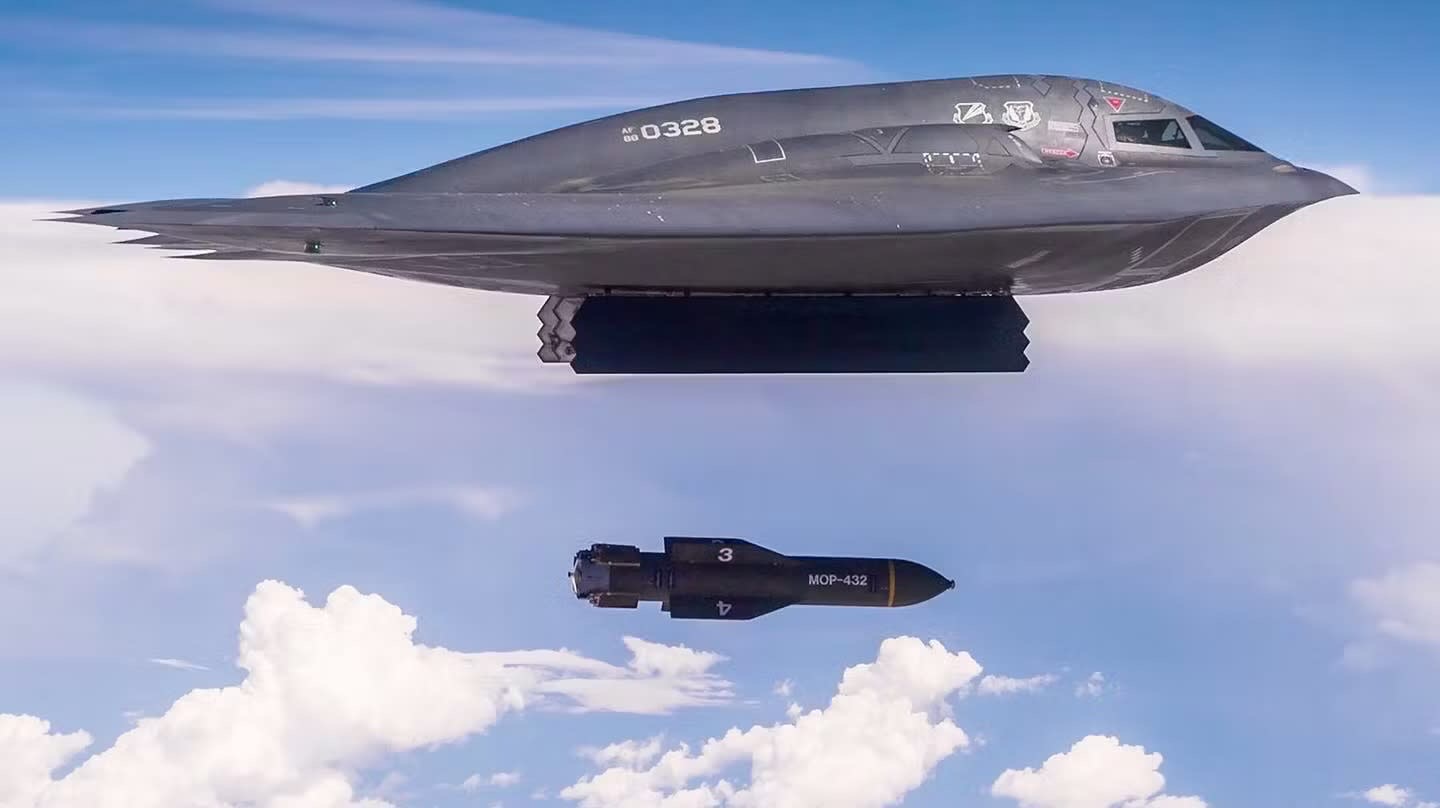
The move follows the first combat use of the MOP in June, when B-2 bombers struck Iran’s underground nuclear facilities at Fordow and Natanz during Operation Midnight Hammer. The Pentagon reported “heavy damage,” though analysts caution that hardened bunkers remain among the toughest targets for conventional weapons.
ARA and Boeing lead development of next-generation bunker buster
Applied Research Associates, based in Albuquerque, New Mexico, has been tasked with overall system design, prototype production, and testing against hardened and deeply buried targets.

“This award emphasizes the trust that Air Force Life Cycle Management Center places in ARA’s proven capabilities,” said Rob Sues, ARA’s President and CEO.
The US Air Force has requested $73.7 million in its fiscal year 2026 budget to support the programme, with demonstrations scheduled through 2027. ARA has previously contributed to every large penetrating weapon fielded by the service over the past decade.
Next Generation Penetrator brings lighter design and smarter fuzes
Unlike the 30,000-pound MOP, the NGP is expected to weigh under 22,000 pounds. That reduction could expand deployment options beyond the B-2 Spirit, which currently is the only aircraft able to carry the MOP. The upcoming B-21 Raider is also expected to integrate the weapon, albeit in smaller numbers due to size constraints.

But weight is only part of the upgrade. The Air Force wants the NGP to deliver combined blast, fragmentation, and penetration effects, while integrating “embedded fuze technology” for precision detonation inside hardened structures.
One option is “void-counting” fuzes — advanced sensors that detect hollow spaces within rock or reinforced concrete, ensuring detonation at the optimal depth. The bomb may also incorporate guidance systems less reliant on GPS, reflecting lessons from Ukraine, where Russian jamming disrupted GPS-guided munitions.
Lessons from the Massive Ordnance Penetrator’s combat debut
The MOP’s operational debut highlighted both its strengths and its limits. Built from high-grade steel and measuring 20 feet in length, it inflicted significant damage on Iran’s fortified nuclear sites. Tehran later admitted its facilities were “badly damaged.”
Yet uncertainty remains over whether the strikes fully destroyed the underground networks — a reminder that brute force alone cannot guarantee success against ultra-deep bunkers.
Adversaries such as Iran, North Korea, and China continue to invest heavily in facilities buried beneath hundreds of feet of rock and reinforced concrete.
Pentagon broadens its underground warfare toolkit
The NGP is part of a wider Pentagon push to counter hardened and deeply buried targets. Alongside large penetrators, the Defence Threat Reduction Agency (DTRA) is experimenting with alternative methods, including:
- Tunnel-collapsing munitions designed to seal access points
- Thermobaric warheads that push blast waves deep into caves
- Rocket-fuel spheres that ricochet through tunnels, spreading fire
Such tools provide commanders with more flexible options against underground complexes.
For US engineers, the contest remains part physics, part cat-and-mouse. Stronger alloys, novel penetrator nose designs, and smarter fuzes are under development to push deeper into rock. Each advance, however, is met by adversaries reinforcing and burying facilities ever further underground.
The Next Generation Penetrator aims to give the Air Force a more versatile and survivable option, building on lessons from the MOP’s combat debut and ensuring the US maintains its edge against hardened and deeply buried targets.