NASA delays first Artemis Moon landing to 2028 as new 2027 test mission added

March 5, 2026
NASA’s first crewed lunar landing under the Artemis programme has been pushed to 2028, as the US space agency reshapes its mission architecture following technical setbacks, including propulsion issues that forced the Artemis II rocket to be rolled back from the launch pad for repairs.
The revised plan introduces an additional Artemis mission in 2027 and shifts the landing objective to Artemis IV, giving NASA more time to test critical systems and reduce risks before astronauts attempt to touch down on the Moon for the first time since 1972.
The revised strategy, announced by NASA Administrator Jared Isaacman during a press conference at the Kennedy Space Center on 27 February, marks the most significant restructuring of the Artemis campaign since the programme was unveiled in 2017.
Under the new framework, Artemis III will no longer attempt to land astronauts on the Moon. Instead, it will serve as a critical technology demonstration in low Earth orbit in 2027, testing docking operations with commercial lunar landers before NASA proceeds to the first crewed landing under Artemis IV in 2028.

The shift reflects growing concerns within the agency that the previous architecture attempted too much too quickly while operating on a launch cadence that was too slow to sustain reliability.
“Launching a rocket as important and as complex as SLS every three years is not a path to success,” Isaacman said. “When you are launching every three years, your skills atrophy, you lose muscle memory.”
The restructured roadmap aims to standardise the configuration of the Space Launch System (SLS), increase launch frequency and rebuild technical expertise within the workforce, steps NASA officials say are essential if the United States is to sustain human exploration of the Moon.
NASA targets first Artemis Moon landing in 2028
If Artemis II and III proceed as planned, NASA intends to attempt the first crewed lunar landing of the Artemis era during Artemis IV in 2028.
A second landing under Artemis V could follow later the same year, before the agency moves to a steady cadence of lunar missions.
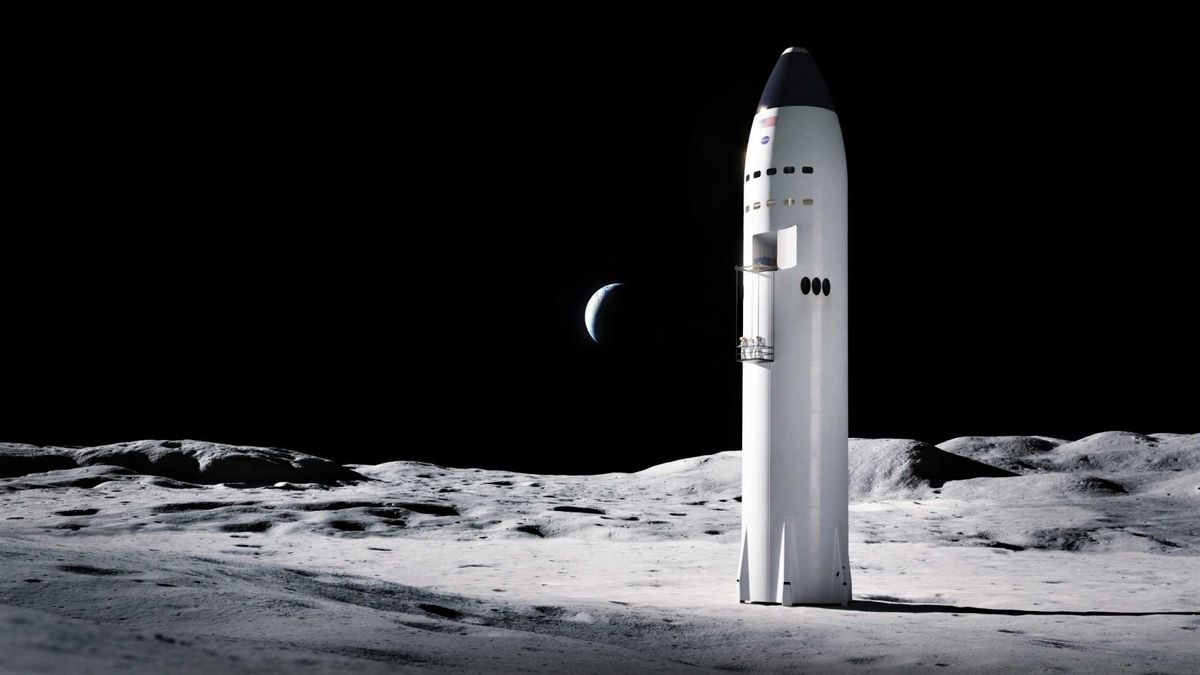
Those missions are expected to rely on commercial landing systems being developed by SpaceX and Blue Origin, which must first demonstrate critical technologies including cryogenic fuel transfer, autonomous docking and uncrewed lunar landings.

The ultimate objective of the Artemis programme extends far beyond a single landing.
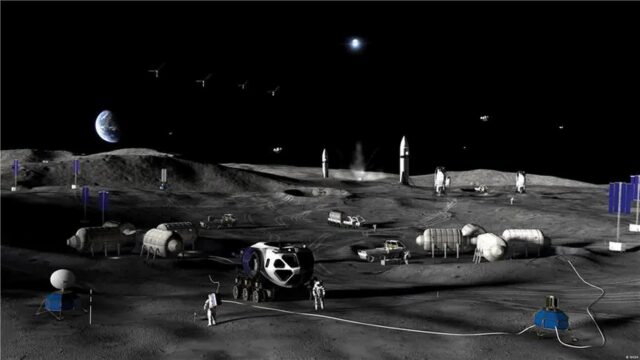
NASA hopes to establish a sustained human presence near the Moon’s south pole, eventually building the infrastructure needed for a permanent lunar base.
Isaacman said achieving that ambition will require steady progress rather than dramatic leaps.
“Competition is good,” he said, referring to the broader geopolitical race in space. “But launching every three plus years is not the right approach.”
Instead, NASA is seeking a more disciplined, incremental path to deep-space exploration.
“We need to start getting back to basics,” Isaacman said.
Artemis III will test Human Landing System in Earth orbit before Moon landing
The most immediate change concerns Artemis III, originally designed as the first crewed lunar landing since Apollo 17 in 1972.
Instead of heading directly to the lunar surface, the mission will now launch in 2027 and rendezvous in low Earth orbit with one or more commercial Human Landing System (HLS) vehicles being developed by SpaceX and Blue Origin.
The mission will test docking procedures, integrated life-support systems, communications and propulsion interfaces, and the next-generation extravehicular activity suits before astronauts rely on those technologies during a lunar landing.
Isaacman said the step-by-step approach mirrors the incremental flight testing that enabled the Apollo programme to land humans on the Moon in 1969.
“You don’t go from one uncrewed launch of Orion and SLS, wait three years, go around the Moon, wait three years and land on it,” he said. “Going right to the Moon is not a pathway to success.”
Instead, NASA intends to recreate the gradual progression of missions that characterised the Mercury, Gemini and Apollo eras.
“We did not just jump right to Apollo 11,” Isaacman said. “We went through Mercury, Gemini and multiple Apollo missions.”
The Artemis III mission will therefore function as a rehearsal for future lunar landings, validating docking procedures and spacecraft operations before astronauts attempt to land on the Moon.
“I would certainly much rather have astronauts testing the integrated systems of the lander and Orion in low-Earth orbit than on the Moon,” Isaacman said.
“Everything about this mission is in the direction of buying down risk before we put our astronauts on the surface.”
NASA standardises SLS rocket to increase Artemis launch cadence
Another major pillar of the new strategy is the decision to standardise the SLS rocket configuration in order to shorten the gap between launches.
NASA officials say the previous plan, which involved introducing upgraded variants such as the Block 1B configuration, would have complicated production and slowed mission cadence even further.
NASA Associate Administrator Amit Kshatriya said the agency intends to retain a configuration close to the current Block 1 architecture, enabling faster manufacturing and integration.
“Each step has to be big enough to make progress, but not so big that we take unnecessary risk,” Kshatriya said.
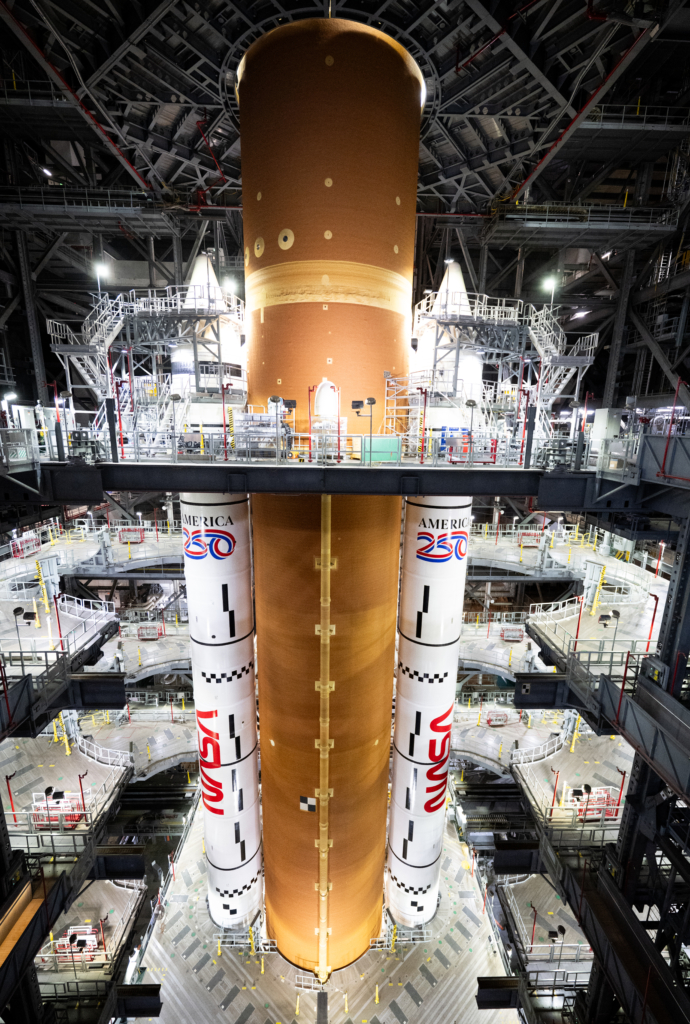
The approach is designed to ensure that each Artemis mission builds directly on lessons from the previous flight while maintaining a consistent launch system.
“We want to keep testing like we fly and have flown,” he said. “The entire sequence of Artemis flights needs to represent a step-by-step build-up of capability.”
By standardising the rocket and simplifying mission objectives, NASA hopes to cut the launch interval from roughly three years to under a year.
Isaacman said the agency must return to the operational tempo that characterised earlier eras of human spaceflight.
“Our average launch cadence was closer to three months throughout Mercury, Gemini and Apollo — not three years,” he said.
NASA workforce rebuild seen as key to sustaining Artemis Moon missions
NASA officials also emphasised that increasing mission cadence will require strengthening the agency’s civil servant workforce and rebuilding institutional expertise.
The agency’s recently announced workforce directive seeks to bring more technical work in-house and restore the operational knowledge required to sustain frequent launches.
“We have to rebuild core competencies and restore core capabilities,” Isaacman said.
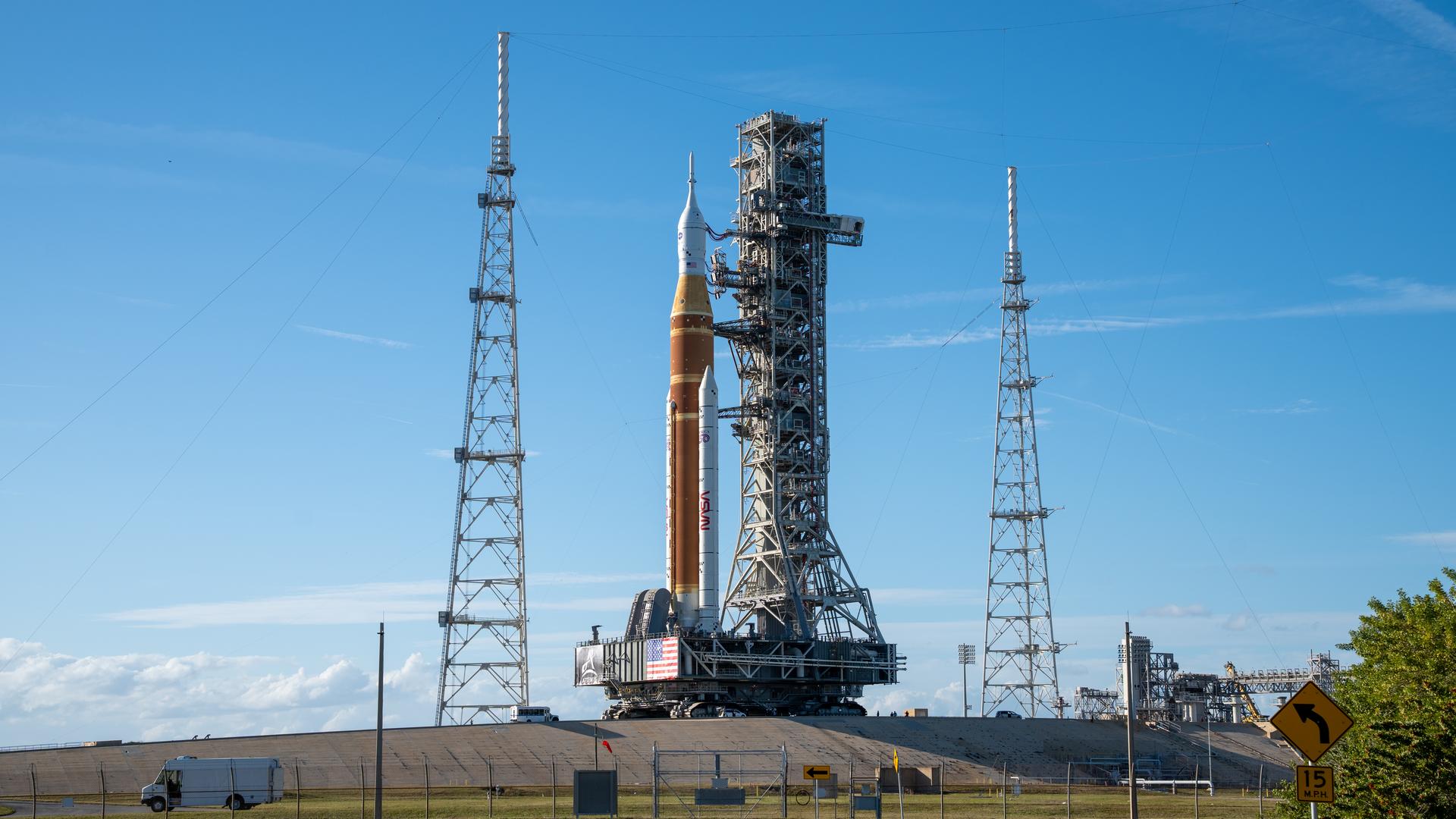
At present, contractors account for roughly three-quarters of the workforce supporting the Artemis programme.
“Seventy-five per cent of our workforce right now is contractors,” he said. “I think a lot of them should be civil servants.”
NASA leadership believes increasing in-house expertise will allow teams to operate launch facilities more efficiently and maintain a faster rhythm of missions.
“We should have the ability to turn around our launch pads and launch with frequency greater than every three years,” Isaacman said.
Artemis II preparations continue as NASA investigates SLS helium issue
While the agency was outlining its revised long-term strategy, engineers at Kennedy Space Center were working to resolve technical issues affecting the upcoming Artemis II mission.
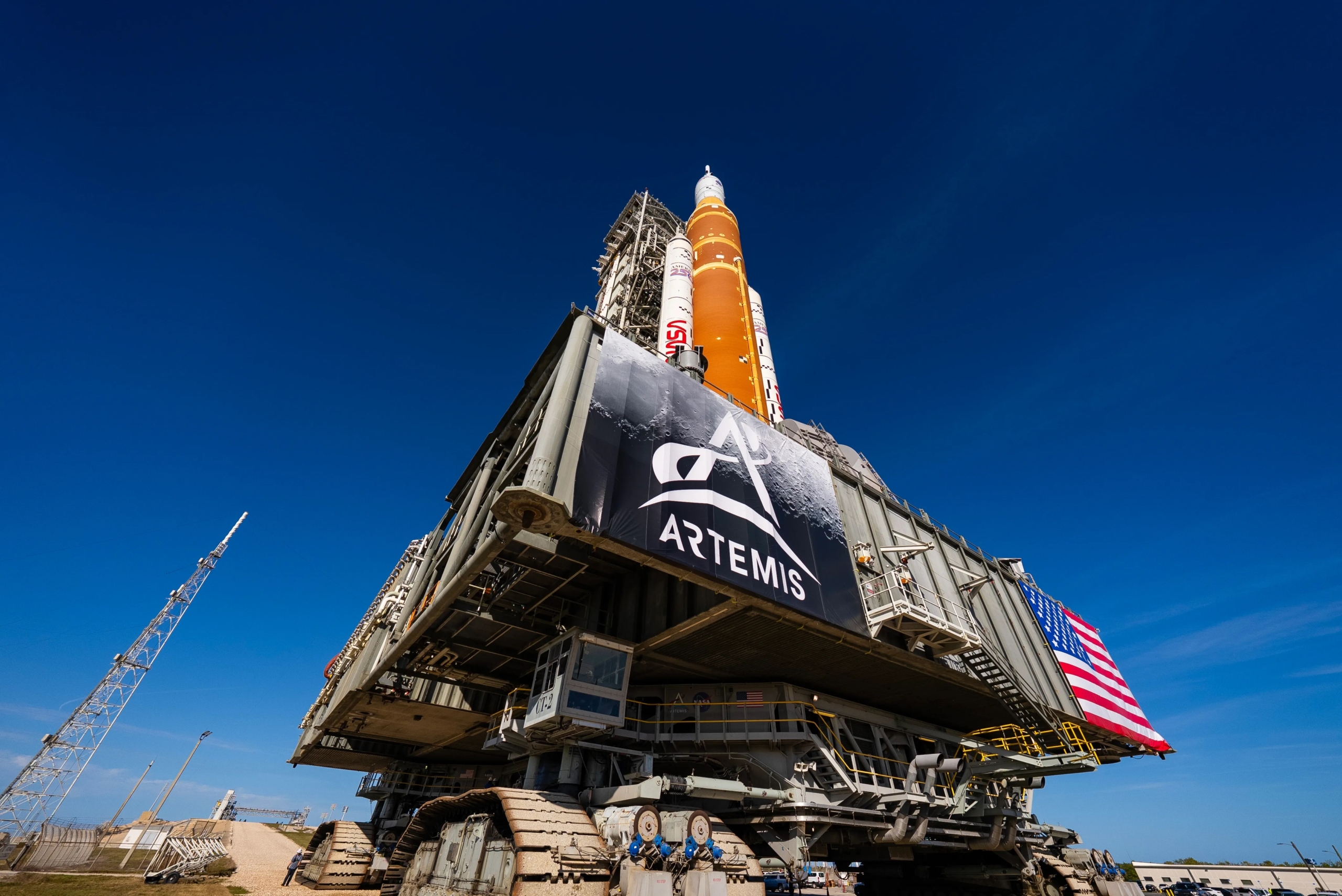
The SLS rocket and Orion spacecraft were rolled back to the Vehicle Assembly Building on 25 February after engineers detected a helium flow anomaly in the Interim Cryogenic Propulsion Stage during post-fuelling procedures.
NASA officials said the issue prevented the upper-stage engines from receiving the helium needed to pressurise propellant systems.
“The data were pretty clear that we were in a no-go situation without the ability to flow helium to the RL10 engines of the upper stage,” said Lori Glaze, acting associate administrator for exploration systems development.
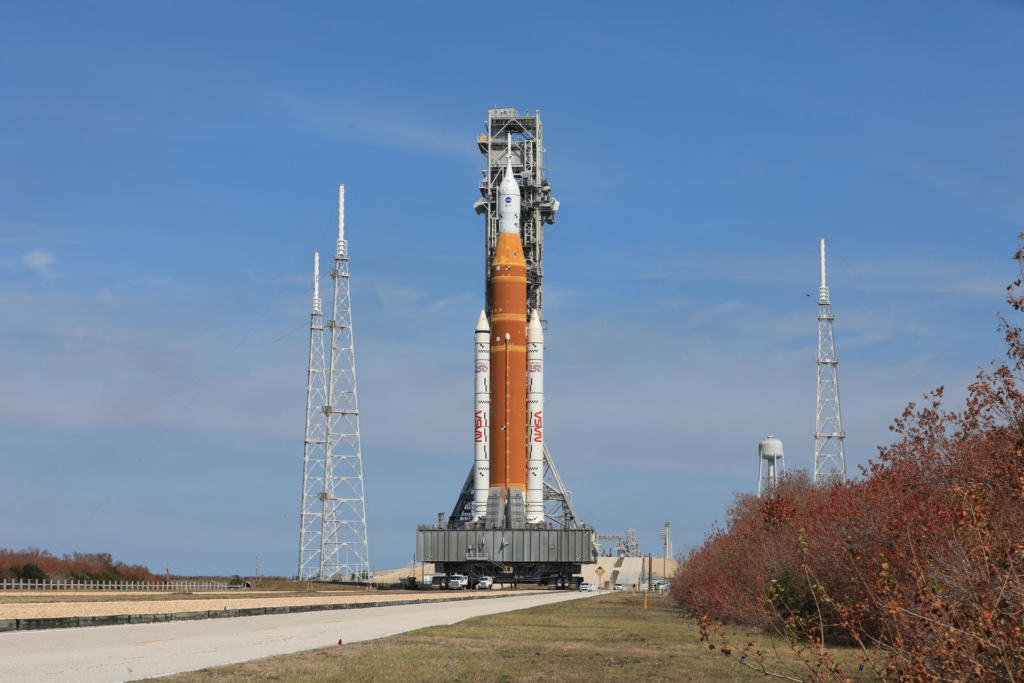
Because technicians cannot access internal components of the upper stage while the rocket remains on the launch pad, NASA opted to move the vehicle back into the assembly building for repairs.
“We do not have the ability to access the interior of the upper stage at the pad, so that was the requirement to roll back to the Vehicle Assembly Building,” Glaze said.
Engineers are now removing suspected components from the helium system for detailed inspection.
“The suspected system components for the helium flow will be removed and undergo detailed inspections,” she said. “We hope to get down to the root cause of that and make changes not just to the hardware, but to our operational procedures.”
If the problem is resolved quickly, NASA hopes to roll the rocket back to Launch Complex 39B in time for the next launch window beginning 1 April.

Artemis II will send four astronauts — Reid Wiseman, Victor Glover, Christina Koch and Canadian astronaut Jeremy Hansen — on a ten-day mission around the Moon.
Isaacman described the flight as a milestone for the agency.
“Artemis two will launch on its historic mission in the weeks ahead,” he said. “It will be the most historic human spaceflight mission in more than a half century.”
Featured image: NASA