Boeing MQ-28 Ghost Bat marks live-fire milestone as Australia orders 1st production fleet

December 9, 2025
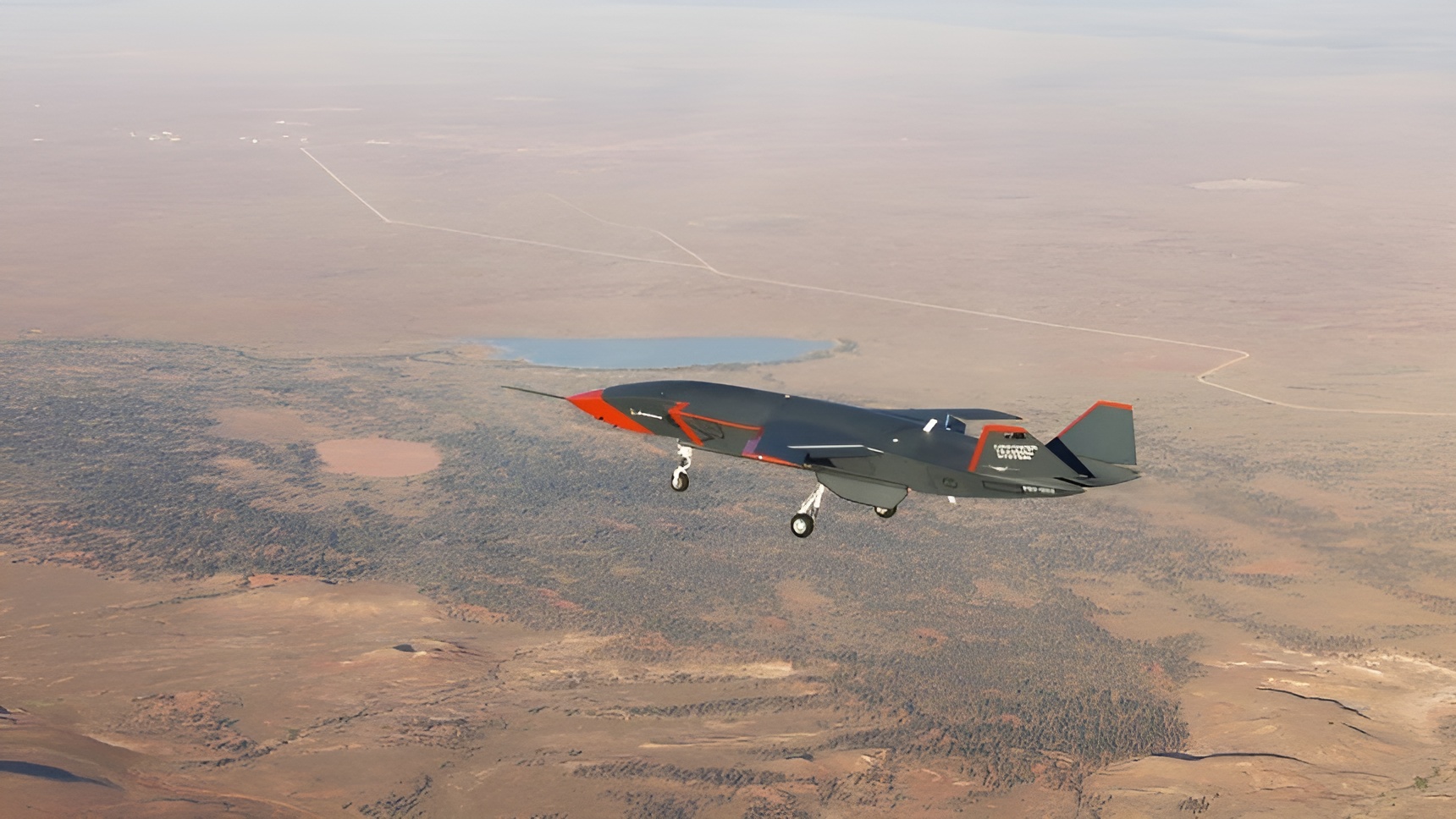
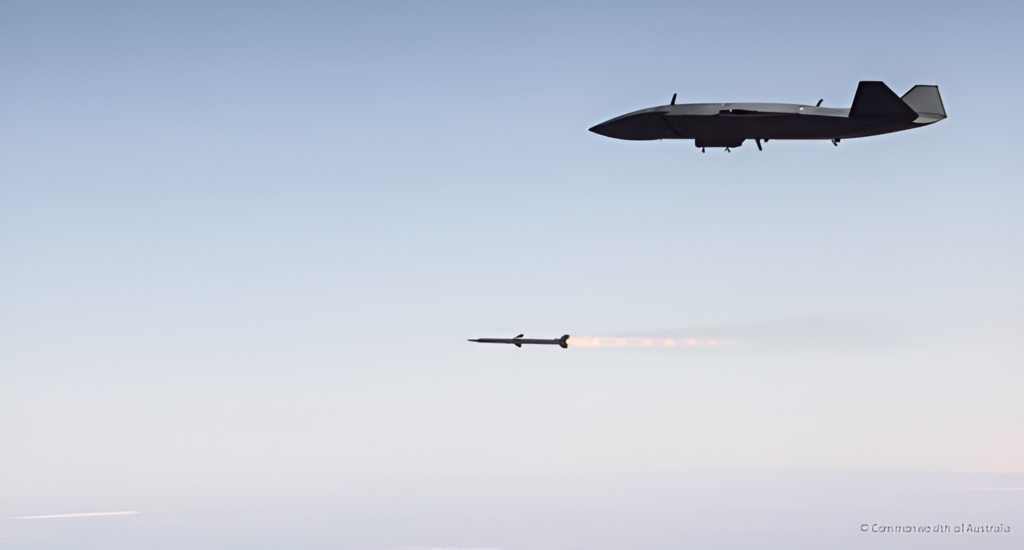
Australia’s home-grown MQ-28 Ghost Bat has taken a decisive step from prototype to combat-credible system, firing an AIM-120 AMRAAM to destroy an airborne target in the world’s first autonomous air-to-air missile engagement using the frontline weapon.
The demonstration, part of Trial Kareela 25-4 at RAAF Base Woomera on 8 December, saw the uncrewed aircraft collaborate with an E-7A Wedgetail and an F/A-18F Super Hornet in a realistic counter-air mission. The test is now being hailed by Australian officials as a turning point in the nation’s approach to autonomous airpower.
“The future is here and the future is right now in Australia,” said Minister for Defence Industry Pat Conroy. “This Aussie-made capability increases the lethality of the Australian Defence Force while reducing the risk to our brave aviators.”
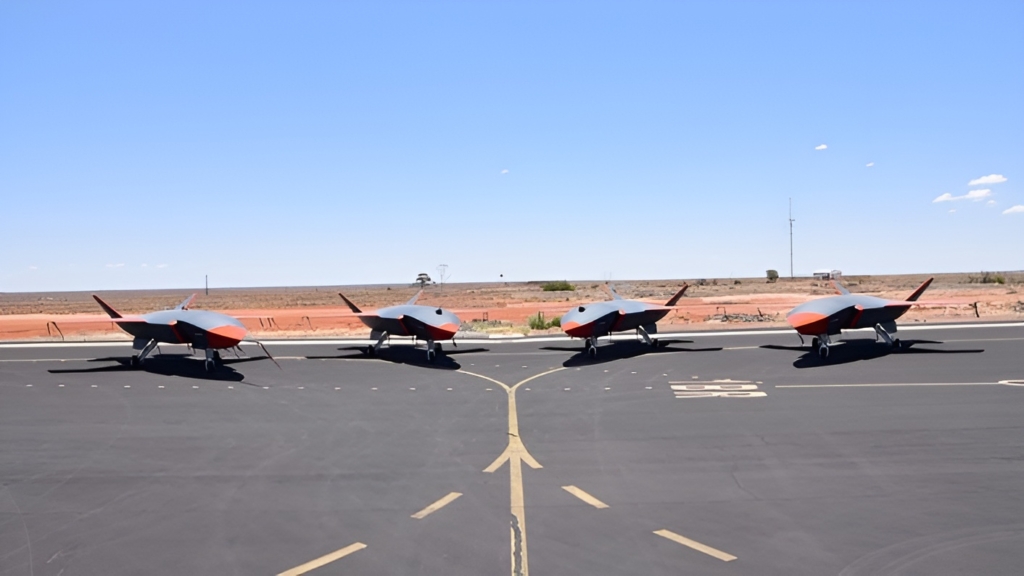
To reinforce the milestone, the Australian Government announced A$1.4 billion ($930 million) to formally clear the MQ-28 for production, marking the country’s first operational acquisition of a domestically designed combat aircraft in more than half a century.
Thank you to the Australian Government. MQ-28 funding through to 2028 backs new aircraft production and Block 3 aircraft development — prepping for @AusAirForce operations and accelerating capability. pic.twitter.com/6YXa4iuhos
— Boeing Australia (@BoeingAustralia) December 9, 2025
The package includes six production-standard Block 2 aircraft, funding for an initial Block 3 next-generation variant, and investment in sensors, ground systems and command-and-control. The order confirms that the Ghost Bat has moved from an experimental project to an operational programme of record.
How Australia’s MQ-28 autonomous missile shot unfolded
The three aircraft launched from separate locations before linking up in the battlespace. Once airborne, an operator aboard the E-7A Wedgetail assumed “custodianship” of the MQ-28 to ensure safety and provide engagement authority.
The F/A-18F identified and tracked a Phoenix jet-powered target drone, sharing targeting data across the formation. The Ghost Bat then repositioned, received authorisation from the Wedgetail and released the AIM-120 from a ventral hardpoint, successfully destroying the target.
The MQ-28, E-7A, and F/A-18F successfully demonstrated an autonomous air-to-air weapon engagement. The MQ-28 proves combat capability — reducing risk for crewed aircraft and providing greater tactical reach. pic.twitter.com/KT464nwftN
— Boeing Australia (@BoeingAustralia) December 9, 2025
“This is the first time an autonomous aircraft has completed an air-to-air weapon engagement with an AIM-120 missile,” said Amy List, Boeing Defence Australia managing director. “It proves the advantage that specialised CCAs bring: greater operational mass, better decision-quality data and reduced pilot risk.”
Imagery released after the test shows the Super Hornet and Ghost Bat flying in formation, underscoring the level of crewed-uncrewed integration that militaries worldwide are pursuing.
From prototype to production: MQ-28 proves readiness
The test caps a high-tempo series of demonstrations under Boeing and the Royal Australian Air Force’s Capability Demonstration 2025 campaign, which validated all key requirements needed for a production decision. Activities included:
- autonomous mission execution
- multi-ship Ghost Bat teaming
- deployments to operating bases, including RAAF Tindal
- integration with E-7A Wedgetail, F-35A Lightning II and MQ-4C Triton
- data fusion between multiple MQ-28s and crewed aircraft
These milestones were delivered four months ahead of schedule, backed by more than 150 flight hours and 20,000 digital test hours in modelling and twin environments.
“A true example of speed-to-capability,” said Colin Miller, VP and general manager of Boeing Phantom Works. “We developed, integrated and employed this weapon system in under eight months.”
This rapid evolution is enabled by the MQ-28’s modular, software-first architecture, allowing autonomy behaviours and mission payloads to be updated digitally without structural redesigns.
What the MQ-28 Block 2 and Block 3 deliver next
With a production order in place, Block 2 aircraft are now being built as the first operationally configured Ghost Bats. These airframes include refined mission systems, upgraded autonomy, and structural changes informed by the prototype fleet.
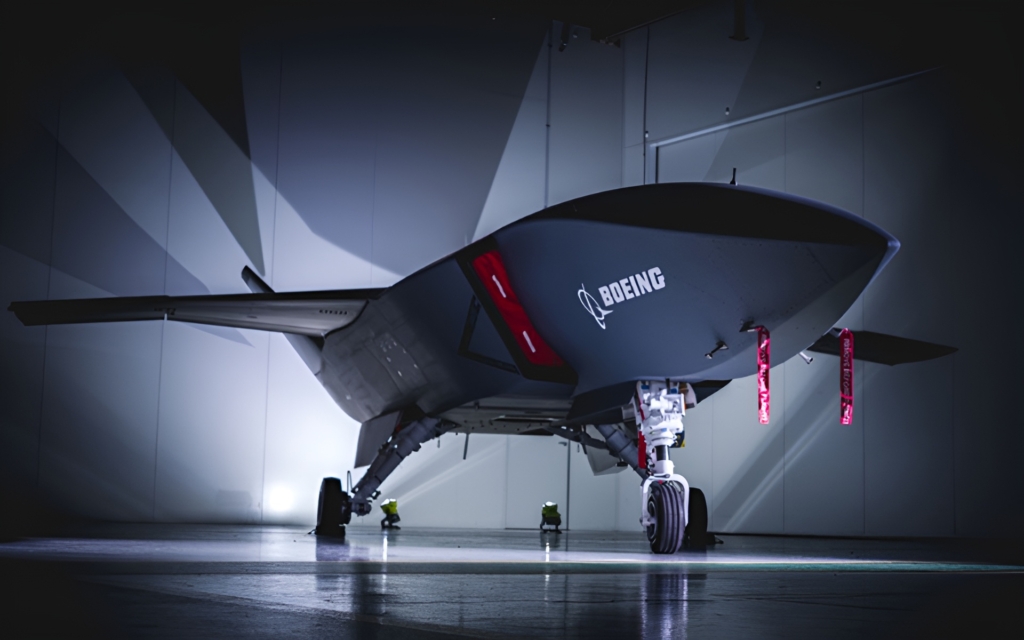
Block 3 development has begun in parallel, adding:
- advanced sensor packages
- enhanced autonomy modes
- expanded weapons options
- full operational production infrastructure
Boeing says the manufacturing system is designed to scale rapidly for both domestic and export customers.
A new combat aircraft at a fraction of the cost of a fighter jet
RAAF leaders describe the MQ-28 as a Collaborative Combat Aircraft (CCA): a teammate for crewed fighters that can carry sensors or weapons, scout ahead, protect high-value assets and, if necessary, act as an expendable node.
Australia’s Chief of Air Force, Air Marshal Stephen Chappell, highlights three core advantages:
- combat mass – more platforms in the fight
- enhanced lethality – extending the reach of crewed fighters
- improved survivability – reducing pilot exposure
The government aims for each Ghost Bat to cost roughly 10% of a crewed fighter, enabling at least three uncrewed teammates per frontline aircraft.
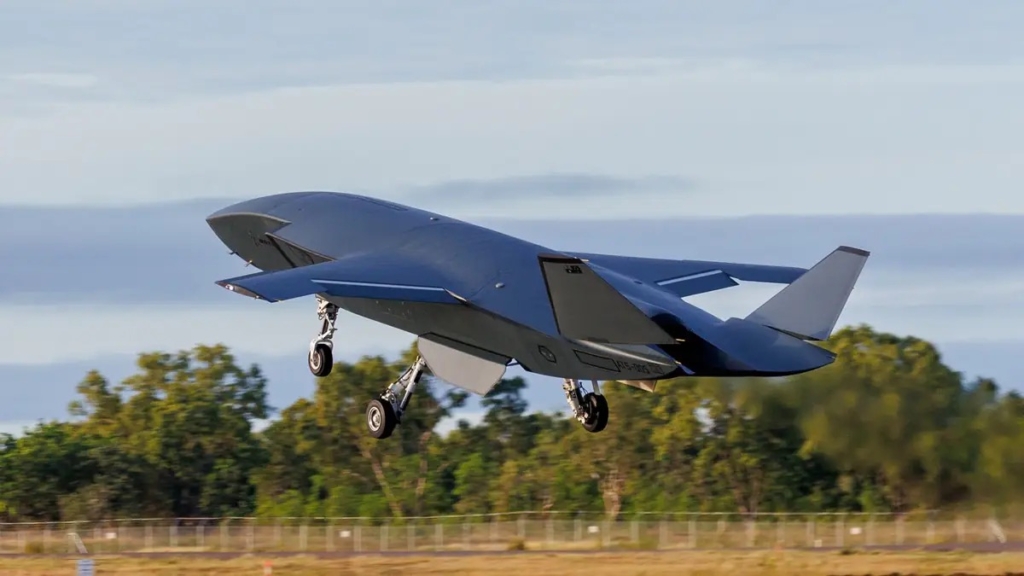
“The Ghost Bat turns a single fighter into a combat team,” Conroy said. “It presents hundreds of potential threat vectors that adversaries must consider.”
Australia’s first combat aircraft in 50 years — built for export
The MQ-28 is the first Australian-designed combat aircraft to enter production since the 1970s. Manufacturing is transitioning from Boeing’s Fishermans Bend facility in Melbourne to a new site at Wellcamp, outside Brisbane.
The programme already involves more than 200 Australian companies and supports 440 high-tech jobs, with 70% local content.
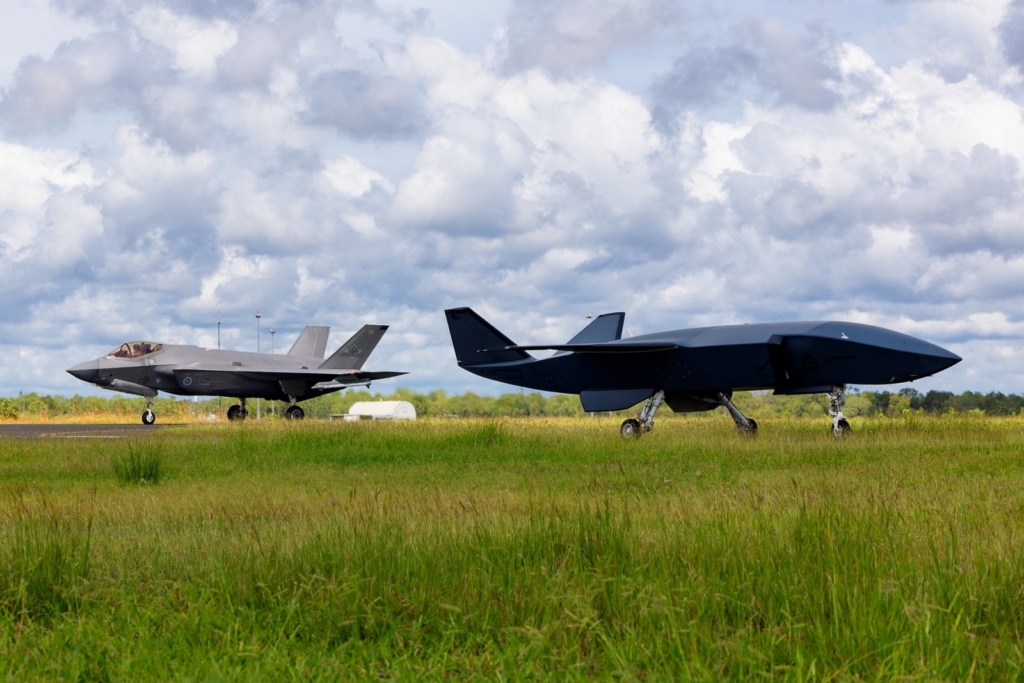
The government lists the Ghost Bat as a top defence export priority, and Boeing has confirmed active collaboration with the US Air Force, which has previously flown an MQ-28 on American ranges, signalling potential US procurement interest.
Where Ghost Bat goes from here
With the AIM-120 engagement now complete, a production order secured and Block 2/3 development underway, Australia has positioned itself at the forefront of crewed-uncrewed teaming — a field widely regarded as central to future air superiority.
The MQ-28 has moved decisively beyond the demonstrator stage. It is now becoming a core element of Australia’s air power, and potentially a flagship export product for its defence industry.
As Boeing’s Amy List puts it: “This milestone firmly demonstrates the MQ-28 Collaborative Combat Aircraft as the most mature capability of its kind in the world.”
Featured image: Boeing