London Gatwick airport opens consultation on changes to departure routing amid sweeping UK airspace reform

January 21, 2026
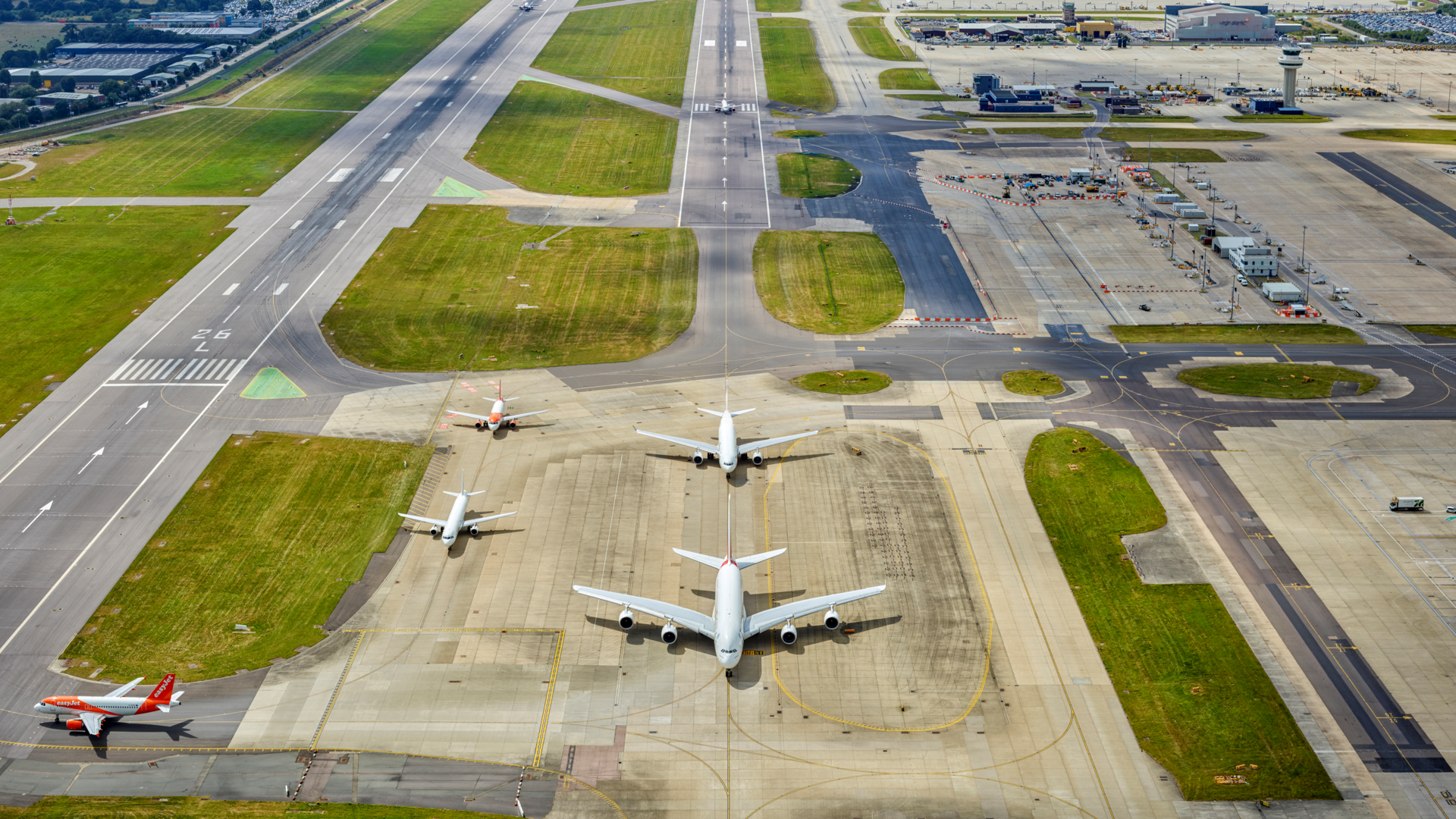
London Gatwick has launched a public consultation on proposed changes to one of its main departure routes, as the UK embarks on the largest redesign of its airspace since the system was first established more than 70 years ago.
The airport is seeking views on options for the future operation of Route 4, one of the departure routes from Gatwick as part of a nationwide programme to modernise flightpaths using satellite-based navigation.
The consultation comes as UK airspace, originally designed in the 1950s to handle around 200,000 flights a year, now accommodates approximately 2.7 million movements annually – with Gatwick keen to add to that with the addition of its back-up northern runway as a full-time landing strip.
Gatwick’s proposals sit within a broader government-backed overhaul of the airspace network, which is intended to improve safety, resilience and efficiency in one of the world’s most congested sections of airspace.
Consultation launched on one of Gatwick’s busiest departure routes
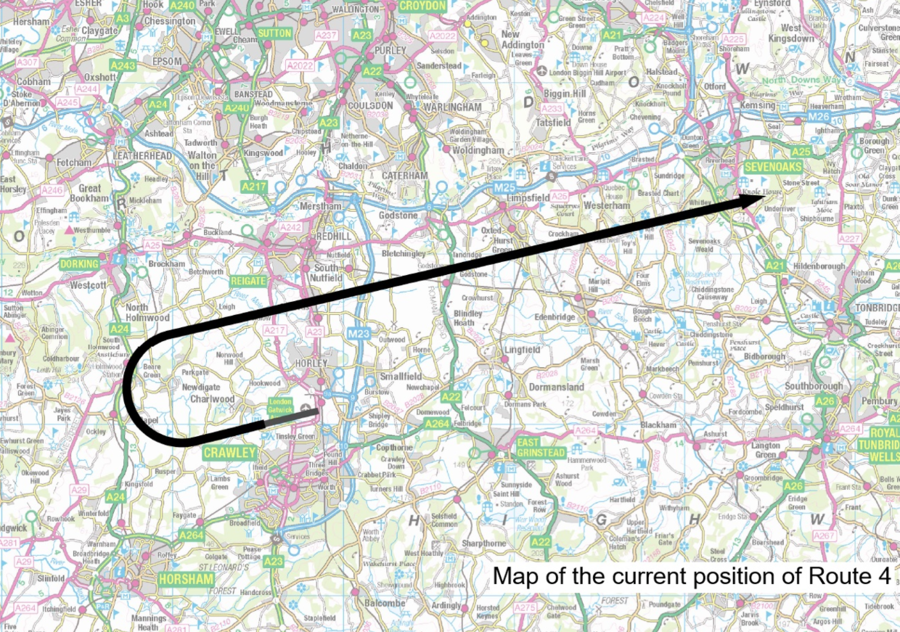
The airport has opened a 14-week public consultation seeking views from residents, local authorities and other stakeholders on options for the future operation of Route 4, one of nine standard instrument departure routes from Gatwick’s 26L runway.
Aircraft using Route 4 depart to the west before executing a 180-degree turn northbound and then routing east towards their onward destinations. The departure is used for aircraft with destinations to the east of Gatwick, from Scandinavia to the Middle East.
Gatwick is consulting on four shortlisted options that would reintroduce satellite-based navigation on the route, replacing legacy procedures that rely on ground-based infrastructure.
The consultation runs from 20 January until 28 April 2026 and includes a programme of in-person drop-in events, online briefings and access to printed materials at locations near to the airport.
Return to satellite navigation after legal challenge
Route 4 has a complex recent history. As part of an earlier airspace change programme, Gatwick introduced performance-based navigation across all nine of its main runway departure routes in 2013.
However, following regulatory and legal challenges, the satellite-based procedures on Route 4 were withdrawn in 2019, while remaining in place on the airport’s other routes.
Since then, Gatwick has been working to develop a revised airspace change proposal designed to address the issues identified during the earlier challenge.
The airport argues that reinstating satellite-based navigation on Route 4 is unavoidable, as conventional navigation aids are progressively decommissioned.
All of Gatwick’s other arrival routes and main runway departures now operate using modern satellite navigation procedures, leaving Route 4 as the exception.
UK airspace modernisation driven by capacity pressures
The Route 4 consultation illustrates the pressures facing the UK’s airspace system as traffic volumes continue to grow.
Modern satellite-based procedures are intended to enable more reliable flightpaths, improved airspace capacity and better integration with neighbouring airports’ operations, particularly in the congested skies of south-east England.
Gatwick says the proposed options could deliver reductions in noise for some communities and support more efficient aircraft operations, although impacts will vary depending on the option selected.
Gatwick consultation: Community engagement and next steps
Gatwick has said that all responses received during the consultation will be formally recorded and analysed.
The feedback will inform the development of a final proposal, alongside a consultation report demonstrating how stakeholder views have been taken into account, before submission to the CAA.
Residents and stakeholders can participate via the consultation website, webinars, public events or by submitting responses online or by post.

How UK airspace is changing
The UK government has set out new legislation to enable the most far-reaching redesign of national airspace since it was created in the 1950s, aiming to deliver quicker journeys, fewer delays and improved environmental performance for passengers and airlines.
The reforms, laid in Parliament in June 2025, pave the way for the creation of the UK Airspace Design Service (UKADS).
UKADS’ initial focus will be on London and the south-east, with Heathrow expansion alone projected to support more than 100,000 jobs. Over the longer term, redesigned “skyways” could also accommodate emerging technologies such as drones and advanced air mobility.
The government says redesigned flightpaths could reduce delays, cut emissions from airborne holding, and allow aircraft to climb and descend more efficiently, lowering noise and air pollution for communities.
The Department for Transport and the Civil Aviation Authority will oversee delivery, with industry bodies, airports and airlines broadly welcoming the reforms as long-overdue infrastructure modernisation.
Martin Rolfe, CEO of NATS, said at the time: “The UK’s airspace network is one of the busiest and most complex in the world. We handle a quarter of Europe’s traffic despite having only 11% of its airspace, with one of the best safety and delay records anywhere.
“However, we have to modernise airspace if we are to maintain this level of performance as traffic grows towards 3 million flights per year.
“The government’s announcement to create a UK Airspace Design Service is a crucial step, building on the work we’ve already completed in other parts of the UK.”
Featured image: Gatwick Airport