LATAM Airlines to install AeroSHARK riblet coating across its entire Boeing 777 fleet

February 9, 2026
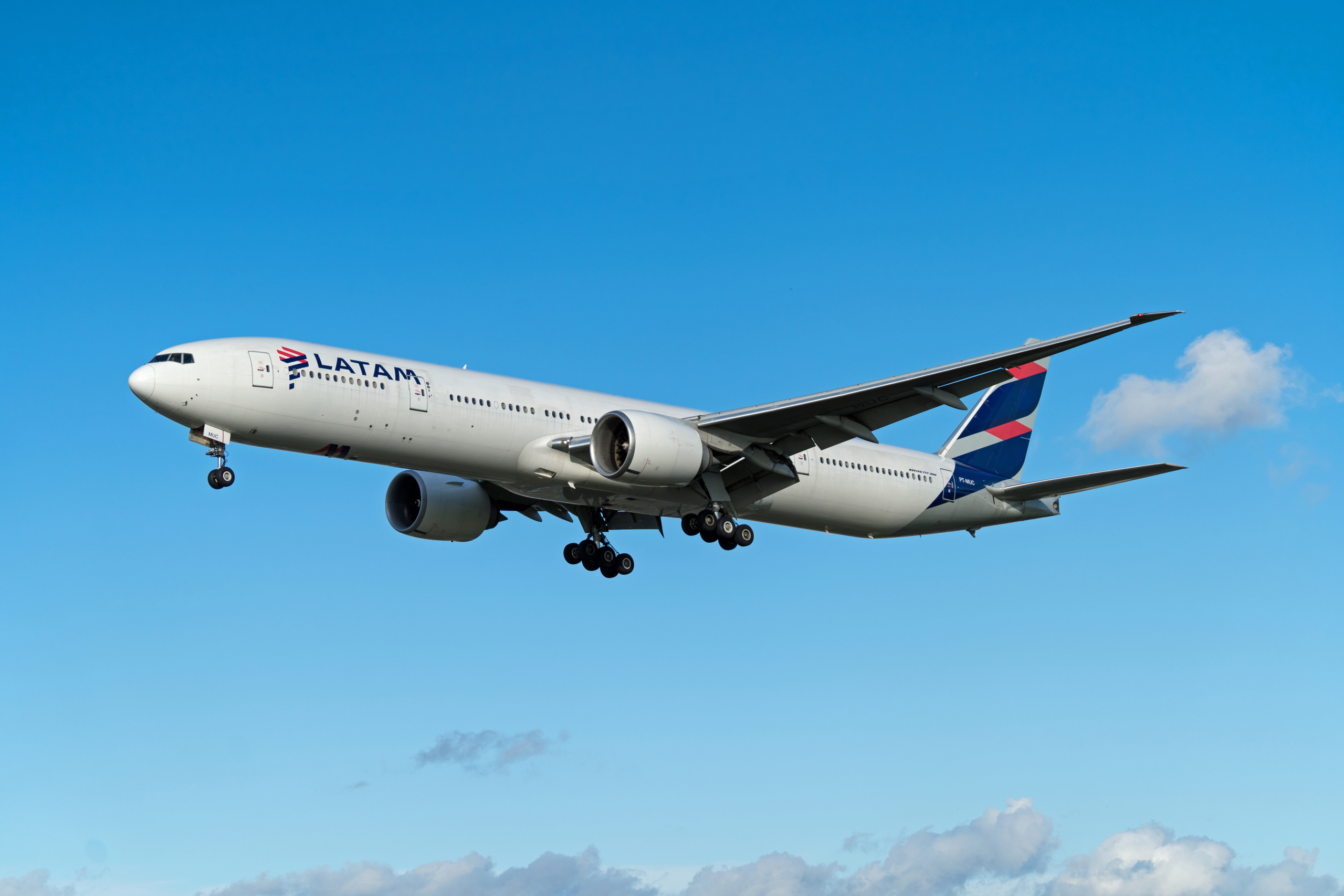
The LATAM Airlines Group is to become the first airline in South America to adopt an AeroSHARK coating to an entire aircraft fleet to save fuel and reduce emissions.
The airline follows members of the Lufthansa Group and All Nippon Airways (ANA) to adopt the special sharkskin-like coating, which reduces drag and makes an aircraft fly more efficiently through the air.
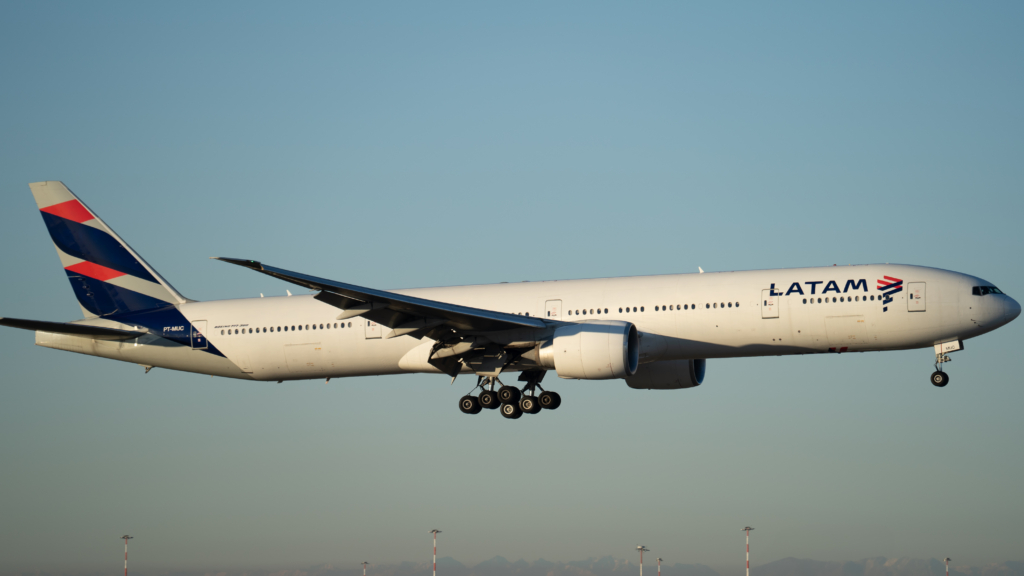
LATAM rolls out AeroSHARK across its entire Boeing 777-300ER fleet
LATAM Airlines of South America has said it plans to equip even more of its aircraft with the nature-inspired AeroSHARK drag-reduction solution jointly developed by Germany’s Lufthansa Technik and BASF Coatings. The carrier said its entire Boeing 777-300ER fleet will feature the coating by the end of 2027, reducing e fuel costs and increasing efficiency.
The company recently extended the contract with its Maintenance, Repair and Overhaul (MRO) provider, which will see the AeroSHARK coating applied to five more Boeing 777-300ER aircraft.
Another five aircraft of the same type within the LATAM 777 fleet had already been treated by the end of 2025. The five remaining aircraft will receive the treatment by the end of 2027.
The airline says it has been “a pioneer” in utilising the beneficial properties of AeroSHARK’s innovative riblet films. Its first aircraft was secretly modified in December 2023 to thoroughly test AeroSHARK, even before officially announcing the application to the public.
The airline added that once this first aircraft successfully validated the promised 1% fuel and emissions reduction in day-by-day airline operations over almost one year, the carrier ordered four additional shipsets in 2024. The five shipsets from the most recent top-up will finally bring the airline’s AeroSHARK order tally to ten.
“Once all the respective aircraft have been modified in 2027, LATAM will become the second airline in the world to operate an entire subfleet with sharkskin-equipped aircraft,” added the carrier.
“Expanding the use of AeroSHARK across our entire Boeing 777-300ER fleet is a clear example of how LATAM combines innovation, operational efficiency and sustainability in very concrete actions,” said Nicolas Seitz, Head of Fleet and Projects at LATAM Airlines Group.
“The proven results achieved with the first aircraft give us the confidence to scale this solution, reducing fuel consumption and emissions while maintaining the highest operational standards. This initiative is fully aligned with our long-term strategy to operate a more efficient and sustainable fleet.”
What is AeroSHARK and how does it work?
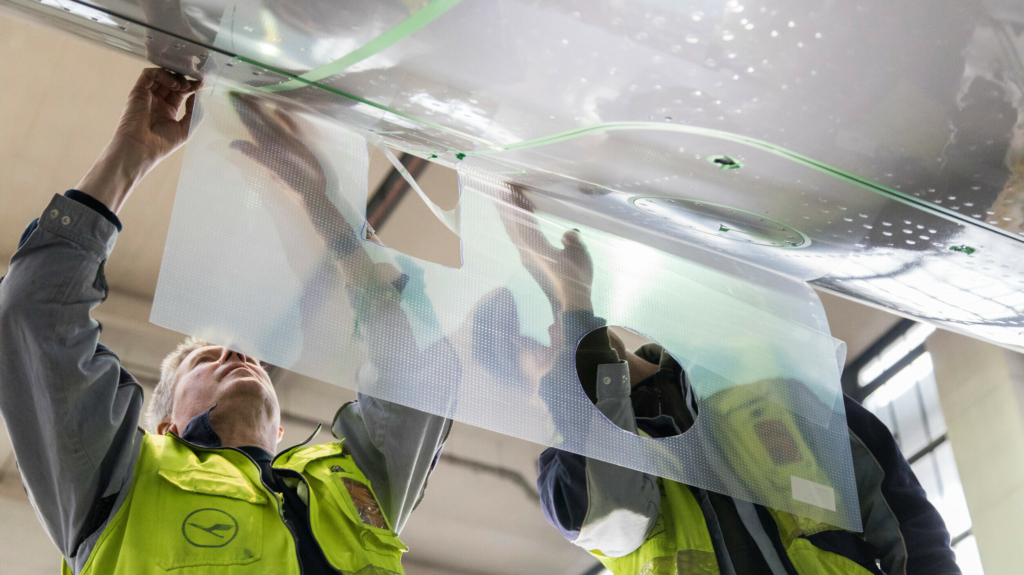
AeroSHARK is a functional surface film that replicates the flow-optimised structure of sharkskin. It features small longitudinal protrusions measuring about 50 micrometres, so-called ‘riblets’, which are precisely oriented along the airflow.
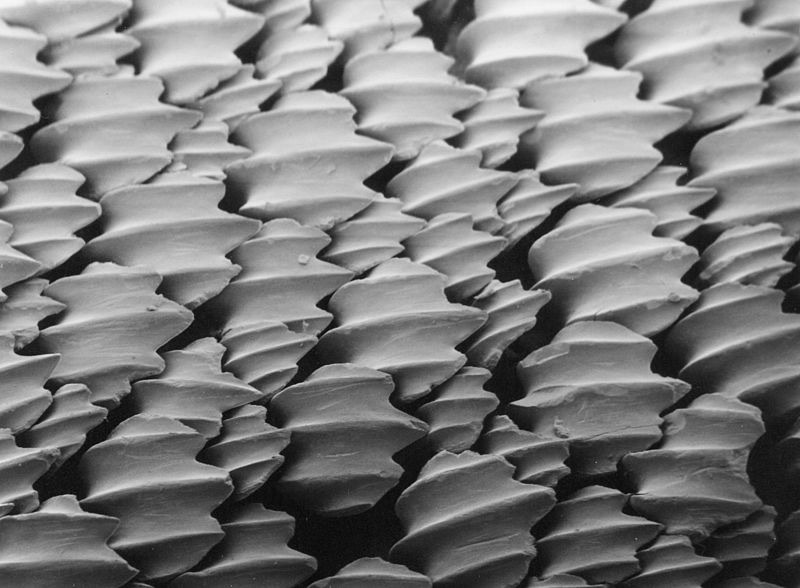
The science behind AeroSHARK is rooted in the natural engineering of the great white shark. Researchers have found that the alternating high and low ridges on a shark’s skin, called denticles, reduce the pressure drag by controlling flow separation, especially as the animal switches between slow and high-speed swimming.
Research by Tokyo Institute of Technology’s Hiroto Tanaka shows high ridges work best at low speeds, while alternating high-low ridges excel at high speeds, offering benefits across the shark’s full swimming range.
In LATAM’s application of the coating, these riblets cover almost the entire fuselage and engine nacelles of the Boeing 777, equating to around 950 square meters on its 777-300ER variant.
Riblets can open the door to fuel savings and lower emissions
The airline said that once LATAM’s entire Boeing 777 fleet is modified this way, the proven 1% of drag reduction will enable the airline to leverage annual savings of up to 4,000 metric tons (eight million pounds) of jet fuel and 12,000 metric tons (24 million pounds) of CO₂ emissions. This is equivalent to around 56 scheduled flights from São Paulo to Miami on a Boeing 777.
“I don’t know to what extent sharks are native to Latin American waters, but it feels like they are becoming more and more native to Latin American skies – and that’s because of LATAM’s pioneering spirit and our innovative, nature-inspired technology,” said Petra Lahme, Head of Product Sales for Lufthansa Technik’s Original Equipment Innovation branch.
“Therefore, I’d like to thank our valued customer for their renewed trust in AeroSHARK, and I eagerly look forward to completing the modification of LATAM’s 777 fleet in the next two years.”
LATAM joins others in applying the sharkfin-like coating
So far, several members of the Lufthansa Group of airlines, including Lufthansa Cargo, SWISS, and Austrian Airlines, have applied the special coating to members of their Boeing 777 fleets.
Additionally, ANA of Japan has also been rolling out AeroSHARK on its 777s. Japan’s Zip Air recently treated one of its Boeing 787-8s with a similar shark-inspired skin coating.
According to Lufthansa Technik, as more airlines are looking to apply the AeroSHARK coating to their fleets, the company and its partner BASF are consistently developing their AeroSHARK product further.
The company added that one current area of development focuses on obtaining supplemental type certification for more and more aircraft types beyond the current lineup of the Boeing 777-200ER, 777-300ER, 777F and 747-400.
For 2026, Lufthansa Technik has already announced to introduce the first AeroSHARK modification for the Airbus A330ceo family of aircraft, while another aim is to modify even larger areas on the aircraft to leverage even greater savings.
For a maximum expansion stage of the AeroSHARK technology, Lufthansa’s initial calculations hint towards a realistic savings potential between 2% and 3%, depending on aircraft type, age and the degree of coverage of the AeroSHARK coating.
Featured image: Travers / stock.adobe.com
.