Airbus, Embraer and Lockheed line up for India’s $11bn contest for 60 transport aircraft

March 5, 2026

India has taken a major step towards reshaping its tactical airlift capability, with the country’s Defence Procurement Board clearing a proposal to acquire 60 medium transport aircraft for the Indian Air Force (IAF).
The programme, estimated to be worth around ₹1 trillion ($11 billion), will proceed under the “Buy and Make” route, a structure that reflects New Delhi’s growing insistence that major defence acquisitions also build domestic industrial capability.
Twelve aircraft will be acquired in fly-away condition, while the remaining 48 will be produced in India through partnerships with local industry.
The proposal now moves to the Defence Acquisition Council for Acceptance of Necessity (AoN) before the tendering and evaluation stages begin, an official at the Ministry of Defence told AGN.
For the IAF, the acquisition represents more than a routine fleet renewal. It is part of a wider effort to modernise a transport fleet that remains heavily reliant on ageing Soviet-era aircraft while simultaneously strengthening India’s aerospace manufacturing ecosystem.
Why India needs a new medium transport aircraft to replace the An-32
At the heart of the programme is the need to gradually retire the IAF’s Antonov An-32 fleet, aircraft that entered service in the mid-1980s and have served as the backbone of India’s tactical airlift operations for decades.
Roughly 100 An-32 aircraft remain in service. Many have undergone avionics and engine upgrades over the past decade, but the fleet faces growing challenges related to maintenance, spare parts availability and long-term sustainment.

The new medium transport aircraft are also expected to assume some tasks currently performed by the ageing Ilyushin Il-76 fleet, allowing the IAF to rationalise its transport operations across different weight classes.
Currently, the service’s airlift inventory spans a wide spectrum: C-295 tactical transports on order to replace Avro HS-748 aircraft, C-130J Super Hercules aircraft for special operations missions, C-17 Globemaster strategic airlifters, and legacy Russian platforms.
The proposed aircraft will sit squarely between light tactical transports and heavy strategic airlifters.
Ladakh operations highlight Indian Air Force tactical airlift requirements
The requirement has been sharpened by operational experience.
During the military standoff with China in eastern Ladakh beginning in 2020, transport aircraft played a critical role in sustaining troops and equipment at forward locations where road access is limited and weather conditions are extreme.
The IAF relied heavily on airlift to move supplies, deploy personnel and maintain logistical continuity in high-altitude areas.

Aircraft operating in these environments must cope with short runways, thin air and limited infrastructure. Many of the IAF’s Advanced Landing Grounds in Ladakh and the northeastern states are semi-prepared strips that impose strict performance requirements.
According to defence officials, the new aircraft must therefore demonstrate the ability to operate from short or unprepared surfaces while carrying meaningful payloads.
Payload requirements for India’s medium transport aircraft programme
The programme specifies a payload capability between 18 and 30 tonnes, a range that defines the medium transport category.
One key operational requirement is the ability to transport the Indian Army’s indigenous Light Battle Tank (LBT) Zorawar, which weighs roughly 25 tonnes. This requirement has influenced the aircraft under consideration.

The aircraft will also need to support a wide range of missions, including troop transport, cargo movement, airborne drops, humanitarian assistance, disaster relief and medical evacuation.
The platform is expected to operate across both tactical and strategic missions, bridging a capability gap between smaller tactical transports and the larger C-17 fleet.
Three aircraft competing for India’s medium transport aircraft programme
The programme has drawn interest from several international manufacturers, but the contest is widely expected to centre on three platforms: Embraer’s C-390 Millennium, Lockheed Martin’s C-130J Super Hercules and Airbus’ A400M Atlas.
Each aircraft represents a different approach to the medium transport requirement, both in capability and industrial strategy.
Embraer C-390 Millennium with Mahindra Defence
Brazil’s Embraer is offering the C-390 Millennium, a twin-jet military transport with a payload capacity of around 26 tonnes.
Unlike most tactical transports, which rely on turboprop engines for short-field performance, the C-390 uses jet propulsion, enabling higher cruise speeds and potentially faster turnaround times.
The aircraft has been designed for multi-role missions including troop and cargo transport, aerial delivery, search and rescue, medical evacuation and aerial refuelling.

Embraer has partnered with India’s Mahindra Defence Systems for the programme. The two companies signed a strategic partnership agreement in October 2025 covering potential production and support activities in India.
As part of its pitch, Embraer has proposed establishing a full maintenance, repair and overhaul ecosystem in the country to support the fleet throughout its lifecycle.
If selected, the facility would handle structural maintenance, component overhaul, avionics support and training while also positioning India as a regional support hub for other C-390 operators.
The Brazilian company is also exploring the integration of Indian suppliers into the global C-390 supply chain.
Lockheed Martin C-130J Super Hercules with Tata Advanced Systems
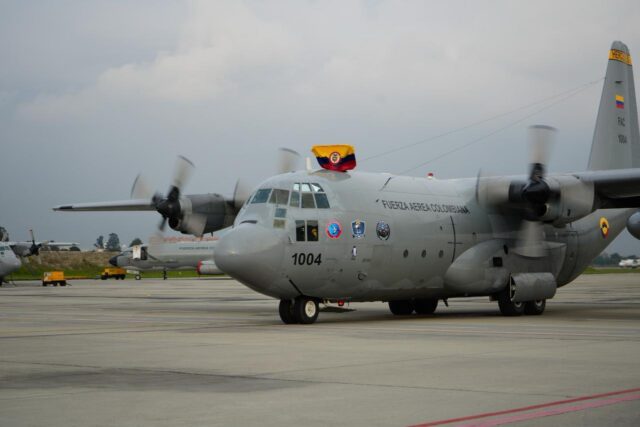
The United States’ Lockheed Martin has offered the C-130J Super Hercules, an aircraft already familiar to the IAF.
India operates 12 C-130J-30 aircraft, which have been used extensively for special operations, high-altitude logistics missions and humanitarian operations.

The aircraft has demonstrated its ability to land at some of the world’s highest airstrips, including Daulat Beg Oldi near the Line of Actual Control with China.
Lockheed Martin has built a long-standing industrial partnership in India with Tata Advanced Systems Limited (TASL). Through their joint venture, Tata Lockheed Martin Aerostructures Ltd, India already manufactures C-130J empennage assemblies for the global fleet.
More than 250 of these structures have been produced in India.
The two companies are also establishing a new depot-level maintenance, repair and overhaul facility in Bengaluru. Once operational, the facility will support heavy maintenance, avionics upgrades and structural inspections for the Indian fleet and potentially for regional operators.
However, the aircraft’s payload capacity of roughly 20 tonnes places it at the lower end of the IAF’s stated requirement.
Airbus A400M Atlas
Airbus has proposed the A400M Atlas, a significantly larger aircraft capable of carrying up to 37 tonnes of cargo.
The aircraft combines both tactical and strategic airlift roles, with the ability to transport heavy or oversized equipment over long distances while still operating from short and unprepared runways.
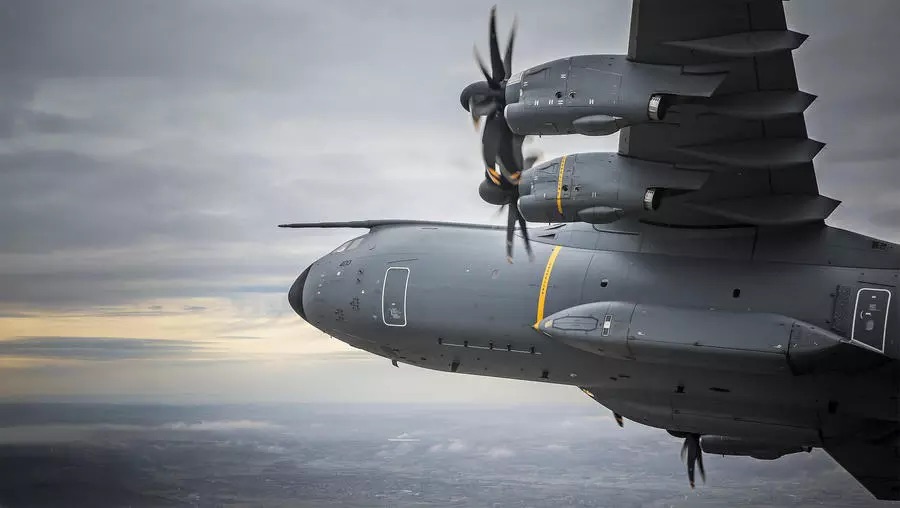
Airbus has indicated that it could manufacture a large proportion of the aircraft in India under the “Make in India” framework.
Germany, a key partner in the Airbus programme, has encouraged India to consider the aircraft for the MTA requirement.
However, the Atlas exceeds the IAF’s stated payload band, raising questions about whether it aligns with the programme’s core objective of replacing the An-32.
Industrial partnerships central to India’s ‘Buy and Make’ transport aircraft programme
For the Ministry of Defence, the programme is as much about industrial development as operational capability.
India has steadily increased local content requirements in defence contracts, pushing foreign manufacturers to establish deeper industrial partnerships with domestic companies.
In the MTA contest, these partnerships have become a central part of each proposal.
Embraer has aligned with Mahindra Defence to build support and production infrastructure in India.

Lockheed Martin is leveraging its long-standing relationship with Tata Advanced Systems and its existing C-130J manufacturing footprint.
Airbus, meanwhile, has already established a major industrial presence through the C-295 programme, under which Tata Advanced Systems is building a final assembly line in Vadodara.
Under that September 2023 deal, 56 C-295 aircraft are being acquired for the IAF, with 40 to be manufactured in India.
The first Indian-built C-295 is expected to roll out later this year.
How the cancelled Il-276 programme shaped India’s transport aircraft search
The MTA requirement itself has a long and complicated history.
More than a decade ago, India and Russia launched a joint project to develop a new medium transport aircraft known as the Il-276. The programme was intended to replace the An-32 fleet and be produced jointly by Hindustan Aeronautics Limited and Russia’s United Aircraft Corporation.
Aviastar-SP, subsidiary of the Ilyushin company, has announced plans to begin production of two new transport aircraft: the heavy transport Il-100 and the medium transport Il-276 (SVTS). The Il-276 will be powered by two PD-14M engines, and Il-100 will be equipped with four PD-26 pic.twitter.com/pwRUXkQsEp
— H. Memarian (@HEMemarian) December 4, 2025
The project was eventually abandoned after design disagreements and shifting priorities.
Since then, the IAF has moved towards procuring an off-the-shelf platform with domestic production under the “Buy and Make” route.
India’s medium transport aircraft contest could reshape IAF airlift capability
Once the Defence Acquisition Council grants the AoN, the programme will move into the tendering stage.
The final decision will likely hinge on a combination of operational performance, lifecycle sustainment, technology transfer and domestic manufacturing.
As one defence source put it, the decision will not be determined solely by aircraft specifications.
“It’s not just about the aircraft,” the source said. “It’s about the ecosystem that comes with it.”
With 60 aircraft potentially on order and the possibility of additional acquisitions in the future, the Indian Air Force’s medium transport aircraft programme is expected to be one of the most closely watched military aviation competitions of the decade.
Featured image: AGN