Inflight WiFi hits a tipping point: 7 in 10 airlines are now connected though low-cost carriers lag

January 13, 2026
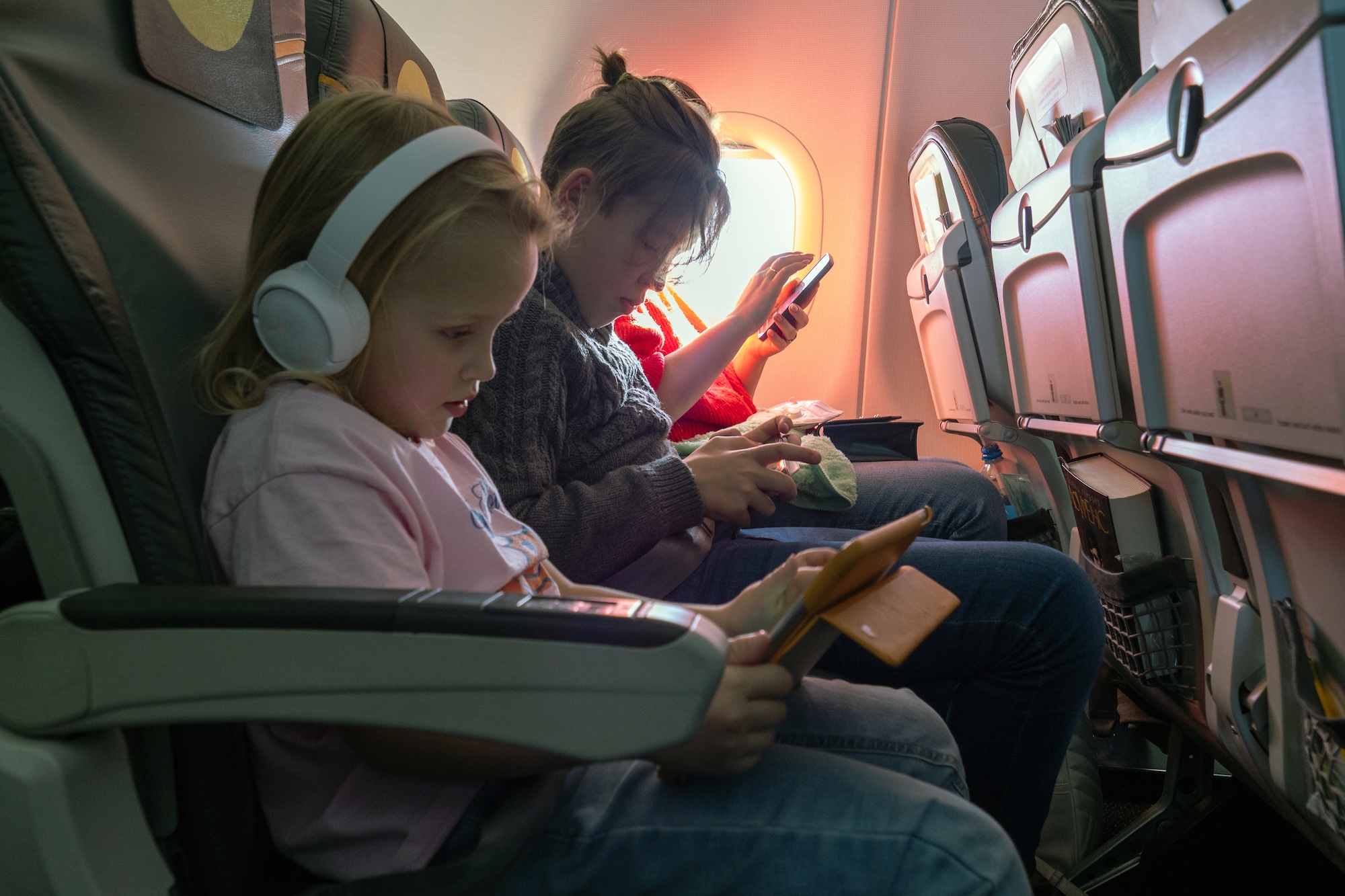
In-flight connectivity (IFC) has moved decisively from “nice to have” to core cabin infrastructure, according to a new global benchmark from Moment.
The Paris-based passenger-experience specialist says seven out of 10 airlines worldwide now offer WiFi onboard, marking what it describes as a maturity phase for the sector.
A shift in passenger expectations reinforces this trend. The company cites a Viasat survey from 2024, which found that 80% of travellers consider in-flight WiFi as essential as seat comfort and schedule reliability when valuing an airline’s service.
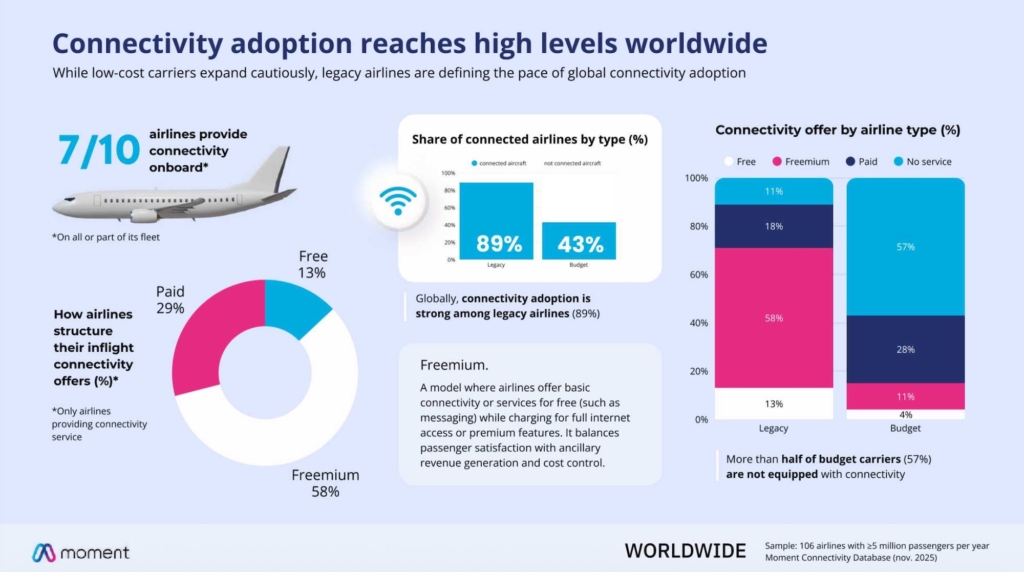
Moment’s Inflight Connectivity Benchmark 2025 analyses 106 airlines across Europe, the Americas, Asia-Pacific, and the Middle East & Africa, comparing connectivity deployment, pricing strategies, and the choice of satellite providers. The data shows more full-service airlines are providing connectivity—refining their brand, fleet, and commercial strategy for the service—while low-cost carriers lag.
Legacy carriers lead in offering in-flight WiFi, while budget airlines lag
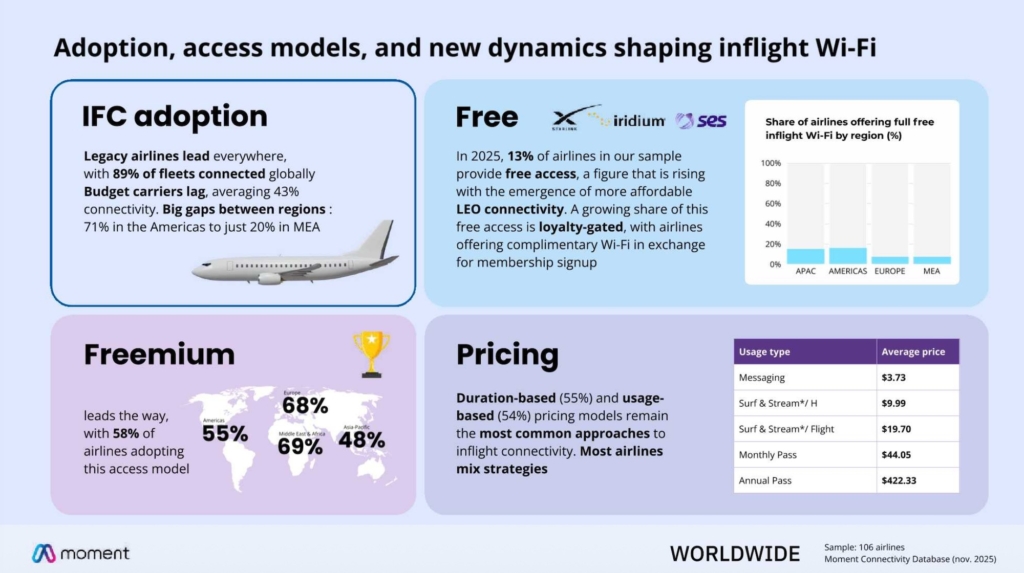
The benchmark shows traditional network airlines leading in in-flight connectivity adoption. Eighty-nine per cent of legacy carriers now have in-flight WiFi, compared with a much lower uptake among low-cost airlines, 57% of which remain unconnected.
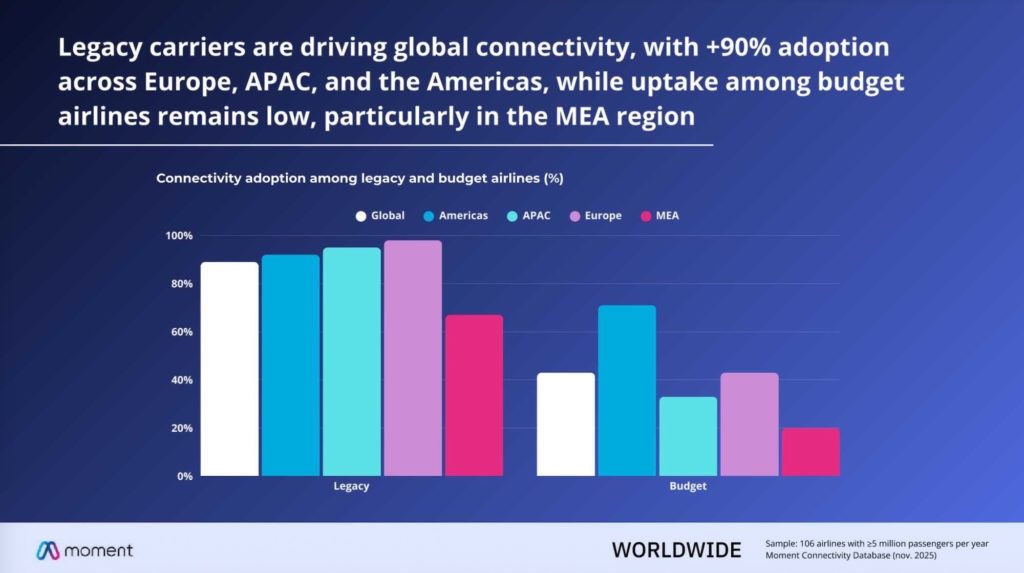
Moment says the gap reflects how IFC has evolved from a premium differentiator into an operational expectation for full-service brands. Budget carriers lag significantly as they weigh installation costs, aircraft utilisation, and ancillary trade-offs.
Still, the report suggests this divide may narrow as technology costs fall and new LEO satellite constellations improve performance and economics.
In-flight connectivity is now a strategic backbone of airline passenger experience
Moment argues that the data show IFC shapes the wider digital passenger journey.
“This evolving landscape signals a new era for aviation where in-flight connectivity is becoming the backbone of a more intelligent, adaptable, and passenger-centric aviation ecosystem,” said Moment CEO and Co-founder Tanguy Morel. “The industry has entered an era where connectivity must align with brand identity, fleet realities, and commercial ambitions. Airlines are no longer asking whether to offer WiFi; they are defining what role connectivity plays in their service promise and revenue strategy.”
Freemium is the dominant airline in-flight WiFi pricing model, but fully free WiFi is increasing
While connectivity availability is increasing, airlines are finding new ways to recoup their connectivity investments. Moment’s data shows freemium access is now the dominant global model, used by 58% of connected airlines.
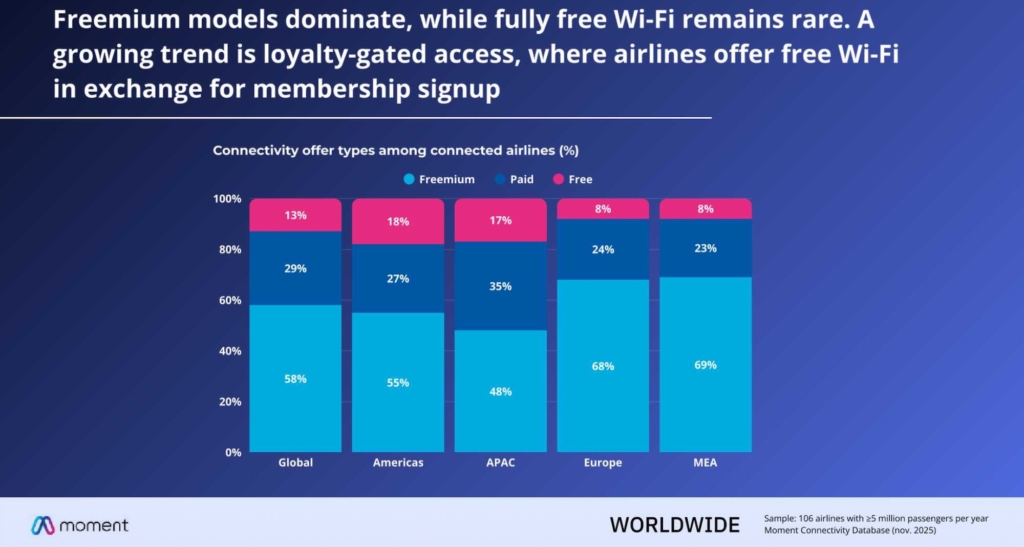
Typically, this offers free messaging—often via apps such as WhatsApp or iMessage—while charging for browsing or streaming. The approach allows airlines to boost passenger satisfaction without abandoning ancillary revenue.
Entirely free WiFi remains relatively rare globally, at 13%, but Moment notes that figure is climbing quickly as low-Earth-orbit (LEO) satellite networks improve bandwidth and lower costs. At the same time, loyalty-gated WiFi is emerging as a popular tactic, with airlines offering free internet in exchange for joining their frequent-flyer programmes.
In-flight WiFi pricing fragments as subscriptions gain ground
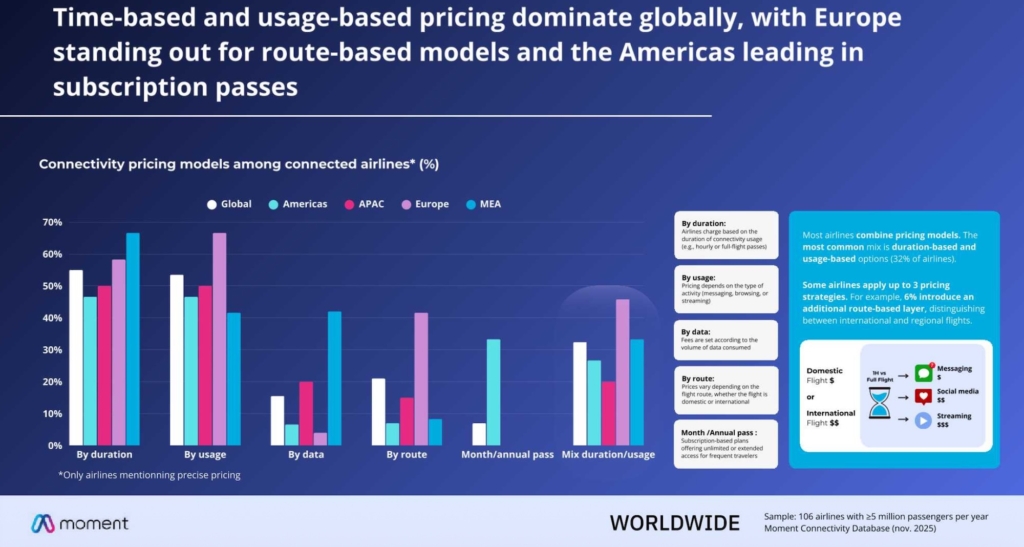
Moment’s benchmark shows airlines are developing complex pricing models for the service, and blending multiple approaches:
- Duration-based pricing: used by 55% of airlines
- Usage-based pricing: 54%
- Data-based and route-based pricing: growing steadily
- Subscription models: expanding, particularly in the Americas
Entry-level services such as messaging average $3.73, while full-flight internet access averages $19.70, allowing airlines to target both casual users and high-value passengers. The growth of monthly passes (averaging $44.05) and annual passes (averaging $422.33) addresses the needs of travellers, particularly frequent flyers, to be “always-connected.”
Regional IFC maturity varies widely
The benchmark also highlights stark regional differences in in-flight connectivity, with some world regions still lagging:
- The Americas lead in maturity and experimentation. Notably, they are the only region where budget airlines currently offer free WiFi, and subscription models are gaining traction.
- The Asia-Pacific region is advancing rapidly, with 19% of airlines offering fully free WiFi, through aggressive adoption of new satellite technologies.
- Europe shows near-universal connectivity among legacy carriers, and further acceleration can be expected as next-generation systems roll out.
- The Middle East & Africa remain in an earlier phase, with limited deployment and large gaps between airline business models, signalling significant growth potential.
In-flight WiFi services still need to catch up with the low-cost model
With airline installation rates rising and business models diversifying, Moment’s benchmark suggests that in-flight connectivity has reached a point of no return—where being offline at 35,000 feet is increasingly the exception rather than the rule on major network carriers.
However, the considerable operational costs of offering in-flight WiFi still make a weak business case for most low-cost carriers. The increased availability of lower-cost LEO satellite connections could change that.
As Ryanair’s CEO, Michael O’Leary, previously told Skift, “There are two costs to putting WiFi on the plane. There’s a physical weight cost which adds to your fuel bill, and two, you have expensive communications because of roaming WiFi. There are a number of different satellite developments that might, in the next few years, come up with a very cheap WiFi that would operate across Europe as a single market, as it does in the US. But until that arises, I don’t think you’ll see WiFi onboard Ryanair.”
Featured Image: danr13 | stock.adobe.com