IAG selects record 29 start-ups for 2025 Accelerator to boost AI, sustainability and mobility

August 12, 2025

International Airlines Group (IAG) has chosen 29 start-ups from 11 countries to join its 2025 IAG Accelerator programme (previously known as Hangar 51).
This is the largest cohort in the initiative’s nine-year history, and a clear signal of how seriously the airline group is betting on deep tech and AI to shape the future of aviation.
The selected start-ups, many of them still at the pre-seed or seed stage, will work directly with IAG’s six operating companies, including British Airways, Iberia, and Aer Lingus, to test and scale technologies that could transform airline operations, sustainability efforts, and the customer experience.
From AI-powered robotics and carbon removal to sustainable aviation fuel and crew scheduling optimisation, this year’s batch of innovators offers a glimpse into what the future of flying might look like.
“We’re welcoming the largest-ever cohort of start-ups to the IAGi Accelerator,” said Ignacio Tovar, Director of Innovation at IAG. “We offer a unique opportunity for founders to work directly with our airlines to demonstrate the potential of their solutions.”
IAG Accelerator: The 29 companies in 2025
The IAG Accelerator runs on two tracks, one for companies ready to test their tech, and another for projects at an earlier stage that focus on climate innovation.
Deploy: Start-ups ready to hit the runway
The Deploy track will see 14 companies trial their solutions in real-world airline settings. These startups will undergo a 12-week proof-of-concept phase, embedding with IAG airlines to validate their technology in operational environments.
- AISmartPlan (Australia): Automates complex aircraft maintenance planning using AI. AISmartPlan optimises task efficiency, extends parts lifespan, and enhances labour utilisation, resulting in significant cost reductions and maximised resource use.
- Anyformat (Spain): Converts and validates any document data via a no-code platform. It empowers companies to extract and utilise data from any format without technical requirements.
- Bonafide AI (USA): Helps businesses integrate with generative and agentic AI commerce tools. It enables brands to distribute accurate and validated content to Generative AI Apps to increase discovery and purchase.
- Cosmofoil (Sweden): Uses natural language processing to optimise airline route planning. Equipped with AI-powered automation, it helps build a new generation of tools to provide reliable planning and decision-making capabilities.
- DAITY (Canada): Synthesises fragmented data using AI to improve aviation risk management.
- Evolinq (Israel): Deploys AI agents to streamline procurement and supplier collaboration. It helps automate suppliers’ communication, mitigate risks, and boost growth.
- INPUTSOFT (USA): Helps in efficient scheduling of human and technical resources. AI-based scenarios for improved utilisation of work shifts. Optimises airport ground crew rostering to reduce delays and inefficiencies. It helps collect and analyse data from all ground handling processes and pay only depending on the number of flights.
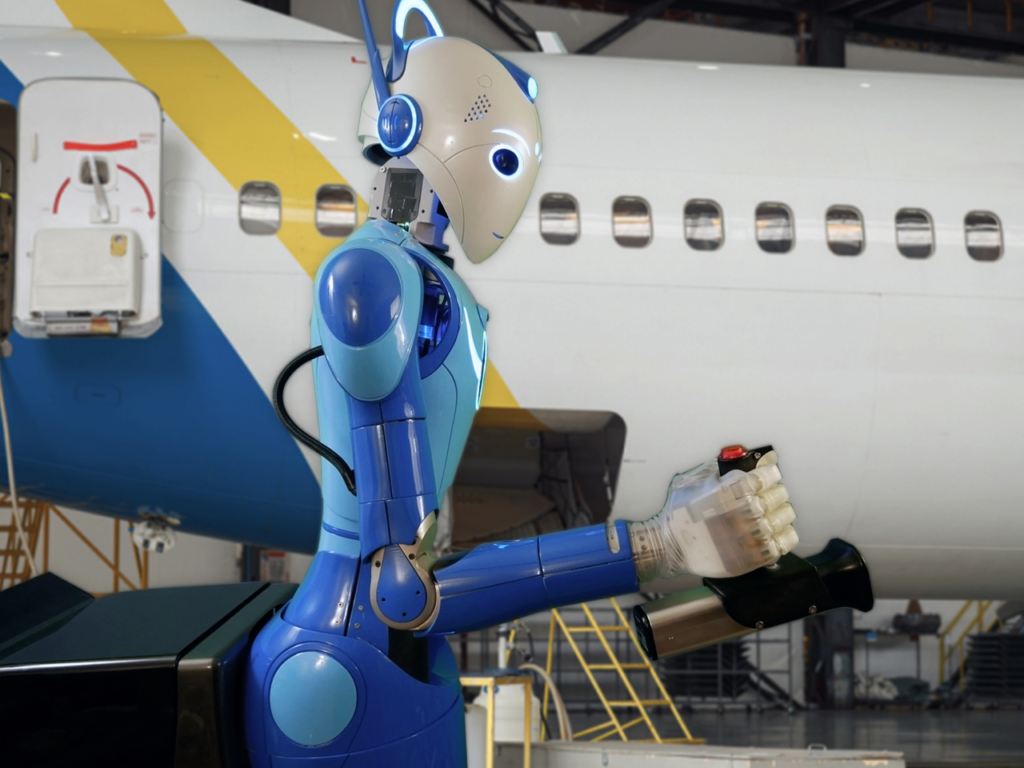
- JourneyRobotics (USA): Builds robotic arms for automated baggage loading. The company claims that its robots load and unload all types of luggage in a fast and efficient manner, improving the safety and well-being of baggage handlers while ensuring that passengers have a seamless and hassle-free journey.
- PixoAnalytics (Germany): Enhances baggage tracking through machine vision. PixoAnalytics uses patented machine learning algorithms to automatically identify and track items such as letters, parcels, fabrics, and medications by analysing their natural surface patterns, ensuring unparalleled accuracy and security.
- Pzartech (Israel): Simplifies parts management during aircraft maintenance. Build digital solutions that support technicians with smartphones.
- Responsibly (Denmark): Offers ESG due diligence tools powered by AI. From human rights compliance to decarbonization targets and sustainability reporting, the company helps in taking control of the supply chain.
- Signapse (UK): Delivers real-time AI-driven sign language translations at airports. Signapse is revolutionising the field with its breakthrough advancements in sign language translation technology.
- Transreport (UK): Improves transport accessibility with passenger assistance tech.
- VegaSpark (France): Identifies strategic opportunities for airport slot swaps.
Most of these start-ups are leveraging artificial intelligence in some form, a key trend in this year’s cohort, reflecting IAG’s focus on AI as a transformative force across multiple airline functions.
Discover: Deep-tech start-ups tackling aviation’s climate challenge
The Discover Track focuses on technologies that are not yet market-ready but hold long-term promise in areas like sustainable aviation fuel (SAF), carbon removal, and fuel efficiency. These 15 start-ups will benefit from a six-month mentorship programme involving IAG experts and external partners.

- Aether Fuels (USA): Converts waste carbon into drop-in liquid fuels using novel catalysts using its proprietary Aether Aurora process, which achieves ultra‑high carbon conversion efficiency and dramatically cuts costs for medium‑scale plants. Its technology is feedstock‑agile, capable of processing CO₂, CO, methane, and other hydrocarbons without additional equipment, helping decarbonise aviation and shipping
- Airhive (UK): Airhive is deploying low‑cost, modular direct air capture (DAC) systems using fluidised bed reactors—industrial technology repurposed to capture over 99% of CO₂ in under 0.1 seconds, all with existing supply chains. The company has launched pilot projects backed by Coca‑Cola Europacific Partners and aims to scale to a million tonnes of CO₂ capture annually
- Ampaire (USA): Ampaire leads the charge in hybrid‑electric aviation with its AmpDrive powertrain, achieving fuel reductions of up to 90%, halved maintenance costs and significantly quieter flights, all while retrofitting existing aircraft. It was recently granted the FAA G‑1 certification basis for its AMP‑H570 hybrid‑electric system, taking a major step toward commercial deployment.
- CERT Systems (Canada): CERT Systems has developed a pioneering single-step CO₂ electrolysis process that transforms industrial carbon dioxide into ethylene—the world’s most widely used petrochemical—using only water and renewable electricity, without requiring costly feedstocks like hydrogen or syngas.
- Circularity Fuels (USA): Circularity Fuels transforms biogas into sustainable aviation fuel via its proprietary Ouro Reactor™, which reforms feedstock at 1/100 the size and cost of traditional systems. It leverages proven technologies to make SAF production more compact and economically viable for biogas developers.
- Feynman Dynamics (China): Feynman Dynamics pioneers advanced electrochemical CO₂ conversion, capturing carbon both from ambient air and industrial emissions and transforming it into value-added molecules, including e‑fuels, polymers, and biodegradable material,s using custom-designed electrolyser stacks and high-performance MEAs (membrane electrode assemblies)
- Kairos Carbon (UK): Converts organic waste into durable carbon removals. It transforms low-quality organic wastes such as sewage sludge, manure, and food residues into high-quality, durable carbon removal using a self‑powering hydrothermal process that requires no external energy, while also recovering clean water and valuable nutrients like phosphorus. The company, a spin‑out from Deep Science Ventures backed by the Grantham Foundation and Zero Carbon Capital, targets carbon removal at under $50 per tonne and has raised pre-seed funding to build its first full-scale implementation.
- Ki Hydrogen (UK): Produces green hydrogen and biogenic CO₂ from biomass. Ki Hydrogen’s innovative biomass electrolyser uses renewable electricity and abundant, low‑cost lignocellulosic biomass to co‑produce green hydrogen at approximately $2/kg and biogenic CO₂ at $100/tonne. The system is energy‑efficient and designed to scale, supporting e‑fuel, chemical, and industrial hydrogen demands.
- Liquid Sun (Finland): Generates power-to-liquid SAF using renewable energy. It is pioneering the use of low-temperature electrolyser (LTE) technology to transform carbon dioxide and water into synthetic aviation fuel (eSAF), backed by nearly €4 million in funding to build the country’s first eSAF production demo facility in Espoo. Their pilot plant—built in shipping‑container form—is underway in Tampere, converting captured CO₂ into carbon monoxide feedstock via LTE.
- Lydian (USA): Converts CO₂ into SAF with reactors compatible with intermittent renewables. Lydian has achieved a major breakthrough with its modular power‑to‑liquids (PtL) technology, converting CO₂, water, and renewable electricity into drop‑in sustainable aviation fuel (SAF) with up to 95% lower emissions, as demonstrated at its North Carolina pilot plant producing 25 gallons per day.
- Mission Zero Technologies (UK): Develops electrochemical direct air capture systems. Mission Zero offers a plug‑and‑play electrochemical DAC solution that extracts atmospheric CO₂ efficiently anywhere with electricity access. Its captured CO₂ can be permanently stored underground, used to offset fossil carbon in products, or transformed into e‑fuels and carbon‑negative building materials.
- Neela Biotech (UK): Uses AI and synthetic biology to turn waste into fuel. The company, recently crowned winner of the 2025 Cambridge Zero Climate Challenge, is developing its Controlled Microbial Upcycling (CMU) platform as a scalable, cost-effective alternative to traditional bio-based SAF
- neo-fossil (UK): Engineers microbes to capture and lock atmospheric CO₂. Co-founded by geneticists and an ML specialist, the Bristol-based start-up has already built its MVP software and begun lab-scale microbial engineering toward scalable carbon-negative applications.
- Oleo (USA): Converts waste biomass into SAF feedstock. Oleo has developed a patented biomanufacturing platform that transforms biomass waste, including food scraps and seaweed, into sustainable bio‑oils, using a two‑step process that first extracts fermentable sugars and then converts them into oleochemicals via fermentation.
- Sora Fuel (USA): Combines CO₂ capture and fuel production in one low-energy process. Sora Fuel offers the world’s first integrated direct air capture and utilisation system—capturing CO₂ from air and converting it into sustainable aviation fuel (SAF) in one energy-efficient process using a liquid bicarbonate electrolyser and Fischer-Tropsch synthesis. The result is a carbon-negative drop-in fuel made from air, water, and renewable power.
This group reflects IAG’s longer-term vision for decarbonising aviation, aligned with its net-zero by 2050 target. Many of these companies are pioneering technologies that could become mainstream by the next decade.
The IAG Accelerator: A decade of innovation
Launched in 2016, the IAG Accelerator has now supported over 120 companies, with many going on to scale across IAG’s airlines and the wider aviation sector. Past alumni include:
- Assaia, whose AI-based ramp operations system is used in multiple airports worldwide.
- Twelve, which developed technology to turn captured carbon dioxide into jet fuel.
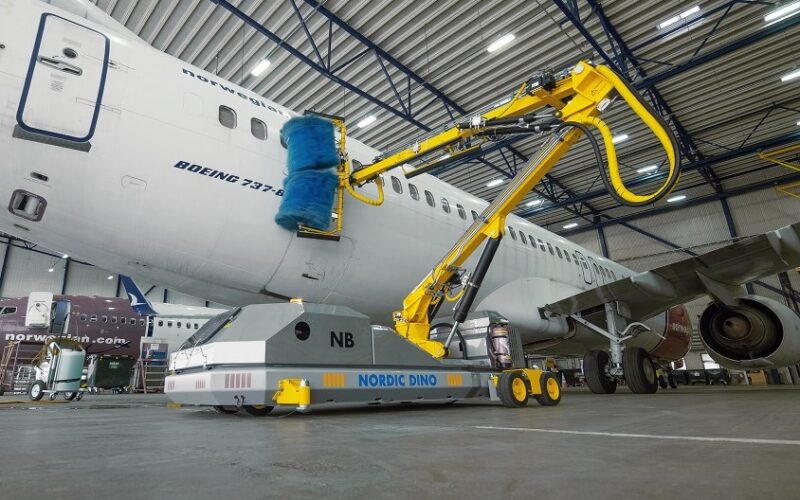
For IAG, the accelerator is more than a tech experiment; it’s a strategic pipeline for commercial partnerships and potential investments via IAGi Ventures, the group’s corporate venture capital arm.
As the aviation industry continues to grapple with rising operational complexity and mounting climate pressure, the 2025 cohort could hold some of the answers from smarter baggage handling to scalable green fuels.
“At its core, the accelerator exists to help scale the most impactful technologies for our industry, both today and into the future,” said Tovar.