Secondary airports & widebody integration: flynas’ solutions to slot-constraints in the Middle East

December 20, 2025
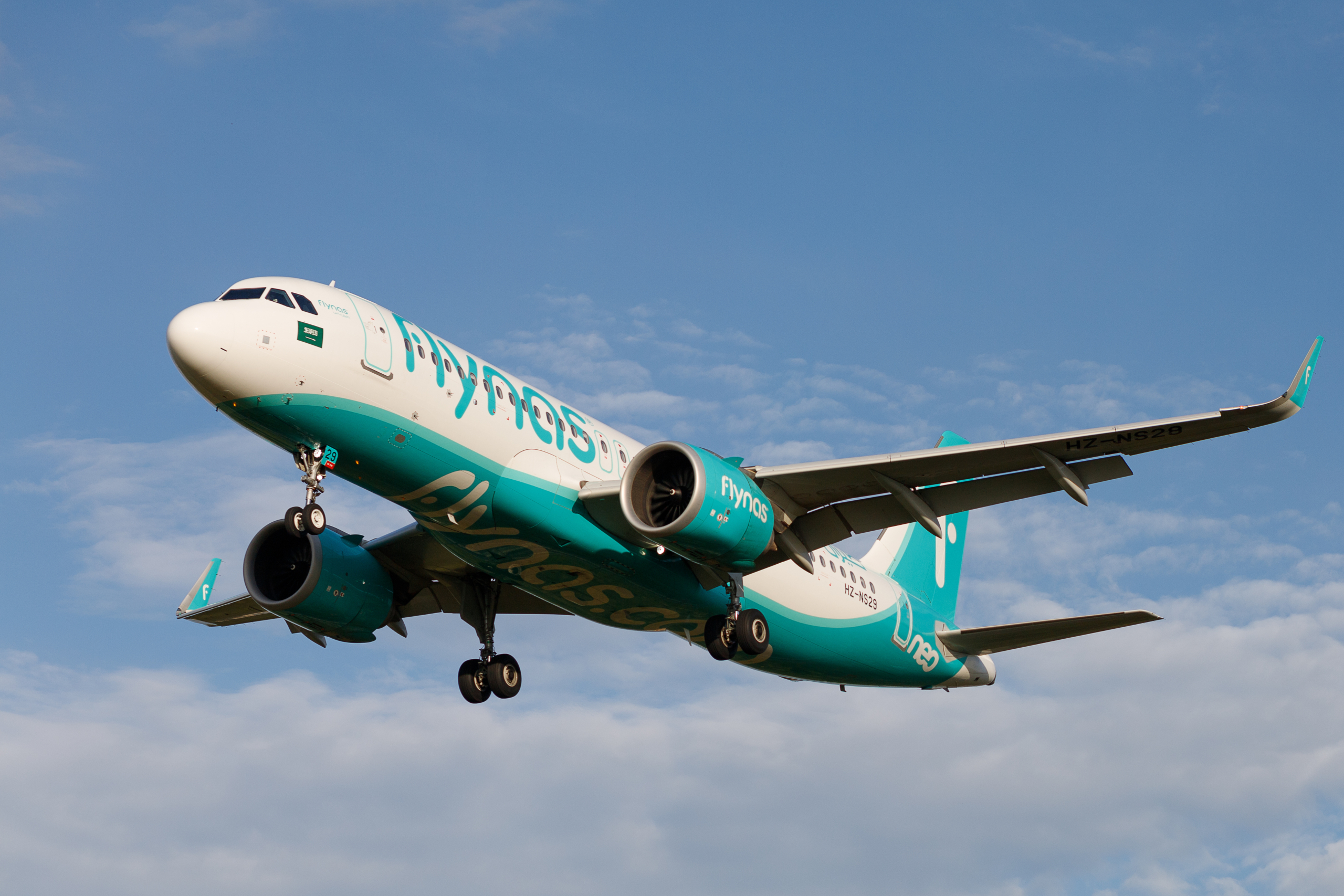
One of Saudi Arabia’s low-cost carriers, flynas, has detailed the ways in which it deals with slot constraint challenges across the Middle East.
Speaking during a panel discussion on Wednesday at the Global Airports Forum in Riyadh attended by Aerospace Global News, the company’s Vice President of Global Sales, Abdulilah Aleidi, said that it was one of the first to fly to several gateways in major cities across the region.

Aleidi cited Dubai, Cairo and Istanbul as examples of cities where the carrier flies to multiple airports to get around either slot constraint challenges or bilateral traffic agreement restrictions.
Short-term fixes
“We are facing some challenges in terms of the availability of slots in some airports with the region,” Aleidi admitted.
In Dubai, he said that flynas was the second Saudi airline to begin flying to both after flyadeal. As the company wanted to expand in Dubai, it first looked to Dubai International Airport (DXB) which it already served. With no space, it sought slots at Al Maktoum (DWC) airport instead.
“We started with one flight. Today, we are talking about five flights a day to Al Maktoum airport from Riyadh and Jeddah.”
flynas’ Dubai operations (DXB and DWC)
| Dubai airport | Route | Frequency |
| Dubai International Airport (DXB) | ||
| DXB | Dammam (DMM) – Dubai (DXB) | Daily |
| DXB | Jeddah (JED) – Dubai (DXB) | Up to 4x daily (20× weekly) |
| DXB | Madinah (MED) – Dubai (DXB) | Daily |
| DXB | Riyadh (RUH) – Dubai (DXB) | Up to 10× daily (63× weekly) |
| Dubai World Central / Al Maktoum (DWC) | ||
| DWC | Jeddah (JED) – Dubai (DWC) | Daily |
| DWC | Riyadh (RUH) – Dubai (DWC) | Up to 3x daily (16× weekly) |
Source: Cirium
Other airlines that fly to both DXB and DWC include Aeroflot, S7 Airlines, Smartwings, Fly Cham Airines, Flyadeal and Eurowings according to information from aviation analytics firm Cirium.
“We cannot increase the capacity of the airport, of course. So this is an alternative solutionm,” Aleidi continued. The carrier also flies to two airports in Cairo (Sphinx and International) and in Istanbul (Sabiha Gökçen and International) due to either slot constraints or bilateral agreement traffic restrictions.
He said that the company was “working closely with authorities” to address traffic restrictions.
Another long-term solution is widebody aircraft
At the Farnborough International Airport (FIA) last year, flynas signed a Memorandum of Understanding (MoU) for up to 160 Airbus aircraft including 130 A320neos and 30 A330-900s.
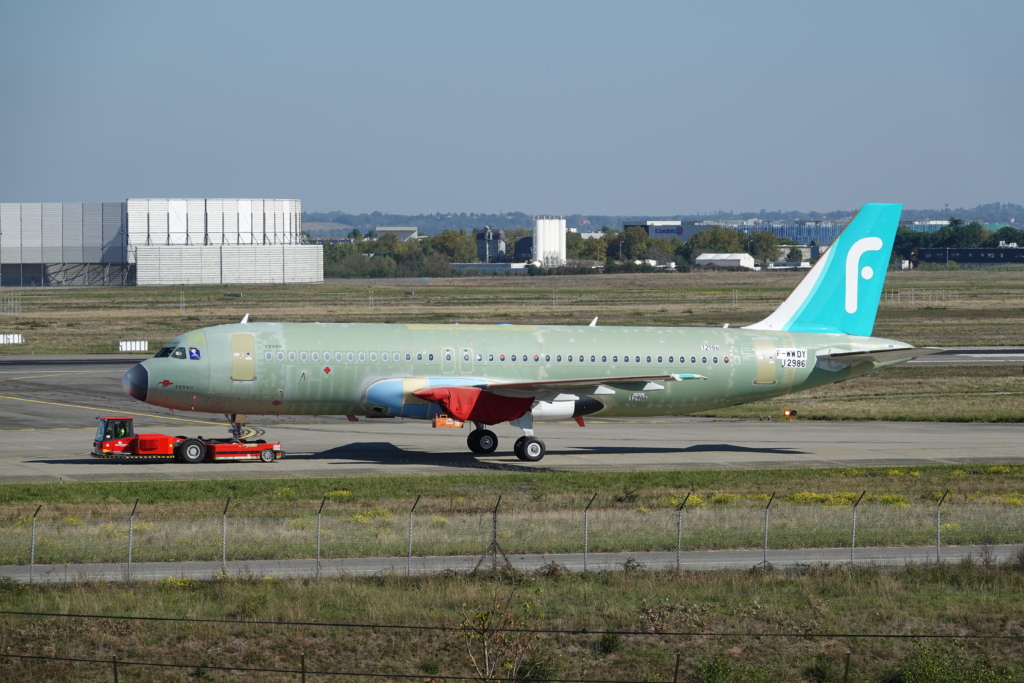
The widebody aircraft are part of its route densification strategy, providing a longer-term solution to airport capacity constraints.
“We know that challenge now is with the slots in the airports,” Aleidi explained. “So we believe the only way to expand and grow in the existing market is by deploying more capacity with widebody aircraft.”
It hopes to receive its first A330neo by the end of next year. The planes are set to arrive in a two-class layout, with up to 400 seats, more than doubling its per-flight capacity compared to its A320s.
A core part of Vision 2030
Saudi Arabia’s first low-cost airline, flynas, was established in 2007. It has undergone a transformative growth period since then, moving from a fleet of around 20 aircraft in 2020 to 65 today.
Today, its expansion is furthered by a comprehensive and ambitious national aviation strategy as laid out in Saudi Arabia’s Vision 2030 plan.

Although the project is exemplified by Riyadh Air – the country’s new flag carrier with more than 150 aircraft on order – flynas will actually end up being bigger by fleet size.
Its order book includes the delivery of 280 Airbus aircraft within seven years.
Featured image: pavlofox | stock.adobe.com